
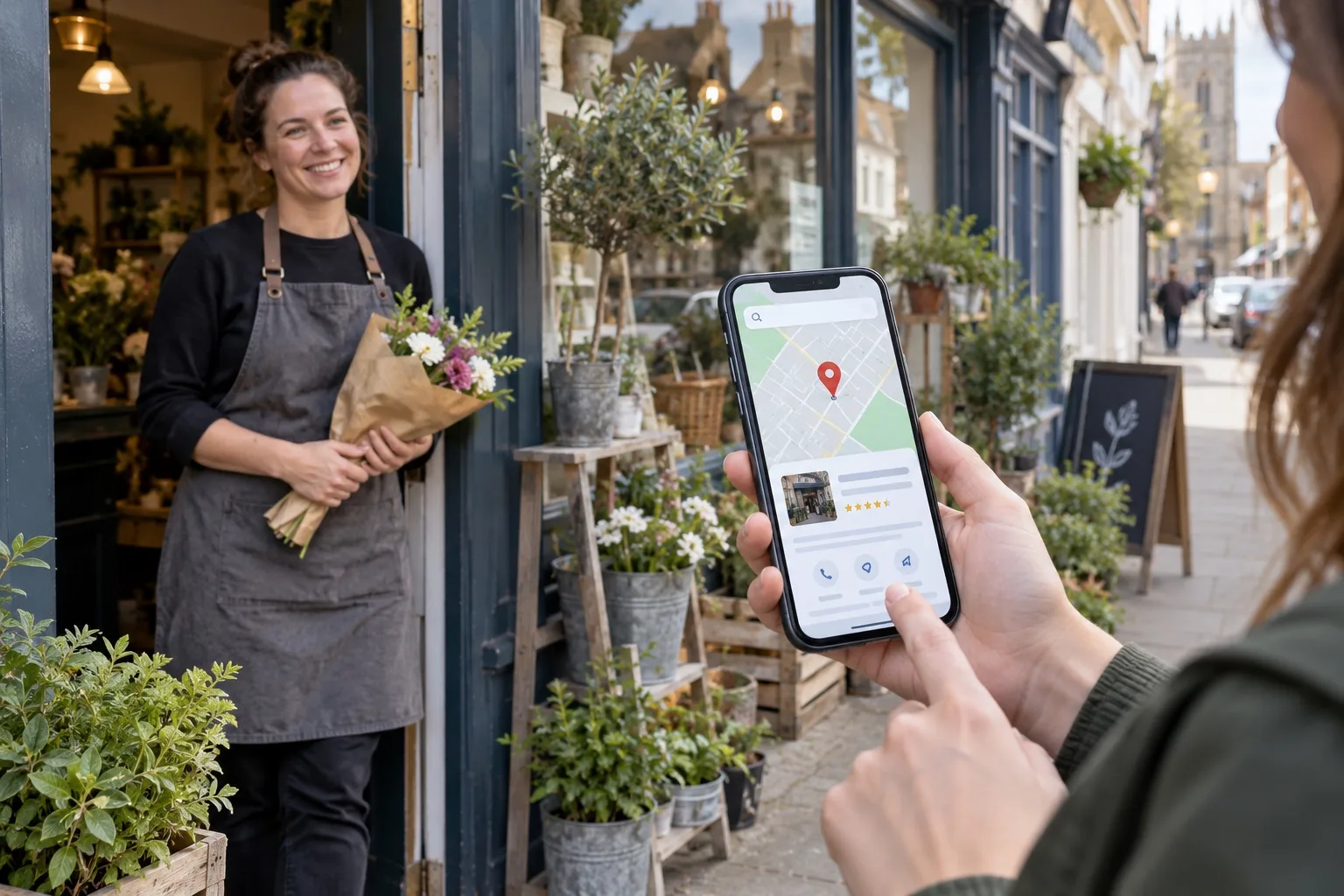
For many UK service businesses, the most valuable search visibility is not national. It happens when someone nearby searches for an emergency plumber, family solicitor, dog groomer, electrician, accountant, clinic, landscaper or web designer, then decides who to contact first. In 2026, local SEO remains one of the most practical ways to connect search demand with real enquiries, but the foundations need to be stronger than a few keywords on a homepage.
Google uses a wide mix of signals to decide which businesses deserve visibility in local results. These include accurate Google Business Profile information, proximity, relevance, prominence, review quality, website content, location signals, brand trust and user behaviour. Your local search performance therefore depends on how well your business is represented across your website, your Google profile and the wider web.
The core foundations UK service businesses should prioritise in 2026 apply whether you serve one town, several counties or a wider region from a fixed base. The aim is to make your business easier to understand, easier to verify and easier to contact when local customers are ready to act.
Why local SEO matters for service businesses in 2026
Local SEO is the process of improving your visibility for searches with local intent. These searches might include a place name, such as roof repairs in Bristol, or they might be implied by the searcher’s location, such as boiler engineer near me. Google often responds with a map pack, organic listings, business profiles, reviews, images, opening hours and contact actions.
For service businesses, this matters because local searchers are often close to taking action. They are comparing providers, checking credibility and looking for evidence that a business can help in their area. A well-built local SEO presence can support more calls, form submissions, quote requests, bookings and visits.
The competitive standard has also risen. Many businesses now have a Google Business Profile and a basic website. The difference in 2026 is made by consistency, depth and usefulness: clear service pages, credible location pages, recent reviews, helpful local content, transparent business details and a joined-up brand presence.
Start with a properly managed Google Business Profile
Your Google Business Profile is often the first thing a prospective customer sees. It can appear before your website in local search results, so it should be treated as a core digital asset rather than a one-off listing.
Check your essential profile details
Begin with the basics. Your business name should match your real-world trading name. Avoid keyword stuffing, as adding unnecessary locations or services to the name can look untrustworthy and may risk profile issues. Your address, service area, phone number, website URL, opening hours and categories should be accurate.
For service-area businesses, be clear about the areas you genuinely cover. If customers do not visit your premises, configure your profile appropriately rather than displaying an address that may cause confusion. Add special hours for bank holidays and seasonal changes, especially if you provide urgent or time-sensitive services.
Choose the right categories and services
Categories help Google understand what your business does. Your primary category should reflect your main service, while secondary categories can support closely related services. A heating company, for example, may need to choose carefully between boiler installation, heating contractor and plumber, depending on its strongest commercial focus.
Use the services section to describe what you offer in plain language. Rather than listing vague phrases, include specific services customers search for, such as bathroom tiling, conveyancing for first-time buyers, garden clearance, emergency locksmith or commercial photography. Keep descriptions helpful and accurate, not stuffed with repetitive keywords.
Use photos, updates and questions
Images help people understand whether your business is active and credible. Add real photos of your team, vehicles, completed work, premises, branded materials and service context where appropriate. A decorator might show finished rooms, a dental practice might show the reception area, and a landscaping business might show before-and-after garden projects with permission.
Google Business Profile posts and updates can support trust, particularly for seasonal offers, new services, local projects or important announcements. The questions and answers section should also be monitored. If people often ask about parking, emergency call-outs, coverage areas or appointment availability, answer clearly and keep the wording consistent with your website.
Build a review strategy that feels genuine
Reviews are a major local SEO trust signal, but they are also a major conversion factor. A strong review profile helps people decide whether to call, especially when several similar businesses appear in the map pack.
In 2026, review quality matters as much as quantity. A profile with steady, recent, detailed reviews is usually more persuasive than one with a burst of generic comments from years ago. Customers often scan for patterns: punctuality, communication, workmanship, friendliness, problem-solving and aftercare.
Ask at the right moment
The best time to request a review is usually soon after a successful job, appointment or project milestone. Make the request simple and polite. Explain that the review helps local customers choose a reliable provider. Where appropriate, send a direct review link in a follow-up email or message.
Do not pressure customers, offer incentives or ask only for positive reviews. A trustworthy process invites honest feedback. If your team has several customer-facing staff, create a simple internal routine so review requests are consistent rather than occasional.
Respond to reviews with care
Replying to reviews shows that your business is engaged. Thank people for positive comments and, where natural, mention the type of service provided or the area served without overusing keywords. For example, a measured response might say: Thank you for your kind feedback. We are pleased we could help with your kitchen rewiring in Chelmsford.
Negative reviews should be handled calmly and professionally. Avoid arguments. Acknowledge the concern, explain how the customer can contact you and demonstrate that you take feedback seriously. Prospective customers often judge the response as much as the original complaint.
Create service pages that match real search intent
Your website needs to give Google and customers a clear understanding of what you do. A single services page listing everything is rarely enough for competitive local SEO. Separate pages for important services usually perform better because they can answer specific questions and match specific searches.
For example, a building firm might have individual pages for house extensions, loft conversions, garage conversions and structural alterations. A law firm might separate conveyancing, wills, probate and employment law. A marketing agency might separate website design, SEO, branding and paid search.
Each service page should explain who the service is for, what is included, what the process looks like, common questions, relevant credentials and clear next steps. Include local context where it is genuinely useful, such as regulations, property types, service availability or regional challenges. Avoid duplicating the same text with different place names, as this creates thin content and weakens trust.
Use location pages carefully, not mechanically
Location pages can be valuable when your business serves multiple towns, cities or regions. However, they need to be genuinely useful. A page that simply swaps Manchester for Liverpool in otherwise identical copy is unlikely to build lasting visibility or confidence.
What a useful location page includes
A strong location page should explain your relationship with that area. Do you have a local team, a physical branch, regular projects, specific availability or knowledge of local conditions? Can you include relevant examples without inventing results or naming clients? Can you reference nearby areas, transport links, property styles or typical service needs?
For a roofing business, a location page might discuss common roof types in the area, storm damage patterns, nearby villages served and the process for arranging an inspection. For a private clinic, it might cover appointment access, parking information, surrounding towns and the services available at that location.
Make sure every location page has a clear purpose, unique copy, accurate contact details and internal links to the relevant service pages. If you only have enough substance for three strong location pages, that is better than thirty thin ones.
Publish local content that supports expertise
Local content is not just writing blog posts with place names in them. It is content that helps customers in your area make better decisions and understand your expertise. This can support local SEO by strengthening relevance, attracting links or mentions, and giving people useful reasons to trust your business.
Good local content could include guidance on preparing a property for winter in your county, planning considerations for home extensions in your region, common bookkeeping deadlines for local small businesses, accessibility improvements for high street premises, or how seasonal demand affects appointment availability.
For example, an estate maintenance company could publish a February checklist for commercial grounds across the South East. A solicitor could explain the local steps involved in buying a leasehold flat in a particular city. A web design company could write about how independent retailers can improve local landing pages before a spring campaign.
Keep the content practical. Use real customer questions, local terminology and service knowledge. Avoid producing generic articles that could appear on any website in any location.
Strengthen trust signals across your website
Trust signals help both search engines and customers assess whether your business is legitimate, experienced and suitable. They are especially important for services involving homes, health, money, legal advice, safety or significant investment.
Make your business details easy to verify
Your website should clearly display your business name, contact details, service areas and opening hours. If you have a physical location, include the address consistently. If you are a service-area business, explain how appointments, visits or call-outs work.
Add an informative about page with real background, team information where appropriate, qualifications, trade memberships, insurance details, awards, case studies or project examples. Use plain English. Customers should not have to dig through your site to work out who you are.
Show evidence, not just claims
Many websites say they are reliable, professional and friendly. Stronger websites demonstrate it. Add project galleries, testimonials, accreditations, guarantees, process explanations, frequently asked questions and clear policies. If you publish case studies, focus on the problem, approach and outcome without inventing figures or using unsupported claims.
Consistency also matters. Your name, address and phone number should match across your website, Google Business Profile and key directories. Inconsistent citations can create confusion for users and search engines.
Technical foundations still matter
Local SEO is not only about content and profiles. Your website must be easy for search engines to crawl and easy for customers to use. A slow, confusing or poorly structured website can reduce enquiries even if it attracts traffic.
Focus on mobile usability first. Many local searches happen on phones, often when someone wants a quick answer. Make contact buttons easy to find, forms short enough to complete and service information clear. Click-to-call links, readable text, accessible navigation and fast-loading pages all support performance.
Use structured data where appropriate, such as LocalBusiness, organisation, service, FAQ and review schema, implemented accurately. This helps search engines interpret key information, although it is not a substitute for strong content. Keep page titles, meta descriptions and headings specific to each service and location. Make sure important pages are internally linked rather than buried several clicks deep.
Measure the enquiries that matter
Local SEO should be judged by business impact, not rankings alone. Rankings vary by searcher location, device and search history, so they can be misleading if viewed in isolation. Track the actions that show commercial value.
Useful measures include phone calls, contact form submissions, booking requests, direction requests, profile interactions, organic landing page visits, conversion rates and the quality of enquiries received. Ask new customers how they found you and compare this with analytics data.
Google Business Profile performance data can show how people interact with your profile, while website analytics can show which service and location pages lead to enquiries. Review this regularly so you can improve pages, refine calls to action and identify gaps in your local visibility.
Common local SEO mistakes to avoid
- Using a keyword-stuffed business name: This can damage trust and may breach platform guidelines.
- Creating duplicate location pages: Near-identical pages with swapped town names rarely help users.
- Ignoring reviews after they are published: Responses show professionalism and can influence future customers.
- Hiding contact details: Local customers need quick reassurance that you serve their area.
- Relying only on Google Business Profile: Your website, citations, content and brand presence all contribute.
- Publishing vague service content: Pages should answer real questions and explain your process.
- Forgetting mobile users: Many local enquiries start on a phone, so speed and usability matter.
A sensible local SEO action plan for 2026
If you are starting from scratch or improving an underperforming presence, take a staged approach. Trying to fix everything at once often leads to unfinished work.
- Audit your current visibility: Review your Google Business Profile, website, reviews, citations and main competitors.
- Fix accuracy issues: Correct business details, opening hours, service areas, categories and contact information.
- Prioritise core service pages: Build or improve pages for the services that matter most commercially.
- Improve review routines: Create a consistent, ethical process for requesting and responding to reviews.
- Develop useful location pages: Focus on the areas where you have genuine relevance and enough detail.
- Add trust signals: Strengthen your about page, testimonials, project evidence, accreditations and frequently asked questions.
- Measure enquiry quality: Track calls, forms and bookings, then refine based on what converts.
FAQs about local SEO for UK service businesses
How long does local SEO take to work?
Some improvements, such as correcting a Google Business Profile or adding missing contact information, can support visibility and conversions quickly. More competitive results usually take longer because Google needs to recognise relevance, trust and consistency over time. Most businesses should think in months rather than days.
Do I need location pages for every town I serve?
No. Location pages should exist where you can provide genuinely useful, unique information. If you serve many towns, start with the most important areas and create strong pages for those. Thin pages for every nearby town can look low quality and may not help visitors.
Are reviews really part of local SEO?
Yes. Reviews can influence visibility, but they also strongly influence whether someone chooses your business. Recency, detail, rating, response quality and review volume all contribute to perceived trust.
Can a service-area business rank locally without showing an address?
Yes, service-area businesses can still appear in local results, provided their profile is configured correctly and their website clearly explains the areas served. Strong reviews, relevant pages, consistent information and credible local signals become especially important.
Should my homepage target my main town or my whole region?
It depends on your business model. If most enquiries come from one town or city, the homepage can reflect that. If you serve a wider region, use the homepage to explain your broader offer and support it with focused service and location pages.
Clear next steps for improving your local presence
Local SEO in 2026 rewards businesses that are clear, credible and genuinely useful. The strongest approach is not a quick trick; it is a consistent digital presence that helps customers understand what you do, where you work and why they can trust you.
If your website, Google Business Profile, reviews and location content have grown in separate directions, now is a good time to bring them together. Start with accuracy, then build depth. Improve the pages that support real enquiries, request reviews consistently, publish local content that answers customer questions and make your trust signals visible.
Giraffe Digital works with UK businesses on website design, SEO, branding and digital strategy that supports long-term visibility and better enquiries. If local search is important to your growth in 2026, the right foundations can make every click, call and profile view work harder.