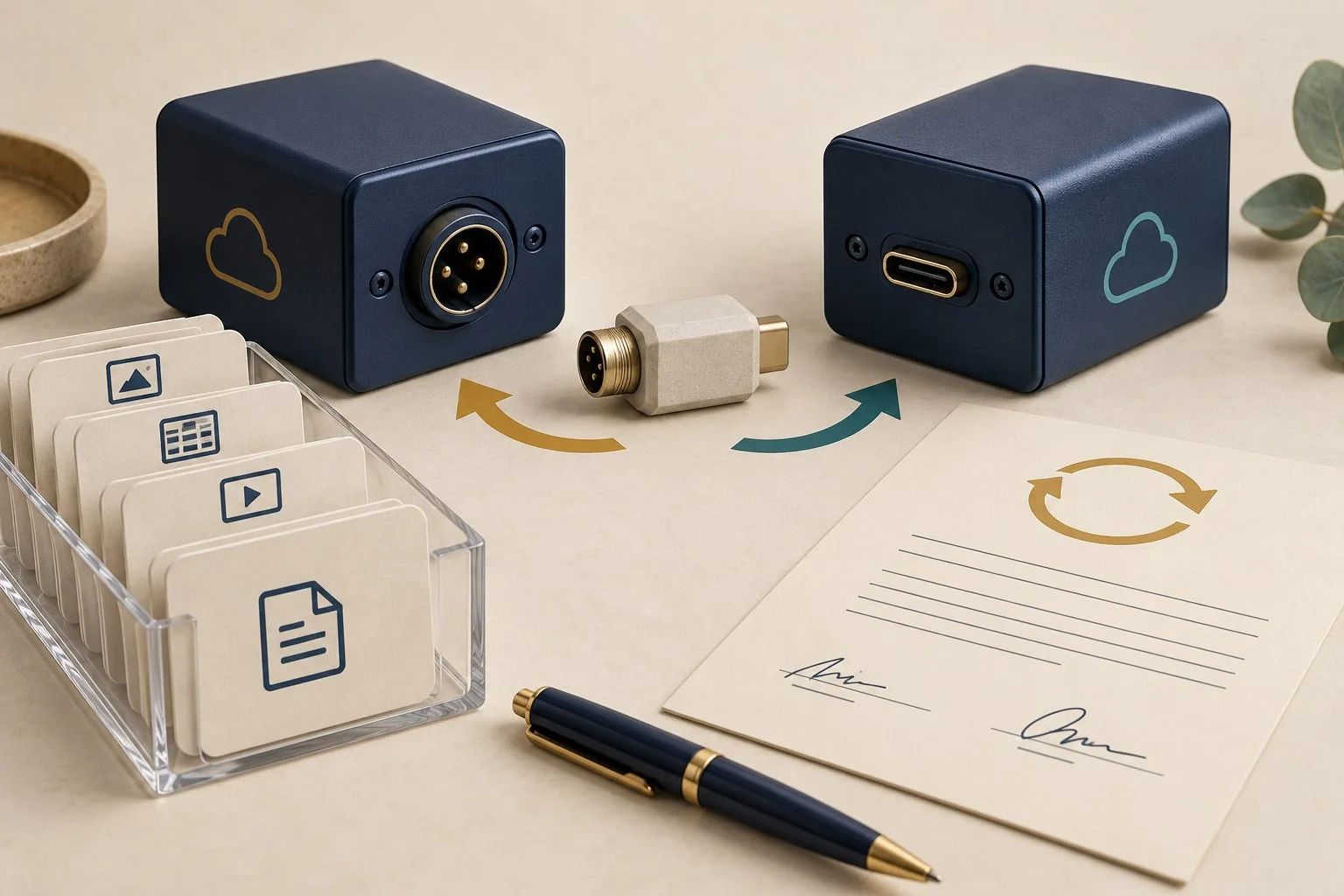
Choosing business software involves more than comparing feature lists and subscription prices. The purchase creates an ongoing relationship with data, processes, people and suppliers. Review how the service will work, change and eventually be replaced before committing to it.
Investigate the problem before the product
Describe the customer or operational need and the wider journey. Record what the present process achieves, where it fails and what a new service must improve. A demonstration of an attractive interface does not establish that the product fits the work.
Map the existing systems, data and responsibilities. Expose dependencies in the quotation brief, including uncertain access, changing integrations and information that is not ready. Use a proportionate prototype or trial to test important assumptions.
Separate commercial and technical reliance
Commercial constraints include contract duration, notice periods, renewal terms and exit charges. Technical reliance can arise through architecture, proprietary features, integrations and the skills needed to operate them. A flexible subscription does not automatically make switching easy.
Some reliance can provide useful value through integrated capabilities and reduced maintenance. Assess that benefit alongside the difficulty and cost of leaving. Government cloud guidance offers a useful distinction, but its procurement requirements do not automatically apply to a private business.
Review the complete cost
Compare subscriptions with implementation, migration, training, integration, support and ongoing administration. Include expected changes in volumes or user numbers. Identify promotional pricing and what applies after the introductory period.
Specify what is included and which activities need additional work. Ask how an unavailable feature, changed API or discontinued service would be handled. Keep the evaluation connected to realistic scenarios rather than assuming every advertised capability is present in the proposed plan.
Map suppliers and information flows
Record the services provided, relevant subcontractor relationships and the information exchanged. Identify accounts, permissions and the operational dependency on each connection. Keep the scope proportionate to the business and consequences of disruption.
An inventory helps people locate a dependency; it does not prove that the arrangement is secure. Combine the map with appropriate access, risk and continuity reviews. Assign an owner to maintain it when suppliers or integrations change.
Test portability and exit arrangements
Obtain an example export and check what it contains. Include attachments, relationships, identifiers, configuration and relevant history where needed. A downloadable spreadsheet may be insufficient to reconstruct the service elsewhere.
Plan how the receiving system will interpret the export. Test a representative transfer rather than relying solely on a button labelled Export. Document permissions, timing, assistance, charges and verification of the destination.
Review contractual arrangements for return or deletion of information with the responsible advisers. Ask how backups and retained copies are handled. A record disappearing from the visible interface does not establish that every copy has been removed.
Keep reviewing after purchase
Compare the actual service with the intended outcomes and commitments. Monitor relevant incidents, changing dependencies and increasing switching costs. Keep knowledge available to more than one individual where the service is important to operations.
Review before renewal with enough time to act on the notice period. The decision might be to remain, improve the arrangement or plan a replacement. Make that a considered decision supported by current evidence.
Supplier review checklist
- Define the need and test important assumptions.
- Map systems, accounts and information flows.
- Compare full costs and contractual commitments.
- Understand technical reliance and its benefits.
- Test useful exports and an achievable exit route.
- Assign owners and review before renewal.
Our requirements guide helps prepare the brief. The service and support guide covers operational expectations.