
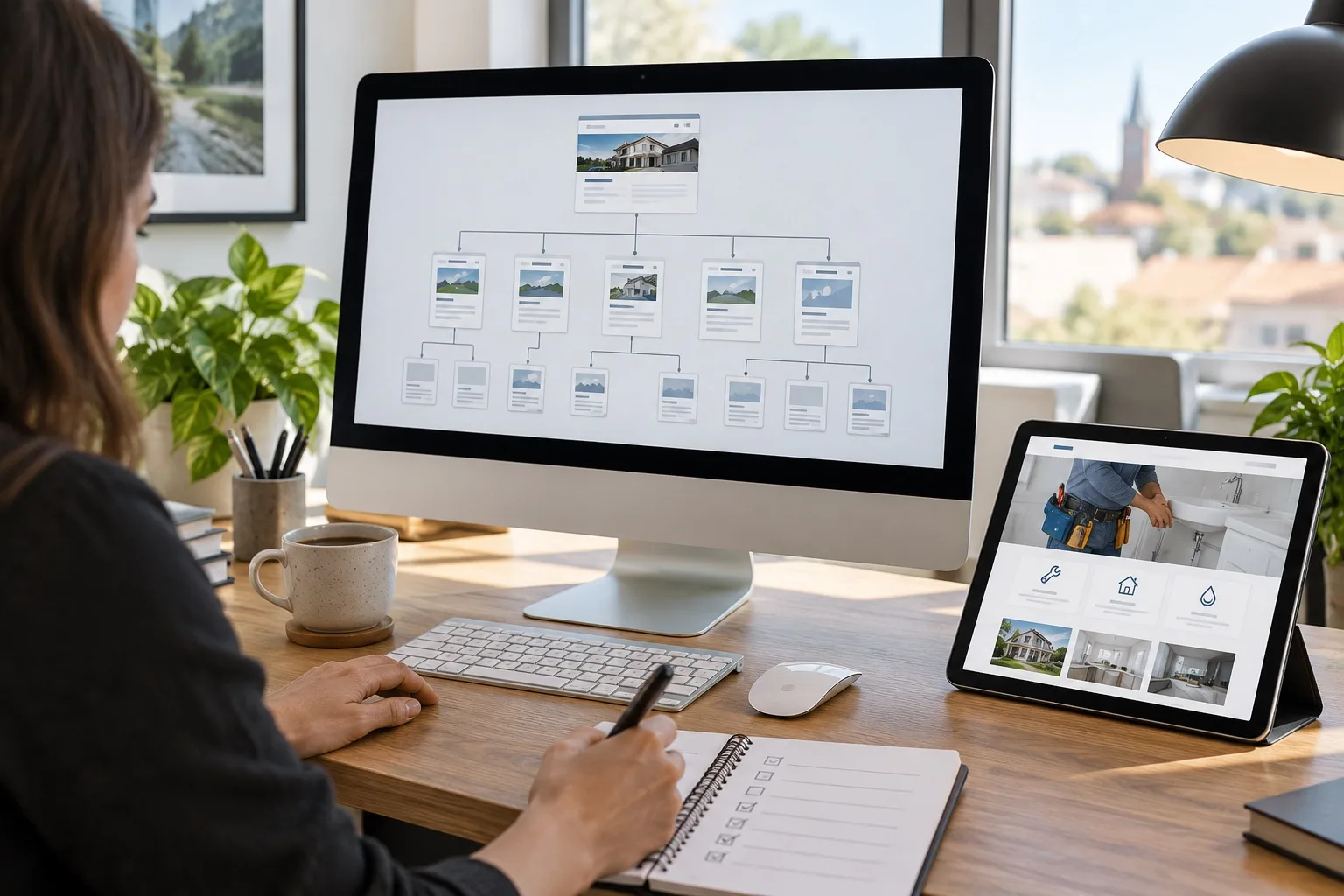
For service businesses, technical SEO in 2026 is not about chasing obscure ranking tricks. It is about making sure search engines can find, understand, trust and serve your most valuable pages at the right moment. Whether you run a legal practice, dental clinic, accountancy firm, home improvement company, consultancy or local trade business, your website needs to make clear what you do, where you do it and why a potential customer should choose you.
The most successful service business websites are usually not the most complex. They are easy to crawl, logically structured, fast to use, supported by accurate structured data and built around genuinely useful service content. The challenge is that small technical issues can quietly hold back otherwise strong websites. A blocked service page, duplicated location content, slow mobile templates or weak internal linking can limit visibility, even when the business itself has excellent expertise.
The technical SEO in 2026 priorities UK service businesses should focus on first are the ones that most directly affect visibility, trust and enquiries: crawlability, indexing, structured data, internal linking, mobile performance and content quality.
Why technical SEO matters more for service businesses in 2026
Search is becoming more selective about which pages it crawls, indexes and promotes. Search engines have to process enormous amounts of content, including AI-assisted material, duplicated local pages and low-value service articles. That makes technical clarity increasingly important. If your website is hard to crawl, thinly structured or unclear about its commercial purpose, it becomes easier for stronger competitors to outrank you.
For a UK service business, technical SEO supports three commercial goals. First, it helps search engines discover important pages such as service, location, sector and contact pages. Secondly, it helps those pages qualify for relevant searches by explaining their purpose and relationships. Thirdly, it improves the experience for users who arrive ready to enquire, book, call or request a quote.
Technical SEO should not sit separately from design, content and conversion strategy. A beautifully designed page that cannot be indexed is commercially weak. A technically sound page with vague copy will struggle to convert. In 2026, the priority is to build a joined-up website that works for search engines and people.
Start with crawlability: can search engines reach your key pages?
Crawlability is the foundation of technical SEO. If search engines cannot access a page, or if they waste too much crawl activity on low-value URLs, your important service pages may not perform as well as they should.
Service business websites often develop crawl issues when they have been redesigned, migrated, expanded with location pages or connected to booking systems. Common problems include blocked folders, incorrect redirects, broken navigation links, old staging URLs, crawlable internal search results, parameter-heavy pages and orphaned content that exists but is not linked from anywhere useful.
A practical crawl review should answer a simple question: can a search engine move from your homepage to every commercially important page in a logical number of clicks? For example, a roofing company should have accessible pages for roof repairs, flat roofing, emergency call-outs and relevant service areas. An accountancy firm should make it easy to find tax, payroll, bookkeeping and limited company support pages, rather than hiding them behind vague dropdown labels.
Crawlability checks to prioritise
- Robots.txt: Check that important service, location, blog and contact pages are not accidentally blocked.
- XML sitemap: Include only indexable, canonical URLs that you actually want search engines to process.
- Broken links: Fix internal 404s, especially from navigation menus, footer links and older blog posts.
- Redirect chains: Replace multi-step redirects with a single redirect to the final live URL.
- Orphan pages: Link important pages from menus, hub pages, related services or relevant articles.
Do not rely on search engines to guess your site structure. Your internal links, sitemap and navigation should all point in the same direction.
Indexing: make sure the right pages are eligible to rank
Crawlability and indexing are related, but they are not the same. A page can be crawlable and still not be indexed, especially if it appears duplicated, low value, technically inconsistent or excluded by a directive.
For service businesses, indexing problems often appear after website rebuilds or content expansion. A team may create several similar location pages, publish thin service variations or leave old duplicate URLs live. Search engines then have to decide which version, if any, deserves to be indexed.
In 2026, your indexing strategy should be deliberately selective. Not every URL deserves to be in Google. Thank-you pages, internal search pages, filtered archive URLs, duplicate tag pages and login areas should usually be excluded. Core service pages, location pages, useful advice articles and contact pages should be indexable, canonical and internally linked.
Indexing signals to review
- Meta robots tags: Ensure key pages are not set to noindex by mistake.
- Canonical tags: Point duplicate or similar URLs to the preferred version, but avoid canonicalising important pages to unrelated URLs.
- Status codes: Important pages should return a clean 200 status, not soft 404s, redirect loops or server errors.
- Duplicate content: Consolidate pages that compete for the same search intent.
- Search Console reports: Review excluded, crawled but not indexed, and discovered but not indexed URLs regularly.
A common example is a service business with separate pages for “emergency plumber Bristol”, “urgent plumber Bristol” and “24-hour plumber Bristol” that say almost the same thing. Rather than spreading value across weak duplicates, it is usually better to create one strong emergency plumbing page that addresses the full intent clearly.
Structured data and schema: help search engines understand your business
Structured data is not a magic ranking button, but it is an important technical SEO priority for 2026 because it helps search engines interpret your content more confidently. For service businesses, schema can clarify your organisation, services, locations, reviews, FAQs and contact details.
The key is accuracy. Schema should describe visible, truthful information on the page. Adding structured data for services you do not offer, locations you do not serve or reviews you cannot substantiate creates risk and reduces trust.
Useful schema types for service businesses
- LocalBusiness: Useful for businesses with a physical location or defined service area.
- Organization: Helps clarify brand details, logo, contact information and official profiles.
- Service: Can support individual service pages by describing the specific service offered.
- FAQPage: Suitable where genuine questions and answers are visible on the page.
- BreadcrumbList: Reinforces site hierarchy and can support clearer search result presentation.
- Article: Appropriate for blog posts, advice articles and guides.
For example, a family law solicitor may use Organization schema across the site, LegalService or relevant local business markup where appropriate, BreadcrumbList schema on deeper pages and FAQPage schema on pages answering common questions about divorce, child arrangements or mediation. The schema should support the page; it should not replace well-written content.
After implementation, use structured data testing tools and Search Console enhancement reports where available. Validation is only part of the job. You also need to check whether the markup matches the visible page and the real business.
Internal linking: guide users and search engines to what matters
Internal linking is one of the most underused SEO tools for service businesses. It helps search engines understand which pages are important, how topics relate and which pages should be associated with particular search intent. It also helps visitors move from research to enquiry.
A strong internal linking structure usually includes service hubs, location hubs, related article links and clear calls to action. For instance, a digital marketing agency might have a main SEO services page, supporting pages for technical SEO, local SEO and content strategy, plus blog articles that link naturally to those services where relevant.
Links should be descriptive. Avoid relying on repeated “click here” links. A phrase such as “technical SEO audit for service websites” gives more context than a generic link label. However, keep the language natural. Over-optimised anchor text can feel forced and reduce readability.
Internal linking examples for service websites
- From blog to service: An article about website speed can link to a website design or SEO audit service page.
- From service to related service: A commercial cleaning page can link to office cleaning, end-of-tenancy cleaning and facilities support.
- From location to service: A Manchester service area page can link to specific services available in that area.
- From FAQ to conversion: A question about project timelines can link to an enquiry or consultation page.
Internal links also reduce reliance on the main navigation. Not every important page can or should appear in the top menu, but every important page should be reachable through relevant contextual links.
Speed and Core Web Vitals: improve mobile experience before it costs enquiries
Website speed is a technical SEO issue and a conversion issue. Service business visitors are often searching on mobile, comparing options quickly or trying to contact someone with urgency. If your pages are slow, unstable or difficult to interact with, potential enquiries can disappear before visitors read your offer.
In 2026, Core Web Vitals remain a useful way to assess real user experience. Largest Contentful Paint relates to loading performance, Cumulative Layout Shift relates to visual stability and Interaction to Next Paint reflects responsiveness. These metrics are not the whole of SEO, but they highlight problems that affect both users and search engines.
Common causes of poor performance include oversized hero images, heavy third-party scripts, unnecessary sliders, unoptimised fonts, bloated themes, excessive tracking tags and poorly configured hosting. A service website does not need to feel plain, but every design decision should justify its performance cost.
Speed improvements with practical impact
- Compress and resize images: Serve appropriately sized images rather than uploading large originals directly from a camera or design file.
- Use modern image formats: Where suitable, use efficient formats while retaining quality.
- Reduce unnecessary scripts: Remove tools, widgets and tracking snippets that are no longer needed.
- Prioritise visible content: Make sure the main heading, introductory copy and call to action load quickly.
- Improve mobile layouts: Buttons, forms and contact options should be easy to use on smaller screens.
Speed work should be measured before and after. Look at lab data and real user data, but also test the site yourself on a typical mobile connection. If the contact form feels slow or the phone number is hard to tap, technical optimisation has not gone far enough.
Content quality and technical SEO now depend on each other
Technical SEO cannot compensate for weak content, and strong content can be held back by poor technical foundations. In 2026, service pages need to demonstrate relevance, clarity and usefulness. They should answer the questions a prospective customer is likely to have before making contact.
For a service page, that often means explaining what is included, who the service is for, common problems solved, locations served, typical process, credentials, FAQs and next steps. Avoid vague claims such as “leading solutions for all your needs” without evidence or detail. Search engines and users both benefit from specificity.
Content quality is particularly important for professional services, health, finance, legal and other areas where trust is central. Author information, review signals, accreditations, policies and clear contact details can all support credibility when presented honestly.
How technical structure supports better content
- Clear headings: Use logical sections that reflect real user questions and service details.
- Readable URLs: Keep URLs concise and descriptive, such as /services/commercial-cleaning/ rather than unclear parameter strings.
- Consistent templates: Service pages should feel cohesive while still containing unique, specific content.
- Helpful FAQs: Add questions that support decision-making, not filler content copied across every page.
- Media optimisation: Images, videos and downloadable resources should support the page without slowing it down.
A useful test is to compare your page with a real sales conversation. If a prospect asked about the service, would your page give them enough confidence to take the next step? If not, the issue is not only content; it is also how the information is structured, linked and presented.
Local and service-area SEO: avoid thin location pages
Many UK service businesses want to rank across multiple towns, cities or counties. Location pages can be effective, but only when they provide genuine value. Thin pages that swap only the place name are unlikely to build lasting visibility and may dilute the overall quality of the site.
A good location page should explain the services available in that area, provide relevant local context, answer location-specific questions and link to the most relevant services. If your business has a physical office, make the address and contact details clear. If you serve an area without premises there, be transparent and avoid implying a false local presence.
For example, a consultancy serving Leeds, Sheffield and Manchester might create regional pages that discuss local sector experience, service availability, travel or remote delivery options and relevant case types without inventing results. A trades business might include service coverage, emergency availability, common local property types and links to specific services.
Location content should help users decide whether you are the right provider for their area. If it exists only to target a keyword, it is unlikely to be strong enough in 2026.
Technical SEO audit priorities for 2026
If you are planning improvements this year, start with a focused technical SEO audit rather than trying to change everything at once. The aim is to identify the issues with the greatest commercial impact: pages that cannot be found, pages that cannot be indexed, pages that are too slow, and pages that do not clearly support enquiries.
A practical audit sequence
- Identify priority pages: List your main services, key locations, high-value blog articles and conversion pages.
- Check crawl access: Confirm these pages are linked, crawlable and included in the sitemap where appropriate.
- Review indexing: Check indexation status, canonical tags, noindex directives and duplicate page risks.
- Assess performance: Test mobile speed, Core Web Vitals and important templates such as service pages and landing pages.
- Validate schema: Ensure structured data is accurate, relevant and free from avoidable errors.
- Improve internal links: Connect related services, locations and articles with descriptive contextual links.
- Strengthen content: Update weak pages so they answer real customer questions and support conversion.
- Monitor changes: Track crawl reports, rankings, enquiries and user behaviour after implementation.
This process works best when SEO, design and development decisions are aligned. Technical recommendations should be realistic for your website platform and business goals, not delivered as an isolated checklist.
Common technical SEO mistakes to avoid
Service business websites often suffer from a similar set of avoidable issues. One of the most common is launching a redesigned website without a proper redirect plan. If old URLs with backlinks or search visibility are removed without relevant redirects, rankings and enquiries can drop quickly.
Another frequent problem is creating too many similar pages. More pages do not automatically mean more visibility. If each page targets nearly the same intent, the site can become bloated and confusing. Consolidation is often more effective than endless expansion.
Overlooking mobile experience is another serious mistake. Many business owners review their website on a desktop screen, while their customers discover it on a phone. Forms, menus, maps, tap-to-call buttons and cookie banners all need to be tested on mobile.
Finally, do not treat schema as a substitute for content. Structured data can reinforce meaning, but it cannot make a thin or unclear page genuinely useful. The best results come when technical signals and visible content tell the same story.
FAQs about technical SEO in 2026 for service businesses
What is the most important technical SEO priority in 2026?
The first priority is making sure your most valuable pages can be crawled, indexed and understood. For most service businesses, that means checking service pages, location pages, contact pages and key advice content before focusing on smaller technical refinements.
How often should a service business run a technical SEO audit?
A light review should be carried out at least quarterly, with a deeper audit before and after major website changes such as redesigns, migrations, new service launches or significant content restructuring.
Does schema improve rankings?
Schema does not guarantee higher rankings, but it helps search engines understand your business and content more clearly. Accurate structured data can support eligibility for enhanced search features and improve the way your information is interpreted.
Are Core Web Vitals still worth focusing on?
Yes, especially because they reflect real user experience. A faster, more stable and more responsive website can help both SEO and conversion performance, particularly for mobile visitors looking for service providers quickly.
Should every service area have its own page?
Only if each page can provide genuinely useful, distinct information. If several location pages are almost identical, it may be better to consolidate them or build stronger regional pages supported by clear service content.
Can technical SEO fix poor content?
No. Technical SEO can help good content perform better, but it cannot turn vague or thin content into a strong search result. The most effective websites combine technical clarity with specific, helpful and trustworthy content.
Clear next steps for your website
If your service business relies on enquiries from search, technical SEO should be part of your 2026 website strategy. Start by identifying the pages that matter most commercially, then check whether they are crawlable, indexable, fast, well linked and supported by accurate structured data. From there, improve the content so each page answers real customer questions and guides visitors towards a confident enquiry.
You do not need to solve every technical detail at once. Focus first on the areas that affect visibility and conversion: clean site architecture, strong service pages, reliable indexing, mobile performance and useful internal links. These improvements create a stronger foundation for future SEO, content and digital marketing activity.
Giraffe Digital helps UK service businesses build websites that are technically sound, strategically structured and designed to support growth. If your website is being redesigned, underperforming in search or ready for a technical SEO review, now is the right time to put the foundations in place for the coming months.