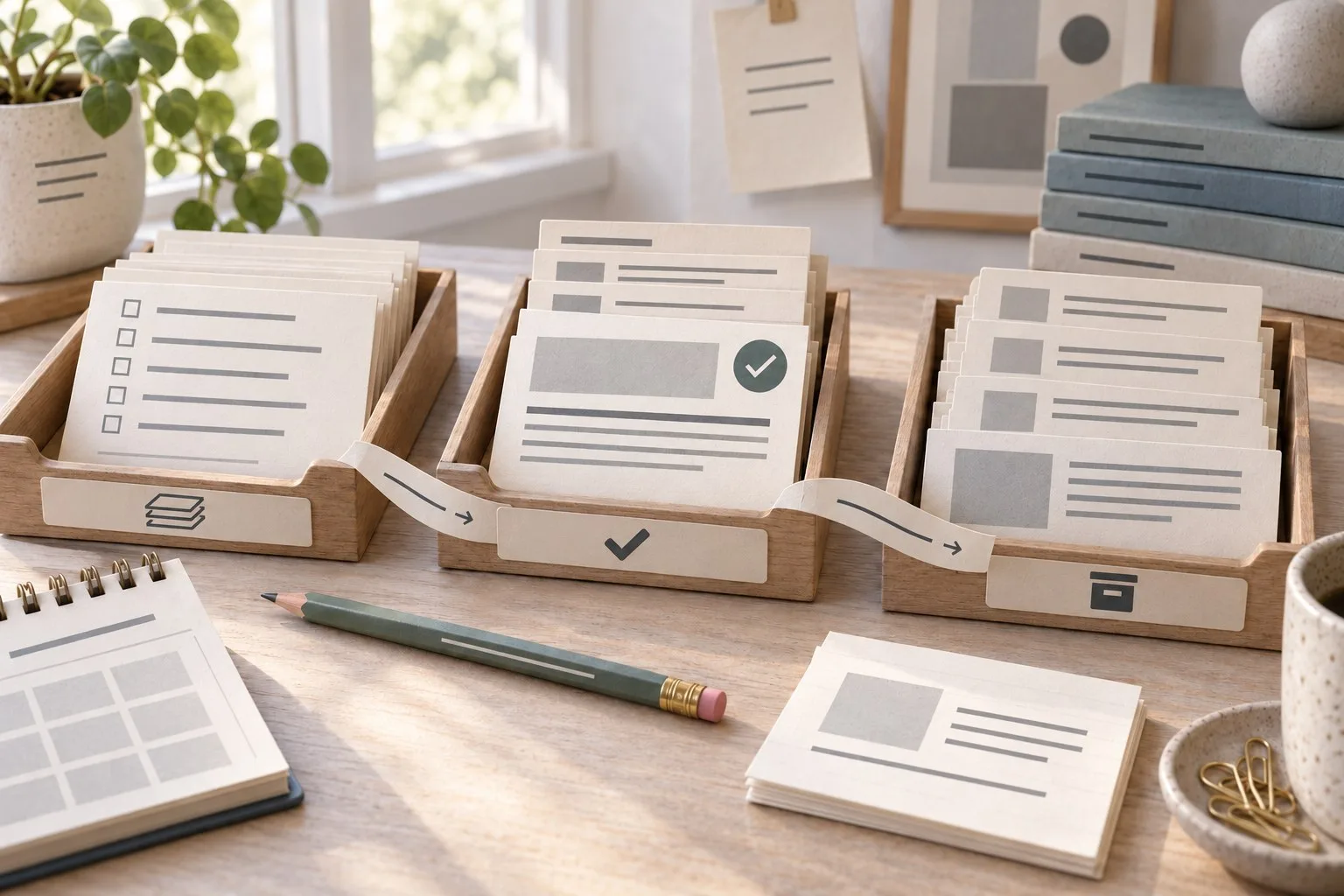
A brand library should help people communicate consistently without having to guess which artwork, wording or evidence is approved. Its value comes from useful instructions and clear ownership as much as from the files it contains.
Define the identity and its practical applications
Explain which elements establish recognition: the name, logo, colours, type, imagery and recurring language. Record their intended uses across the website, documents, packaging and customer communications. Test the actual small and large applications before approving the system.
For a new service within an existing business, decide how much distinction it needs and how customers will recognise the parent organisation. This decision depends on the offer and audience. Another agency's project does not establish what will work for your business.
Separate enduring voice from situational tone
Voice describes the relatively stable character of the business's writing. Tone adapts that character to the reader's situation. An enthusiastic launch announcement and a calm explanation of a service failure can belong to the same recognisable organisation.
Review formality, humour, enthusiasm and respect with actual examples. Ask whether the wording supports the task and the customer's likely state of mind. Create examples for sales, instructions, errors and support so the guidance can be used beyond a single promotional page.
Give visual assets a clear job
Plan the subject, setting, composition and intended placement of each image. A useful shot list connects each planned visual to a specific communication need. It also helps identify required permissions and the crops needed for different layouts.
Distinguish expressive illustrations from interface controls. A pictogram that works in a brochure may not be understandable as a small button. Test recognition, contrast and interaction in the actual component rather than substituting decorative assets for functional icons.
Provide usable templates
A document or presentation template should support the content people actually create. Define heading levels, common layouts and placeholders without forcing every message into the same visual arrangement. Include realistic examples of short and long content.
In PowerPoint, reusable templates can use slide masters, layouts and placeholders and be saved as .potx files. Template creation requires the desktop application rather than PowerPoint for the web. Check the team's real editing environment and test the resulting files before rollout.
Make permission and version history visible
Keep the current approved assets easy to identify while retaining useful historical versions separately. Record the owner, approval date, intended use and relevant restrictions. A downloadable file does not automatically grant every possible use of a mark or photograph.
Separate maintaining the library from simply using its contents where the selected system supports that distinction. Check actual sharing, inherited permissions and version recovery. A shared folder's existence is not proof that changes can be traced or restored.
Support claims before publication
Under CAP Code rule 3.7, marketers must hold documentary evidence before publication for claims likely to be regarded as objective and capable of substantiation. Keep that evidence connected to the actual wording, period, audience and service being advertised.
A customer's favourable opinion does not establish an objective market-wide superiority claim. Comparative claims can identify competitors through their context even without naming them. Review evidence, qualifications and the relevant requirements before turning internal observations into advertising statements.
Generated text and plausible-looking citations do not prove an advertised result. Where evidence is limited, narrow the claim to what can be supported or remove it. Give factual and editorial reviewers clear responsibility for their decisions.
Check the system in use
- Test recognition and usability across actual applications.
- Provide examples for different reader situations.
- Keep approved versions and permission boundaries clear.
- Test templates in the team's editing environment.
- Connect objective claims to appropriate evidence.
Our website media guide covers useful images and alternatives. Use the accessibility review guide to check that identity choices support the interface.