Cybersecurity is no longer something that only affects large organisations. Every business with a website, email account, or online service is a potential target for cybercriminals. Small and medium-sized businesses are often targeted because they may have fewer security measures in place, making them easier to compromise.
A cyberattack can result in lost data, financial costs, reputational damage, and disruption to day-to-day operations. The good news is that many security incidents can be prevented by following good practices and keeping websites and systems properly maintained.
Why Business Websites Are Targeted
Modern websites store and process a wide range of information. This may include customer details, contact form submissions, employee accounts, online orders and payment information.
Attackers often look for weaknesses such as outdated software, weak passwords or vulnerable plugins. Automated tools continuously scan the internet searching for websites with known security flaws, meaning any website can become a target regardless of its size.
Businesses should assume that their website is being scanned regularly and take steps to reduce the risk of compromise.
Keep Software Up to Date
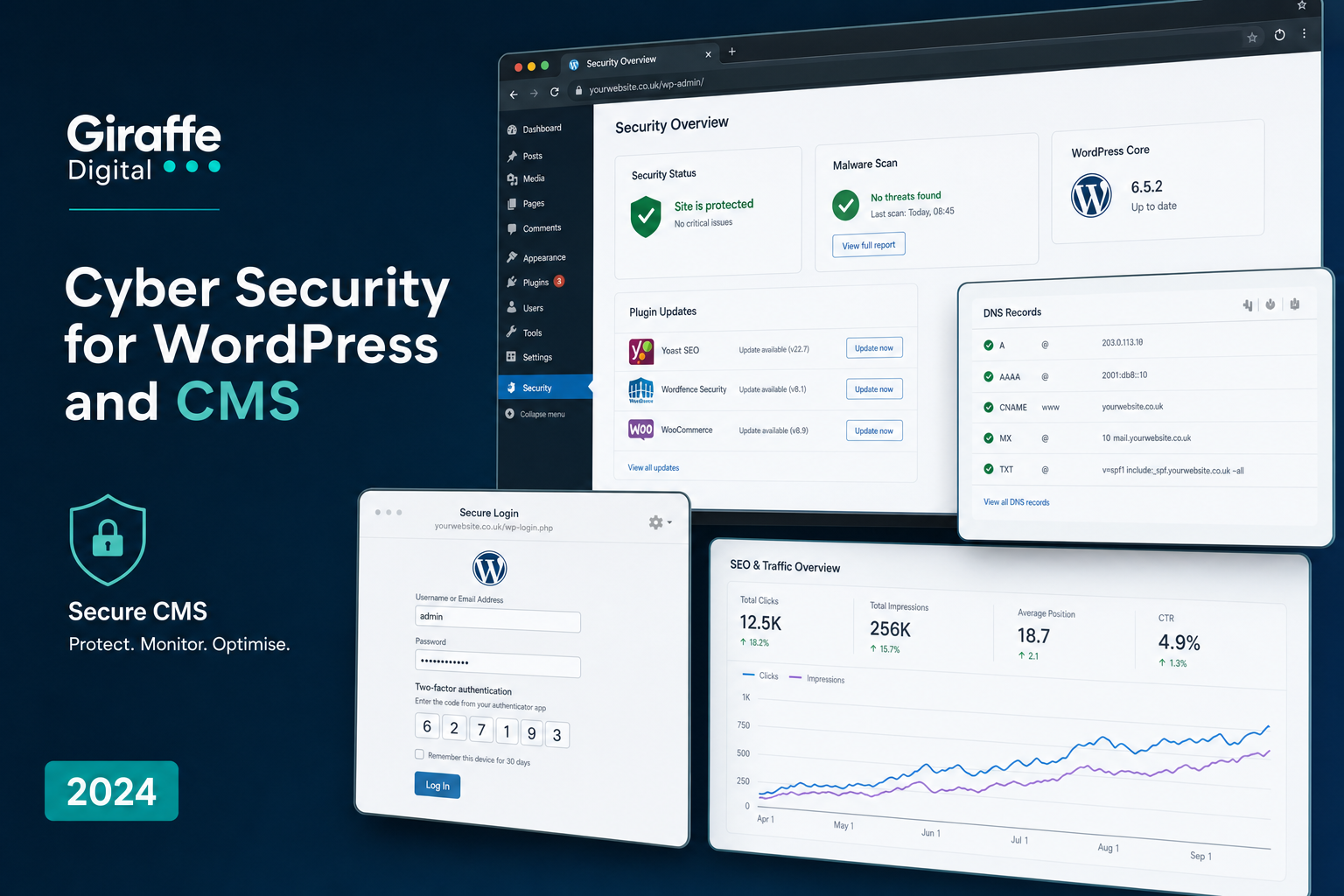
One of the most effective ways to improve website security is to keep all software up to date.
This includes:
- Content management systems such as WordPress.
- Themes and plugins.
- Server software.
- PHP versions.
- Databases.
- Third-party integrations.
Software updates frequently contain security patches that fix vulnerabilities discovered after previous releases. Delaying updates can leave websites exposed to attacks that could otherwise have been prevented.
Before applying major updates, it is good practice to test changes on a staging environment and ensure a recent backup is available.
Use Strong Passwords and Multi-Factor Authentication
Weak passwords remain one of the most common causes of compromised accounts.
Every administrator account should have a unique password that is long, complex and not reused on other websites or services.
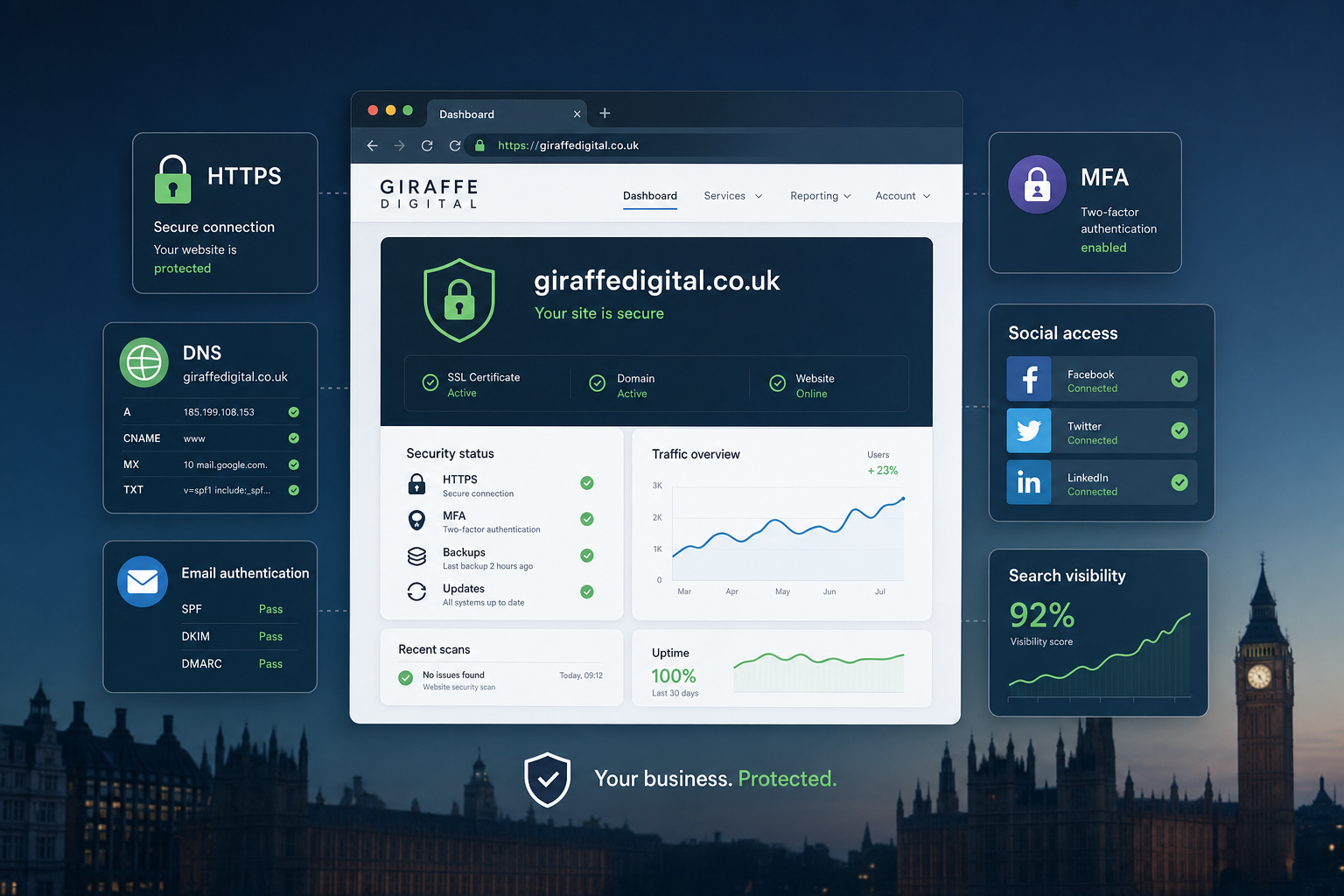
Where available, multi-factor authentication should also be enabled. This adds a layer of protection by requiring a second form of verification before granting access.
Even if a password is compromised, multi-factor authentication can prevent unauthorised access.
Protect Your Website with HTTPS
Every business website should use an SSL certificate to encrypt information exchanged between visitors and the server.
HTTPS helps protect login credentials, contact forms, and customer information from interception while also reassuring visitors that the website is secure.
Search engines also favour secure websites, making HTTPS beneficial for both security and visibility.
Regular Backups Can Save Your Business
No security system is perfect.
Hardware failures, accidental deletions, and cyberattacks can all result in data loss.
Regular backups allow you to restore your website if something goes wrong quickly.
A good backup strategy should include:
- Daily website backups.
- Database backups.
- Off-site storage.
- Multiple restore points.
- Regular testing of backup restoration.
Having backups is only useful if they can be restored successfully when needed.
Be Aware of Phishing Attacks
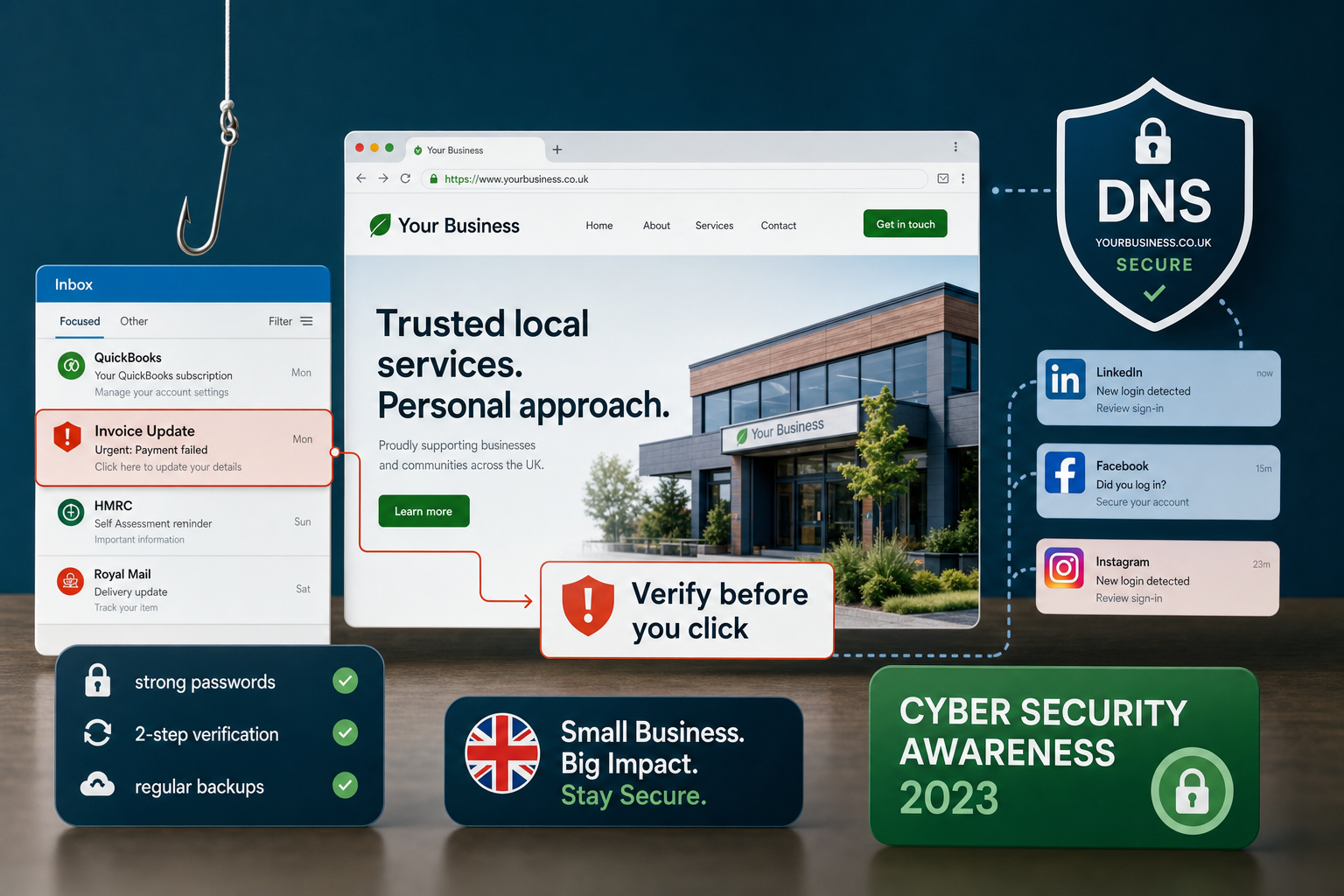
Many cyber attacks begin with a convincing email.
Criminals frequently impersonate banks, suppliers, colleagues or well-known companies in an attempt to trick recipients into revealing passwords or downloading malicious files.
Before opening attachments or clicking links, users should verify the sender and check for anything unusual.
If an email seems unexpected or requests urgent action, it is worth confirming its authenticity through another communication method.
Employee awareness remains one of the strongest defences against phishing.
Limit User Permissions
Not every user needs full administrative access.
Applying the principle of least privilege means granting each user only the permissions required for their role.
For example, someone writing website content may not require access to server settings or security configuration.
Reducing unnecessary permissions limits the potential impact if an account is compromised.
Monitor Your Website
Website monitoring helps identify unusual activity before it becomes a larger problem.
Monitoring can include:
- Login attempts.
- File changes.
- Malware scanning.
- Uptime monitoring.
- Performance monitoring.
- Security alerts.
Early detection often allows issues to be resolved before they affect customers.
Choose Reliable Hosting
Your hosting provider plays an important role in website security.
A reputable hosting company should provide features such as secure infrastructure, firewalls, malware protection, account isolation, regular server maintenance and reliable backups.
Businesses should also ensure that their hosting platform supports current software versions and receives ongoing security updates.
Choosing hosting based solely on the lowest price can sometimes result in fewer security features and slower response to emerging threats.
Train Your Team
Technology alone cannot prevent every cyber attack.
Employees should understand common security risks, including phishing emails, password security and safe handling of sensitive information.
Regular awareness training helps staff recognise suspicious activity and report concerns before problems escalate.
A well-informed team is one of the most valuable security measures any organisation can have.
Create a Cyber Security Plan
Every business should have a documented process for responding to security incidents.
This plan should identify who is responsible, how affected systems will be isolated, how customers will be informed if necessary and how services will be restored.
Preparing for an incident before it happens allows businesses to respond more quickly and reduce downtime.
How Giraffe Digital Can Help
At Giraffe Digital, we understand that website security is just as important as great design and reliable performance. We develop websites using modern technologies, follow recognised security best practices, and encourage regular software updates to help keep our clients' websites protected.
Whether you need a new website, ongoing maintenance or advice on improving your website's security, our team can help ensure your online presence remains reliable, secure and ready for future growth.
Cyber security is not a one-time task. It is an ongoing commitment that protects your website, your customers and your business. By keeping software updated, using strong authentication, maintaining regular backups, and choosing trusted technology partners, businesses can significantly reduce their exposure to cyber threats while giving visitors confidence that their information is in safe hands.