Home working has moved from an occasional convenience to a normal part of business life for many UK organisations. Whether your team is working from kitchen tables, spare rooms or shared family spaces, the change has created new cyber security risks that cannot be ignored. A business website, social media presence, email system and customer database are all valuable assets, and each one can be weakened if home working practices are not properly managed.
For business owners, home working cyber security is not just an IT concern. It affects reputation, lead generation, search visibility, customer trust and the day-to-day ability to trade online. A compromised email account can be used to mislead customers. A weak website password can give an attacker access to content, forms or customer enquiries. A poorly protected social media account can damage a brand in minutes. The good news is that many of the most useful protections are practical, affordable and easy to introduce with clear guidance.
Why home working has increased cyber security risk
When staff work in an office, businesses usually have more control over networks, devices and working routines. Home working changes that balance. Employees may be using domestic broadband, shared devices, personal email habits and a mixture of approved and unapproved applications. Even diligent team members can make mistakes when they are adapting quickly.
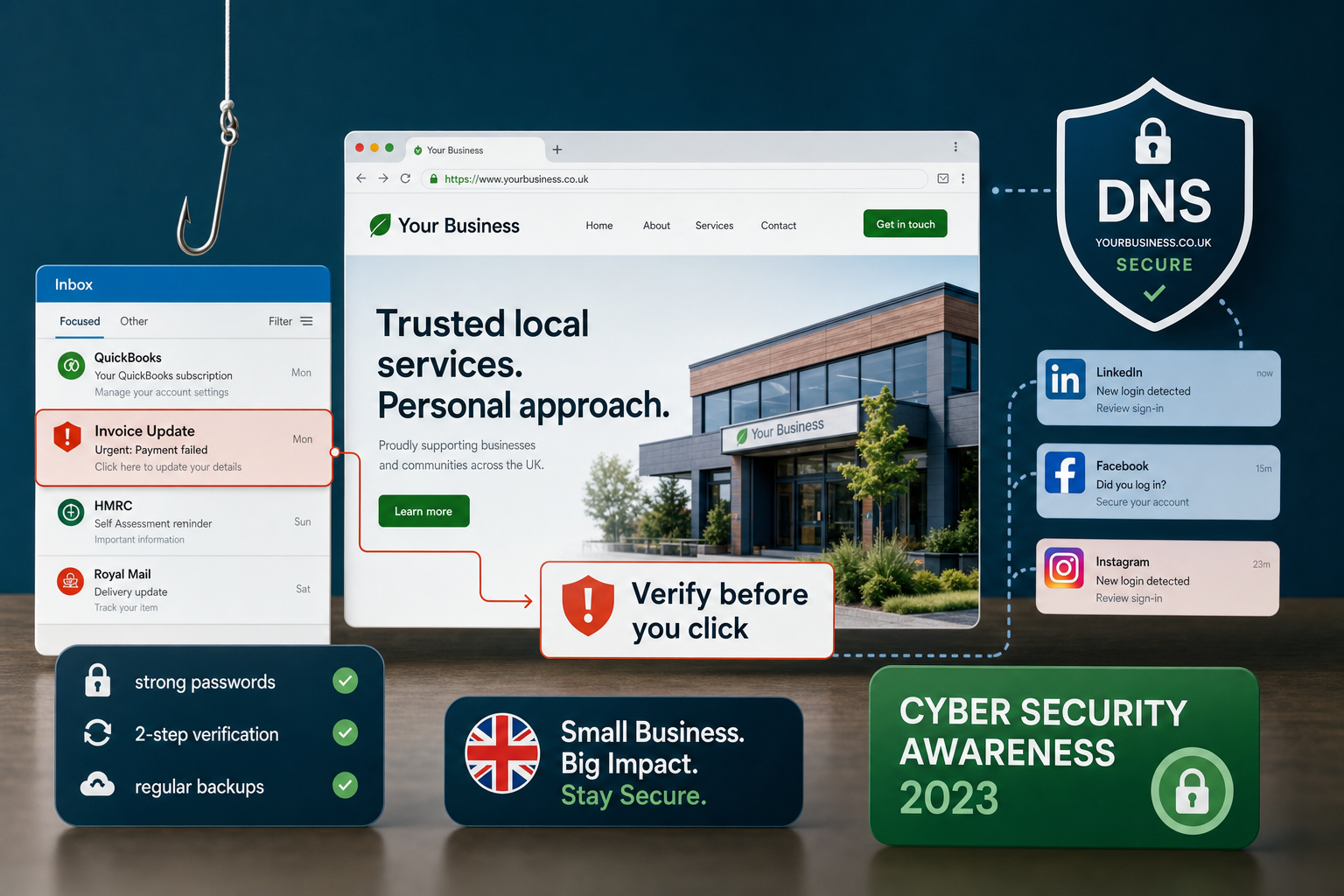
Attackers know this. As many organisations moved to remote working at speed, phishing emails, fake login pages, fraudulent invoices and scam messages have become more tempting. A member of staff who is under pressure may click a link that appears to come from a supplier, courier, bank, online meeting tool or internal colleague. If that link captures their password, the attacker may gain access to email, website administration areas, cloud storage, advertising accounts or social media profiles.
For small and medium-sized businesses, the consequences can be serious. Losing access to a website or domain can interrupt sales and enquiries. Losing control of a social media page can undermine months of brand building. Data loss can also create legal and reputational issues, particularly where customer information is involved. Cyber security is therefore directly linked to business continuity and digital marketing performance.
Start with a clear home working policy
A home working policy does not need to be overly complicated, but it should be specific. Staff need to know which devices they may use, how to store documents, how to report suspicious emails and who to contact when something goes wrong. A written policy also helps managers apply the same standard across the team, rather than relying on informal conversations.
A useful policy should cover approved software, password rules, device updates, data storage, video meetings, file sharing and the use of public or shared Wi-Fi. It should also explain what staff should not do, such as forwarding work documents to personal email accounts, reusing passwords across business tools, saving customer data on unprotected personal devices or installing unknown browser extensions.
It is worth making the policy practical and human. If guidance is too technical, it may be ignored. Use examples that relate to daily work, such as checking a sender’s email address before opening an invoice, confirming payment changes by phone, and avoiding public posting of screenshots that reveal customer details or internal systems.
Protect logins with strong passwords and two-step verification
Weak and reused passwords remain one of the most common causes of account compromise. Home working increases the risk because employees are accessing more business systems from outside the office. Every important account should have a strong, unique password. This includes email, website administration, domain management, analytics, advertising platforms, social media accounts, file storage and online meeting services.
A password manager can help staff create and store stronger passwords without needing to remember them all. Where available, two-step verification should also be switched on. This adds an extra layer of protection by requiring a second code or approval as well as the password. It is particularly important for email accounts, because email is often the route to resetting passwords for other services.
Business owners should also review who has access to key accounts. Former employees, freelancers and old suppliers may still have permissions that are no longer needed. Remove unnecessary access and use individual accounts wherever possible, rather than sharing one login across several people. This makes it easier to manage risk and understand what has happened if an issue occurs.
Keep devices, routers and software updated
Software updates are not just about new features. They often fix known security weaknesses. Laptops, desktops, tablets and smartphones used for business should be kept up to date, with automatic updates enabled where appropriate. Web browsers, email applications, office software, video meeting tools and security software should also be maintained.
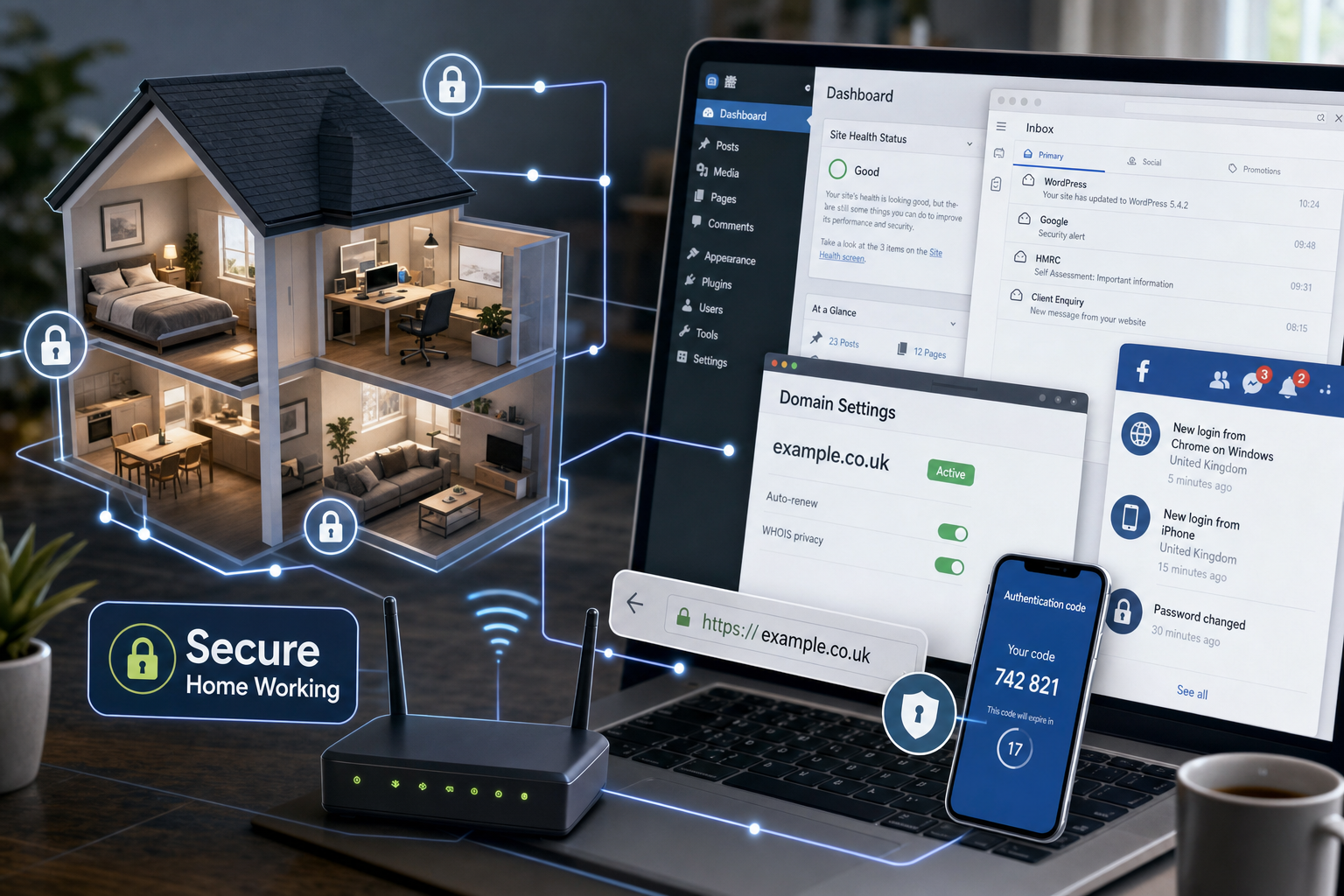
Home routers deserve attention too. Many domestic routers use default settings or old firmware. Staff should be encouraged to change default administrator passwords, use strong Wi-Fi passwords and avoid giving guests access to the same network used for work. Where possible, a separate guest network can help keep work devices away from other household devices.
If staff are using company equipment, make sure it is configured before it leaves the office. If they are using personal devices for work, set minimum expectations. For example, devices should have a supported operating system, a screen lock, anti-malware protection and a clear process for reporting loss or theft.
Secure business websites and online forms
Your website is often the centre of your digital marketing activity. It supports search engine visibility, social media campaigns, email marketing, paid advertising and customer enquiries. If home working arrangements lead to weaker website administration, the risk to your marketing performance increases.
Website administration accounts should be limited to people who genuinely need access. Each user should have the lowest level of permission required for their role. A person who only writes blog posts does not usually need full administrator privileges. Removing unnecessary permissions reduces the damage that can be caused if a password is stolen.
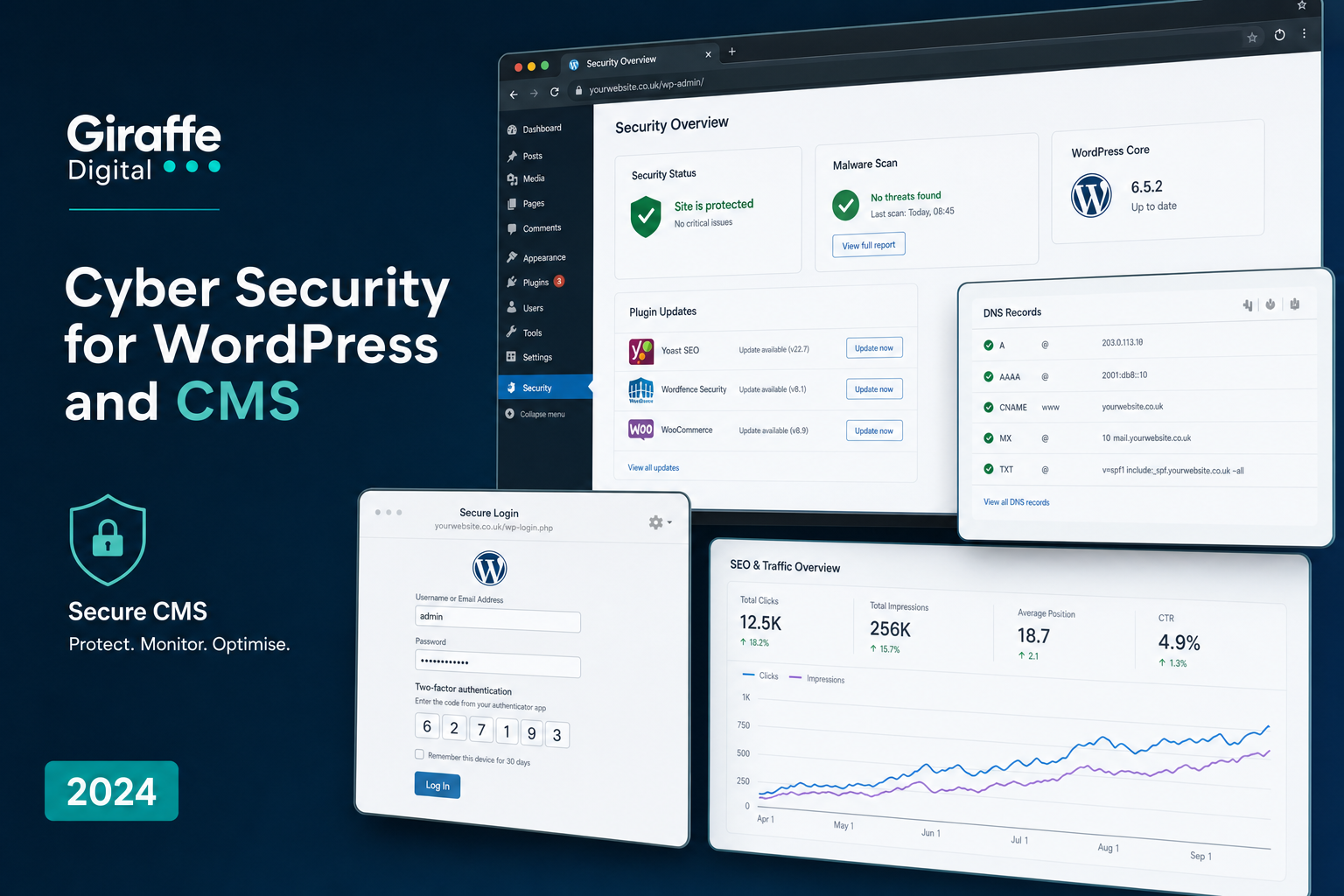
It is also important to keep your website platform, themes, plugins and contact form tools updated. Outdated website components can provide opportunities for attackers. Regular backups should be taken and stored safely, so the site can be restored if something goes wrong. For any website that collects enquiries, takes payments or stores customer information, secure handling of data is essential.
Make sure your website uses HTTPS, with a valid security certificate. Visitors increasingly expect the padlock symbol in the browser, and search engines have treated secure connections as a positive signal for some time. Beyond SEO, HTTPS helps protect information sent between the visitor and your website, such as contact form details.
Protect email, enquiries and customer communication
Email is one of the most valuable tools in a business, but it is also one of the most targeted. During home working, employees may be dealing with more email than usual, including messages about deliveries, invoices, remote access, online meetings and internal updates. This creates opportunities for phishing and impersonation.
Train staff to pause before acting on urgent requests. A fraudulent email may ask for a password reset, a payment change, a gift card purchase or an immediate transfer. If a request relates to money, sensitive data or account access, confirm it through a separate trusted channel. Do not rely on replying to the same email thread if something feels suspicious.
It is also wise to review the wording of customer-facing forms and automated email responses. Clear communication can reduce confusion and help customers recognise legitimate messages from your business. If your team is working remotely and response times have changed, say so plainly on your contact page rather than leaving customers uncertain.
Manage social media access carefully
Social media accounts are often shared across marketing teams, directors and external partners. That convenience can become a risk when people are working from different locations. A compromised social account can publish harmful posts, send scam messages to followers or remove legitimate administrators.
Review who can access each account on Facebook, Instagram, LinkedIn, Twitter and any other platforms your business uses. Remove people who no longer need access. Use role-based permissions where available, so that a person responsible for posting does not necessarily have full control of billing, page ownership or account settings.
Two-step verification should be enabled for social media accounts wherever possible. Staff should also be careful with direct messages containing links, especially if they appear to come from a customer, supplier or colleague. Attackers often use familiar names and brand imagery to encourage clicks.
From a digital marketing perspective, social media security protects more than login details. It protects brand trust. Your audience expects your posts, replies and messages to be authentic. If a page is compromised, the reputational effect can last longer than the technical clean-up.
Think carefully about domains and online ownership
Your domain name is a core business asset. It supports your website, email addresses, search visibility and brand recognition. If control of a domain is lost, a business may struggle to keep its website and email running. For organisations relying on online enquiries, that can be extremely disruptive.
Business owners should know who controls each domain name and which email address is used for important renewal and security notifications. Domain access should not depend on a single employee’s personal inbox. Use a business-controlled email address, keep contact details current and make sure renewal reminders are not overlooked.
When registering or renewing domain names, choose names that are clear, brand appropriate and easy for customers to type. Avoid confusing spellings where possible, and consider protecting important variations if they are likely to be mistaken for your main domain. Keep a record of registration dates, renewal dates and login responsibilities. Do not share domain account passwords casually, and remove access when it is no longer required.
Domain security also matters for email trust. If customers are used to hearing from your business at a particular domain, sudden changes or lookalike email addresses can create confusion. Consistent domain use, clear branding and well-managed email settings all help reinforce trust.
Support SEO and digital marketing through security
Cyber security and search marketing are closely connected. A secure, reliable website is easier for customers to trust and easier for marketing activity to support. If a website is hacked, search engines may display warnings, pages may be altered, spam content may be added, and rankings can suffer. Even short periods of downtime can reduce enquiries during important campaigns.
Good security also supports conversion. A visitor who arrives from organic search, paid advertising or a social post needs confidence before submitting a form or making contact. Clear contact details, HTTPS, professional design, consistent branding and transparent privacy information all help reassure potential customers.
For local businesses, keep directory listings and map profiles accurate while teams are working remotely. If opening hours, service availability or appointment processes have changed, update them. Consistent information across your website and online profiles helps customers make decisions and reduces unnecessary phone calls or messages.
Content marketing can also play a useful role. If your customers are facing changed circumstances, publish helpful updates, FAQs or service pages. Make sure those updates are accurate, secure to manage and aligned with search intent. A rushed blog post uploaded through a poorly protected account can create avoidable risk, so marketing speed should not come at the expense of sensible controls.
Make staff awareness part of everyday work
Technology is important, but people are central to home working cyber security. Staff should feel comfortable reporting mistakes quickly. If someone clicks a suspicious link or enters details into a questionable page, the worst outcome is often delayed reporting. A blame culture can make employees hide problems until they are harder to fix.
Keep training short, regular and relevant. A monthly reminder about phishing, password reuse or safe file sharing can be more effective than a long document that is rarely read. Share examples of scams that staff are likely to see, such as fake delivery notices, invoice changes, tax-related messages or online meeting invitations.
Managers should also lead by example. If directors use weak passwords, bypass approved systems or request sensitive information through informal channels, staff will follow the same behaviour. Secure working should be presented as a normal part of professional service, not an obstacle to getting work done.
Create a practical incident response plan
Even well-prepared businesses can experience cyber incidents. The aim is to reduce the likelihood and limit the damage. A simple incident response plan should explain what to do if an account is compromised, a device is lost, a suspicious email is received, a website is altered or customer data may have been exposed.
The plan should include named contacts, emergency login recovery steps, backup locations, supplier details and communication guidance. If your website is central to lead generation, include a process for taking it offline safely, restoring from backup and updating customers where necessary. If social media is compromised, know who can contact the platform and who will prepare a public response.
It is also worth keeping a secure inventory of key digital assets. This might include domains, websites, hosting details, email systems, social media profiles, advertising accounts, analytics accounts and design files. When information is scattered across individual inboxes, recovery becomes slower and more stressful.
Home working security is part of good digital strategy
For UK businesses, home working is likely to remain part of operations for some time, whether full-time or blended with office work. Treating security as part of digital strategy helps protect the value of your website, brand, content and customer relationships. It also supports better decision-making when choosing platforms, designing websites and planning campaigns.
If you are redesigning a website, reviewing SEO performance or refreshing your brand, include security in the discussion from the start. Ask who will update the site, who will approve content, how forms will be protected, where data will be stored and how access will be removed when people change roles. These questions are easier to answer during planning than during an emergency.
Home working cyber security does not have to be overwhelming. Start with the essentials: strong passwords, two-step verification, updated devices, limited access, secure websites, careful domain management and clear staff guidance. Each improvement reduces risk and strengthens the foundations of your online presence.
Practical takeaway: your website, domain, email and social media accounts should be treated as business-critical assets. Protecting them is not only about avoiding cyber attacks; it is about preserving customer confidence, maintaining search visibility and keeping enquiries flowing.
Giraffe Digital helps businesses think strategically about their online presence, from website design and SEO to digital marketing and brand consistency. In a period where more work is happening away from the office, secure digital foundations are essential. The businesses that combine strong marketing with sensible cyber security will be better placed to serve customers confidently, wherever their teams are working.