
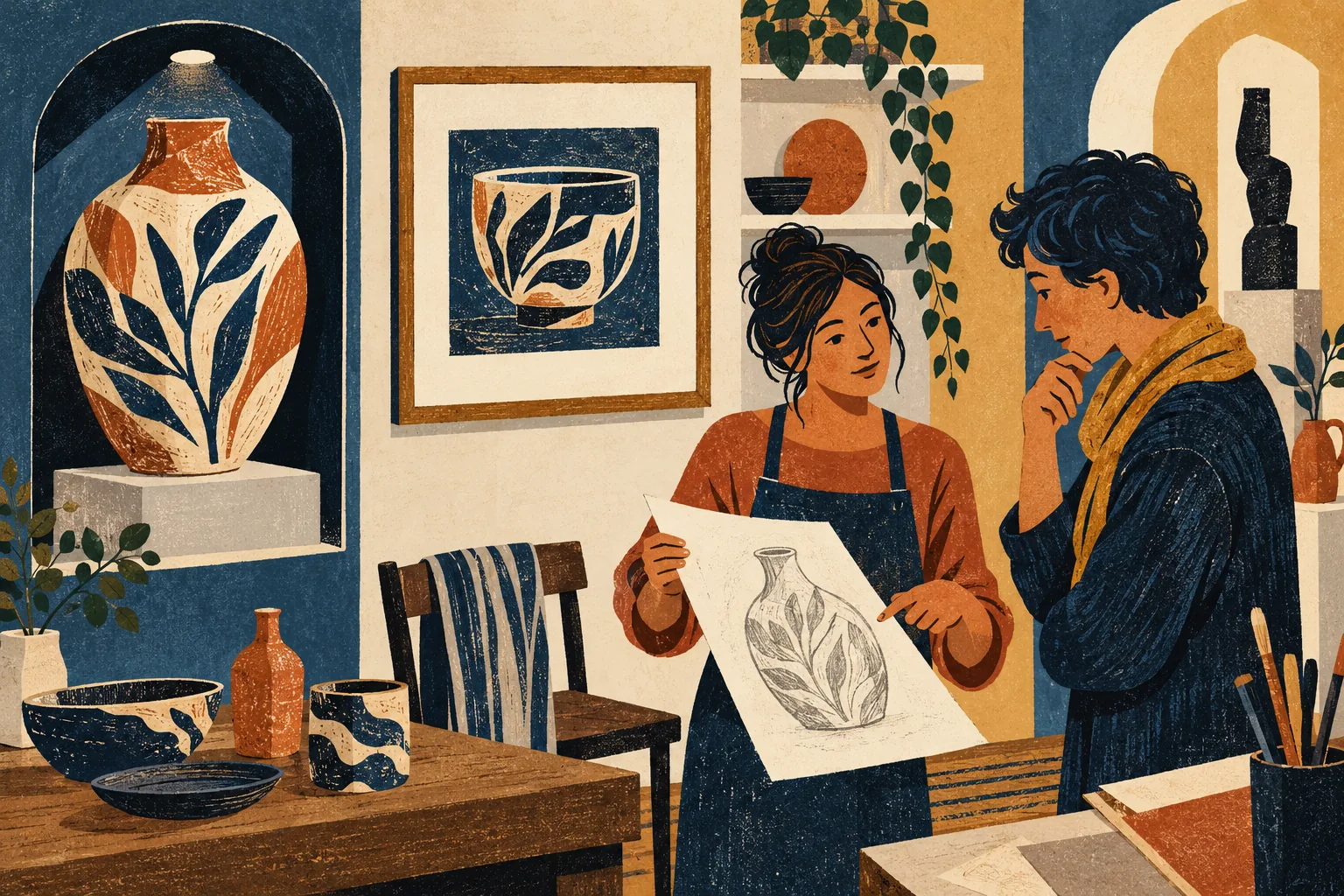
A photograph can attract interest in a maker's work while leaving the reader unsure what to do next. Is this piece available? Is it an example of an earlier project? Can someone discuss a different size or an original commission? A useful website answers that first question before asking the visitor to complete a form. The aim is a relevant conversation that respects what the artist or maker actually offers.
Belper, Wirksworth and Matlock provide a useful local setting for that exercise. They have different creative organisations, but a business presenting original work in any of them can use the same decision: give each work a clear purpose and make the next enquiry match it. This guide offers a practical brief you can use with your own approved descriptions and photographs.
Start with the local creative context
In Belper, Love Belper's introduction to The Cabin of Makers describes a collective that presents and sells members' work and shares creative practices. For a maker's own website, the practical lesson is to distinguish the finished piece from an explanation of how it was made. A process photograph can build understanding without becoming an implied offer to buy every object shown.
In Wirksworth, Haarlem's own introduction explains the relationship between its makers' shop, studios and gallery. That provides a useful reminder to name the role of a presentation. A portfolio, an exhibition record and a current product offer can be connected, but the visitor needs to understand which one they are reading.
Matlock Artists Society describes both learning activities and an exhibition of members' work. For an independent creative business in Matlock, an image used to discuss a technique may need a different next step from a piece offered commercially.
Give each work one accurate starting description
Choose three images from your website. For each, write down what the reader is looking at before considering a redesign. Use an actual title or reference, a short approved description and the reason it appears. Do not begin with an attractive general label such as "our creations" if the three images lead to different kinds of conversation.
- An available piece: explain the particular work and give current availability the meaning your business has confirmed.
- A portfolio example: identify the previous work and explain its role as an example, without implying that the same piece can be purchased.
- A commission introduction: describe the type of work you are prepared to discuss, with a route for an initial request.
These are starting descriptions, not a promise that every piece fits a fixed category forever. If an available work becomes a portfolio example, the editor needs to update the explanation and its contact link together. Give someone responsibility for checking that relationship. A visible image can remain useful even when its commercial status changes.
Build a commission enquiry card
A general message box can leave a prospective customer unsure how much detail to provide. A short enquiry card gives them a useful starting brief. Ask for the reference that prompted their interest, the intended use of the work, the size or format they have in mind and any timing requirement they want to discuss. Request enough context for a first response, rather than a complete specification before the maker has spoken to them.
Keep the invitation within your actual practice. If the business discusses commissions only for particular materials or kinds of work, explain that scope alongside the card. If timing or a proposed variation needs review, say that plainly. Submitting an enquiry should not appear to confirm that the work has been accepted, that a piece is reserved or that the requested date is agreed.
Illustrative example: a fictional ceramic maker shows a photograph of a previous vessel. The accompanying description identifies it as earlier work. A separate invitation allows the reader to discuss a commission within the maker's stated practice. The enquiry asks which example prompted the request and what the proposed piece is intended for. It does not present the old vessel as current stock or promise an exact reproduction.
Help pictures retain their meaning beyond the gallery
An image may appear on an introductory page as well as in the work's fuller description. Check whether the shorter presentation retains enough context to avoid a different interpretation. A caption or nearby sentence can identify a portfolio example before the reader follows the link. Use photographs you are authorised to publish and describe what is actually shown.
Google's image guidance recommends useful descriptive text and warns against filling alternative text with keywords. For this exercise, write an accurate description of the image rather than a list of towns and services. Keep commercial status in the appropriate visible work information, where customers can understand and act on it.
Turn the exercise into a useful digital brief
For a maker considering website design in Belper, the three work descriptions and the enquiry card provide concrete material for discussing navigation. They show how a visitor should move from a picture to a relevant question. The design brief can assess that journey rather than asking only for a more impressive gallery.
For a creative business reviewing SEO in Wirksworth, the exercise exposes questions that substantive work descriptions should answer. Research the actual practice and customer need before choosing search wording. If the offer itself remains difficult to explain, branding in Wirksworth can explore the proposition behind the collection of images.
For a maker planning digital strategy in Matlock, decide which conversation to improve first: a question about an available piece, understanding of previous work or a commission brief. Assign responsibility for the relevant description and first response. The Derbyshire service directory and East Midlands overview connect with related support where a wider project needs consideration.
Test whether a reader can make the right request
Ask someone unfamiliar with the business to open the three work introductions on a phone. Without coaching, ask them what each image represents and what they would do if interested. Then ask them to begin a draft enquiry about one example. Review whether they can identify the work, understand the invitation and reach the appropriate contact route.
Record the misunderstanding in the reader's own words. If they assume a previous piece is available, repair its description and the related link. If they cannot tell whether commissions are discussed, refine the invitation before adding more promotional activity. This small test gives the next website decision a specific purpose: helping someone understand the work and begin a conversation the business can answer.
Frequently asked questions
Practical answers to questions about putting this advice into use.
How should a maker distinguish a portfolio example from an item for sale?
Give each piece an accurate description of its current role, such as an available item, a completed project or an example of previous work. Explain when a similar piece would require a separate commission enquiry.
What should a commission enquiry ask a prospective customer for?
Ask for information that helps you discuss the work, such as the intended use, a relevant work reference and the customer’s initial requirements. Keep the enquiry distinct from an agreed commission, price or delivery commitment.