
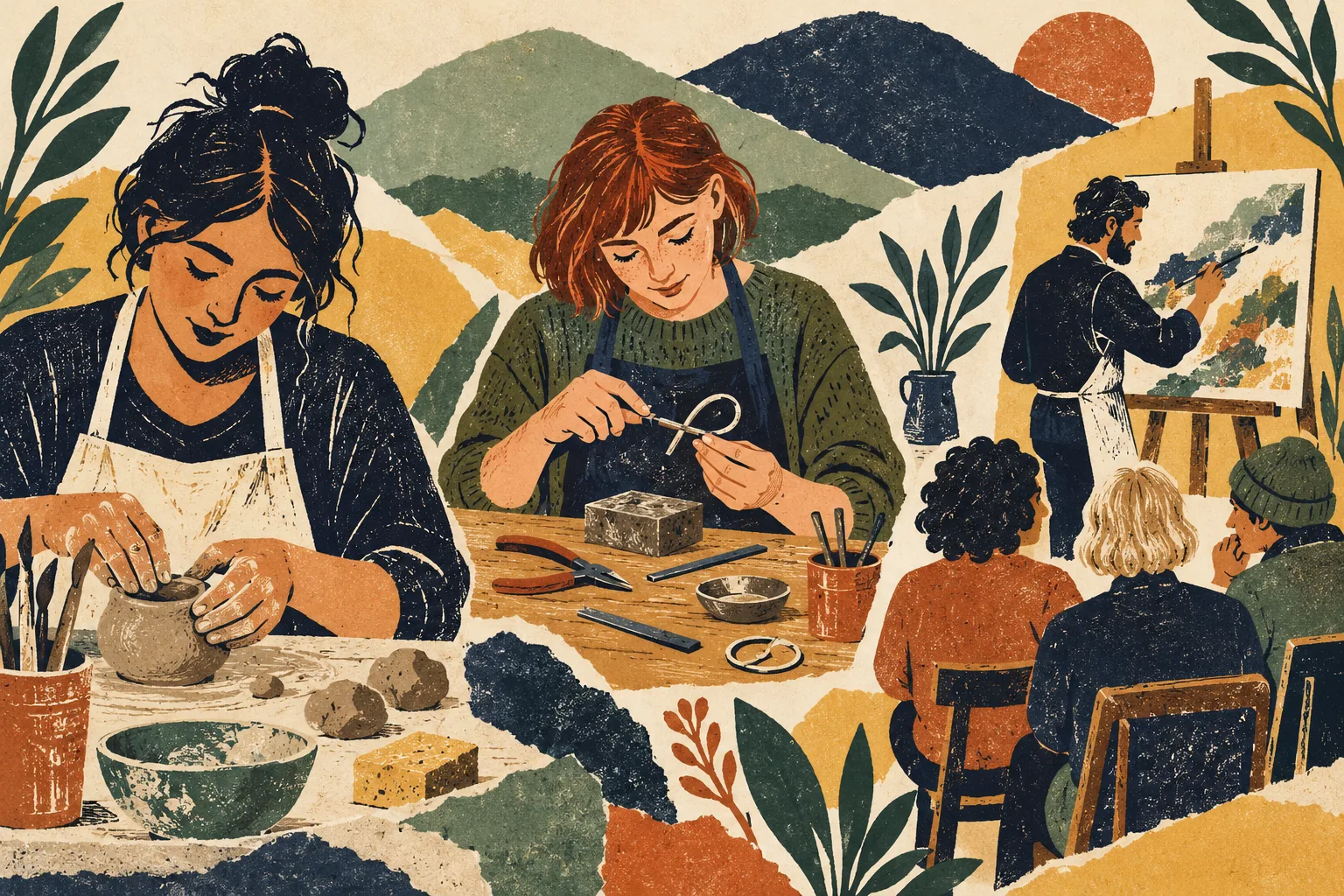
A beautiful photograph of finished work can inspire someone to join a creative class. It cannot tell them whether they will be making something themselves, working on their own project or committing to a taught course. Workshop websites need to explain that difference before asking for a booking. The most useful starting point is the participant's decision: what will I do, and is this the right experience for me?
Ripley and Alfreton provide useful contexts for that question. This guide helps independent makers, studios and arts organisations prepare workshop content that describes participation clearly. It includes a practical listing structure and a fictional test brief you can adapt. The local examples illustrate different ways of presenting creative activity; they are independent organisations with their own current programmes.
Separate browsing finished work from making your own
This craft studio and gift shop in Ripley presents creative workshops alongside an artisan gift shop and its own home fragrance range. For a business with a similarly varied offer, the visitor's intention matters more than placing every product and session in one shop grid. Someone choosing a candle needs product information; someone hoping to make something needs to understand the activity and participation.
Use photographs that help answer those different questions. A finished piece can show the kind of work involved, while an approved image of the making process can explain the activity. Caption examples accurately: identify a tutor's work, a participant's work or an illustrative result. Avoid presenting an elaborate professional piece as the guaranteed outcome of an introductory session.
For website design in Ripley, bring a real product description and a real workshop description to the design discussion. Ask the designer to show how a visitor recognises each type of offer. The information should remain clear in search results, on a phone and when a workshop link is shared without the surrounding homepage.
Explain the commitment, not just the technique
The Potter's Nook in Ripley describes hand-building and throwing classes, distinguishes experiences and courses, and mentions wheel booking for experienced visitors. Those distinctions raise different website questions. An introductory visitor needs to understand how a session starts; a returning potter may be looking for a suitable opportunity to practise existing skills.
Write a plain description of your own format. A single session might introduce a technique or a small project. A course may develop skills through several meetings. A supervised practice session may require previous experience. These formats should have distinct names and explanations rather than share an ambiguous 'creative workshop' label.
- Participation: what the person will practise, observe or discuss.
- Starting point: the experience or preparation actually required.
- Commitment: a single session, a defined series or another confirmed arrangement.
- Materials: what is included, what participants bring and any separate choices.
- Outcome: the skills explored and whether an object is completed, collected later or still in progress.
- Booking: how to choose a session and where to ask a question before committing.
Only include arrangements your team has confirmed. If an object needs finishing after the session, explain what happens next. If participants make different pieces, describe that flexibility without promising that every idea will be achievable. The aim is an informed choice, rather than a long list of impressive techniques.
A useful brief for SEO in Ripley starts with these genuine distinctions. Give each substantial offer an accurate title and readable explanation. Connect related beginner and course options where that helps someone compare them. Creating several pages that repeat the same description with slightly different search phrases adds little to the decision.
Give a bring-your-own project group its own explanation
Derbyshire County Council's library events information describes Alfreton Library's Craft and Chat as a drop-in activity where adults bring their craft projects. That is a different proposition from booking a tutor-led session with a defined technique. The useful explanation starts with what someone brings and how they join, rather than suggesting that every craft gathering is a taught class.
For your own group, decide whether the organiser provides instruction, facilitates shared practice or simply hosts people working on individual projects. Explain that role accurately. Confirm what participants bring, what the group supplies and where to ask about an unfamiliar activity. Someone choosing a first craft session should not arrive expecting tuition that the organiser never offered.
A clear identity for recurring activities also helps. Branding in Alfreton can support consistent names and descriptions across a programme, social post and website listing. Keep a recognisable group name, but accompany it with plain information about participation. Readers should understand the format without decoding an imaginative slogan or relying on colour alone.
Test a fictional listing before building the calendar
Imagine an independent studio preparing an introductory printmaking session. This is a fictional exercise, not an offer from any of the organisations mentioned. The proposed activity involves learning one technique and making sample prints. The studio has not yet decided whether a follow-on course will be offered.
Prepare a draft listing with the participation details above. Ask someone unfamiliar with the project to explain what they think they are booking. Then give them three questions: must they have tried printmaking before, do they need to attend several sessions, and will they leave with a finished edition or experimental samples? Compare their answers with the tutor's intended experience.
If the answers differ, revise the explanation before adding more filters or booking fields. For example, 'explore a technique through sample prints' communicates a different expectation from 'create your own print collection'. Clear wording gives the booking design something dependable to work with. It also makes questions to the tutor more specific.
Keep the activity and its dates connected
The underlying description explains the experience; individual dates explain when it is offered. Keep them connected, so a shared link retains the right context. When a date has passed, show that state clearly and offer a relevant current route if one exists. An old session should not appear bookable because its promotional image remains on the website.
Agree who confirms the description, dates and booking availability. Where a separate system takes bookings, check that the selected session and participation option carry through correctly. A completed purchase should refer to the option the person actually chose. Test the relationship using a controlled preview or test booking process before sending visitors into it.
A focused digital strategy in Alfreton can start with that content and booking relationship. Gather the workshop descriptions, the fictional listing test and the questions people still ask. Those materials help decide whether the next improvement is clearer copy, a better programme layout or a change to booking administration.
Our East Midlands services connect wider website, SEO, branding and digital planning support. For a workshop project, the first useful deliverable is a listing that helps someone understand the activity and choose confidently. One well-researched guide can support that work across related towns without repeating the same advice on separate pages.
Frequently asked questions
Practical answers to questions about putting this advice into use.
What should a creative workshop listing explain before someone books?
Explain the activity, the expected level of experience, what participants need to bring and the commitment involved. Keep the workshop description connected to its confirmed dates and booking information.
How should a website distinguish a taught class from a project group?
Describe the format and the support participants can expect. A taught session, pottery practice and a bring-your-own project group may involve different materials, preparation and levels of guidance, so each needs an accurate explanation.