Uncertain trading conditions have become a daily reality for many UK businesses. Changing restrictions, shifts in customer confidence, disrupted routines and pressure on cash flow all make planning more difficult. Yet this is exactly when a clear digital presence matters most. When people are unsure whether a shop is open, whether a service is available, or whether delivery and appointments are still running, they turn to search engines, websites and social media for quick answers. Digital Marketing During Uncertain Trading Conditions is not about chasing every new trend; it is about making your business easier to find, easier to understand and easier to contact when customers need reassurance.
For business owners, the most valuable digital activity in November 2020 is practical, measurable and focused. A well-designed website, accurate local information, useful search content, consistent social updates and secure domain management can all help protect demand and support customers through a difficult period. The aim is not to spend for the sake of visibility, but to build a stronger online base that can adapt as circumstances change.
Why digital marketing matters more when conditions are uncertain
During stable periods, customers may follow familiar routines. They may visit the same high street, contact the same supplier, or rely on recommendations from friends. In uncertain periods, those routines change. A customer who would normally walk into a showroom may now compare options online first. A client who used to book by phone may look for a form, email address or live availability. A local buyer may search for delivery, collection, opening hours or updated safety information before making a decision.
This shift creates both risk and opportunity. If your website is out of date, slow, unclear or difficult to use on a mobile phone, potential customers may assume the business is not operating confidently. If your social channels have not been updated for months, people may not know whether you are open. If your local search listing shows incorrect opening hours, you may lose enquiries at the moment they are ready to act.
On the other hand, businesses that communicate clearly can stand out. Simple updates such as revised opening times, service changes, appointment procedures, delivery information and frequently asked questions can reduce hesitation. Helpful content can also reassure customers that your team understands their needs and remains available. Good digital marketing is not just promotion; it is customer service, sales support and reputation management working together.
Start with a clear, reliable website
Your website is often the first place people go when they are deciding whether to trust your business. In uncertain conditions, it needs to answer practical questions quickly. Visitors should be able to understand what you offer, where you operate, how to buy or enquire, and what has changed because of current trading conditions.
Begin by reviewing the homepage. Does it make your core service clear within a few seconds? Does it explain whether you are open, taking bookings, delivering, offering remote consultations or operating by appointment? If important information is hidden in a news post or buried on a contact page, many visitors will miss it. A short, prominent update can make a significant difference.
Navigation should also be simple. Avoid making users hunt through vague menu labels. Pages such as Services, About, Contact, Delivery, Bookings, FAQs and Support should be easy to identify. If you sell products online, make sure categories are logical and product information is complete. If you generate enquiries, forms should be short, reliable and supported by clear calls to action.
Mobile experience is particularly important. Many customers search while travelling, during breaks, or while comparing options quickly at home. A mobile-friendly site should load promptly, display text at a readable size and allow users to tap buttons without frustration. Images should be optimised, and pages should not be weighed down by unnecessary scripts or oversized files.
Security and trust signals matter too. A secure connection, clear contact details, privacy information, terms where appropriate, and visible evidence of real trading activity all help reassure visitors. If your website has not been updated for some time, a design review may reveal relatively small improvements that can make the whole business appear more professional and dependable.
Use SEO to answer real customer questions
Search engine optimisation should be guided by customer intent. During periods of uncertainty, the most useful SEO work often involves understanding what people are trying to find right now. They may be asking whether a service can be delivered remotely, whether a product is in stock, whether a local business is open, or how a process works under current restrictions.
Review your key pages and ensure they use plain, relevant language. A service page should not only list what you do; it should explain who the service is for, what problems it solves, how the process works and how to take the next step. For local businesses, place names and service areas should be included naturally where relevant. This helps search engines and users understand the geographical context of your offer.
Frequently asked questions can be valuable because they reflect real concerns. For example, a retailer might explain collection options, delivery areas and returns. A professional services firm might explain remote consultations, document sharing and appointment times. A trades business might explain safety procedures, quoting processes and emergency availability. These details help customers make decisions and can support long-tail search visibility.
It is also worth checking the basics. Page titles and descriptions should be unique and descriptive. Broken links should be fixed. Old offers, outdated dates and unavailable services should be removed or updated. Search engines favour websites that are useful and technically accessible, but customers also make quick judgements. Accuracy is part of credibility.
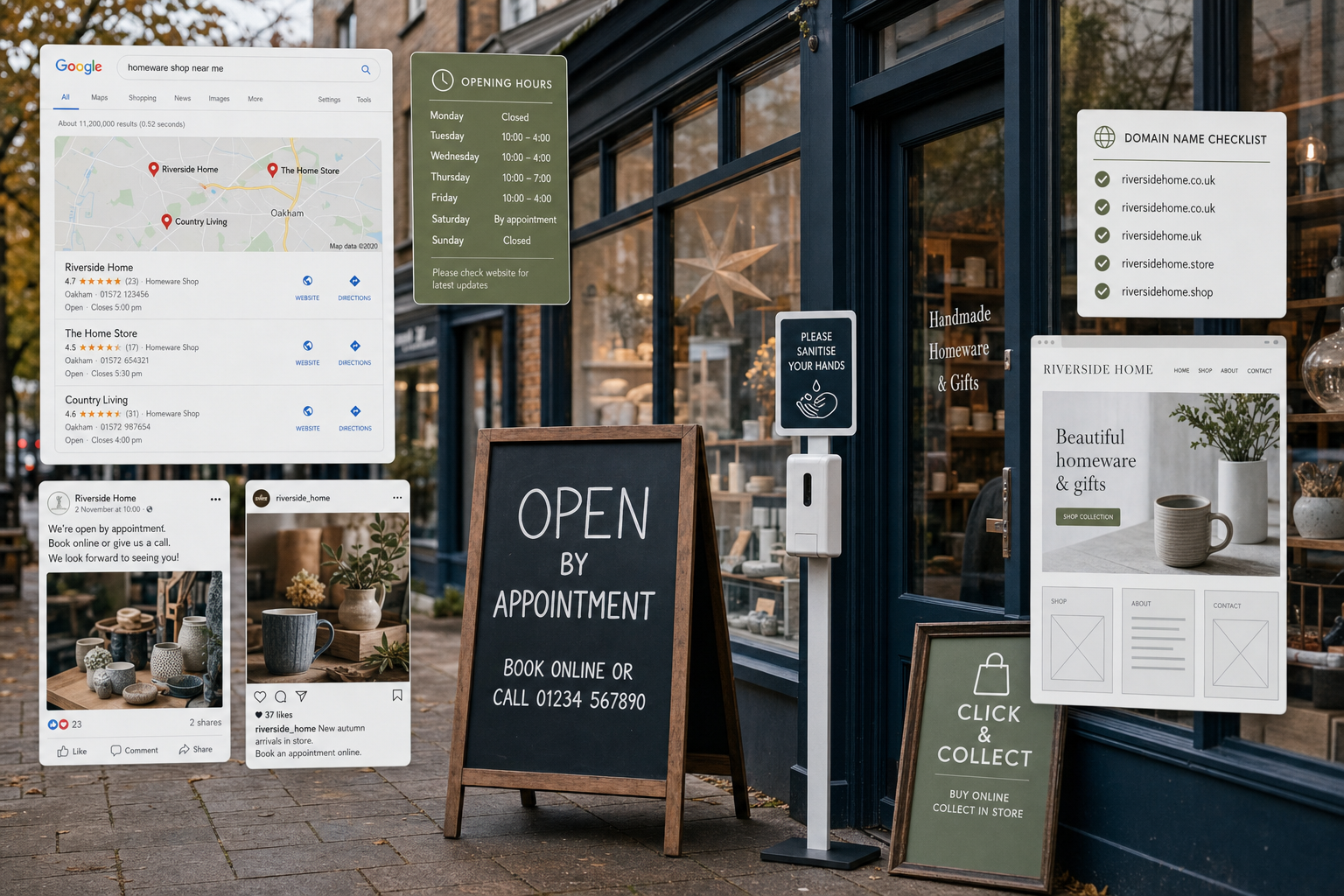
Local search deserves attention. Your local business profile should show correct opening hours, contact details, categories, website address and service information. If hours change temporarily, update them promptly. Encourage genuine reviews from customers where appropriate, and respond professionally. In a period when people are cautious, recent reviews and current information can influence whether they make contact.
Keep social media useful, not just active
Social media marketing can help businesses stay visible when customers are spending more time online, but activity should have a purpose. Posting frequently without a clear message can create noise rather than value. Instead, use social channels to answer questions, maintain confidence and guide people towards the right next step.
Different platforms suit different audiences. Facebook remains useful for many local businesses, community updates and customer service messages. Instagram can help with visual products, hospitality, lifestyle brands and behind-the-scenes content. LinkedIn is valuable for business-to-business communication, professional services and recruitment messages. Twitter can be effective for quick updates, industry conversation and support. The best platform is the one your customers actually use and where your business can communicate consistently.
Useful content might include opening updates, product availability, delivery reminders, staff introductions, customer guidance, seasonal advice, project photographs, short explanations and answers to common questions. If you are changing how appointments, orders or collections work, social media can help spread the message quickly. However, important information should also be on your website, because social posts can be missed and are not always easy to find later.
Paid social advertising can be helpful when targeted carefully. For example, a local retailer might promote click-and-collect availability within a defined area. A service provider might promote a consultation offer to people with relevant interests or job roles. The key is to match the message to the audience and to send users to a landing page that continues the same conversation. Advertising should not compensate for a confusing website; it should amplify a clear offer.
Protect your brand with sensible domain registration
Domain registration is sometimes treated as a one-off technical task, but it is an important part of brand protection. Your domain name is tied to your website, email, search visibility and customer trust. If it expires, is registered under the wrong contact details, or is too close to another organisation’s name, it can create avoidable problems.
Choose a domain that is easy to spell, easy to say and closely connected to your trading name. For UK businesses, consider whether a UK-focused domain and a wider commercial domain are both appropriate for brand protection. Avoid unnecessary hyphens, confusing abbreviations and names that could be mistaken for a competitor or another established organisation.
Make sure domain ownership details are properly recorded and accessible to the business, not only to an individual member of staff or an external supplier. Renewal reminders should go to an actively monitored email address, and key domains should be renewed in good time. It is also sensible to keep a secure record of where domains are registered, when they renew and which services depend on them.
If you are launching a new brand, campaign or product range, check domain availability early in the naming process. It is frustrating to settle on a name, commission design work and then discover that the most suitable domain is not available or could cause confusion. Domain planning sits naturally alongside branding, website design and digital strategy.
Use technology to improve resilience
The right technology can make a business more adaptable, particularly when trading conditions change quickly. This does not necessarily mean complex systems. Often, resilience comes from making sure essential tools work together reliably.
For example, an enquiry-led business may benefit from clear contact forms, automated confirmation emails, a simple customer relationship management process and call tracking. An appointment-led business may need online booking, calendar management and reminder emails. A retailer may need stock information, secure payments, delivery options and order notifications. A membership or training organisation may need gated content, video sessions and email communication.
Website content management is another important consideration. If every small update requires a lengthy technical process, the business may struggle to respond. A suitable content management system should allow trained users to edit pages, publish updates and manage basic content safely. The aim is to give the business enough control without compromising design quality, security or performance.
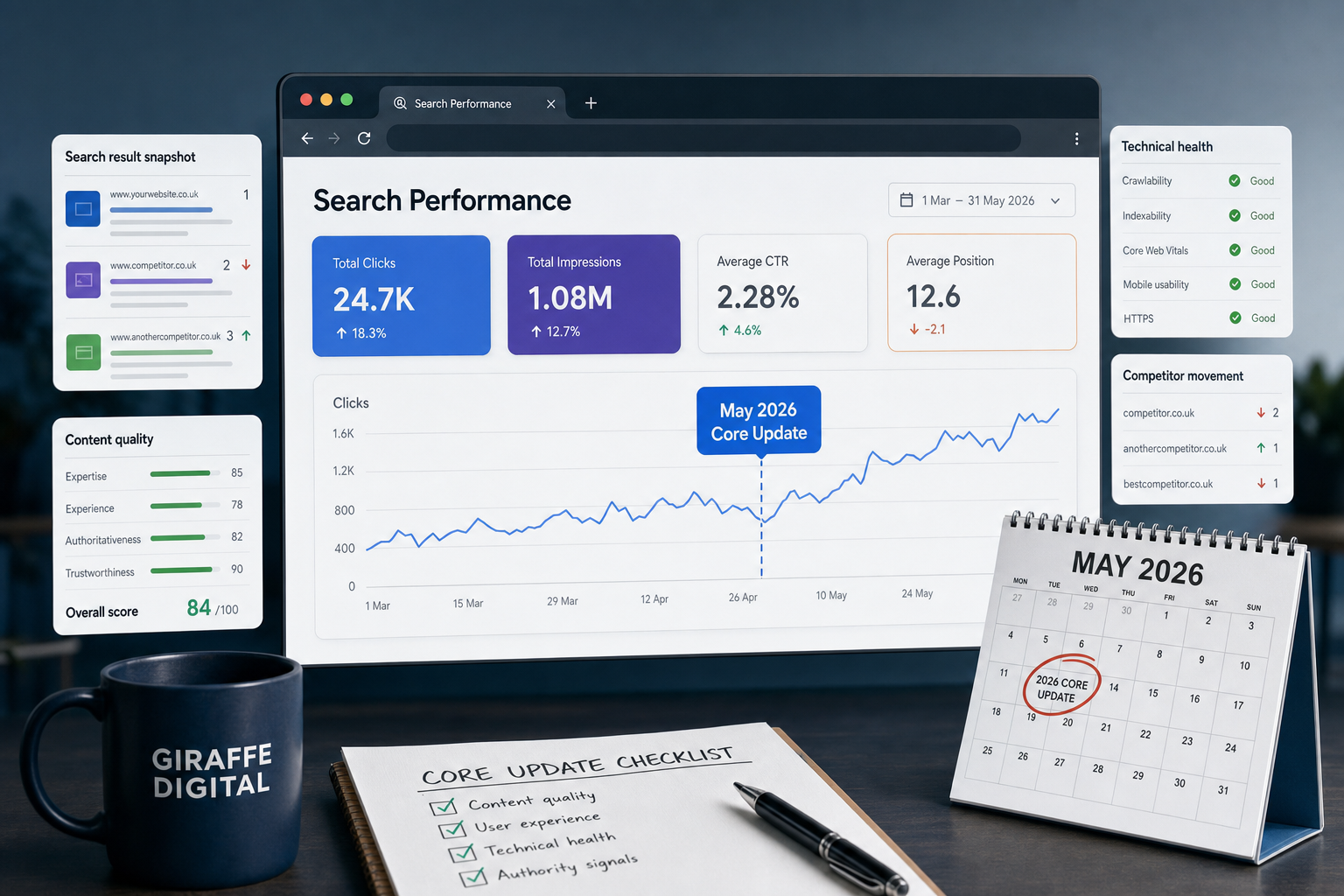
Analytics should be used to guide decisions. Website data can show which pages attract visitors, which channels drive enquiries and where users leave the site. Search query data can reveal what people are looking for. Social media insights can show which posts generate useful engagement. In uncertain conditions, this information helps business owners prioritise activity rather than relying on guesswork.
It is important to keep measurement practical. Focus on enquiries, calls, form submissions, sales, email sign-ups, key page visits and other actions that genuinely matter. Large visitor numbers are less valuable if they do not result in meaningful engagement. A smaller, better-qualified audience can be more useful than broad traffic with little intent.
Plan flexible campaigns instead of fixed assumptions
Marketing plans made at the start of a year may no longer fit the conditions of late 2020. That does not mean planning is pointless; it means plans need flexibility. A useful approach is to work in shorter cycles, review performance regularly and adapt messages as customer needs change.
Start by identifying your most important business objectives. Do you need to protect existing customer relationships, generate new leads, move more sales online, promote local delivery, fill appointment slots or explain a changed service? Each objective may require a different mix of website updates, SEO, email, social media and advertising.
Next, prioritise the activity that removes barriers. If customers are confused, improve information. If they are not finding you, improve search visibility. If they are visiting but not enquiring, review page structure and calls to action. If they are unsure whether to trust you, improve proof, reviews, case information and contact details. This practical sequence usually delivers more value than simply increasing posting or advertising without addressing the underlying issue.
Email marketing can also be useful when handled carefully. Customers who have chosen to hear from you may appreciate clear updates, useful advice and timely reminders. Keep messages relevant and respectful. Avoid sending updates only when you want to sell; include information that helps recipients understand availability, changes, support options or seasonal considerations.
Build confidence through clear communication
Uncertainty often creates hesitation. Customers may delay decisions because they are unsure about availability, safety, timing, budgets or reliability. Digital marketing can reduce that hesitation by making your communication calm, specific and consistent.
Avoid vague statements such as normal service continues if the details have changed. Instead, explain what customers can expect. For example, tell them whether consultations are by phone or video, whether delivery times are affected, whether collection slots must be booked, or whether support requests are being prioritised. Specific information feels more credible and reduces the need for customers to ask basic questions.
Your tone matters as well. Businesses do not need to overstate the situation or use dramatic language. A measured, helpful tone is more reassuring. Thank customers for their patience, explain practical steps and provide clear routes to contact your team. Consistency across your website, search listings, social profiles and email updates helps avoid confusion.
In uncertain conditions, the strongest digital marketing is often the clearest. Customers want to know who you are, what you offer, what has changed and how to take the next step with confidence.
Focus on long-term digital value
The immediate aim may be to navigate difficult trading conditions, but the improvements made now can continue to support the business beyond the current period. A clearer website, stronger search presence, better local visibility, organised domain management and more consistent communication all create lasting value.
Business owners do not need to do everything at once. The most sensible starting point is a digital audit: review your website, search visibility, social channels, domain arrangements, analytics and customer journey. Identify the issues that are most likely to affect enquiries or sales, then prioritise them in a manageable order.
Digital marketing uncertainty is challenging, but it also highlights what customers expect from modern businesses: accurate information, accessible services, responsive communication and trustworthy online experiences. By focusing on practical improvements rather than panic-driven activity, UK businesses can strengthen their position and give customers clearer reasons to choose them.