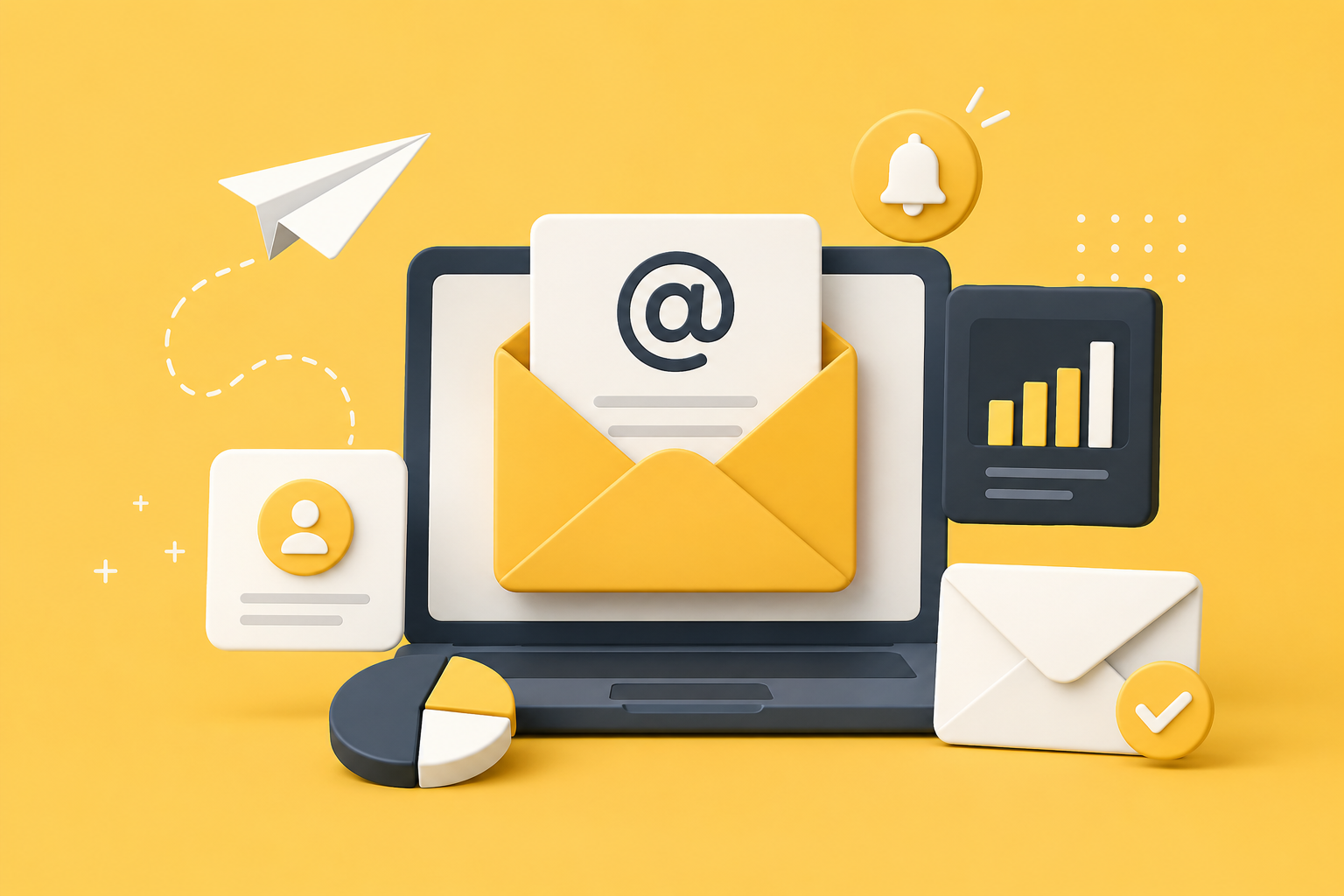
Email marketing remains one of the most effective forms of digital marketing available to businesses today. While social media platforms and search engines continue to evolve, email provides something many other marketing channels cannot: direct communication with your audience.
Unlike social media, where algorithms determine who sees your content, emails are delivered directly to your subscribers. When used correctly, email marketing can help businesses build stronger customer relationships, increase sales, encourage repeat business and keep their brand front of mind.
Whether you run a small local business or a national company, a well-planned email marketing strategy can deliver measurable results without requiring a large advertising budget.
What Is Email Marketing
Email marketing is the process of sending targeted emails to people who have chosen to hear from your business.
These emails may include:
- Company news
- Product launches
- Promotional offers
- Educational content
- Blog articles
- Event invitations
- Customer updates
- Newsletters
Unlike unsolicited emails, effective email marketing is permission-based. Subscribers choose to receive your emails because they find value in your content.
This makes email one of the highest-converting digital marketing channels available.
Why Email Marketing Still Works
Many businesses assume email has become outdated.
The reality is quite different.
Most people check their email every day, often several times. Businesses continue to rely on email for communication, purchases, support and account management.
Email marketing offers several advantages:
- Direct communication with customers
- High return on investment
- Full ownership of your audience
- Personalised messaging
- Easy performance tracking
- Cost-effective campaigns
- Excellent customer retention
Unlike social media platforms, your email list belongs to your business.
You are not dependent on changing algorithms or declining organic reach.
Build Your Email List Properly
Growing your subscriber list should always focus on quality rather than quantity.
Avoid buying email lists.
Purchased contacts rarely engage with your business, and sending unsolicited marketing emails may breach privacy regulations.
Instead, encourage visitors to subscribe by offering something valuable.
Examples include:
- Free guides
- Checklists
- Discount codes
- Industry insights
- Exclusive offers
- Helpful newsletters
- Early product announcements
People are far more likely to subscribe when they understand the benefit.
Make Signing Up Easy
Your website should make subscribing simple.
Consider adding signup forms to:
- Your homepage
- Blog articles
- Contact page
- Footer
- Checkout process
- Landing pages
Keep forms short.
Usually, asking for a first name and email address is enough.
Long forms often reduce conversion rates.
Always Follow Data Protection Rules
Businesses operating in the UK must ensure their email marketing complies with relevant data protection legislation.
Subscribers should:
- Give clear consent
- Understand what they are signing up for
- Be able to unsubscribe easily
- Have their personal information stored securely
Transparency builds trust while helping maintain a healthy subscriber list.
Segment Your Audience
Not every subscriber wants the same information.
Segmenting your email list allows you to send more relevant content.
For example, you might create groups based on:
- Existing customers
- New subscribers
- Previous purchases
- Industry
- Location
- Interests
Sending relevant emails often results in higher open rates and better engagement.
Write Subject Lines That Get Opened
Your subject line is often the deciding factor in whether someone opens your email.
Good subject lines should be:
- Short
- Clear
- Honest
- Interesting
Examples include:
- Five Ways to Improve Your Website Speed
- Our Latest Website Design Tips
- Is Your Website Ready for 2026?
- New Guide Available to Download
Avoid misleading subject lines designed purely to generate clicks.
Building trust is more valuable than achieving a single open.
Focus on Providing Value
One of the biggest mistakes businesses make is treating every email as a sales message.
Subscribers quickly lose interest if every email asks them to buy something.
Instead, provide useful information.
Ideas include:
- Helpful advice
- Industry updates
- Customer success stories
- Practical guides
- Frequently asked questions
- Business news
- Expert tips
When subscribers regularly gain value from your emails, they become more likely to engage with future promotions.
Keep Your Emails Easy to Read
Most people scan emails rather than reading every word.
Improve readability by:
- Using short paragraphs
- Including headings
- Leaving white space
- Writing conversationally
- Highlighting important information
Simple layouts often perform better than overly complicated designs.
Include a Clear Call to Action
Every email should have a purpose.
Ask yourself:
"What do I want the reader to do next?"
This might include:
- Reading a blog article
- Booking a consultation
- Downloading a guide
- Purchasing a product
- Contacting your business
- Registering for an event
Avoid overwhelming readers with too many different actions.
One clear objective usually works best.
Personalise Where Appropriate
Personalisation extends beyond including someone's name.
You can tailor emails based on:
- Previous purchases
- Browsing behaviour
- Customer interests
- Industry
- Location
Relevant content feels more valuable than generic messages sent to everyone.
Design for Mobile Devices
Many people read emails on smartphones.
Ensure your emails:
- Display correctly on smaller screens
- Use readable font sizes
- Include buttons that are easy to tap
- Load quickly
- Avoid excessively large images
Testing emails across different devices before sending helps identify any formatting issues.
Use Automation to Save Time
Email automation allows businesses to communicate consistently without manually sending every message.
Examples include:
Welcome Emails
Introduce new subscribers to your business and explain what they can expect.
Follow-Up Emails
Send additional information after someone downloads a guide or submits an enquiry.
Abandoned Basket Emails
Remind customers about products left in their shopping basket.
Customer Reviews
Invite customers to leave feedback after completing a purchase.
Automation helps deliver the right message at the right time.
Send Emails Consistently
Consistency builds familiarity.
Whether you send weekly, fortnightly or monthly newsletters, maintaining a regular schedule helps subscribers know what to expect.
Avoid sending multiple promotional emails in quick succession unless genuinely necessary.
Quality should always come before frequency.
Measure Your Results
Most email marketing platforms provide valuable statistics.
Monitor metrics such as:
- Open rate
- Click-through rate
- Unsubscribe rate
- Conversion rate
- Bounce rate
These figures help identify which emails perform well and where improvements can be made.
Test Different Approaches
Successful email marketing involves continuous improvement.
Experiment with:
- Subject lines
- Send times
- Layouts
- Images
- Calls to action
- Content length
Small adjustments can often improve engagement significantly.
Avoid Common Email Marketing Mistakes
Many campaigns underperform because of avoidable errors.
Sending Too Many Emails
Excessive frequency often leads to unsubscribes.
Making Every Email a Sales Pitch
Subscribers expect useful information as well as promotions.
Ignoring Mobile Users
Poor mobile formatting reduces engagement.
Using Generic Content
Relevant, personalised emails perform far better.
Neglecting Analytics
Performance data helps improve future campaigns.
Integrate Email With Your Other Marketing Channels
Email marketing works best when combined with other digital marketing activities.
For example:
- Share new blog articles.
- Promote your latest social media content.
- Announce website updates.
- Highlight customer success stories.
- Drive traffic to new landing pages.
Each marketing channel should support the others rather than operate independently.
Build Long-Term Relationships
Email marketing should not focus solely on making immediate sales.
Instead, aim to build lasting relationships.
Helpful, informative communication encourages trust and keeps your business at the forefront of customers' minds.
When they need your products or services in the future, your business is more likely to be remembered.
How Giraffe Digital Can Help
At Giraffe Digital, we believe email marketing should form part of a wider digital marketing strategy. Alongside professional website design, search engine optimisation and content creation, email campaigns help businesses stay connected with existing customers while attracting new opportunities.
Whether you need professionally designed email templates, landing pages that generate subscribers or engaging content for your newsletters, our team can help create campaigns that deliver real value and measurable results.
Final Thoughts
Email marketing continues to be one of the most reliable and cost-effective ways to communicate with your audience. By building a high-quality subscriber list, providing useful content, and maintaining consistent communication, businesses can strengthen customer relationships and drive long-term growth.
The most successful email campaigns are not those that sell the hardest. They are the ones that provide genuine value, solve problems and keep customers engaged. With careful planning and a focus on your audience, email marketing can become one of the strongest assets in your digital marketing strategy.