
A website rebrand should help customers recognise the business while understanding what has changed. New colours, a different logo or revised language can strengthen an identity, but an abrupt change can also create uncertainty. Returning visitors may wonder whether they have reached the same supplier or whether the service they know still exists.
Customer recognition depends on more than the logo. People may remember a service name, a familiar contact route, a particular explanation or the way the business presents its work. Planning the transition means identifying those signals and deciding which should remain visible.
The task is to connect the new identity with a clear customer experience. A useful rebrand plan defines the business change, preserves important journeys and explains the transition where needed. It should give the team evidence that customers can still find, understand and trust the business.
State what the rebrand changes in business terms
Begin with the reason for the change. The business may be clarifying its positioning, bringing several offers together or introducing a new identity. Write a short explanation of what changes for customers and what continues. This becomes a reference for decisions about content and communication.
Separate visual changes from service changes. A redesigned website does not necessarily mean a different support arrangement, while a new service structure may require more than refreshed graphics. Customers need accurate information about their relationship with the business.
Agree which statements the team can support. Avoid announcing a transformed experience if the underlying process is unchanged. Equally, do not hide an important change behind a cosmetic launch message. The transition explanation should match the actual offer.
Use that explanation to brief everyone involved. Designers, writers, customer support and operational colleagues need a shared account of the change so that the website, email and personal conversations do not tell conflicting stories.
Identify the signals customers already recognise
Review how customers find and describe the business. Search queries, enquiry conversations, feedback and interviews can reveal which names and phrases they use. Ask returning customers what they would look for when trying to find a familiar service again.
List important recognition signals. These might include the business name, a named service, people customers deal with, an established domain, contact details or recognisable examples of work. Assess which signals are useful and which carry confusion that the rebrand should resolve.
Do not assume the team's favourite design feature is what customers remember. A visual asset may matter, but a clear explanation of the offer may matter more. Customer evidence helps distinguish a genuine recognition risk from an internal attachment.
Create a record of the existing experience before changing it. Retain representative pages, navigation labels and key journey steps. This gives reviewers a practical comparison and helps identify whether the new version removes something customers relied on.
Protect the journeys that keep the relationship working
Map the tasks customers return to complete. They may need to contact support, book a follow-up, find preparation instructions or enquire about a familiar service. Prioritise those routes in the rebrand plan rather than assuming the homepage is the whole experience.
Keep the service consistent across the public website, messages and supporting systems, and test the complete journey with users. During a rebrand, customers need a coherent route to their task rather than several contradictory versions of the service. Our clear service information guide provides the related checks.
Check the language used in navigation and calls to action. If a service receives a new name, make its relationship to the old one understandable where appropriate. A returning customer should not need to guess whether a renamed page describes the service they already use.
Record important destinations in the launch checklist. These include forms, account areas, booking tools, support pages and external systems. A visually consistent page is not enough if the next step leads to a contradictory identity or an unfamiliar contact route.
Plan continuity in content and evidence
Review the business information that helps customers establish identity. Contact details, company information, team introductions and relevant examples of work should be accurate and easy to find. Decide how they will support the new presentation without creating misleading claims.
Keep useful proof connected to the service it demonstrates. A case study should still explain the customer problem and the work delivered after its layout changes. Rewriting every example into broad brand language can remove the detail that originally made it credible.
Where the business name changes, agree a clear explanation of the relationship between the old and new names. Confirm the wording with the people accountable for the actual business arrangement. The website should not imply legal or operational continuity that has not been established.
Consider an illustrative consultancy that renames a maintenance package. Its launch page can explain the new name, show the relevant service details and direct existing customers to their usual support route. That is more useful than announcing a fresh identity while leaving customers to work out what happened to their package.
Coordinate the transition across customer touchpoints
Inventory the places where customers encounter the identity. Include email signatures, automated messages, forms, downloadable documents, proposals, booking confirmations and social profiles. Assign an owner and launch decision for each important touchpoint.
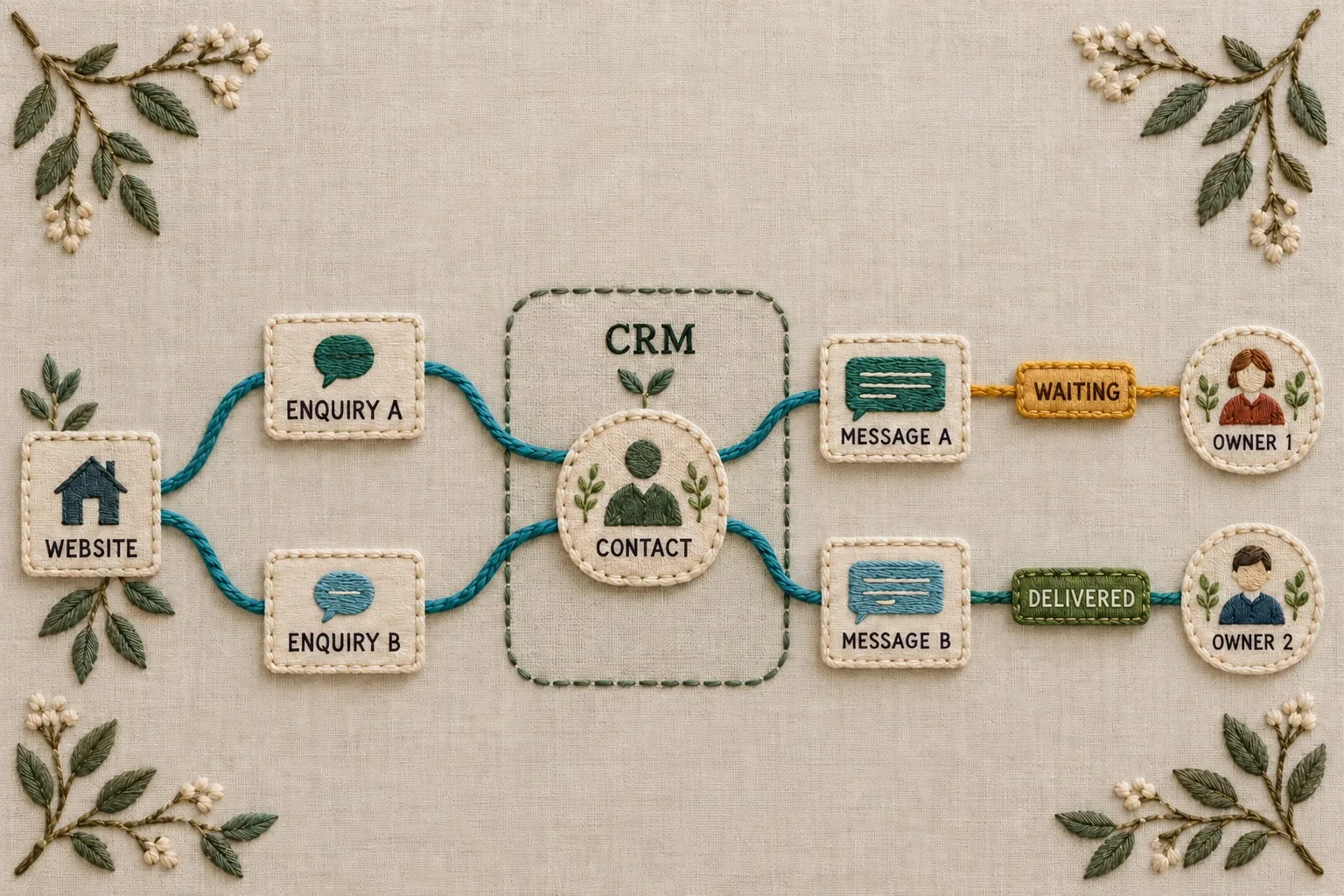
Some systems may need to change together, while others can follow a controlled sequence. Identify dependencies before choosing a launch date. For example, updating an enquiry form's sender identity should be coordinated with the inbox and response template that customers will encounter afterwards.
Keep a simple status record. Each item should show the approved asset or wording, the person responsible, the expected change date and the verification result. This prevents an asset folder from being mistaken for a completed rollout.
Prepare staff for customer questions. Give them a concise explanation, relevant links and a route for issues that require another team. A confident, accurate personal reply can resolve recognition concerns that a public announcement cannot anticipate.
Test recognition with realistic customer tasks
Show the proposed experience to people representative of the intended audience, including returning customers where possible. Ask them to find a service or complete a familiar task. Observe whether they recognise the business and understand the next step without prompting them towards the desired answer.
Use practical questions after the task. What do they think changed? Which business do they believe they are contacting? Where would they go for help? These responses can reveal uncertainty even when someone says the design looks attractive.
Test across relevant devices and routes. A person following an old saved link may encounter a different introduction from someone entering through the new homepage. Include those paths in the review, and give the technical team responsibility for address changes and redirects where required.
Resolve confusing signals before launch. That might mean clearer transition wording, a more recognisable service label or better continuity in the contact journey. The aim is to help customers orient themselves while allowing the new identity to do its job.
Monitor the transition and retire explanations deliberately
After launch, review enquiries, support questions and the functioning of important journeys. Look for evidence of confusion about identity, service availability or contact routes. Investigate the actual path customers followed before deciding that the issue is purely visual.
Agree when temporary transition content should be reviewed. An old-name explanation can help recognition initially, but it should not remain indefinitely without a purpose. Assess customer needs and the business's identity requirements before removing or revising it.
Giraffe Digital's branding service connects identity, messaging and how a business presents itself. Planning recognition alongside those decisions helps the new website express the brand while preserving a clear customer relationship.
A well-planned rebrand gives customers enough continuity to feel oriented and enough explanation to understand the change. Identify what they recognise, protect the journeys they use and test the transition through real tasks. That creates a stronger foundation for the new identity than a launch announcement alone.
Frequently asked questions
How should we state what the rebrand changes in business terms?
Begin with the reason for the change. The business may be clarifying its positioning, bringing several offers together or introducing a new identity. Write a short explanation of what changes for customers and what continues. This becomes a reference for decisions about content and communication. Separate visual changes from service changes. A redesigned website does not necessarily mean a different support arrangement, while a new service structure may require more than refreshed graphics. Customers need accurate information about their relationship with the business. Agree which statements the team can support. Avoid announcing a transformed experience if the underlying process is unchanged. Equally, do not hide an important change behind a cosmetic launch message. The transition explanation should match the actual offer.
How should we protect the journeys that keep the relationship working?
Map the tasks customers return to complete. They may need to contact support, book a follow-up, find preparation instructions or enquire about a familiar service. Prioritise those routes in the rebrand plan rather than assuming the homepage is the whole experience. Keep the service consistent across the public website, messages and supporting systems, and test the complete journey with users. During a rebrand, customers need a coherent route to their task rather than several contradictory versions of the service. Our clear service information guide provides the related checks. Check the language used in navigation and calls to action. If a service receives a new name, make its relationship to the old one understandable where appropriate.
How should we plan continuity in content and evidence?
Review the business information that helps customers establish identity. Contact details, company information, team introductions and relevant examples of work should be accurate and easy to find. Decide how they will support the new presentation without creating misleading claims. Keep useful proof connected to the service it demonstrates. A case study should still explain the customer problem and the work delivered after its layout changes. Rewriting every example into broad brand language can remove the detail that originally made it credible. Where the business name changes, agree a clear explanation of the relationship between the old and new names. Confirm the wording with the people accountable for the actual business arrangement. The website should not imply legal or operational continuity that has not been established.
How should we coordinate the transition across customer touchpoints?
Inventory the places where customers encounter the identity. Include email signatures, automated messages, forms, downloadable documents, proposals, booking confirmations and social profiles. Assign an owner and launch decision for each important touchpoint. Some systems may need to change together, while others can follow a controlled sequence. Identify dependencies before choosing a launch date. For example, updating an enquiry form's sender identity should be coordinated with the inbox and response template that customers will encounter afterwards. Keep a simple status record. Each item should show the approved asset or wording, the person responsible, the expected change date and the verification result. This prevents an asset folder from being mistaken for a completed rollout. Prepare staff for customer questions.
How should we monitor the transition and retire explanations deliberately?
After launch, review enquiries, support questions and the functioning of important journeys. Look for evidence of confusion about identity, service availability or contact routes. Investigate the actual path customers followed before deciding that the issue is purely visual. Agree when temporary transition content should be reviewed. An old-name explanation can help recognition initially, but it should not remain indefinitely without a purpose. Assess customer needs and the business's identity requirements before removing or revising it. Giraffe Digital's branding service connects identity, messaging and how a business presents itself. Planning recognition alongside those decisions helps the new website express the brand while preserving a clear customer relationship. A well-planned rebrand gives customers enough continuity to feel oriented and enough explanation to understand the change.