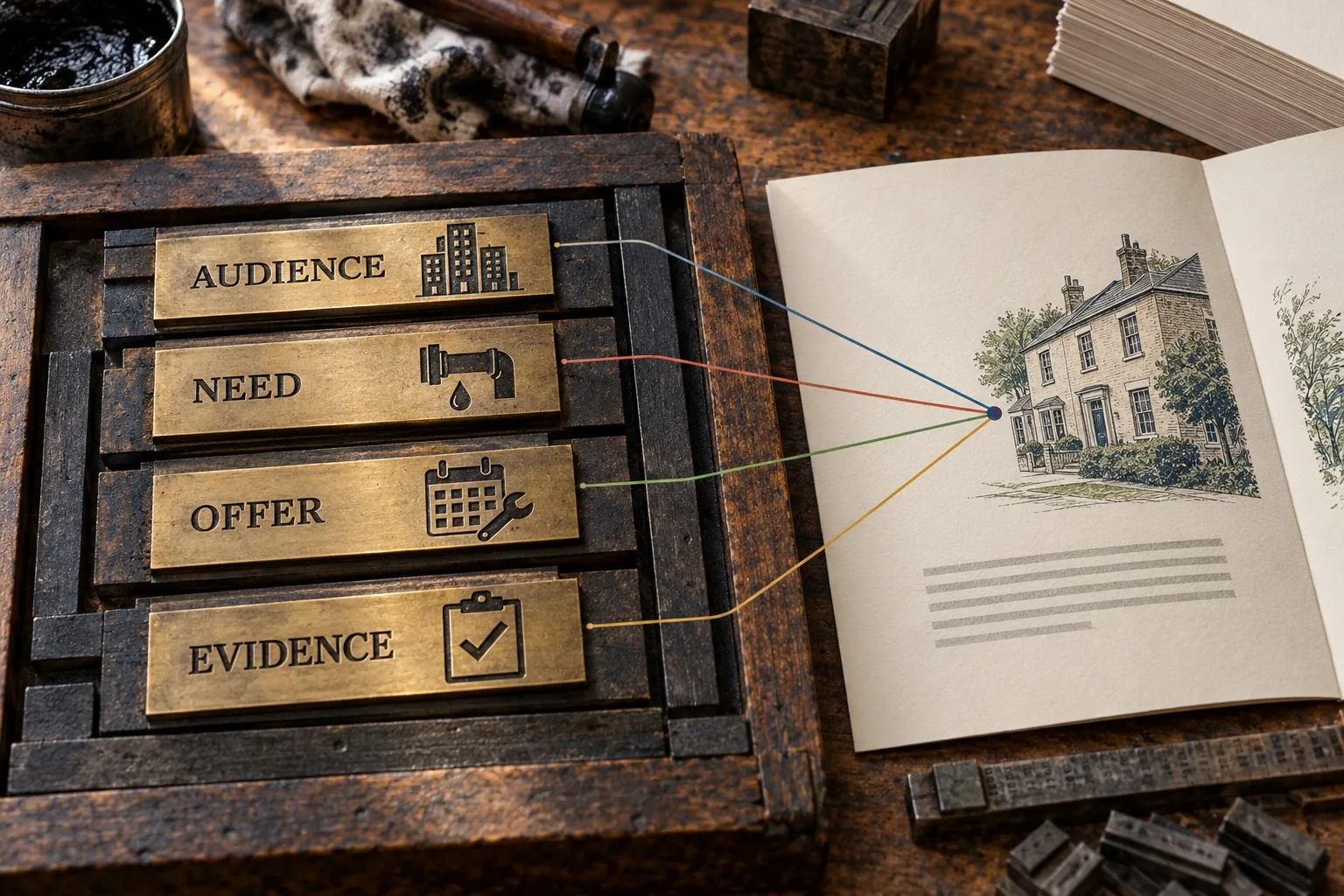
A brand positioning statement helps a business decide what its website should communicate and why a customer should care. It is an internal working statement rather than a slogan. Its purpose is to connect a specific audience, a relevant need, a clear offer and a credible reason to choose the business.
Without that direction, website copy often becomes a collection of broad claims: quality service, experienced team and solutions tailored to you. Those statements may be true, but they give writers little guidance and customers little basis for comparison. A useful positioning statement makes choices that can be translated into headings, service explanations, evidence and calls to action.
Choose the audience for the page you are writing
Start with a meaningful customer group. “Everyone who needs our service” is too broad to guide copy. Consider the person's situation, task and reason for seeking help. A business buying its first website may need different reassurance from a business replacing a site that has become difficult to maintain.
Separate an audience description from a demographic stereotype. Location or company size can matter, but they do not necessarily explain the buying decision. Ask what has triggered the search, what the person is responsible for and what would make the choice feel risky.
If the business serves several audiences, decide which one a particular page should address. The homepage may introduce the wider offer, while service pages can explain more specific needs. One positioning statement does not have to force every customer into the same message.
Gather evidence about the customer's problem
Review sales conversations, enquiry questions, project briefs and feedback. Look for the language customers use when describing the difficulty, not only the terms the business uses to sell its service. A customer may ask for a modern website while their underlying concern is that visitors cannot understand the services or make an enquiry easily.
Speak to recent customers where possible. Ask what prompted them to look, which alternatives they considered and what helped them decide. Questions about actual decisions are usually more useful than asking whether they like a proposed slogan.
Explore customer tasks, difficulties and desired outcomes, then organise the supporting evidence. Keep the final positioning statement focused on priorities the business can support. A long list of possible needs does not automatically create a clear position. Our customer needs and clear website copy guide connects that investigation with useful service information.
Mark assumptions separately from observations. If the team believes customers value rapid turnaround but enquiries repeatedly focus on support and clarity, investigate the difference. The statement should not simply preserve the loudest opinion in a workshop.
Define the offer in a category people understand
Explain what the business provides using language the audience recognises. A category such as managed website support or commercial cleaning gives the reader an initial frame of reference. A clever invented description can make the offer harder to understand before you have earned their attention.
Then specify the relevant scope. What does the service include, who is it suitable for and what does the customer need to provide? A broad promise such as complete digital transformation can create expectations that a narrower service cannot fulfil.
Category clarity does not mean making every business sound identical. It gives the customer a stable starting point from which to understand your particular approach. Distinction becomes more useful when people already understand what they are comparing.
Identify a difference that matters to the buying decision
A useful differentiator connects the way you work with something the customer values. For example, a structured content planning stage might matter because a busy client needs help deciding what the website should say. A named support contact might matter because the customer wants clear responsibility when something changes.
Distinguish a benefit from a feature. Weekly progress meetings are a feature of delivery. Better visibility of decisions and outstanding tasks is the intended benefit. The website should explain that connection without claiming an outcome you cannot demonstrate.
Review the alternatives fairly. Customers may compare another provider, a do-it-yourself tool, an internal team or postponing the project. Understanding those alternatives helps you explain fit. It does not require making unsupported claims about competitors.
A difference does not have to be unique throughout the market to be relevant. Avoid claiming uniqueness unless you can substantiate it. A specific, dependable way of working can still help a customer choose when it addresses a concern that other pages explain poorly.
Connect every promise to evidence
List the proof available for each proposed claim. Evidence might include a documented process, relevant qualifications, a permissioned case study, a clear service description or examples of completed work. The strength of the claim should match the strength and scope of the evidence.
Be cautious with superlatives and numerical promises. “The fastest” or “guaranteed to double enquiries” requires more than confidence. If the business has no supporting evidence, choose a more precise description of what it does and how the customer can assess it.
Customer testimonials can provide useful context, but one customer's experience should not be presented as a universal result. Explain the project circumstances where relevant and make sure the business has permission to use the material.
Create a proof list alongside the statement. This makes the statement usable for writers: they can choose a heading, explain the offer and support it with an appropriate example rather than filling the page with adjectives.
Write a working statement in plain language
A practical statement can answer four questions in a short paragraph: who is the service for, what situation does it address, what does the business provide and why is its approach credible? There is no need to force it into a rigid sentence if doing so makes it harder to understand.
For example, an imagined maintenance business might describe itself as supporting small property managers who need a clear route from reporting a fault to arranging a repair. Its offer could combine a structured request process, agreed communication and a visible record of progress. The evidence would then need to show that those arrangements exist. This is a worked example of the method, not a claim about Giraffe Digital or another supplier.
Read the statement aloud and remove phrases that could describe almost any competitor. Replace them with a relevant process, scope or benefit. Keep the wording short enough that the team can use it when deciding what belongs on the website.
Translate the statement into website copy decisions
The homepage introduction should help the reader recognise the offer and its relevance. A service page should then explain how the service works, what is included, what evidence supports it and what the customer can do next. The positioning statement gives those sections a shared direction.
Use the statement to decide which details deserve prominence. If customers mainly worry about handing over content, explain the content process early. If fit depends on service area or project scope, make that information easy to find. Do not hide essential qualifications beneath a confident headline.
Align calls to action with the buying stage. A reader comparing approaches may need to understand the process before requesting a quote. Someone with an urgent, clearly defined requirement may need a direct contact route. The same button wording will not suit every journey.
Check consistency across page titles, introductions, service descriptions and enquiry forms. A website that promises a guided service but presents an unexplained technical form creates a mismatch between the message and experience.
Test understanding before polishing the language
Show representative readers a draft page and ask what the business offers, who it appears to serve and what they would do next. Avoid leading them towards the answer. Their interpretation can reveal confusion that an internal review misses.
Compare useful observations rather than treating personal taste as the main test. A reader may dislike a phrase while still understanding the offer. Another may enjoy the language but misunderstand the service. Clarity and relevance should guide the revision.
After launch, review enquiry quality and recurring questions. If customers consistently expect a service that is outside scope, the positioning or page explanation may need attention. Keep a record of the evidence behind revisions so that future copy changes do not undo a useful decision.
Giraffe Digital's branding service connects visual identity with messaging, while website design shapes how that message supports customer journeys. A brand positioning statement gives both a practical reference: a clear audience, a relevant promise and evidence the business can stand behind.
Frequently asked questions
How should we choose the audience for the page you are writing?
Start with a meaningful customer group. "Everyone who needs our service" is too broad to guide copy. Consider the person's situation, task and reason for seeking help. A business buying its first website may need different reassurance from a business replacing a site that has become difficult to maintain. Separate an audience description from a demographic stereotype. Location or company size can matter, but they do not necessarily explain the buying decision. Ask what has triggered the search, what the person is responsible for and what would make the choice feel risky. If the business serves several audiences, decide which one a particular page should address. The homepage may introduce the wider offer, while service pages can explain more specific needs.
How should we connect every promise to evidence?
List the proof available for each proposed claim. Evidence might include a documented process, relevant qualifications, a permissioned case study, a clear service description or examples of completed work. The strength of the claim should match the strength and scope of the evidence. Be cautious with superlatives and numerical promises. "The fastest" or "guaranteed to double enquiries" requires more than confidence. If the business has no supporting evidence, choose a more precise description of what it does and how the customer can assess it. Customer testimonials can provide useful context, but one customer's experience should not be presented as a universal result. Explain the project circumstances where relevant and make sure the business has permission to use the material.