For many UK business owners, the website brief has changed considerably over the last few years. A site can no longer be treated as a static brochure that looks acceptable on a desktop computer and merely tolerable on a phone. Customers now expect fast loading, clear navigation, secure pages and an experience that feels natural on the device in their hand. This is why progressive web apps are starting to enter serious website discussions. The term may still sound new, but the thinking behind it is highly practical: build websites that behave more like quality mobile apps where the browser and device allow it, while remaining accessible to everyone else.
What are progressive web apps
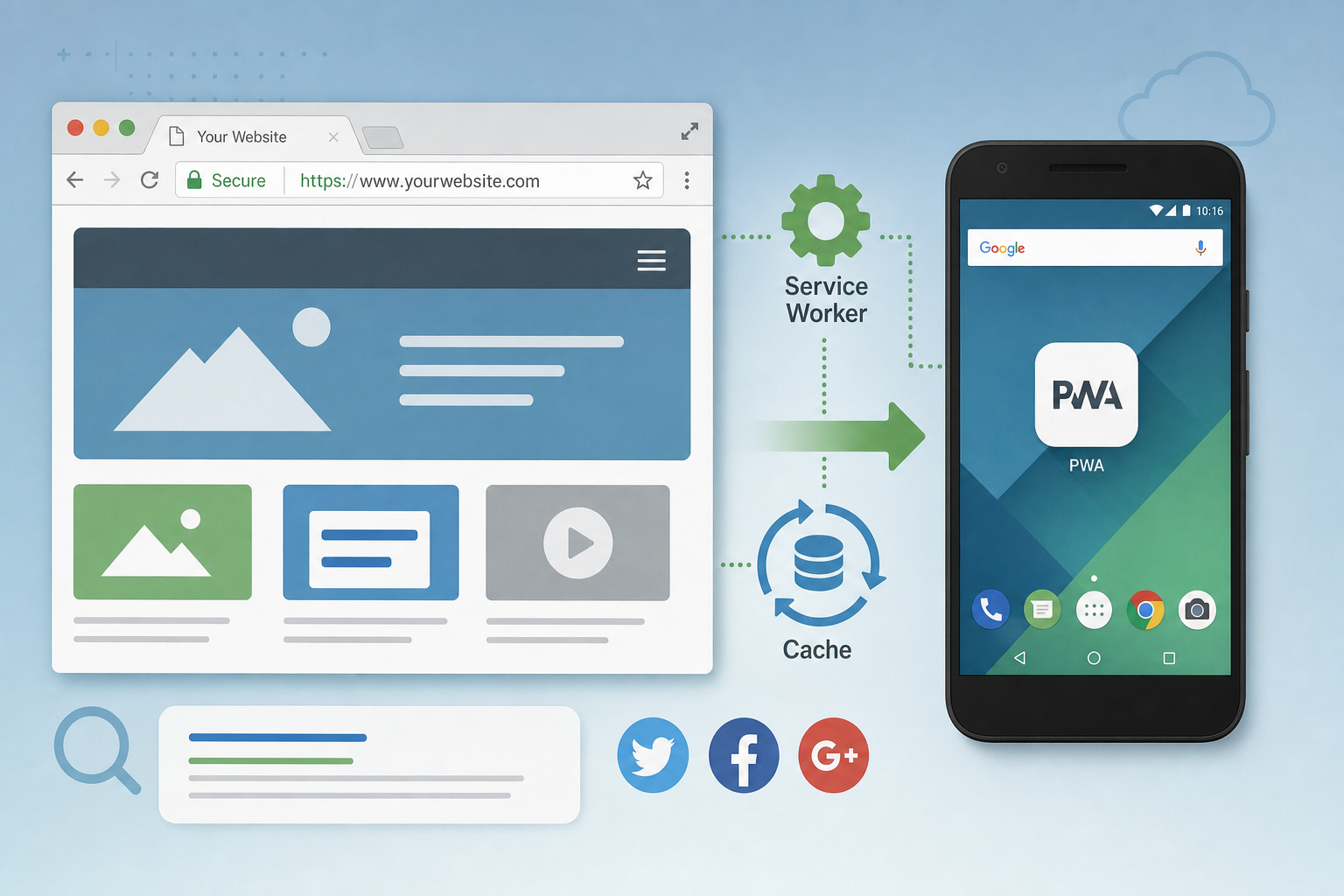
Progressive web apps are websites enhanced with modern browser features to provide a more app-like experience. They are still part of the open web, reached through a normal web address, indexed by search engines and shared with a simple link. The difference is that, when supported by the browser, they can load quickly, work more reliably on poor connections, sit on a user’s home screen and, in some cases, support timely notifications.
The word progressive is important. A progressive web app should not shut out visitors with older browsers or less capable devices. Instead, it should start with a solid, accessible website and then add richer behaviour where available. A customer using an up-to-date Android phone in Chrome may receive a more app-like experience, while another visitor using an older desktop browser still receives clear content, working forms and a usable journey.
Several technologies sit behind this approach. Responsive design remains essential, so the layout adapts sensibly to different screen sizes. A web app manifest can provide details such as the site name, icon and display preferences when a visitor adds it to their home screen. Service workers, where supported, can help manage caching and make repeat visits faster and more resilient. HTTPS is also a key part of the discussion, both for security and because many of these newer browser features require a secure connection.
Why this matters for business websites
The immediate value of progressive web apps is not novelty. It is usefulness. Many businesses have already invested in mobile-friendly websites, but mobile friendliness is only the starting point. A page may fit a small screen yet still feel slow, clumsy or unreliable. If visitors are comparing suppliers, booking appointments, browsing products or reading advice while travelling, small delays and awkward interactions can lead to lost enquiries.
A progressive approach encourages businesses to think about the complete customer experience. How quickly does the first useful content appear? Can key pages be revisited quickly? Is the enquiry form easy to use with a thumb? Does the site still offer helpful information when a connection drops on a train or in a busy town centre? These are not abstract technical questions; they affect enquiries, repeat visits and brand perception.
There is also a strategic advantage in not forcing every business into a native app discussion. A native mobile app can be valuable in the right circumstances, particularly where customers use it regularly and expect device-specific features. However, many small and medium-sized businesses do not need to ask potential customers to visit an app store before they can engage. A progressive web app keeps the low-friction benefits of the web: a link from search, social media, email or a business card can take the user straight to the right page.
Design considerations for a progressive approach
A progressive web app still succeeds or fails on the quality of its design. Adding technical features to a confusing website will not solve the underlying problem. The starting point should be a clear content structure, a strong visual hierarchy and a journey that reflects what customers actually need to do.
For a service business, that may mean prioritising trust signals, service summaries, locations served, case study-style information where appropriate and straightforward enquiry options. For a retailer, it may mean faster category browsing, clear product information, simple filtering and a checkout path that is comfortable on a mobile screen. For a membership organisation, it may mean making events, updates and account information easy to revisit.
Home screen behaviour should be considered carefully. If a user adds a site to a phone home screen, the icon, short name and opening screen need to feel polished and consistent with the brand. This is not just a technical setting; it is part of brand presentation. A poorly prepared icon or an awkward opening view can make the experience feel unfinished.
It is also sensible to design for interruption. Mobile users are often distracted. They may open a page, switch to a message, lose signal, then return later. Progressive techniques can help, but the content and interface should also support this reality. Clear headings, saved states where appropriate, obvious calls to action and short forms can all make the experience more forgiving.
Search marketing and visibility
One of the strengths of progressive web apps is that they remain websites. This matters for search marketing. Business owners should be cautious about any digital proposal that creates an impressive app-like surface but weakens the foundations of search visibility. Search engines still need to discover, crawl and understand important content.
Good technical SEO remains central. Important pages should have descriptive titles, useful headings, readable copy and clean internal links. Content should not be hidden behind interactions that make it difficult to access. The site should load efficiently, avoid unnecessary weight and provide a sensible experience without relying on fragile scripts for basic navigation.
Mobile search has become an important source of enquiries for many local and national businesses, so performance and usability should be treated as part of the search strategy. A slow site can damage engagement, and poor engagement can reduce the commercial value of the traffic you do receive. While no single technical feature is a shortcut to rankings, a faster, clearer and more dependable site gives search visitors a better chance of becoming customers.
Structured, helpful content is still one of the most reliable investments. A business considering progressive web app features should also review whether its website answers the questions customers are searching for. Service pages, location pages, frequently asked questions, buying guides and sector-specific advice can all support organic visibility when written with care and matched to genuine customer intent.
Social media and returning visitors
Social media marketing also benefits from a stronger mobile web experience. Many social visits begin on a phone, often in a browser view opened from a social app. If the landing page is slow or difficult to use, the value of the post, advert or campaign is reduced.
Progressive web app thinking encourages businesses to make shared pages fast, focused and worthwhile. A campaign page promoted through Facebook, Twitter or LinkedIn should open quickly, explain its purpose immediately and make the next step obvious. If a visitor saves the site to their home screen or returns later, the experience should reinforce the same brand message they first saw in the social channel.
For businesses that publish regular advice, events or product updates, the possibility of more direct re-engagement is worth watching. Browser support for web notifications is developing, though it is not universal and should be used with restraint. Notifications should never be treated as a replacement for email, search or social media. If used at all, they should be timely, relevant and clearly permitted by the user. An intrusive approach can quickly harm trust.
Domain names, branding and trust
A progressive web app is still reached through a domain name, so the basics of domain choice remain important. A domain should be easy to say, easy to type and closely connected to the organisation’s brand. UK businesses should consider whether a UK-focused domain, a broader international option, or both, best supports their plans. The decision should reflect the audience, brand protection and future growth rather than short-term fashion.
When registering domains, avoid confusing spellings, unnecessary hyphens and names that are too close to another organisation’s established brand. It is also worth considering common variations and making sure the domain will still make sense if the business expands its services. Keep registration details organised, renewals monitored and ownership clearly held by the business rather than an individual employee or temporary supplier.
Security is part of trust. Because progressive web app features commonly require HTTPS, businesses should plan for a secure site from the outset. HTTPS is especially important where forms, customer accounts, payment details or private information are involved, but it also sends a broader trust signal. A customer who sees a secure, consistent domain is more likely to feel confident continuing with an enquiry.
Technology choices and practical planning
Not every website needs to become a fully developed progressive web app immediately. In March 2016, browser support is still uneven, and the most sensible approach is to match investment to business value. The question should not be whether the newest feature can be used, but which improvements will make the customer journey faster, clearer or more reliable.
A sensible plan might begin with responsive design, performance improvements and HTTPS. From there, a business could add a web app manifest, prepare suitable icons and explore service worker caching for key assets or content. For example, a restaurant might make menus, opening times and contact details quick to revisit. A professional services firm might ensure articles and contact pages load rapidly on repeat visits. A retailer might prioritise faster product browsing and a smoother mobile path to enquiry or purchase.
Testing is essential. A progressive web app should be checked across realistic devices and browsers, not only on a designer’s large screen or a developer’s preferred handset. It should also be tested on slower connections, because many mobile visitors are not browsing in perfect conditions. If a feature is not supported, the website should still work properly. This is the heart of progressive enhancement.
Questions to ask before starting
Business owners do not need to master every technical detail, but they should ask informed questions during a website project. The following prompts can help shape a better brief:
- What are the main mobile journeys? Identify whether visitors are trying to call, book, buy, read, compare or find directions.
- How fast does the site feel on a typical mobile connection? Real-world performance matters more than how it behaves on an office broadband line.
- Will the site remain usable in unsupported browsers? Progressive enhancement should protect the basic experience.
- Is HTTPS included in the plan? Security should be part of the foundation, not an afterthought.
- How will search engines access the content? Important pages should remain discoverable and understandable.
- Does the design support the brand when saved to a home screen? Icons, names and opening views should look deliberate and professional.
A sensible next step for UK businesses
Progressive web apps are not a passing design decoration; they are part of a broader movement towards faster, more capable and more customer-focused websites. For many UK businesses, the best next step is not to commission a complex app-like build overnight, but to review the existing website against modern expectations. Is it genuinely mobile friendly? Is it quick? Is it secure? Does it support search visibility? Does it make it easy for visitors from social media and search to take action?
Where the answers are mixed, progressive web app principles can provide a useful direction of travel. Start with the needs of customers, strengthen the foundations and then add browser features where they create real value. Done well, this approach can make a website feel more immediate, more reliable and more memorable without giving up the openness and reach that make the web so powerful for business.