Voice search is no longer a novelty reserved for early adopters. With smartphones in every pocket and smart speakers becoming a familiar feature in UK homes, more people are asking questions aloud and expecting instant, useful answers. For local businesses, this creates an important shift: search is becoming more conversational, more mobile and more closely tied to immediate intent. Voice assistant local search is therefore not simply a technical trend; it is a practical opportunity to be discovered when nearby customers are ready to call, visit, book or buy.
Whether someone asks for the nearest café, a reliable plumber, opening hours for a shop, directions to a showroom or the best local solicitor, voice assistants are increasingly acting as the first point of contact between customer and business. The businesses that provide clear, accurate and trusted information across the web are more likely to be surfaced in these results. The businesses that leave gaps, inconsistencies or outdated details risk being invisible at the very moment a customer is asking for help.
What voice assistant local search means for businesses
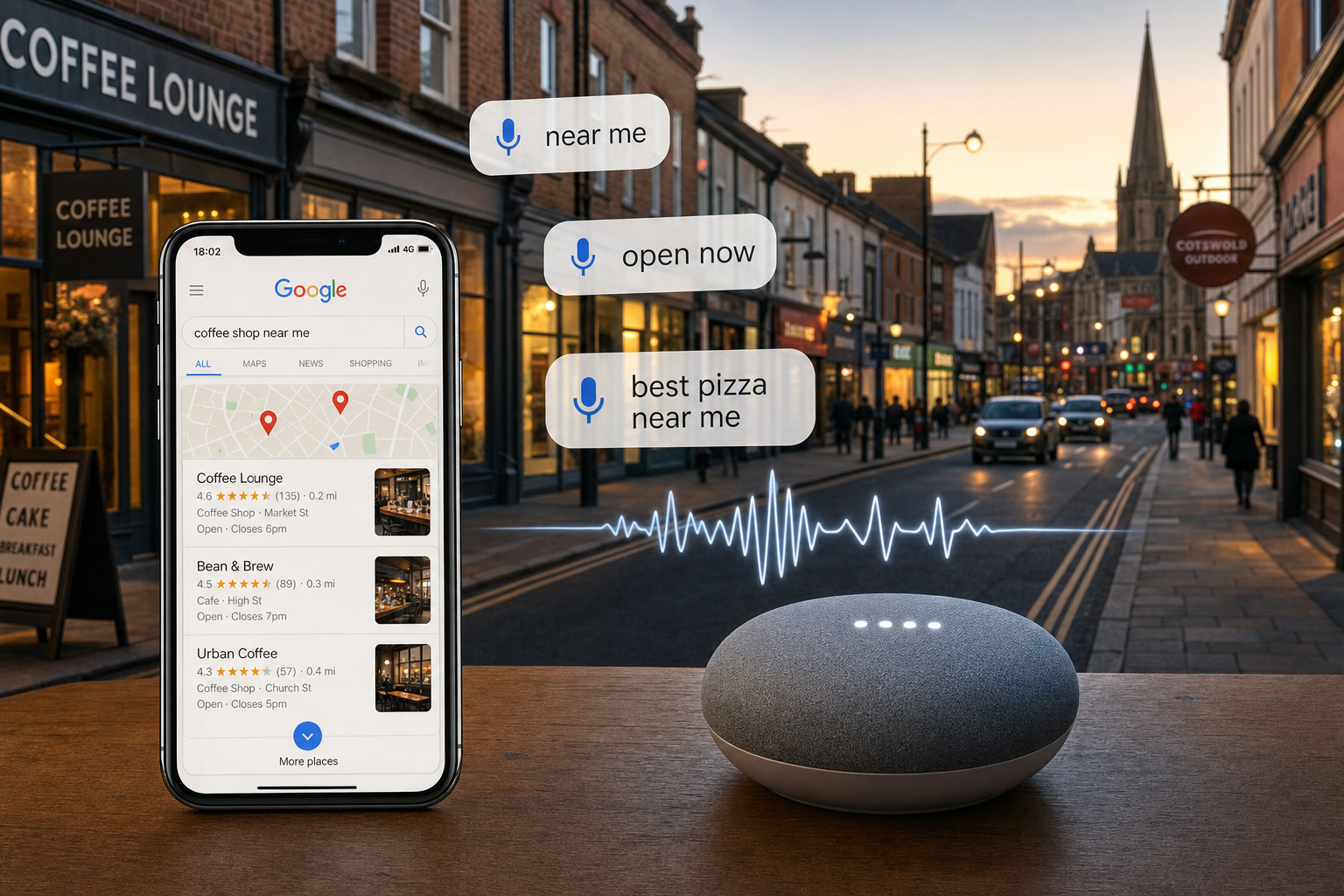
Voice assistant local search refers to searches made through services such as Google Assistant, Siri, Alexa or Cortana, where the user asks for a local answer. These searches may take place on a mobile phone, smart speaker, tablet, car system or desktop device. The assistant then interprets the request, considers the user’s location and returns what it believes to be the most relevant answer.
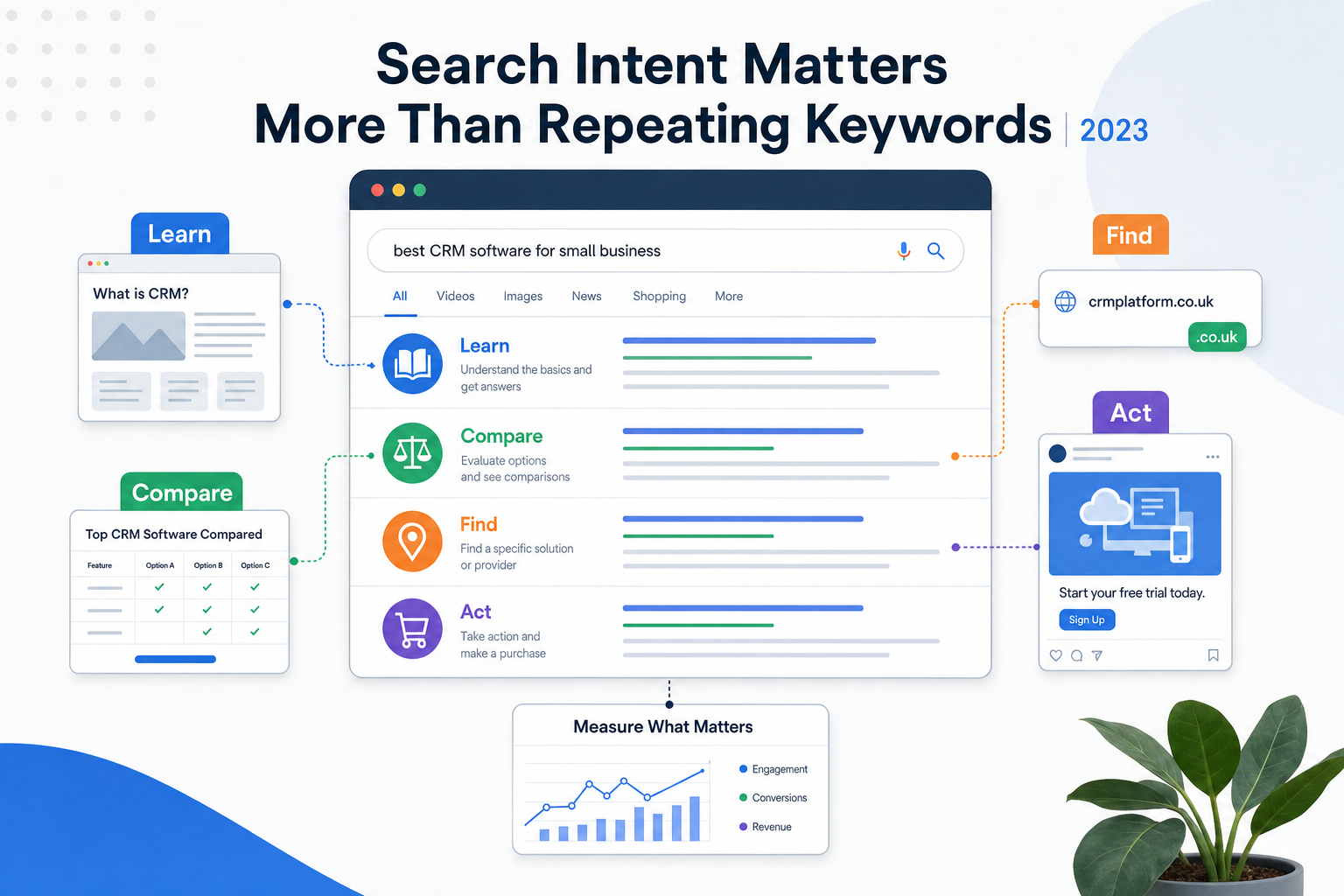
The wording is often different from a typed search. A customer might type ‘ dentist Portsmouth’, but say, ‘ Who is the best dentist near me open today?’ A typed search may be short and fragmented, while a voice search is more likely to be a complete question. This matters because your website, listings and wider digital presence need to answer natural questions clearly.
Voice also raises expectations. When people search by speaking, they are often doing something else at the same time: walking, driving, cooking, shopping or comparing local options quickly. They are not always browsing ten results. In many cases, they want one strong answer, a quick call button, opening hours, directions or a concise explanation. This makes accuracy, authority and ease of action especially important.
Why local intent is so valuable
Local searches often show stronger commercial intent than broad informational searches. A person asking for ‘ Italian restaurant near me’, ‘ emergency locksmith in Southampton’ or ‘ garden centre open now’ is usually much closer to taking action than someone casually researching a topic. Voice assistants make this behaviour even more immediate because the path from question to call, map route or booking can be very short.
For UK business owners, this has clear value. A well-optimised local presence can help generate telephone enquiries, appointment requests, shop visits, table bookings and direction requests. It can also support trust. When your opening hours are correct, your reviews are visible, your address is consistent and your website loads properly on mobile, customers receive small but important signals that your business is organised and reliable.
Voice search should therefore be seen as part of a wider digital marketing approach, not as a separate channel. It connects search engine optimisation, website design, local listings, social proof, content, social media and brand consistency. The aim is to make it easy for both customers and search platforms to understand who you are, what you do, where you operate and why you are a credible choice.
Start with accurate local business information
The foundation of voice assistant local search is reliable business data. Search platforms depend heavily on structured, consistent information from business listings, map services, directories and websites. If your name, address, telephone number or opening hours vary across the web, it becomes harder for search systems to trust the information they hold.
Every local business should review its core details across major platforms, including Google My Business, Bing Places and Apple Maps, as well as relevant industry directories. Your business name should be written consistently, your address should match your real-world location, and your telephone number should be easy to call from a mobile device. If you serve customers at their premises rather than at your own, make sure your service area is clear.
Opening hours deserve particular attention. Voice assistants are often asked whether a business is open now. Bank holidays, seasonal changes and special events can cause confusion if listings are not kept up to date. A customer who arrives to find your business closed is unlikely to feel reassured, and a search platform that receives conflicting signals may be less confident about recommending you.
Optimise your website for conversational questions
Your website remains central to local search performance. While map listings are important, your own site gives you the space to explain your services, locations, expertise and customer journey in detail. To support voice search, your content should reflect the questions real customers ask before getting in touch.
Consider the difference between a service page that simply lists ‘ boiler repair’ and one that answers useful questions such as ‘ Do you provide emergency boiler repairs in Portsmouth?’, ‘ Which types of boilers do you work with?’ and ‘ How quickly can an engineer attend?’ The second approach is more helpful to users and gives search engines clearer context.
Frequently asked question sections can be particularly valuable, provided they are written naturally and not stuffed with repeated keywords. Use plain language. If customers usually ask whether you cover a specific town, offer evening appointments, provide free consultations, stock a certain product or have parking available, answer those questions clearly on your website.
Location pages can also help if your business serves multiple areas. These should be genuinely useful rather than copied and lightly edited. A strong local page may include the services available in that area, directions, nearby landmarks, local testimonials if you have permission to use them, and a clear call to action. The aim is to be specific, helpful and credible.
Make mobile experience a priority
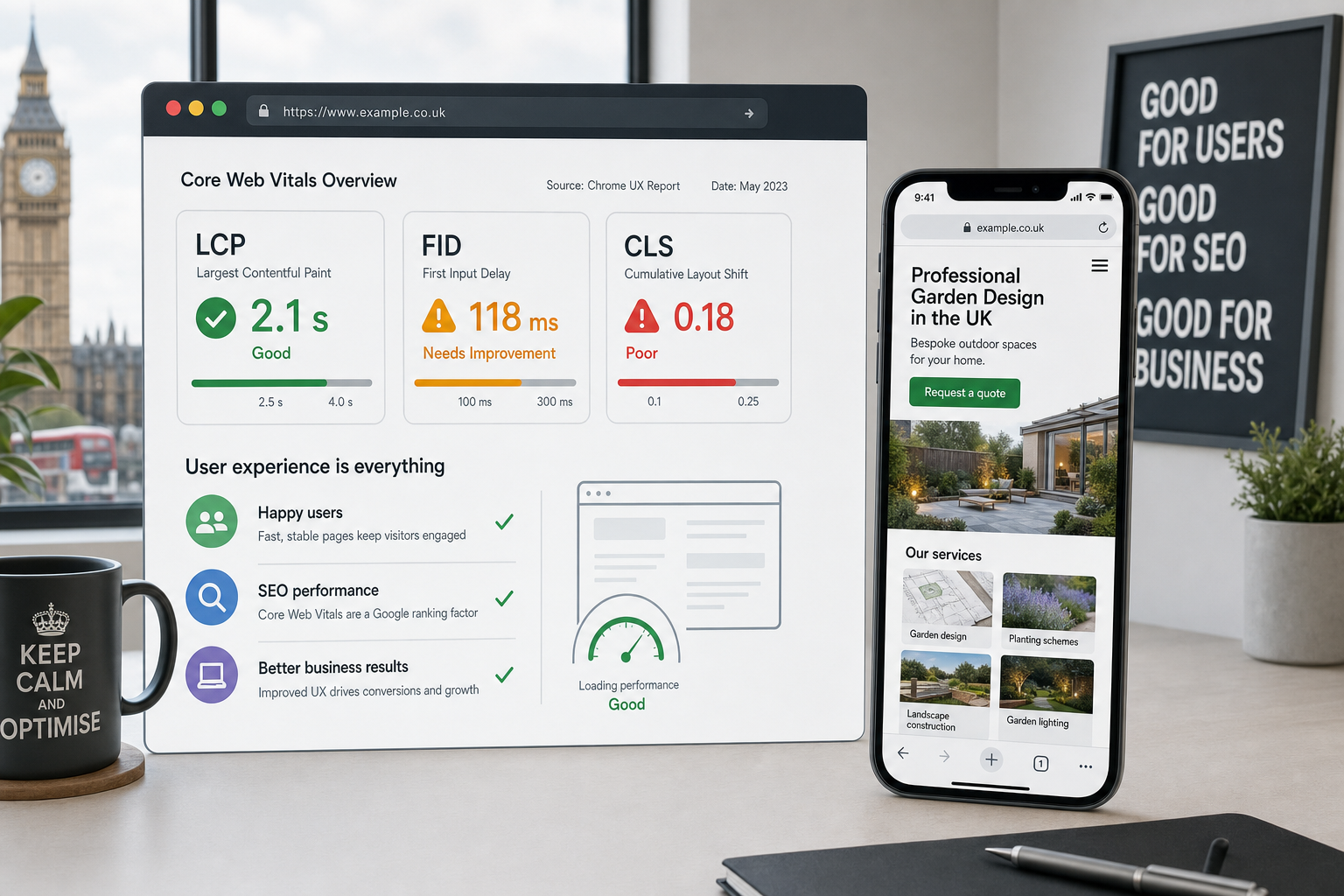
Many voice searches begin on mobile devices, and even smart speaker searches may lead users to continue on a phone. A website that is difficult to read, slow to load or awkward to navigate can quickly lose the enquiry. Mobile-friendly design is therefore a practical requirement, not a luxury.
Your website should display well on smaller screens, with readable text, clear buttons and simple navigation. Telephone numbers should be tappable. Contact forms should be short enough to complete without frustration. If customers need directions, your address should be easy to find and compatible with map applications.
Speed is also important. Users making local searches are often impatient because they have an immediate need. Compressing images, reducing unnecessary scripts, using good hosting and keeping the design clean can all improve performance. A visually attractive website is valuable, but it should not come at the expense of speed or clarity.
Good website design for voice-led local search is about reducing friction. If an assistant recommends your business and the user visits your site, the next step should be obvious. Make it easy to call, book, enquire, visit or find out more.
Use reviews and reputation as trust signals
Reviews play a significant role in local decision-making. When a voice assistant returns a local recommendation, ratings and review volume can influence both visibility and customer confidence. A business with a healthy pattern of genuine reviews is usually more reassuring than one with no public feedback at all.
UK businesses should encourage satisfied customers to leave reviews on relevant platforms, while taking care not to pressure people or create artificial feedback. A simple follow-up email, printed reminder or polite request after a successful project can be enough. The key is to build reviews steadily and ethically.
Responding to reviews is also worthwhile. Thank customers for positive comments and respond calmly to criticism. A thoughtful response can show future customers that you listen and care. It also helps keep your public profile active and managed.
Reputation extends beyond review platforms. Local press mentions, community involvement, industry associations, case studies and helpful social media activity can all contribute to a stronger online presence. Search engines are looking for confidence, and customers are doing the same.
Support local search with social media marketing
Social media is not a replacement for a well-built website or accurate local listings, but it can support local visibility and brand trust. Active social profiles help customers see that a business is current, approachable and engaged. They can also reinforce location, services, opening times, events and seasonal offers.
For local businesses, the most useful social media content is often practical and specific. A restaurant might share menu changes, opening hours, local event updates and behind-the-scenes photographs. A trades business might show completed work, maintenance tips and service area reminders. A professional services firm might answer common questions and explain when customers should seek advice.
Consistency matters. Your business name, logo, location and contact details should match your website and listings. If a customer hears your name through a voice assistant and then checks your social profile, the experience should feel joined up. Branding, tone of voice and visual identity all help people recognise and trust you.
Social media can also generate questions that inform your website content. If customers repeatedly ask the same things in comments or messages, those questions may deserve a place on your website. This is a useful way to make your content more conversational and better aligned with voice search behaviour.
Choose and manage your domain name carefully
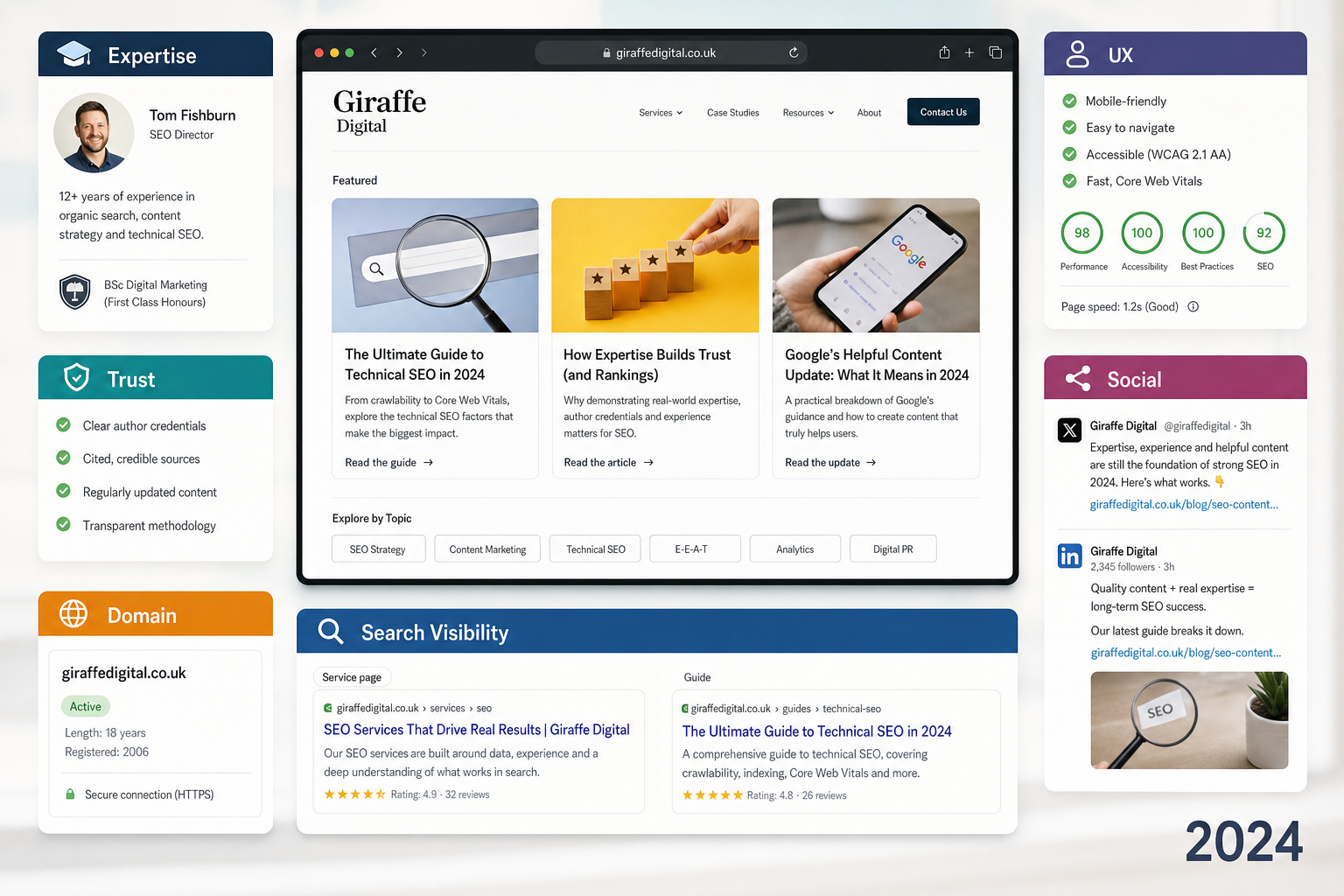
Your domain name is an important part of your digital identity. It appears on business cards, vans, signage, emails, search results and social profiles, so it should be memorable, credible and easy to say aloud. This matters even more as voice interaction grows. If customers cannot pronounce, spell or remember your web address, they may struggle to find you later.
When registering a domain, choose a name that reflects your business clearly without being unnecessarily long. Avoid confusing hyphens, unusual spellings and strings of numbers unless they are already central to your brand. For UK organisations, a suitable UK domain can help reinforce location and trust, although the best choice depends on your brand, audience and long-term plans.
It is sensible to register a domain in the business name where possible, and to consider protecting close variations if they are likely to be confused with your brand. Keep ownership details, renewal dates and administrative access well managed. Losing control of a domain can cause serious disruption to your website, email and marketing.
Your domain should also support professional email. A branded email address usually appears more credible than a generic personal address, particularly when customers are comparing local suppliers. Small trust signals can make a real difference when a voice search introduces your business to someone for the first time.
Technical signals that help search engines understand you
Behind the visible design of a website, technical details help search engines interpret and rank content. For local businesses, this includes clear page titles, descriptive headings, well-written meta descriptions, logical navigation and accurate contact information. Each key service should have a suitable page rather than being hidden in a vague list.
Structured data can also help identify information such as business type, address, telephone number, opening hours and reviews where appropriate. It does not guarantee a voice search result, but it gives search engines clearer signals about your organisation. Technical implementation should be accurate and tested carefully, as misleading or poorly applied markup can create confusion.
Security is another important consideration. A website using HTTPS provides a more reassuring experience for users and is increasingly expected across the web. Contact forms, booking forms and any page collecting personal information should be handled responsibly, with clear privacy information and appropriate safeguards.
Analytics and call tracking can help you understand how customers find and contact you, although they should be set up carefully so they do not create inconsistent telephone numbers across local listings. Measuring enquiries, direction requests, form submissions and popular pages can guide future improvements.
Practical examples of voice-led local searches
Imagine a homeowner asking, ‘ Who can fix a leaking tap near me?’ The assistant may look for nearby plumbers with strong local relevance, clear service information, good reviews and accurate opening hours. If your plumbing website has a clear emergency repairs page, your local listing is complete and your phone number is correct, you are in a stronger position.
Consider a family asking a smart speaker, ‘ What time does the garden centre close?’ If the listing has not been updated for seasonal hours, the answer may be wrong or a competitor may be suggested instead. Simple maintenance of business information can therefore protect real footfall.
Or take a professional services business. A potential client might ask, ‘ Find an accountant near me for small businesses.’ A firm with a well-structured small business accounting page, local contact details, positive reviews and helpful answers to common questions is better aligned with that query than a firm whose website only says ‘ welcome to our practice’ without detail.
Preparing your business for the future of local search
Voice assistant local search will continue to develop as devices become more capable and users become more comfortable speaking to technology. However, the best preparation is not to chase every new feature. It is to build strong digital foundations: accurate data, useful content, mobile-friendly design, trustworthy reviews, consistent branding and sensible technical optimisation.
For many UK businesses, the first step is an audit. Check how your business appears in map results, search results, directories and social platforms. Search for your own services using natural questions. Look at your website on a mobile phone. Ask whether a new customer could quickly understand what you do, where you operate and how to take the next step.
Voice search rewards clarity. It favours businesses that make information easy to interpret and action easy to complete. By improving the quality and consistency of your online presence, you not only prepare for voice assistants; you improve the experience for every customer who finds you online.
For business owners considering a new website, SEO campaign or wider digital strategy, voice assistant local search should be part of the conversation. It is not about replacing traditional search marketing. It is about recognising how customer behaviour is changing and making sure your business is ready to be found when it matters most.