A strong domain name is one of the simplest digital assets a business can own, yet it has a lasting effect on branding, marketing and customer trust. Before a visitor sees your website design, reads your copy or makes an enquiry, they may first encounter your web address on a business card, in a search result, on a van, in a directory listing or through social media. A short, clear and memorable domain name gives your business a better chance of being found, remembered and recommended.
For many UK business owners, choosing a domain name happens early in a website project. It can feel like a quick administrative task, but it deserves careful thought. A domain is not just a technical address; it is part of your brand language. It influences how people talk about your company, how easy it is to type your website address and how confidently potential customers judge your online presence.
Why a memorable domain name matters
A memorable domain name reduces friction. If someone hears your business mentioned at a networking event, spots your web address on printed material or sees it in a local advert, they should be able to recall it without struggling. The easier it is to remember, the more likely it is that a prospective customer will visit your site later.
Shorter names tend to work well because they are easier to type and less prone to mistakes. This is especially important when people are using smartphones, where typing long addresses can be awkward. Mobile internet use continues to grow, and more customers are checking websites while travelling, shopping or comparing services away from their desks. A concise domain name supports this behaviour.
A memorable domain name also helps word-of-mouth marketing. If your web address is complicated, includes unusual spellings or needs to be explained every time, you risk losing traffic. A name that can be spoken once and understood immediately is far more useful for day-to-day business development.
Keep it short, clear and easy to spell
The best domain names are usually straightforward. They avoid unnecessary words, awkward punctuation and confusing combinations of letters. A business should aim for a name that looks tidy in print, sounds natural when spoken and can be typed correctly after being heard aloud.
As a general guide, avoid making a domain longer than it needs to be. If your full company name is long, consider whether a shorter trading name, brand phrase or abbreviation would work better. For example, a company called South Coast Commercial Cleaning Services Limited may find that a shorter branded domain is more practical than using every word in the company name.
Spelling matters too. If you regularly need to say, “that is with a double letter” or “there is no hyphen”, the name may cause unnecessary confusion. Some businesses can make distinctive spellings work, but only when the wider brand is strong enough to support them. For most small and medium-sized businesses, clarity is more valuable than cleverness.
- Choose words that are easy to pronounce.
- Avoid unusual spellings unless they are central to your brand.
- Keep the domain as short as possible without losing meaning.
- Say the name aloud before registering it.
- Ask someone unfamiliar with the business to spell it after hearing it once.
Use keywords carefully, but do not rely on them alone
It can be tempting to register a domain that contains a popular search phrase. For example, a plumber in Bristol might consider a domain that includes the words Bristol and plumbing. This can be useful if it is natural, relevant and still brandable. However, a keyword-heavy domain should not be treated as a substitute for good search marketing.
Search engines are becoming better at assessing the quality and relevance of websites. A domain that matches a search phrase exactly is not enough on its own. Your website still needs useful content, a clear structure, good technical performance, relevant page titles, appropriate headings, local signals where applicable and genuine authority built over time.
A balanced approach is often best. If you can include a service, location or product category in a way that remains neat and memorable, it may help users understand what you do. If the result is long, clumsy or too generic, it may be better to focus on a stronger brand name instead.
For example, a domain such as brightonaccountants.co.uk may be descriptive, but it could be difficult to protect as a distinctive brand. A shorter branded name with strong website content, local landing pages and consistent citations may be more effective in the long run.
Choose the right extension for your market
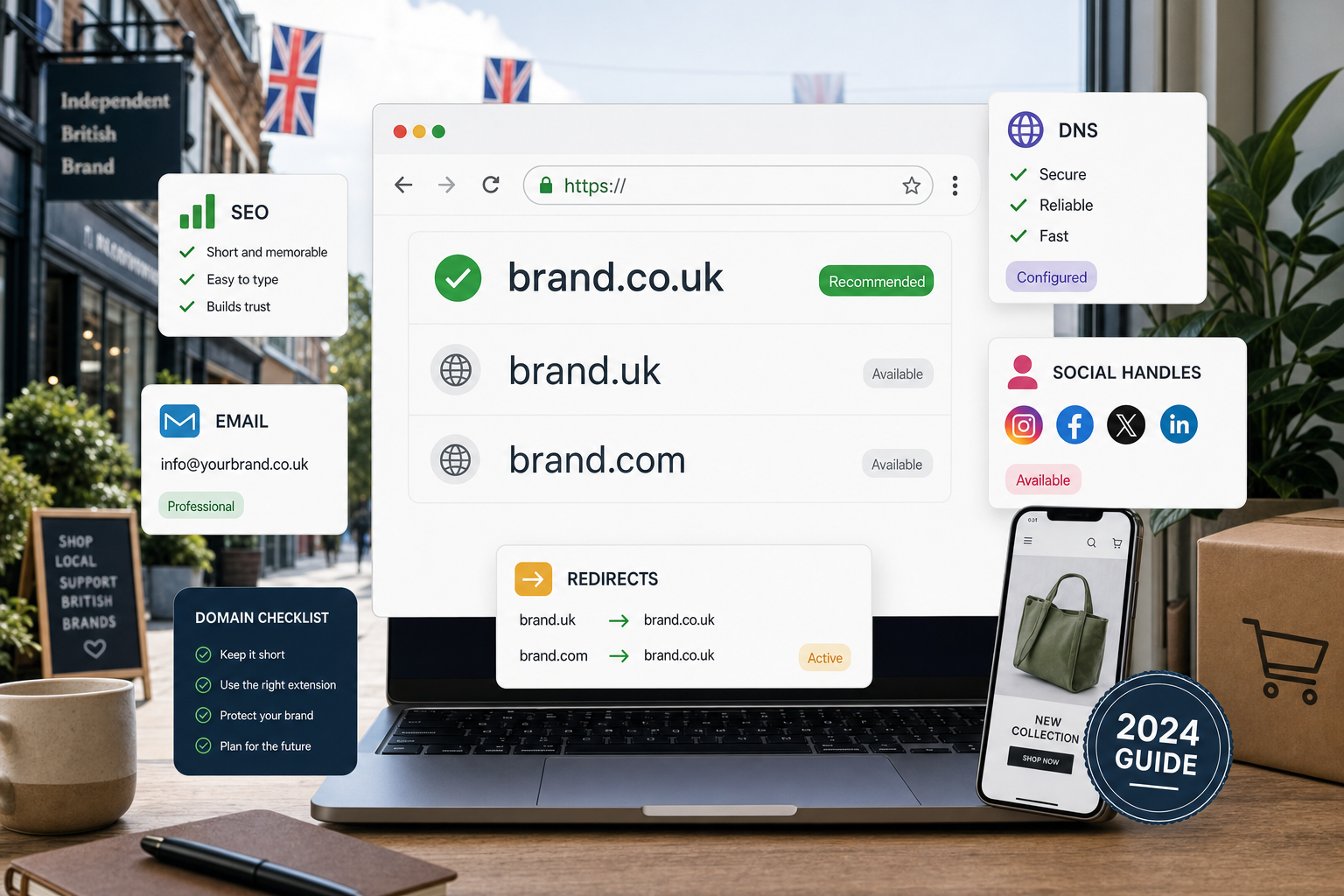
For UK businesses, the domain extension should reflect the audience you want to reach. The familiar .co.uk extension remains a strong choice for organisations primarily serving the UK market. It signals local relevance and is widely recognised by customers. A .com domain can also be valuable, particularly for companies trading internationally or wanting a broader commercial feel.
If the ideal .co.uk is available and your business is UK-focused, it is usually sensible to secure it. If the .com version is also available and relevant to your plans, consider registering it as well to protect the brand. Businesses with ambitions beyond the UK may wish to think carefully about how the domain will appear to customers in other countries.
There is now a wider choice of domain extensions becoming available, and some may suit particular sectors. Even so, most business owners should consider customer familiarity before choosing something unusual. A creative extension may look distinctive, but it can also require more explanation. If customers naturally expect a .co.uk or .com address, choosing a less familiar option may increase the risk of mistyped visits or missed enquiries.
Be careful with hyphens, numbers and similar names
Hyphens can make a domain harder to communicate. A name such as city-print.co.uk may be readable on paper, but it is less convenient to say aloud. People may forget the hyphen or visit a competitor with the non-hyphenated version. If the clean version of a domain is already taken, think carefully before settling for a hyphenated alternative.
Numbers can also cause confusion. If your domain includes the number 4, some people may type four instead. If it includes 2, they may type to or too. Numbers can work well when they are already an established part of a brand, but they should be used with care.
It is also important to check for similar names. A domain that looks too close to another business may confuse customers and could create legal issues. Before registering, search for the name, look at businesses using similar wording and consider whether your choice is distinctive enough. This is especially important if you are planning to invest in signage, stationery, advertising or a full website design project.
Think about brand consistency across the web
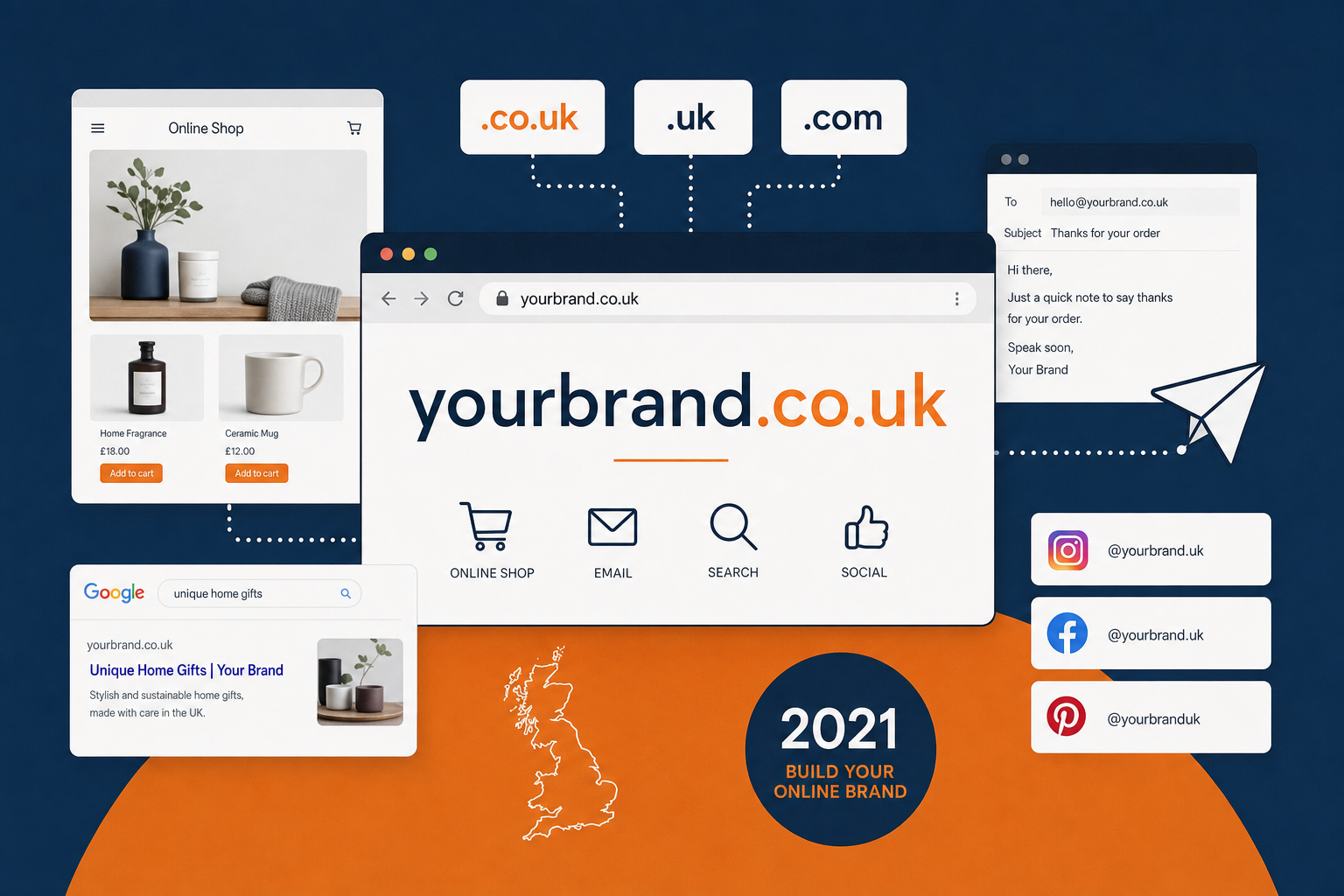
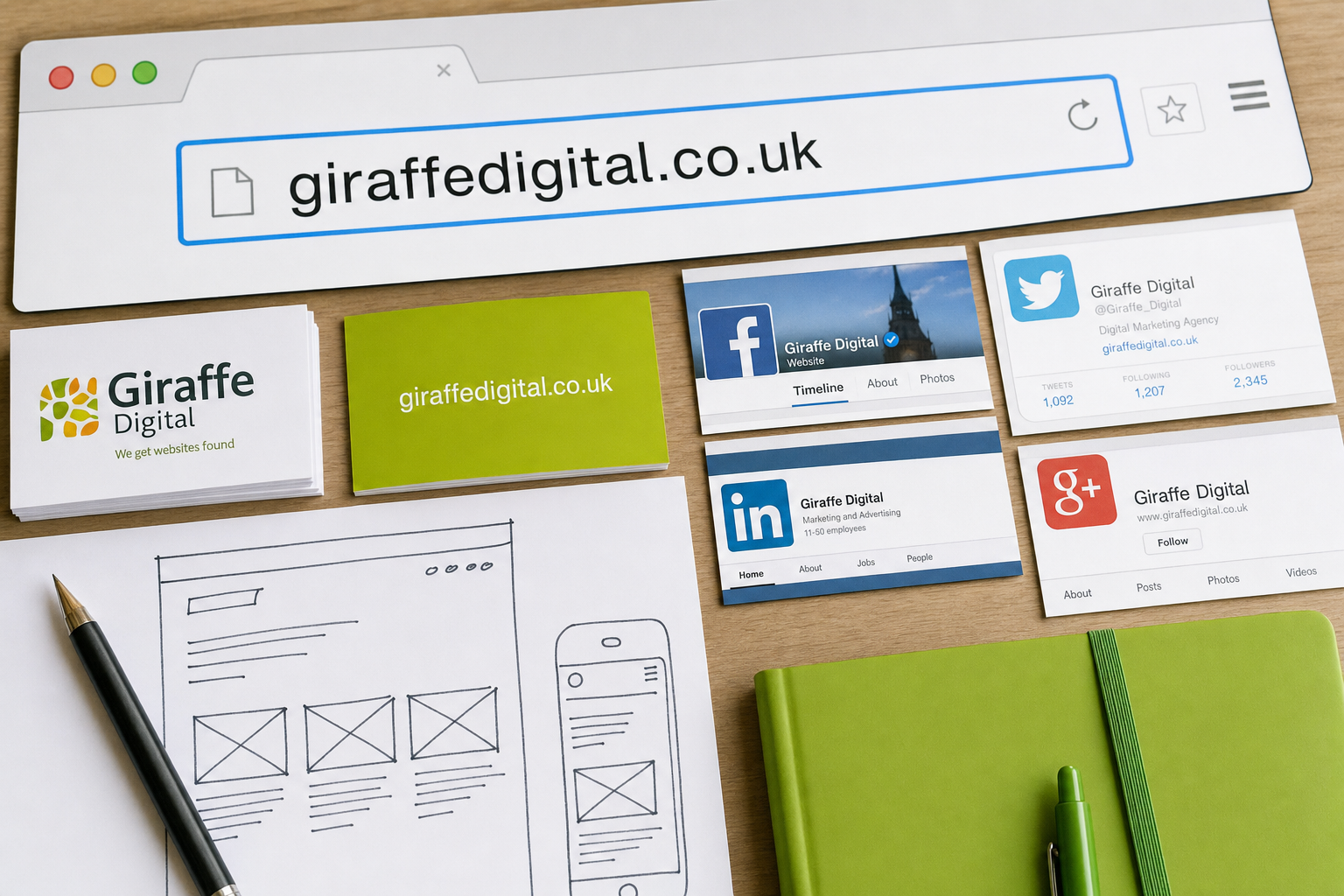
Your domain name should work alongside your broader digital presence. When possible, choose a name that can be used consistently across social media profiles, email addresses and printed materials. In 2014, many customers will look for businesses not only through search engines, but also through Facebook, Twitter, LinkedIn and Google+. If your web address and social handles are aligned, your brand becomes easier to recognise.
Before committing to a domain, check whether the same or a similar name is available on the social platforms you intend to use. Exact matches are not always possible, but consistency helps. If your website uses one name, your Twitter profile uses another and your Facebook page uses a third, customers may hesitate or wonder whether they have found the right organisation.
Consistency also helps with offline marketing. A short domain can sit neatly on business cards, shop fronts, exhibition stands, flyers, adverts and vehicle graphics. Long domains often need smaller text, awkward line breaks or extra explanation. A strong web address should be easy to display wherever your brand appears.
Consider email and everyday communication
Your domain will usually form part of your business email address, so think beyond the website. An address such as enquiries@yourbrand.co.uk looks more professional than relying on a free email service for business communication. It reassures customers that they are dealing with an established organisation and helps build trust at every point of contact.
Short domains make email addresses easier to use. If your domain is long and complicated, staff may have to spell it repeatedly over the phone. Customers may also make mistakes when sending enquiries, which can lead to missed opportunities. A concise domain supports smoother communication across sales, customer service and administration.
It is also worth thinking about future departments or staff addresses. A flexible domain should work with names such as sales, support, accounts or bookings. If the result looks unwieldy, the domain may not be practical enough for everyday business use.
Register carefully and protect your asset
Once you have chosen a domain, registration should be handled carefully. Make sure the domain is registered using accurate business details and that you retain control of renewal information, login access and administrative contacts. A domain may seem small, but losing access to it can affect your website, email and marketing activity.
Keep a secure record of where the domain is registered, when it is due for renewal and who has authority to manage it. If an agency, designer or IT provider assists with registration, ensure your business remains clearly identified as the registrant. This avoids confusion if you change supplier in future.
It can also be sensible to register obvious variations where they are commercially important. This might include common misspellings, the .com version of a .co.uk name or a shorter version used in campaigns. You do not need to register every possible variation, but protecting the most likely alternatives can reduce customer confusion and help safeguard the brand.
Make the domain part of your website strategy
A good domain name is only one part of an effective online presence. Once chosen, it should support a website that is well designed, easy to navigate and built around the needs of your audience. A memorable domain can bring people to the front door, but the site itself must persuade them to stay, read, enquire or buy.
From a design perspective, the domain should sit comfortably within your visual identity. It should be easy to include in the header, footer, contact page and downloadable documents. It should also be clear in search results, where page titles and descriptions need to encourage clicks.
From a marketing perspective, the domain should be used consistently in campaigns. Whether you are promoting a seasonal service, a local offer, an event or a new product range, your web address should be simple enough to remember and trustworthy enough to click. If you use separate campaign pages, keep the main domain clear and use readable page addresses wherever possible.
A memorable domain name will not do all of your marketing for you, but it can make every piece of marketing easier to act upon.
Checklist before you decide
Before registering a domain, take time to test it properly. What looks good in isolation may be less effective once spoken, printed or placed in a search result. The following checklist can help you make a more confident decision.
- Is the domain short enough to remember after one or two mentions?
- Can it be spelt correctly by someone hearing it over the phone?
- Does it avoid unnecessary hyphens, numbers and awkward wording?
- Does it suit your UK audience and preferred domain extension?
- Is it distinctive enough to support your brand?
- Will it look professional on business cards, adverts and signage?
- Can it work well as part of an email address?
- Are suitable social media names available, or close enough for consistency?
- Does it leave room for the business to grow beyond one narrow service?
- Have you checked for confusingly similar businesses or names?
Final thoughts for business owners
Choosing a Short, Memorable Domain Name is a business decision as much as a technical one. It affects branding, website design, search visibility, social media marketing and everyday communication. A strong choice can serve your organisation for years, while a poor one can create confusion and make marketing harder than it needs to be.
For most UK businesses, the best domain is short, clear, easy to spell and aligned with the brand. It should give customers confidence and make it simple for them to find you again. By taking the time to choose carefully at the beginning of a website or digital strategy project, you create a stronger foundation for all the online marketing that follows.