Choosing a domain name is one of the first practical decisions for any new online project. It affects how customers remember you, how your brand appears in search results, how email addresses look on business cards, and how confidently people share your website with others. Domain registration may seem like a quick administrative task, but the choice you make can influence your website design, search marketing, social media activity and wider digital strategy for years to come.
For UK business owners, the best domain is usually one that is clear, credible and easy to use in everyday conversation. It should support your brand rather than restrict it, and it should be simple enough to work on a van, leaflet, invoice, exhibition stand, email signature and social media profile. Before you brief a designer, commission copy or begin planning search engine optimisation, it is worth taking time to select and secure the right domain.
Start with the purpose of the project
The right approach to domain registration depends on what the website needs to achieve. A small local business launching its first brochure website has different priorities from a retailer planning an online shop, a charity running a campaign or a national organisation preparing a long-term content strategy.
Begin by asking what visitors are likely to do when they arrive. Are they expected to telephone, request a quotation, book an appointment, download information, join a mailing list or buy online? A domain that suits a simple local service may not be flexible enough for a wider brand in the future. Equally, an overly abstract name might make it harder for people to understand what the business offers when they first see it.
For many new projects, the strongest choice is the trading name, provided it is easy to spell and not easily confused with another organisation. If your business name is long, consider whether a shorter version could work for the website while still remaining recognisable. If people regularly abbreviate your name in conversation, that abbreviation may be worth protecting too.
Brand names, keywords and memorable domains
There is often a temptation to register a domain built entirely around popular search terms. A name such as townplumberexample.co.uk may appear useful because it describes both location and service, while a brand-led name may feel less obvious at first glance. Search visibility matters, but a domain should not be judged on keywords alone.
Search engines consider many signals beyond the domain name, including the quality of the website, relevance of page content, structure, links, freshness, location signals and user behaviour. A keyword-rich domain can help communicate relevance, but it will not compensate for thin content, poor design or a weak proposition. Search quality continues to reward sites that provide useful, original material and discourage tactics that exist mainly to manipulate rankings.
A strong brand domain is usually easier to build over time. It is more distinctive in search results, easier to protect in marketing and less likely to look dated as the business expands. If your services may change, avoid a domain that locks you into one product, one town or one narrow offer unless that is a deliberate and permanent decision.
Good domain names tend to share a few qualities. They are short enough to remember, clear when spoken aloud, easy to spell and free from unnecessary punctuation. Hyphens can make a domain more readable in some cases, but they can also be forgotten when someone types the address directly. Numbers can cause similar confusion, particularly when people are unsure whether to use the digit or spell the word. If you must explain the domain every time you say it, keep looking for a better option.
Choosing the right domain extension
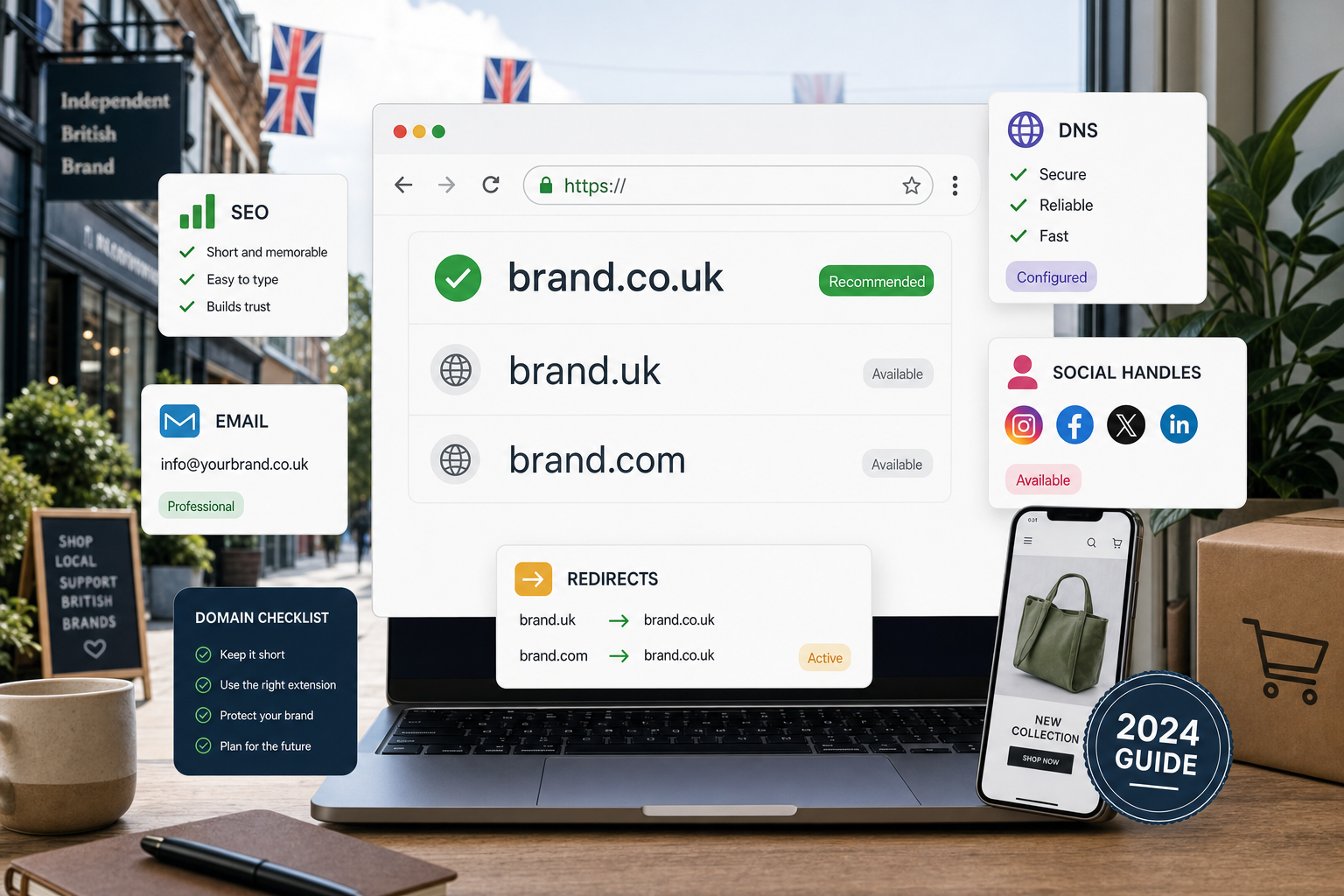
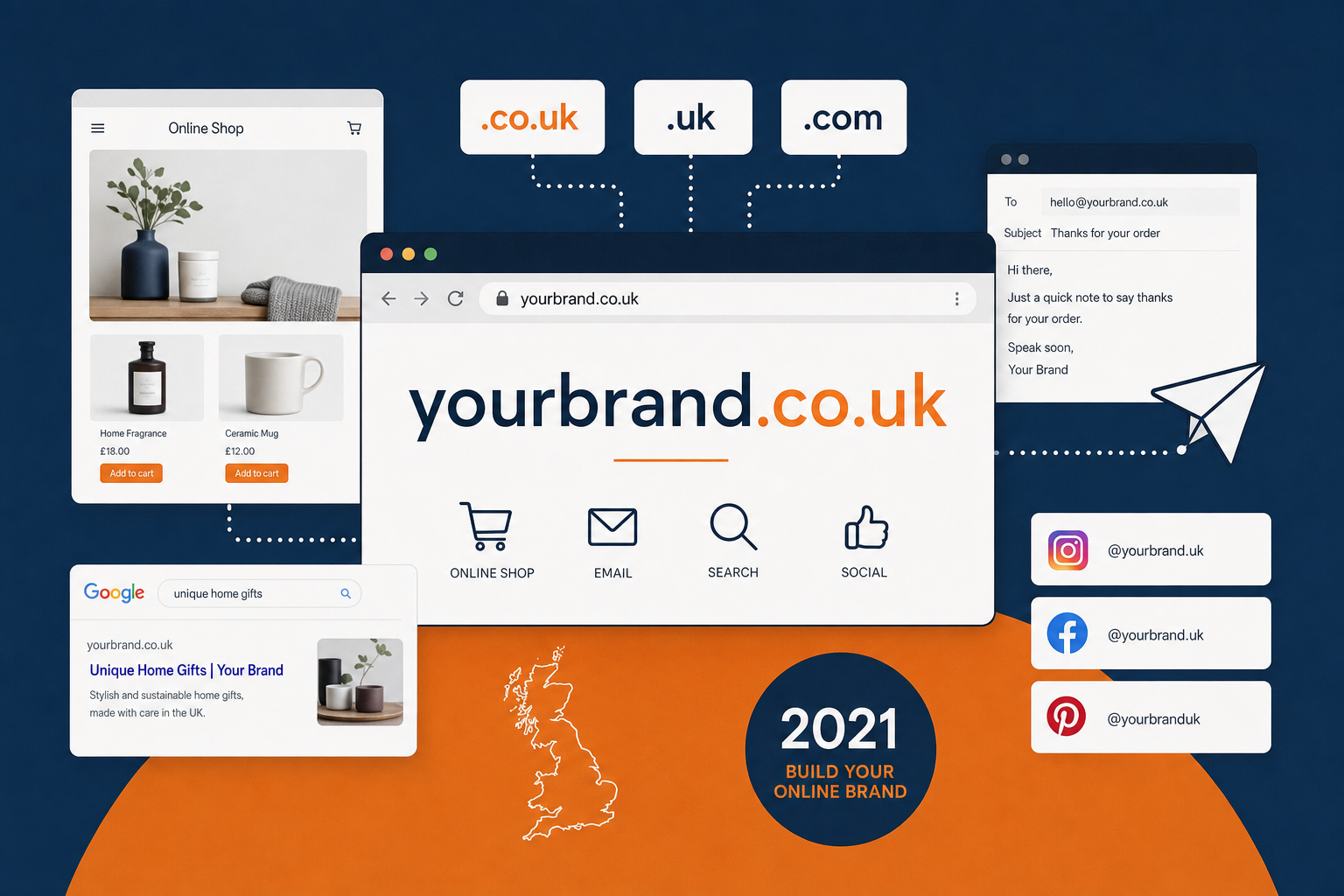
For most UK businesses, .co.uk remains a natural and trusted choice. It signals a UK presence, suits local and national organisations, and is familiar to customers. If your work is international, or if you want a domain that feels broader than the UK market, .com may also be a sensible option. Where possible, many businesses choose to secure both the .co.uk and .com versions to reduce confusion and protect the brand.
Other extensions can be appropriate in specific circumstances. A charity or not-for-profit organisation may consider .org.uk, while certain technology or information-led projects may use other established extensions. However, it is important to think about customer expectations. If your audience is likely to assume your website ends in .co.uk, choosing a less common extension may lead to mistyped visits and missed enquiries.
Consistency is also important for email. An address such as enquiries@yourbusiness.co.uk looks professional and reinforces the website. Free email addresses can be useful at an early planning stage, but they do not create the same level of trust once a business is actively marketing itself. Securing the domain early allows you to set up branded email alongside the website build.
Check availability, confusion and legal risk
Before completing domain registration, check more than simple availability. Search for the name online and consider whether there are similar businesses using similar wording. A domain can be technically available while still creating confusion in the market. If another organisation in your sector already uses a near-identical name, customers may struggle to distinguish between you, and your marketing may become less effective.
It is also wise to consider trade marks and established trading names. A domain should not be chosen because it resembles a competitor or borrows from a well-known brand. This can create legal risk and damage trust. If the name is central to a serious business launch, professional advice on brand protection may be worthwhile before investing in design, print, signage and online promotion.
Think carefully about spelling variants. If your business name includes a word that is commonly misspelt, or if there is a British and American spelling difference, you may decide to secure the most likely alternatives and point them towards the main website. This is particularly useful for campaigns where the domain will be heard on radio, mentioned in conversation or printed in places where people cannot click it directly.
Register domains with ownership and control in mind
A domain is a business asset. It should be registered in the correct name, with accurate contact details and clear internal responsibility. Problems often arise when a domain is registered by an individual employee, a former supplier or an email address that is no longer monitored. If renewal notices are missed or login details are lost, the website and email can be disrupted.
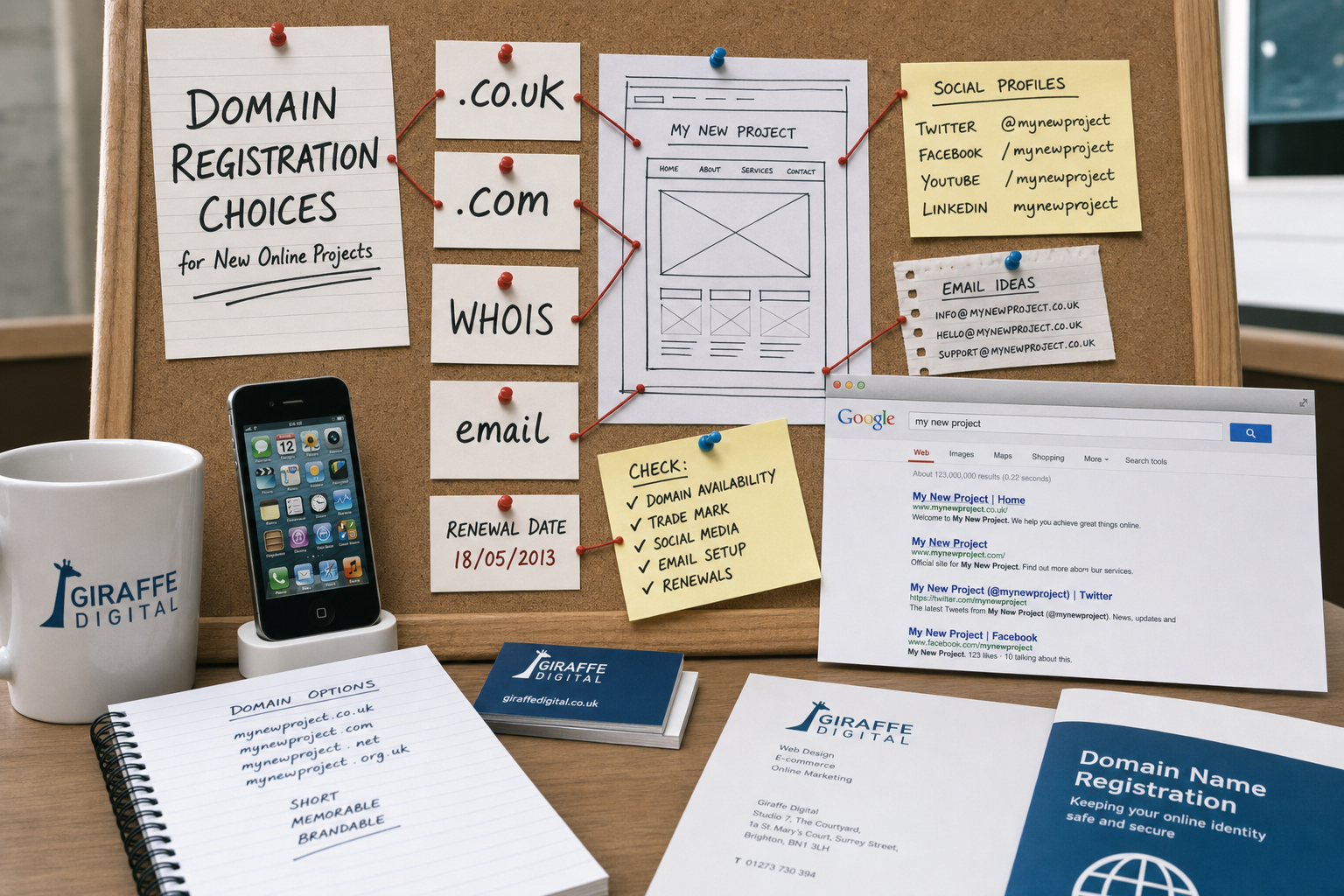
Keep a record of the domain, registration date, renewal date, account access, associated email address and DNS arrangements. This information should be stored securely and be accessible to the people responsible for the website. If a web design or marketing partner helps with the registration process, make sure ownership and management responsibilities are understood from the outset.
It is also sensible to decide how many related domains to register. You do not need to own every possible variation, but protecting the obvious ones can prevent avoidable confusion. The main trading name, key extension alternatives and common spelling variants are usually more valuable than a large collection of speculative domains that will never be used.
How domain registration affects website design
A domain name becomes part of the visual identity of a website. It appears in the browser address bar, in search results, on printed material and across digital campaigns. A concise domain gives designers more flexibility when creating navigation, headers, footers, calls to action and campaign graphics. Long domains can still work, but they often require more care in layout and typography.
When planning a new website, think about how the domain will sit alongside the logo, strapline and page titles. If the business name is descriptive, the website copy can focus on benefits, proof and calls to action. If the brand name is more abstract, the homepage and meta information need to explain clearly what the organisation does. The domain and design should work together to reassure visitors that they are in the right place.
Mobile browsing is also increasingly important. More customers are using smartphones and tablets to search, compare and make contact. A domain that is easy to type on a small touchscreen has practical value. Avoiding complicated punctuation, unusual spellings and excessive length can reduce friction for mobile users, especially when they are entering the address from a printed advert or recommendation.
Domains, SEO and local search
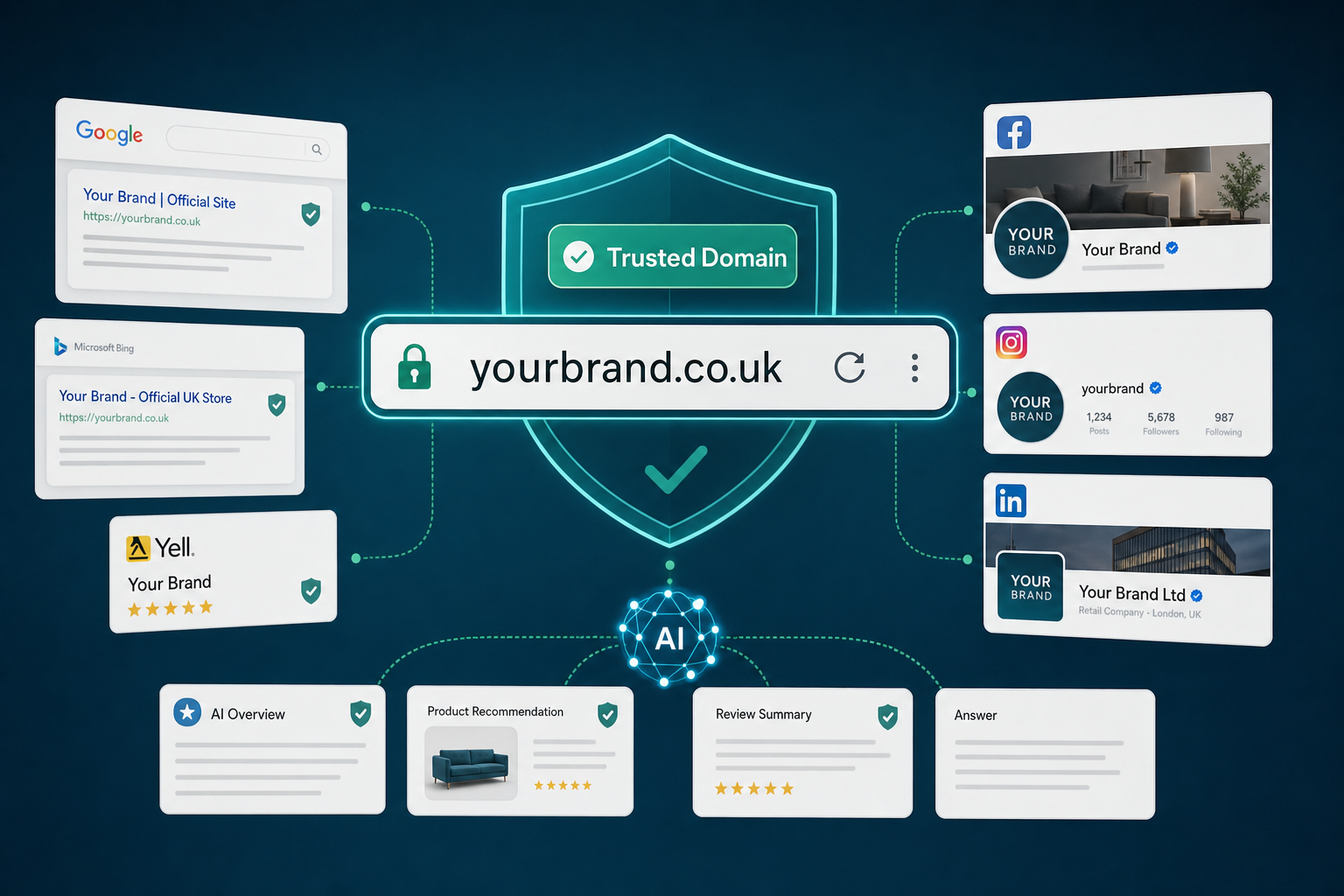
Domain registration is only one part of search engine optimisation, but it provides a foundation. A clear domain can help users understand relevance, and a stable domain allows authority to build over time. Frequent domain changes can cause disruption if they are not handled carefully, so it is better to choose a name you can continue using as the business grows.
For local businesses, location can be handled in several ways. Including a town or region in the domain may be useful if the business is permanently tied to that area, but it is not the only route. Well-written page titles, local landing pages, address information, map listings, customer-focused content and relevant links can all support local visibility. If you may expand into nearby areas, a domain based solely on one location could become limiting.
When launching a new website, ensure that the domain resolves consistently. Decide whether the preferred address will use www or not, and make sure the alternative points properly to the chosen version. This helps avoid duplicated versions of the same pages and gives search engines a clearer signal. If replacing an older website, redirects from old pages to relevant new pages should be planned carefully so existing bookmarks, links and search visibility are not wasted.
Content remains essential. A good domain may encourage clicks, but useful pages earn enquiries. Service pages, case information where appropriate, frequently asked questions, blog posts, guides and clear contact details all help visitors make decisions. The domain gets people to the door; the website must then prove that the business is credible and relevant.
Using domains in social media and campaigns
Domain choice should also be considered alongside social media marketing. Businesses are increasingly using Facebook pages, Twitter profiles, LinkedIn company information and other social platforms to build awareness and direct people back to their websites. Where possible, aim for consistency between the domain and social profile names. This makes the brand easier to recognise and reduces the risk of customers following the wrong account.
A short, memorable domain is useful in offline and online campaigns. It fits more neatly into print adverts, vehicle graphics, exhibition stands, flyers and email newsletters. It is also easier for people to share verbally. If you are running a specific campaign, you might register a campaign domain, but in many cases it is better to direct attention to a well-structured page on the main website. This keeps authority, analytics and brand recognition focused in one place.
If additional domains are used for marketing, they should be managed carefully. They can point to a relevant page or micros-site, but they should not create a confusing web of duplicate content. Every domain should have a clear purpose; otherwise, it becomes another item to renew and maintain without adding real value.
Planning for the long term
The best domain registration decisions are made with future plans in mind. Consider how the business may develop over the next few years. Will you add new services? Trade in more than one location? Recruit staff? Sell online? Publish regular advice? Work with larger clients? A domain that feels suitable for a small launch should still feel credible when the organisation is more established.
It is worth discussing domain choices early with your web designer or digital marketing adviser. The domain affects technical setup, email, analytics, search strategy, printed material and launch planning. If the website is being redesigned rather than built from scratch, the existing domain may already have value through age, links, recognition and customer familiarity. In such cases, changing domain should be done only for a strong reason and with a careful migration plan.
Remember that domain registration is not just about securing an address. It is about choosing the public route into your organisation online. A good domain supports trust, makes marketing easier and gives your website a stable base from which to grow.
Checklist before you register
- Keep it clear: choose a domain that is easy to say, spell and remember.
- Think about your audience: select an extension that feels familiar and trustworthy to your customers.
- Protect the obvious variants: consider key alternatives, common misspellings and the main UK or international extensions where relevant.
- Avoid unnecessary complexity: be cautious with hyphens, numbers and unusual spellings.
- Check for confusion: search for similar names in your sector before committing.
- Plan for SEO: choose a stable domain and support it with useful content, sound structure and consistent redirects where needed.
- Consider social media: check whether matching or similar profile names are available on important platforms.
- Keep control: ensure the domain is registered with accurate ownership details and monitored renewal information.
For a new online project, domain registration is a small step with long-lasting consequences. By choosing carefully at the start, UK business owners can avoid confusion, strengthen their brand and give their website design and digital marketing a more reliable foundation.