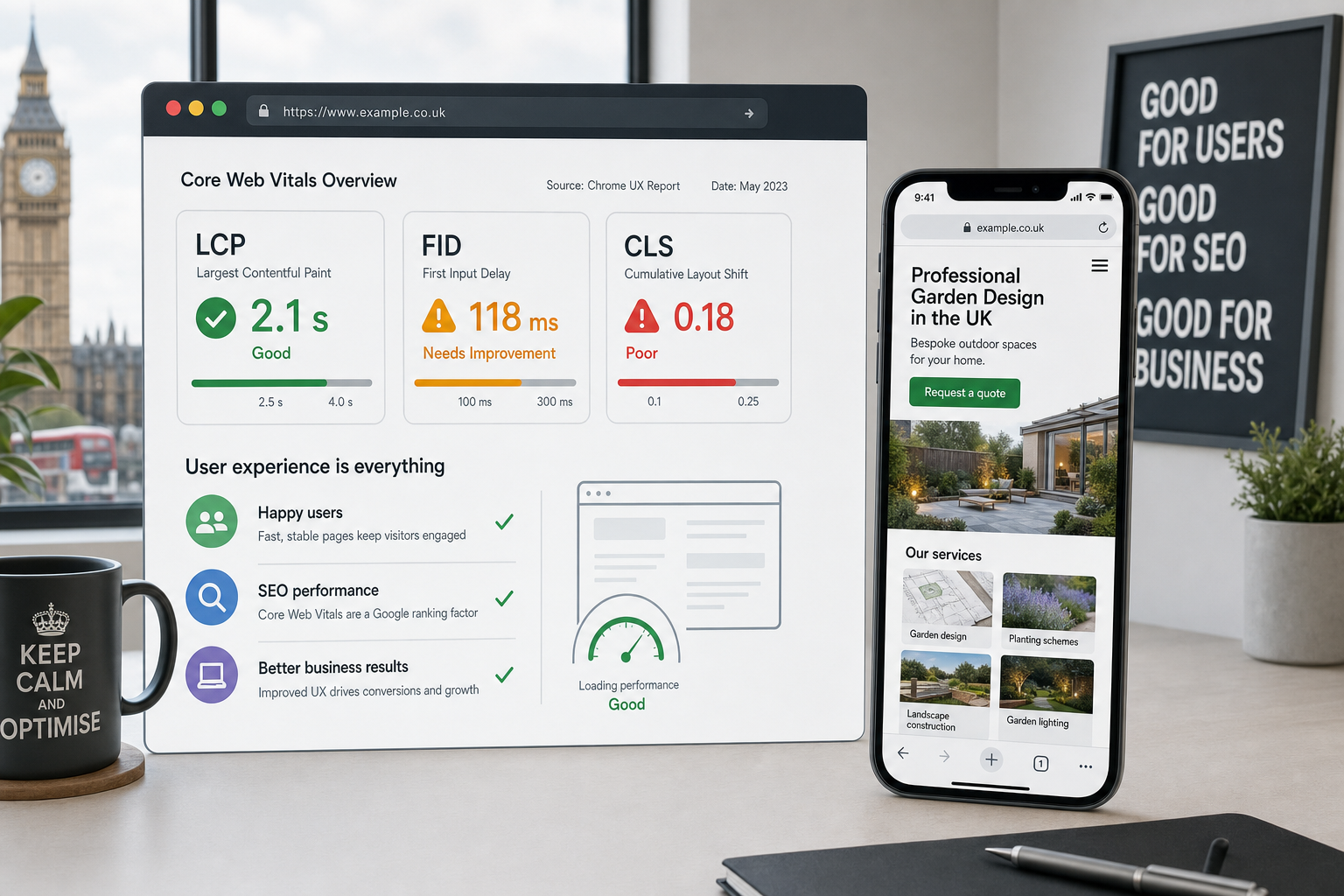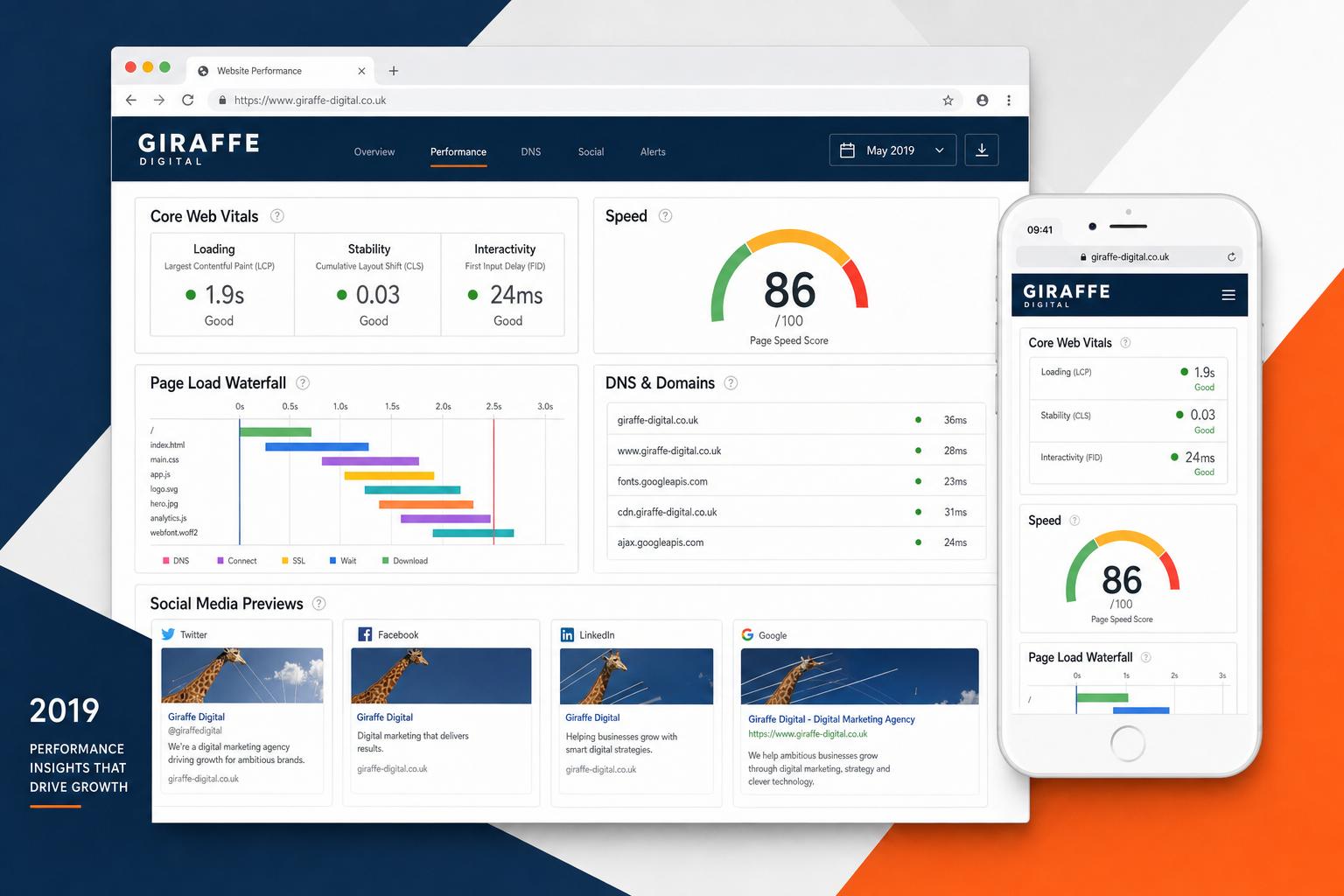
Website performance is no longer a purely technical topic reserved for developers. For business owners, it affects enquiries, online sales, search visibility, advertising returns, brand perception and customer confidence. The phrase Core Web Vitals is a useful way to bring the most important performance conversations into one place: how quickly a page feels useful, how smoothly it responds, and how reliable the experience feels across phones, tablets and desktops. In April 2019, with more customers browsing on mobile connections and search engines placing increasing emphasis on user experience, these vital signs deserve a place in every website design and digital marketing discussion.
What do we mean by Core Web Vitals
Core Web Vitals can be understood as the essential health checks that show whether a website feels fast, usable and trustworthy to real visitors. They are not about admiring a website in a design presentation or relying on a single performance score. They are about the lived experience of a customer who taps a link from search, opens a page from a social media post, or returns to your site after seeing your brand elsewhere online.
For a UK business owner, the practical questions are straightforward. Does the first useful content appear quickly? Can a visitor interact without delay? Does the layout behave predictably as images, fonts and scripts load? Can somebody on a typical mobile connection find your phone number, complete an enquiry form or browse your services without frustration?
These questions matter because people make judgements quickly. A slow or awkward website suggests that a business may be less organised, less reliable or less attentive than a competitor. A smooth website, by contrast, reassures visitors before they have read a full page of copy.
Why performance matters for business, not just SEO
Search visibility is an important reason to care about performance, but it is not the only reason. Website speed and stability also influence how much value you get from every other marketing activity. If you are investing time in social media marketing, email campaigns, print materials with a web address, or pay-per-click advertising, the website needs to convert that attention into action.
Consider a local service business sharing a new blog post on Facebook and LinkedIn. If the page takes too long to show useful content on a phone, a potential customer may abandon it before seeing the service offer. A retailer promoting seasonal products on Instagram may lose sales if product images are too heavy or the checkout feels sluggish. A professional services firm may spend months building credibility through content, only to lose confidence at the point where a visitor attempts to load a case study or contact form.
Performance is therefore a commercial issue. It affects lead generation, conversion rate, bounce rate, advertising efficiency and brand reputation. It also supports accessibility, because a simpler, faster website is often easier to navigate for more people and on a wider range of devices.
The search marketing context in 2019
By 2019, search marketing is firmly connected to user experience. Mobile-friendly design, secure browsing through HTTPS, useful content and technically sound pages are all part of a sensible SEO programme. Search engines want to send users to pages that answer their query and provide a good experience when they arrive.
This does not mean that a fast website with thin content will outrank a slower website with excellent relevance and authority. SEO still depends on many factors, including content quality, page structure, internal linking, backlinks, local relevance and how well a page matches search intent. However, performance is one of the areas where businesses can often make practical improvements that benefit both search engines and visitors.
Tools such as browser developer tools, Lighthouse audits and PageSpeed-style reports can help identify opportunities, although they should be used with judgement. A score is a starting point for discussion, not the whole story. The best approach is to test key pages, understand where visitors arrive from, and prioritise changes that improve the experience for real customers.
How Core Web Vitals affect website design
Good website design is not simply about appearance. It is about clarity, hierarchy, speed and confidence. A visually impressive homepage can still perform poorly if it is weighed down by oversized images, multiple tracking scripts, unnecessary animation or complicated layouts that shift as the page loads.
When planning a new website, performance should be discussed from the first design stage. Large hero images may look attractive, but they need to be prepared in appropriate dimensions and file formats. Video backgrounds should be used with care, particularly on mobile. Fonts should be chosen and loaded sensibly. Navigation should be simple enough for customers to find important pages quickly. Calls to action should appear early and remain easy to use.
Designers, developers and marketers should work together rather than treating performance as a late technical fix. For example, a campaign landing page can be designed with a clear headline, compressed imagery, a short enquiry form and a prominent phone number. That approach supports both conversion and performance, without sacrificing brand quality.
Practical ways to improve your website’s vital signs
Most businesses do not need to begin with a complete rebuild. Many performance gains come from careful housekeeping and a clear understanding of what each page is meant to achieve. The following actions are a useful starting point.
- Compress and resize images: Uploading a photograph straight from a camera or stock library can make a page unnecessarily heavy. Prepare images at the size needed for the design.
- Review plugins and scripts: Content management systems can become slow when too many add-ons, widgets or tracking codes are installed. Keep what is useful and remove what is not.
- Use reliable hosting: A well-built site still needs a hosting environment that responds quickly and copes with expected traffic.
- Enable caching where appropriate: Caching can reduce the amount of work needed to serve repeat visits and commonly requested pages.
- Prioritise visible content: Important text, navigation and calls to action should appear quickly rather than being delayed by less important assets.
- Keep forms simple: Every unnecessary field adds friction. Ask only for the information needed to respond properly.
- Test on real devices: Desktop testing is not enough. Check the experience on mobile phones and slower connections.
These steps are not glamorous, but they often make the difference between a website that merely exists and a website that actively supports business growth.
Core Web Vitals and social media marketing
Social media marketing often creates short bursts of attention. A post may perform well for a few hours, sending visitors to a blog article, event page, product range or campaign landing page. If that page is slow or awkward, the opportunity is wasted.
Visitors arriving from social platforms may be especially impatient because they are usually browsing casually. They may be on a train, at lunch, between meetings or using mobile data. The landing page must therefore make sense quickly. The headline should connect clearly with the post they clicked. The page should load without heavy delays. The next action should be obvious, whether that is reading further, booking a consultation, downloading a guide or making an enquiry.
It is also worth remembering that social media platforms present your website content through previews. Clear page titles, concise descriptions and suitable images help your links look more credible when shared. Performance and presentation work together: the post earns the click, and the website must then earn the enquiry.
Domain registration, trust and technical foundations
Performance conversations should not ignore the basics of domain registration and technical set-up. Your domain name is part of your brand, your search presence and your customer’s first impression. A clear, memorable domain can make marketing easier across print, email, social media and word of mouth.
For UK businesses, a relevant .co.uk or .uk domain can be a strong choice, while .com may also be appropriate for organisations with broader markets or established brand use. The best option depends on availability, customer expectations and long-term brand plans. Avoid overly long domains, confusing spellings, unnecessary hyphens and names that are too close to another organisation’s brand.
Once registered, the domain should be managed carefully. Keep renewal details up to date, ensure the domain is registered to the correct organisation, and maintain access to the account used to manage it. DNS records should be handled accurately, particularly for the website, email and any verification needed for search or marketing platforms. HTTPS should be in place so visitors see a secure connection, especially where forms or account areas are involved.
These foundations may seem separate from Core Web Vitals, but they all contribute to customer trust. A fast website on a confusing domain, with insecure pages or unreliable email, still creates avoidable risk.
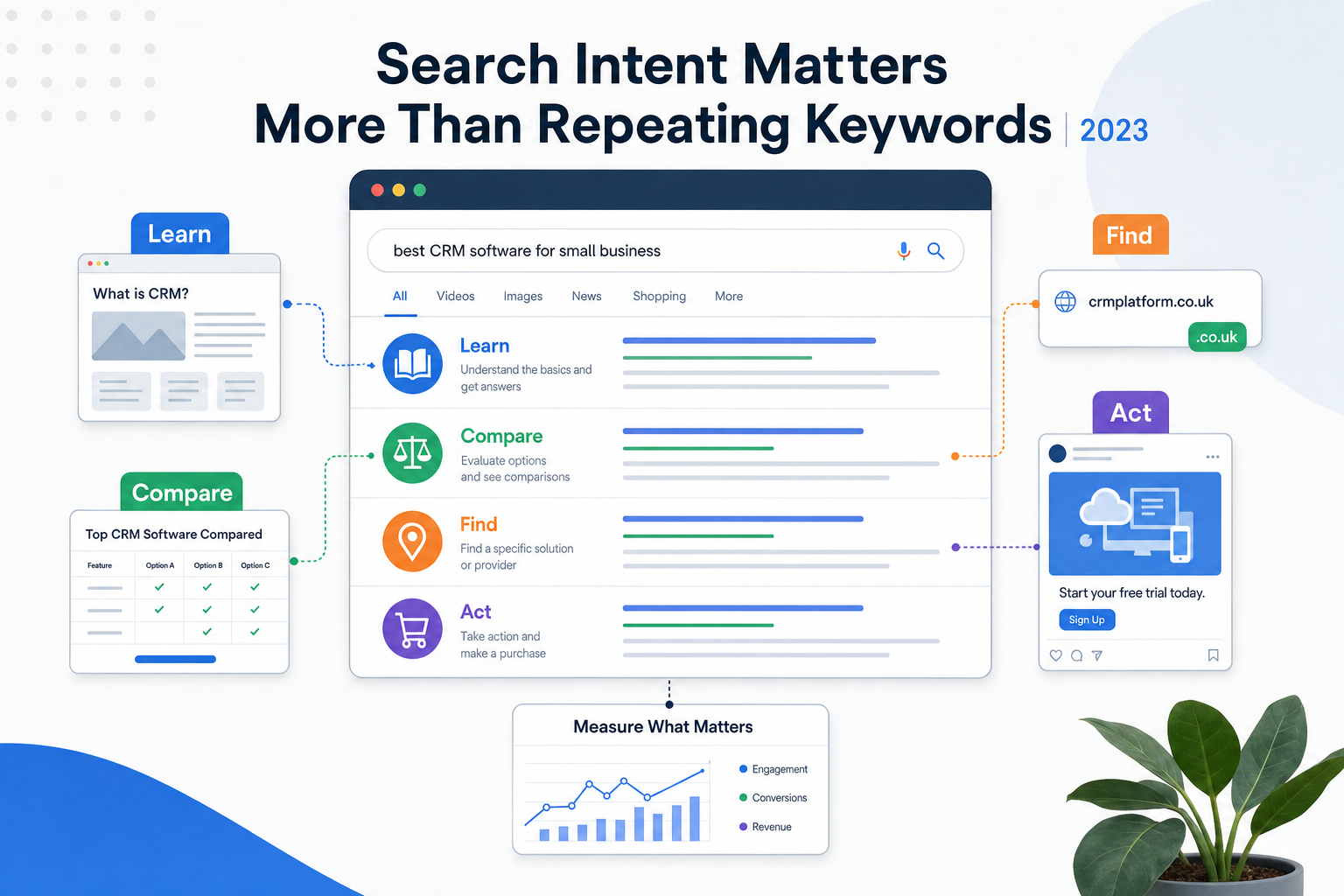
Measuring what matters
Measurement should focus on the pages that matter most to your business. For many organisations, that includes the homepage, main service pages, contact page, campaign landing pages, product pages and important blog posts. Testing only the homepage can hide problems elsewhere, particularly if your advertising or search traffic lands on deeper pages.
Use performance reports to identify heavy files, slow server responses, render-blocking assets and layout issues. Then compare those findings with analytics data. If an important page receives traffic but produces few enquiries, performance may be one of several factors to investigate alongside copy, offer, design and audience quality.
It is helpful to create a simple routine. Check important pages before launching a campaign, after adding new design features, and when installing new tracking or marketing tools. Performance can gradually decline as more content, scripts and visual elements are added, so ongoing care is better than an occasional emergency tidy-up.
Balancing creativity, technology and marketing
A strong website needs creativity, but creativity should be supported by technology rather than undermined by it. Animation, photography, video and interactive elements can all help communicate a brand when they are used with purpose. Problems arise when design features are added without considering how they affect the visitor’s device, connection and task.
The same principle applies to marketing technology. Analytics, remarketing tags, live chat, booking tools and social media integrations can be valuable, but each addition should earn its place. If a tool slows the site noticeably or distracts visitors from making an enquiry, it may be doing more harm than good.
The most effective digital strategies are joined up. Branding sets the tone, content answers customer questions, SEO improves discoverability, social media creates reach, and website performance helps convert attention into action. Core Web Vitals give business owners a practical language for discussing the performance part of that strategy without getting lost in jargon.
A sensible next step for UK businesses
If you are planning a new website or reviewing an existing one, begin by looking at the experience from your customer’s point of view. Search for your services on a mobile phone. Open your website from a social media post. Try to complete an enquiry form. Check whether key information appears quickly and whether the page feels stable and easy to use.
Then ask your website team for a performance review of your most important pages. The aim is not to chase perfection for its own sake, but to remove avoidable friction. A faster, clearer and more stable website supports SEO, strengthens brand trust and improves the return from your wider digital marketing.
Core Web Vitals are ultimately a business conversation as much as a technical one. They encourage organisations to focus on the details customers actually experience: speed, clarity, responsiveness and confidence. For UK businesses competing online in 2019, those details can make a meaningful difference.