Your domain name is one of the most visible parts of your business online. It appears on your website, email addresses, printed materials, search results, social profiles and advertising. For many UK businesses, it is also the first thing a potential customer will type, notice or remember. That makes domain protection an important part of your wider digital strategy, not just an administrative task to handle when a website is first built.
As more domain extensions become available, from familiar options such as .co.uk and .com to newer industry and location-based endings, business owners are increasingly asking which domains they should register and which can safely be ignored. The answer depends on your brand, market, competitors, customers and long-term plans. However, one principle remains consistent: protecting the right domains early is usually simpler than trying to recover them later.
What domain protection means for a business
Domain protection is the practice of registering and managing domain names that are important to your brand, trading names, products, campaigns and future growth. It is not about registering every possible variation. Instead, it is about making sensible decisions that reduce risk and support your marketing activity.
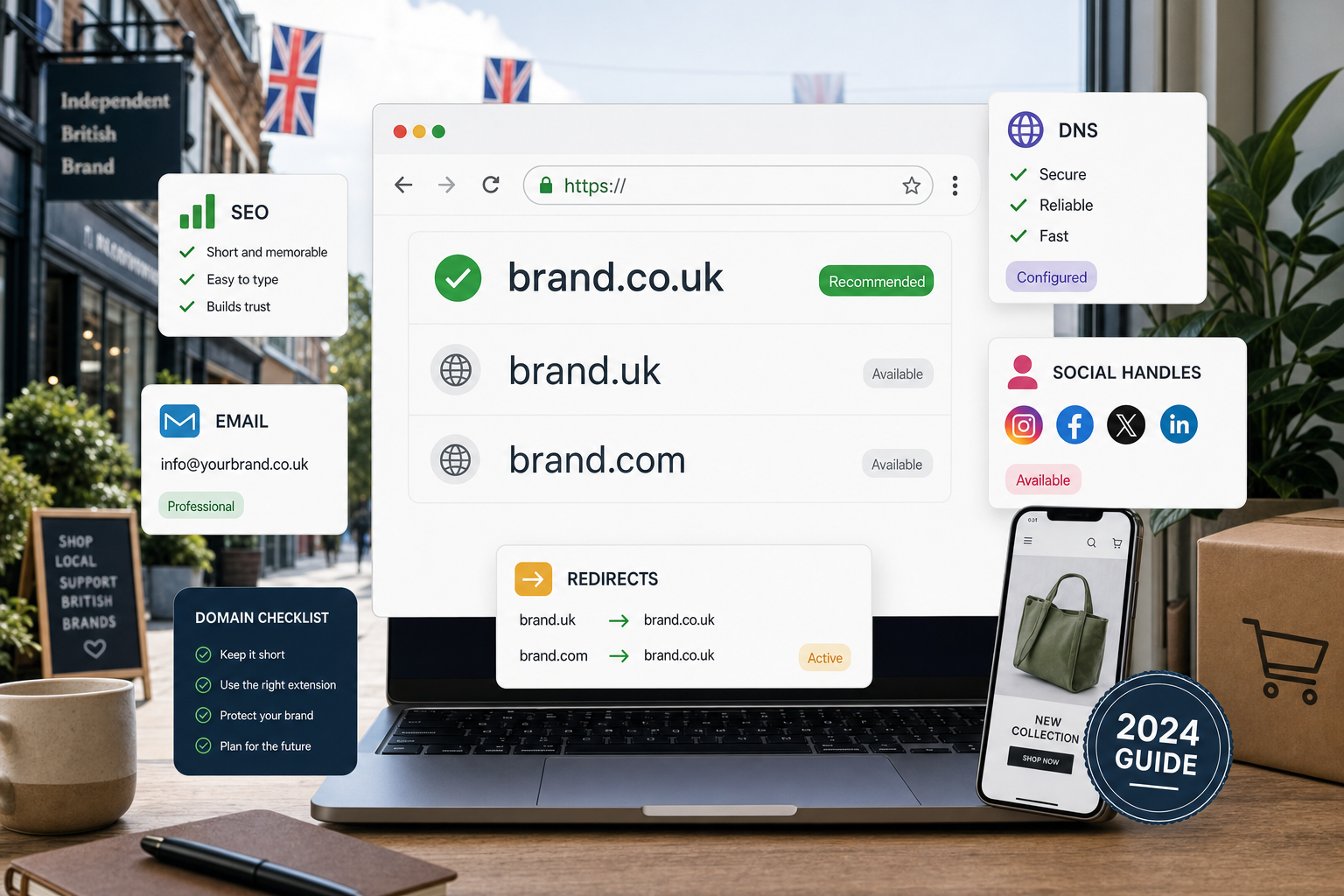
For example, a company trading as Greenfield Kitchens might own greenfieldkitchens.co.uk as its main website domain. It may also be wise to register greenfieldkitchens.com, greenfieldkitchens.uk and perhaps common spelling variations if customers regularly mistype the name. If the business plans to advertise a separate fitted bedroom service, it may also consider a relevant domain for that campaign. The purpose is to prevent confusion, protect brand reputation and make it easier for customers to find the correct business.
Good domain protection supports several areas of a digital strategy. It can help preserve brand consistency, prevent competitors or unrelated parties from using similar names, reduce the chance of misleading websites appearing in search results and make future marketing activity easier to manage. It also gives your web design and SEO team a clearer foundation when planning site structure, redirects and campaign landing pages.
Why multiple domain extensions matter
Many UK businesses naturally start with a .co.uk domain, and for good reason. It is familiar, trusted and strongly associated with UK organisations. However, customer behaviour is not always predictable. Some people still type .com out of habit, especially when they have heard a brand name verbally. Others may see .uk and assume it is the shorter version of the same business. If another party owns one of these important versions, there is potential for confusion.
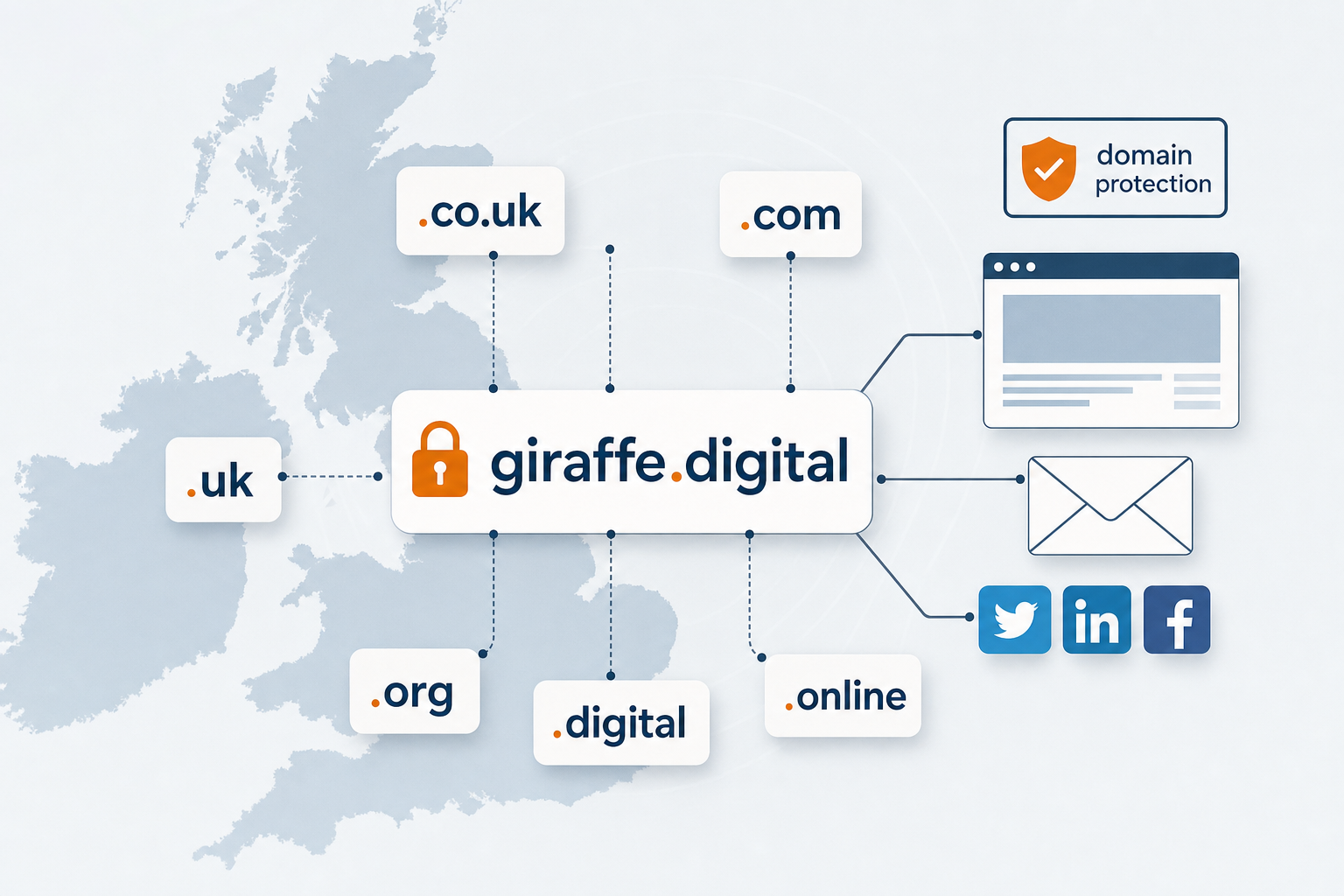
Owning multiple extensions can be useful when they are closely connected to your brand. Common examples include .co.uk, .com and .uk. Depending on the business, you may also consider extensions linked to your sector or location. The key is to assess whether an extension is likely to be used by your customers, competitors, partners or suppliers. If an extension has no clear commercial or protective value, it may not be necessary.
The introduction of many newer domain endings has created more choice, but also more uncertainty. A business does not need to buy every available extension to protect itself properly. In most cases, a carefully chosen small group of domains is more practical. This approach keeps administration manageable and avoids creating a confusing set of unused addresses.
Choosing which domains to protect
Start with the names people already associate with your business. This usually includes your registered business name, trading name and main brand name. If these differ, each may need consideration. For instance, a company may be legally registered under one name but trade publicly under another. Customers will search for the public-facing name, so that is often the priority for domain protection.
Next, consider the most likely extensions. For a UK business, .co.uk remains a natural choice. A .com domain can be valuable if you trade internationally, plan to grow outside the UK, or simply want to prevent confusion. The shorter .uk extension is also worth reviewing, particularly if you already hold the matching .co.uk. Many businesses have rights or opportunities associated with their existing UK domains, so it is sensible to check ownership and availability rather than assume everything is already covered.
After that, review obvious spelling issues. If your business name is frequently misspelt, contains a hyphen, includes a plural word or can be heard in more than one way, a small number of variations may be useful. A domain that captures a common mistake can be redirected to your main website, helping visitors reach the right place.
You should also think about product names and campaigns. If you are launching a new service with its own identity, securing the relevant domain before public promotion begins can prevent problems. The same applies to event names, long-running advertising campaigns or microsites. Even if the campaign later sits within your main website, owning the domain can give you flexibility.
How domains connect with website design and SEO
Domain decisions should not be made in isolation from website design and search marketing. A domain may look appealing on a business card, but it also needs to work in search results, email addresses, printed advertising, telephone conversations and social media profiles. A clear, memorable domain is usually stronger than one that is long, awkward or difficult to spell.
From an SEO perspective, it is important to understand that owning multiple domains does not automatically improve search visibility. Search engines want to rank useful, relevant pages, not a collection of thin duplicate websites. If you register several protective domains, they should normally redirect to the main website rather than host copied versions of the same content. This helps avoid confusion and keeps authority focused on the site you actually want customers to use.
When a new website is being designed, domain planning should be part of the project. Your web team should know which domain is the primary address, which domains will redirect, whether HTTPS will be used and how old pages will be handled if the business is moving from one domain to another. Proper redirects are particularly important when replacing an older website, as they help visitors and search engines find the correct pages after launch.
For local businesses, the domain should also be consistent with other marketing signals. Your business name, address and telephone number should be accurate across your website, local listings and social profiles. A strong domain will not compensate for inconsistent contact information or a poorly structured website, but it can form part of a more trustworthy online presence.
Avoiding brand confusion and reputational risk
The most obvious risk of not protecting important domains is that someone else may register them. This may be accidental, opportunistic or commercially awkward. A similar domain could be used for an unrelated business, a holding page, a misleading site or email addresses that look uncomfortably close to your own. Even when no harm is intended, customers can become confused.
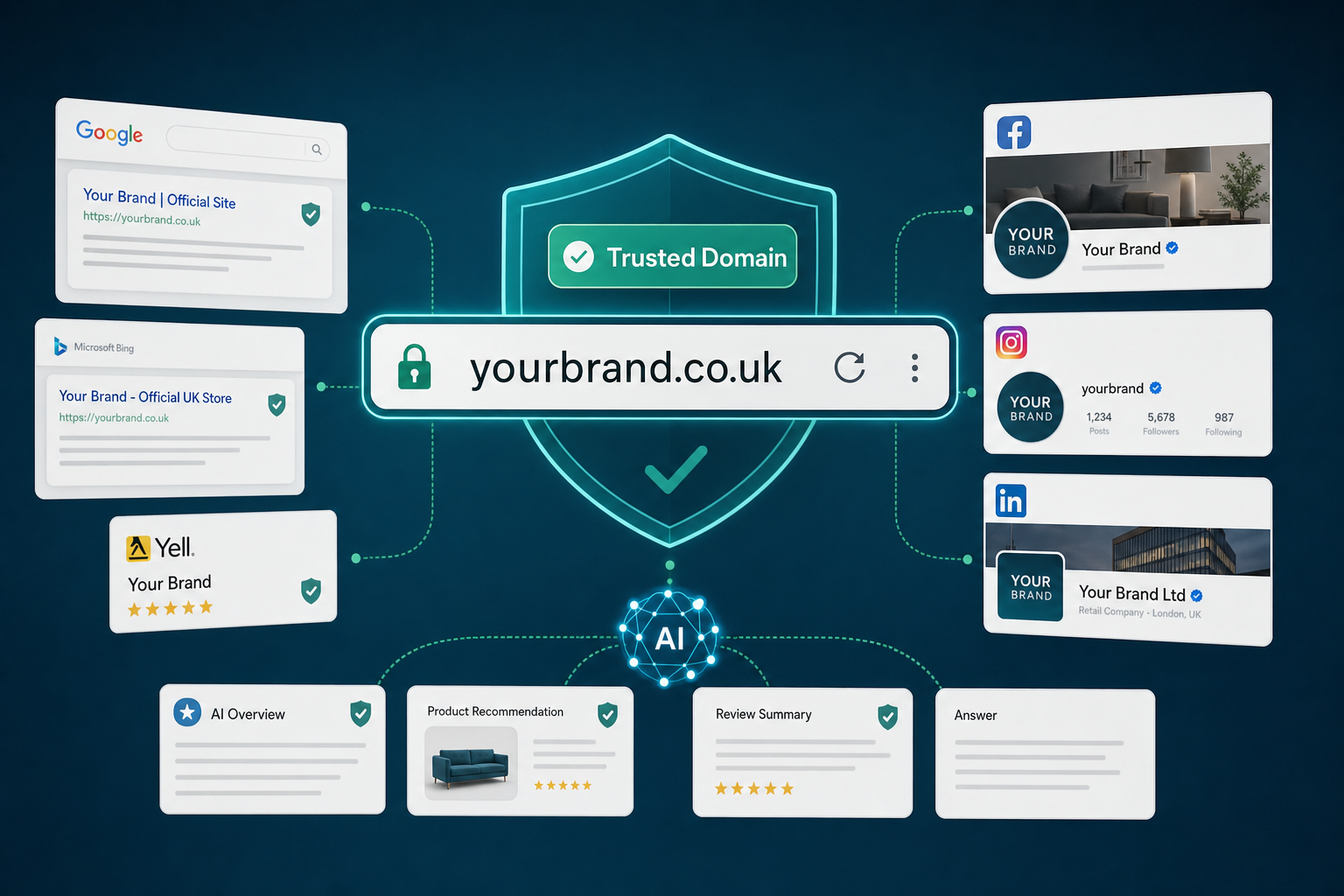
Reputation matters online because trust is built quickly and lost quickly. If a potential customer visits the wrong website or sends an enquiry to the wrong email address, the experience reflects badly on the brand they thought they were contacting. Domain protection reduces this risk by making it harder for confusion to occur in the first place.
It is also worth considering how your domain appears in offline marketing. Radio adverts, networking conversations, vehicle graphics and exhibition stands all rely on people remembering and typing the correct address later. If there is an obvious alternative extension that many people might try, protecting it can be a sensible precaution.
Using redirects properly
Registering extra domains is only the first step. They need to be configured correctly. In many cases, secondary domains should be redirected to the main website using permanent redirects. This ensures that visitors who type an alternative address land on the correct site, while search engines understand which domain should be treated as the primary location.
It is generally best to avoid running the same website on multiple domains without a clear technical plan. Duplicate versions can dilute signals, confuse analytics and make it harder to manage search performance. A single primary domain, supported by well-managed redirects, is usually cleaner and more effective.
If a business changes its name or moves from an old domain to a new one, careful redirect planning becomes even more important. Each important old page should point to the most relevant new page where possible, not simply to the homepage. This creates a better user experience and helps preserve search value built up over time.
Domain protection and social media marketing
Your domain name and social media presence should work together. When customers see your name on Facebook, Twitter, LinkedIn or Instagram, they should recognise the same brand they see on your website. If your domain and social handles are inconsistent, it can make the business look less established and can make word-of-mouth recommendations harder to follow.
Before launching a new brand, check whether the corresponding social media names are available as well as the domain. You may not use every platform immediately, but securing the most relevant profiles can prevent future complications. As with domains, the aim is not to collect every possible variation, but to protect the channels that matter to your audience.
Social campaigns can also benefit from memorable domains. A short campaign domain can be useful for print advertising or events, provided it redirects cleanly to the right landing page. This should be planned carefully so that campaign tracking, analytics and user experience all support the same objective.
Practical steps for UK business owners
If you are reviewing your domain protection, begin with a simple audit. List every domain you own, who controls it, when it renews, where it points and which email addresses depend on it. Many businesses discover that domains have been registered under old staff details, outdated email addresses or unclear arrangements. This creates unnecessary risk.
Next, identify your primary domain and confirm that it matches your current brand strategy. If your business has changed name, moved into new markets or launched new services, your domain portfolio may no longer reflect how customers see you. This is particularly common in established businesses where the original website was created several years ago.
Then review obvious gaps. Ask whether the main .co.uk, .com and .uk versions are available or already owned. Look at common spelling variations and any names connected to key products or campaigns. If you have a trade mark or distinctive brand name, ensure your domain decisions support that protection, while seeking appropriate legal advice where necessary.
Finally, make sure someone is responsible for ongoing management. Domains should be renewed on time, contact details should be kept current and technical settings should be documented. A domain that expires unexpectedly can disrupt your website, email and marketing activity, so it deserves the same care as other essential business assets.
Balancing protection with practicality
It is possible to overdo domain registration. Buying too many domains can create clutter, unnecessary administration and no meaningful marketing benefit. The best approach is balanced: protect the names and extensions that have a clear relationship to your business, but do not feel pressured into registering every variation that exists.
A useful test is to ask three questions. Could a customer realistically type or search for this domain? Could another party using it create confusion or reputational risk? Could it support a planned campaign, product or future market? If the answer is yes, it may be worth protecting. If not, it may be a distraction.
Domain protection works best when it is part of a wider digital plan. It should sit alongside professional website design, secure hosting, clear content, search engine optimisation, social media marketing and consistent branding. A well-chosen domain will not make a weak website perform well on its own, but it can strengthen the overall platform on which your online presence is built.
Building a stronger digital foundation
For UK business owners, domain protection is a practical way to reduce risk and support long-term digital growth. It helps customers reach the right website, protects important brand names and gives your marketing team more control over how the business appears online.
If you are planning a new website, rebrand or digital marketing campaign, review your domains before the work goes live. A short audit at the beginning of a project can prevent difficult conversations later. By protecting the right extensions, redirecting them properly and keeping your online identity consistent, you create a stronger foundation for search marketing, social media and future business development.