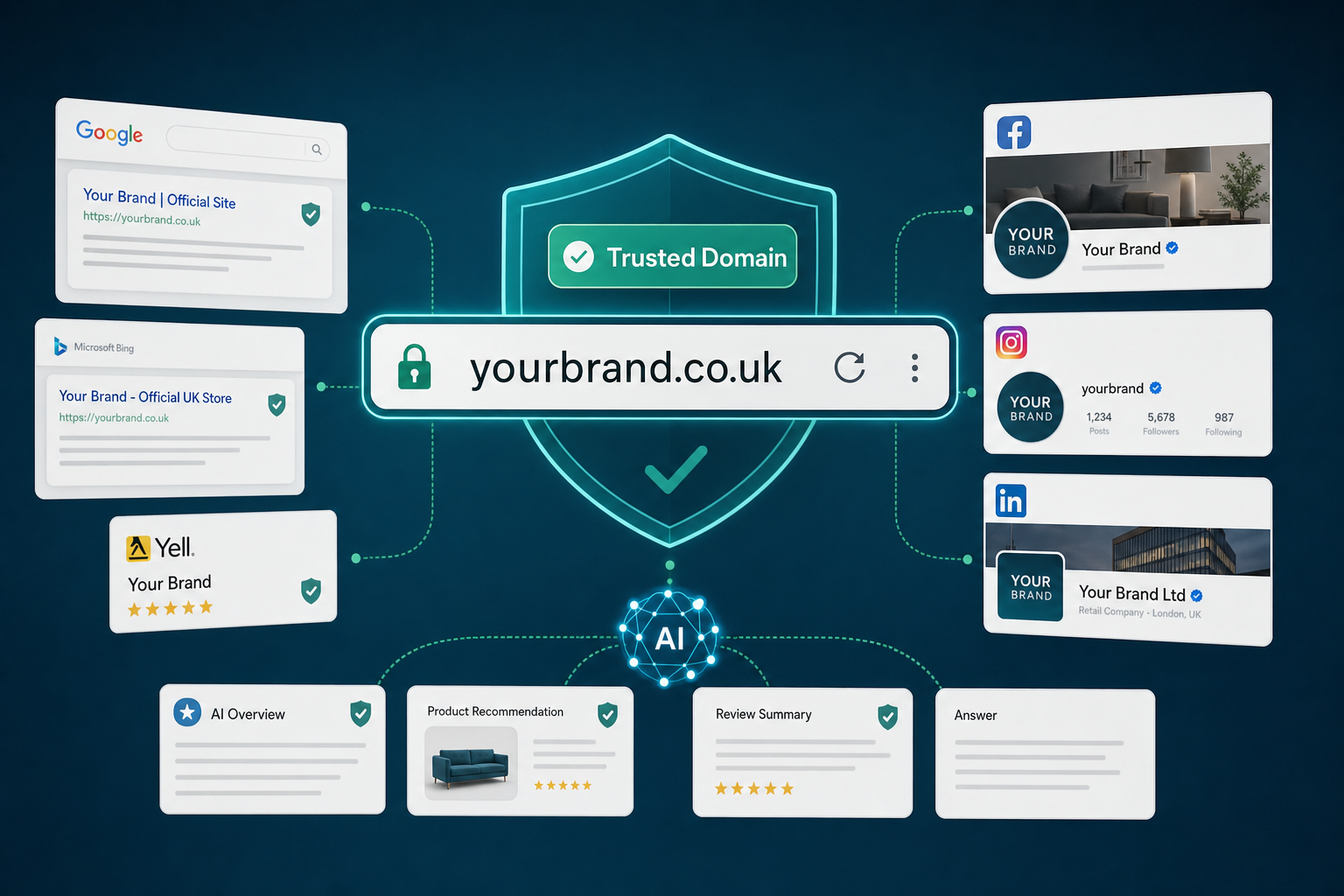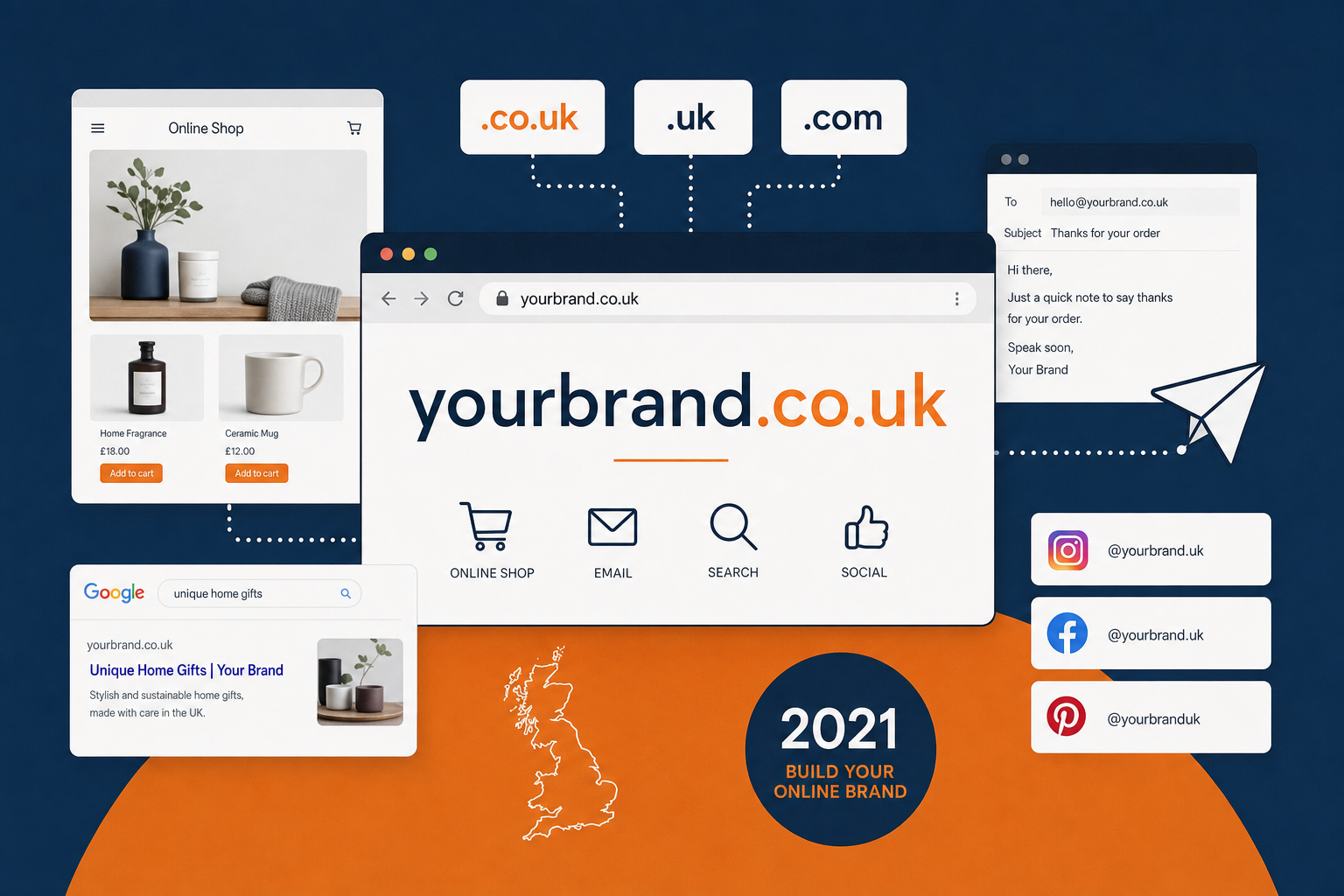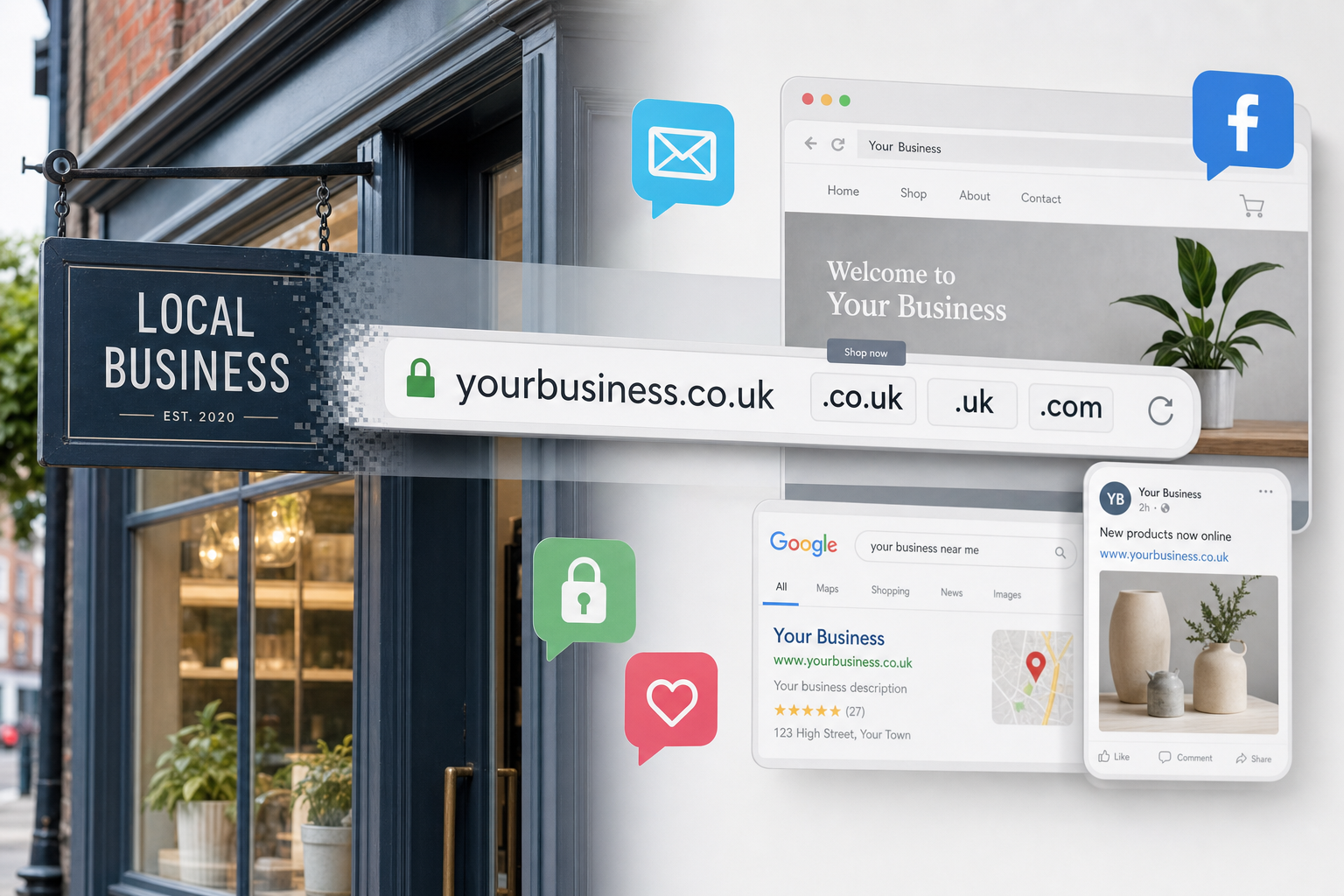
Your domain name is one of the first brand decisions your customers, search engines and social audiences will encounter. It appears on your website, email addresses, printed material, online profiles, paid adverts and business cards, so it needs to do more than simply point people to a homepage. For a new UK brand, the right domain can make your business easier to find, easier to remember and easier to trust. The wrong choice can create confusion, restrict future growth or make a website redesign more complicated than it needs to be.
These domain registration tips are written for business owners planning a new website, brand refresh or digital marketing programme in 2024. They focus on practical decisions: choosing a name that fits your brand, selecting suitable extensions, checking for risks, preparing for SEO and keeping your domain secure after registration.
Start with the brand, not just the availability search
It is tempting to begin by typing ideas into an availability checker and choosing the first address that is free. That approach can work for simple projects, but it often leads to names that feel compromised. Before checking availability, define what the domain has to achieve for your business.
Think about your positioning, audience and likely customer journey. A local accountancy firm, an online interiors shop and a national training provider all need different levels of description, memorability and flexibility. If your business is likely to expand into new services, locations or product categories, avoid a domain that boxes you into one narrow offer.
A useful test is to say the domain aloud as if you were giving it to a customer over the phone. If you have to spell it repeatedly, explain unusual punctuation or clarify whether a word is singular or plural, it may not be the strongest choice. Shorter is usually better, but clarity matters more than being extremely brief.
Choose a domain extension that matches customer expectations
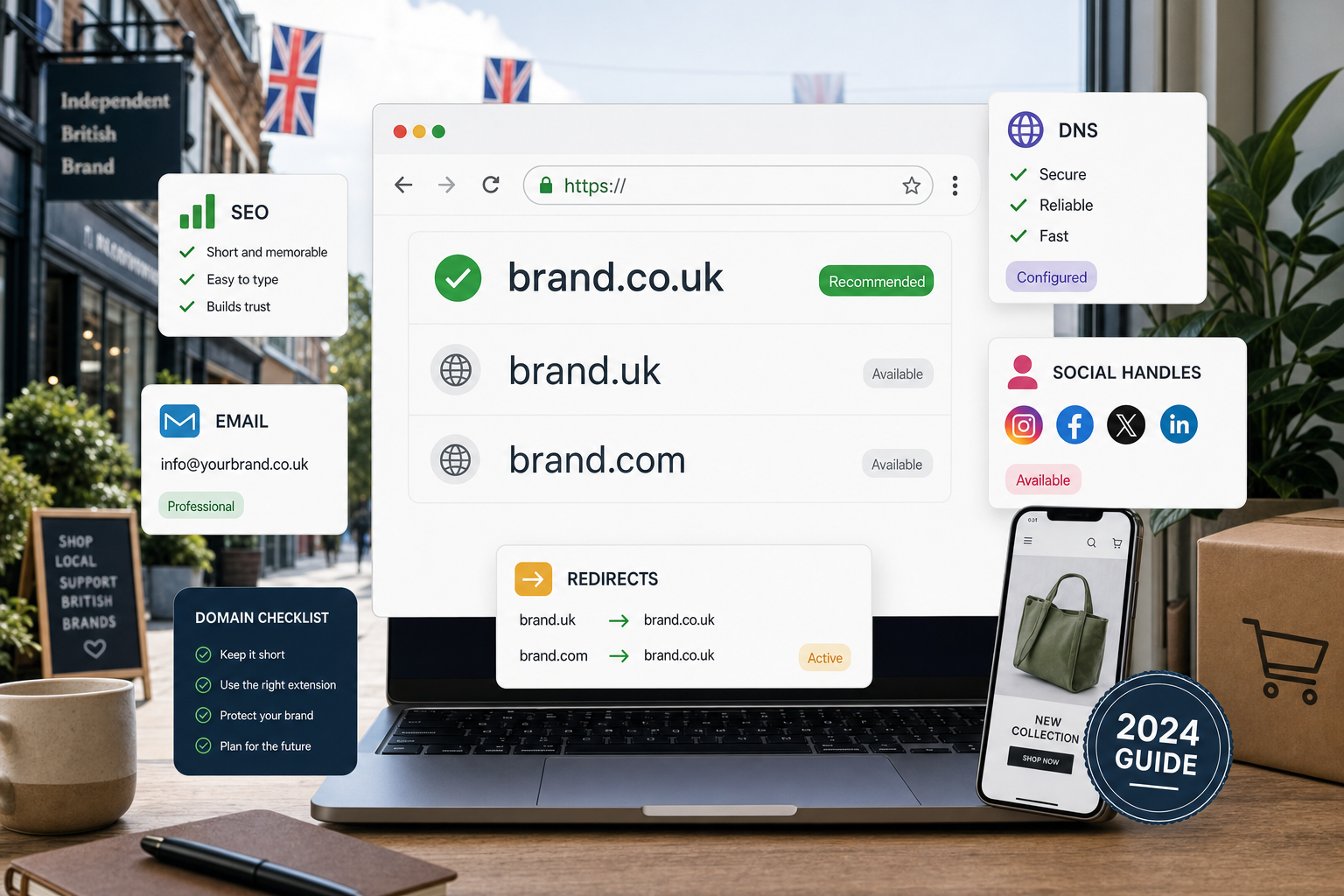
For many UK organisations, a .co.uk or .uk domain remains a strong signal of local relevance. If you trade primarily in the UK, these extensions can reassure visitors that your business understands the market, delivery expectations, legal environment and customer service standards they expect.
A .com can also be valuable, particularly if you plan to sell internationally or want a domain that feels broadly familiar. In some cases, it is sensible to register more than one relevant extension and redirect the secondary versions to your main website. This can reduce customer confusion and make it harder for another organisation to use a very similar address.
Newer descriptive extensions can be useful in some sectors, but they need careful thought. A creative studio, community project or specialist online tool may benefit from a more descriptive ending, while a professional services business may find that a traditional UK-focused extension builds trust more quickly. The best choice is the one your target audience will recognise, type correctly and feel comfortable clicking.
Keep the name clear, memorable and easy to market
A good domain should be easy to use across website design, email, social media and offline marketing. Avoid unnecessary hyphens, numbers and clever spellings unless they are central to your established brand identity. These details can make a domain harder to remember and increase the risk of customers landing elsewhere.
Consider how the domain will look in different places. It may appear in a search result, a mobile browser address bar, a social media biography, a van graphic, a podcast mention or a printed flyer. A name that looks tidy in all these contexts will support your wider marketing more effectively.
It is also worth checking whether the words create unintended meanings when written together. This is especially important for two- or three-word brand names. Read the domain carefully in lowercase, because that is how many people will see it in real use.
Think about SEO without forcing keywords into the domain
Keyword-rich domains can still describe what a business does, but they are not a shortcut to strong search visibility. Search engines assess the quality, relevance, structure and reputation of your website far more broadly than the words in the domain alone. A domain chosen only for keywords can also feel generic, making it harder to build a distinctive brand.
That does not mean keywords have no place. If a natural phrase fits your business name and makes the offer clearer, it can be useful. For example, a local service provider might include a trade or location if it reads naturally and supports recognition. However, avoid overlong combinations that look as though they were written only for search engines.
From an SEO perspective, the most valuable domain is usually one that people can remember, search for by name, link to confidently and associate with useful content. Your website architecture, page titles, headings, internal linking, technical performance and content quality will do more of the heavy lifting than the domain name itself.
Check for brand, trade mark and social media conflicts
Before registering a domain, carry out basic checks to reduce the risk of confusion or legal difficulty. Search for similar business names in your sector, review the UK company register, look at trade mark databases and check common social media handles. The aim is not only to avoid direct conflict, but also to understand whether customers could confuse your brand with another organisation.
Consistency across channels matters. If your domain is short and clear but your social media usernames have to be heavily altered, your marketing may become harder to manage. Ideally, your domain, display name and social handles should feel like part of the same identity, even if they are not identical.
If your chosen name is distinctive and important to your future growth, consider taking professional legal advice before investing heavily in design, signage, packaging or advertising. A domain being available does not automatically mean the brand name is safe to use.
Register common variations for brand protection
New brands do not need to register every possible variation, but a few sensible defensive registrations can prevent future problems. Consider obvious extensions, common spelling variations and singular or plural versions if they are likely to be confused. You can redirect these to your main website so customers still reach the right place.
This is particularly useful if your brand name contains a word that is commonly misspelt, has more than one accepted spelling or sounds similar to another word. It can also help protect marketing campaigns where people may hear your domain in audio or video content before typing it manually.
Be selective. Registering too many unrelated domains can become difficult to manage and may distract from building authority around one primary website. Decide which domain is your canonical home, then use any supporting domains carefully.
Use the domain correctly in your website design
Your domain decision should connect with your website design from the beginning. The address should be prominent enough to reinforce brand recognition, but the website experience itself must prove that the brand is credible. A strong domain cannot compensate for confusing navigation, slow pages, weak copy or unclear calls to action.
Make sure your main domain works cleanly with secure browsing, mobile layouts and analytics tracking. Decide whether your website will use the www version or the non-www version, then apply consistent redirects so visitors and search engines always end up at the same primary address. This helps avoid duplicate versions of your site competing with each other.
If you are replacing an old website, plan redirects before launch. Any important pages on the old domain or previous URL structure should point to the most relevant new pages. This protects user experience and helps preserve the value of links and search visibility built over time.
Set up professional email and avoid mixed messages
Your domain is also the foundation of professional email. A branded email address usually feels more credible than a generic consumer mailbox, particularly for enquiries, quotes, customer support and recruitment. It also reinforces your domain every time someone receives a message from your business.
Set up email carefully with the correct authentication records. By 2024, email providers are placing strong emphasis on sender authentication, including records that help prove messages genuinely come from your domain. Good configuration supports deliverability and reduces the chance of legitimate customer emails being treated with suspicion.
Keep naming consistent. If your website uses one brand style, your email addresses, email signatures and social profiles should follow the same pattern. Small inconsistencies can make a new business look less organised than it really is.
Protect access, ownership and renewal details
One of the most important domain registration tips is also one of the least glamorous: keep control of the account and records. Your domain should be registered using details that the business can access, not only a personal email address belonging to one employee or supplier. If access is lost, recovering control can be stressful and disruptive.
Use a strong, unique password and enable two-factor authentication where available. Keep renewal reminders active and ensure more than one appropriate person knows where domain details are stored. Domains can lapse when card details expire, staff change roles or reminder emails go unnoticed.
Be clear about ownership when working with designers, developers or marketing partners. It is common for a supplier to help with technical setup, but the business should understand who controls the domain, where it is managed and how to access essential records if needed.
Understand DNS before making changes
DNS settings connect your domain to services such as your website, email, analytics tools and marketing platforms. You do not need to become a technical specialist, but you should know that changing records without a plan can temporarily break important services.
Before launching a new website, gather the correct DNS requirements for hosting, email and any verification records required for search, advertising or social tools. Keep a record of current settings before making changes, and schedule updates at a sensible time so any issue can be handled promptly.
If your website is business-critical, avoid making major DNS changes late on a Friday or just before an important campaign. Careful timing and testing reduce the risk of lost enquiries during a launch.
Plan for social media and campaign use
Your domain should be easy to use in social media marketing. It may appear in profile links, paid social adverts, short-form video captions, printed QR code destinations and campaign landing pages. A clean, trustworthy domain can improve confidence before a visitor even reaches the site.
For campaigns, use clear landing page URLs rather than sending every visitor to the homepage. For example, a training provider might promote a specific course category, while a retailer might direct seasonal traffic to a curated collection. The domain provides the trust signal; the landing page provides the relevance.
Be cautious with separate campaign domains. They can be useful in specific circumstances, but they may dilute brand recognition and create tracking complexity. In many cases, a well-structured landing page on your primary domain is better for SEO, analytics and long-term brand value.
Review your domain strategy before launch
Before your website goes live, run through a final checklist. Is the domain easy to say, spell and remember? Does it match your brand direction? Have you checked for obvious conflicts? Are the right extensions and variations registered? Is the primary version redirected correctly? Are email and DNS records set up securely? Have old URLs been mapped if this is a redesign?
This review is much easier before launch than after customers, search engines and campaigns start using the domain. A little extra care at this stage can prevent avoidable technical fixes and brand confusion later.
Your domain is not just an address. It is a long-term digital asset that supports brand recognition, search marketing, website design, email credibility and customer trust. By choosing carefully and managing it properly from the start, a new online brand can build on a stronger foundation and make every part of its digital presence easier to grow.