Email remains one of the most useful digital marketing channels available to UK businesses, but only when it earns its place in a customer’s inbox. Sending the same newsletter to every contact and hoping for a response is no longer enough. People expect relevant messages, clear value and a smooth journey from email to website. If a campaign feels generic, repetitive or disconnected from the rest of your brand, it is likely to be ignored, unsubscribed from or reported as spam.
The businesses getting more from email in 2022 are not necessarily sending more often. They are using better segmentation, clearer offers, stronger website landing pages and a more thoughtful understanding of what different customers need. The result is improved email marketing value: not just more clicks, but more useful conversations, better-qualified enquiries and stronger customer relationships.
Why email marketing value matters more than volume
Many business owners still measure email activity by the size of their list or the number of campaigns sent each month. Those numbers can be useful, but they do not prove that the channel is working. A large list with low engagement can create deliverability problems and weaken your brand. A smaller, better-segmented list can produce stronger results because the content is more relevant to the people receiving it.
Email marketing value comes from the practical business impact of each campaign. Does it help customers make a decision? Does it answer a real question? Does it encourage a useful next step, such as booking a consultation, requesting a quote, reading a guide or returning to an abandoned basket? When email is treated as a service to the reader rather than a broadcast tool, it becomes a more effective part of a wider digital strategy.
This is especially important because privacy changes and inbox filtering make simplistic campaign reporting less reliable. Open rates can still provide a general indication of engagement, but they should not be treated as the sole measure of success. Clicks, enquiries, sales, repeat visits, form submissions and customer feedback provide a more meaningful picture of performance.
Segmentation is the difference between noise and relevance
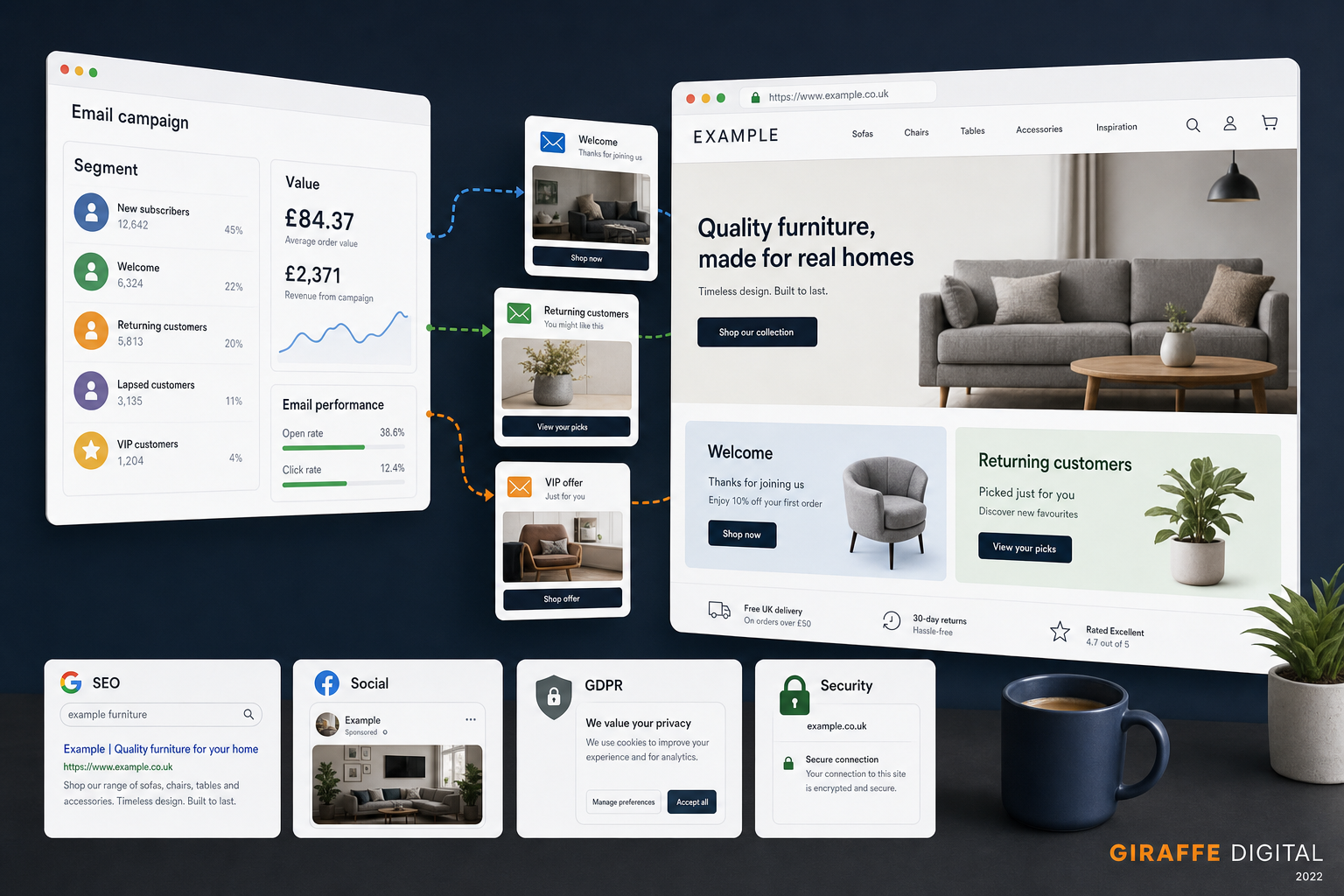
Segmentation means dividing your email audience into useful groups so you can send messages that match their interests, behaviour or stage in the buying journey. It does not have to be complicated to be effective. Even a small business can make email more relevant by separating new leads, existing customers, inactive subscribers and people who have shown interest in a particular service.
For example, a local service business might segment contacts into homeowners, landlords and commercial property managers. Each group may need a similar core service, but their priorities will be different. Homeowners may respond to reassurance, trust signals and clear explanations. Landlords may want speed, compliance and simple communication. Commercial customers may need evidence of reliability, capacity and process. One generic campaign is unlikely to speak well to all three.
An e-commerce business could segment by recent purchasers, frequent purchasers, basket abandoners and people who have browsed a category without buying. A professional services firm could segment by sector, enquiry type or how recently someone engaged with a guide or webinar. A charity or community organisation might segment by donors, volunteers, event attendees and newsletter-only subscribers.
Useful segmentation criteria for UK businesses
- Customer status: prospect, first-time buyer, repeat customer, lapsed customer or advocate.
- Interest area: products viewed, services requested, content downloaded or categories browsed.
- Location: region, local branch, service area or event proximity.
- Engagement level: recent clickers, inactive subscribers, frequent readers or new sign-ups.
- Buying stage: awareness, consideration, ready to enquire, post-purchase or renewal.
- Business type: sole trader, small business, larger organisation, public sector or charity, where relevant.
The key is to use segmentation in a way that supports better communication, not unnecessary complexity. Start with two or three meaningful groups and improve them over time. A simple, well-maintained segmentation plan is more valuable than a complicated system that no one uses properly.
Value-led content gives people a reason to stay subscribed
People do not stay on an email list because a business wants to sell to them. They stay because the content is useful, timely or relevant. Value-led email content can take many forms: practical advice, product guidance, customer support, useful reminders, event information, seasonal planning, insight into common mistakes or early access to relevant updates.
A website design agency, for example, might send a segmented email to business owners explaining how to assess whether their website is helping or hindering enquiries. A retailer could send care advice after a purchase. A training provider might send reminders before a course, useful preparation material and follow-up resources. A trades business could send seasonal maintenance tips to previous customers. Each message has a commercial purpose, but it also gives the reader something helpful.
Value does not mean writing long emails every time. In many cases, a short message with one clear idea and one clear action will perform better. The email should make it obvious why the recipient is receiving it and what they can do next. If the next step is to visit your website, the landing page must continue the same message rather than dropping the visitor onto a generic homepage.
Your website determines whether email clicks turn into business
Email and website design should not be treated as separate projects. A campaign can only deliver commercial value if the destination page is clear, fast, trustworthy and relevant. If a subscriber clicks through to a slow page, a confusing layout or a form that asks for too much information, the opportunity is easily lost.
Strong email landing pages tend to share a few characteristics. They match the promise of the email, use a clear heading, explain the value quickly, show credible proof where appropriate and make the next action easy. For a service business, that might mean a short enquiry form, a click-to-call option on mobile and a clear explanation of what happens after someone gets in touch. For an online shop, it could mean a relevant category page, clear product information, delivery details and visible returns information.
Website accessibility and mobile usability also matter. Many people read emails on their phones, so the campaign journey must work on smaller screens. Buttons need to be easy to tap, text must be legible, forms should be simple and the page should load efficiently. Good design is not only about appearance; it is about reducing friction and helping customers make confident decisions.
Connect email with SEO, social media and branding
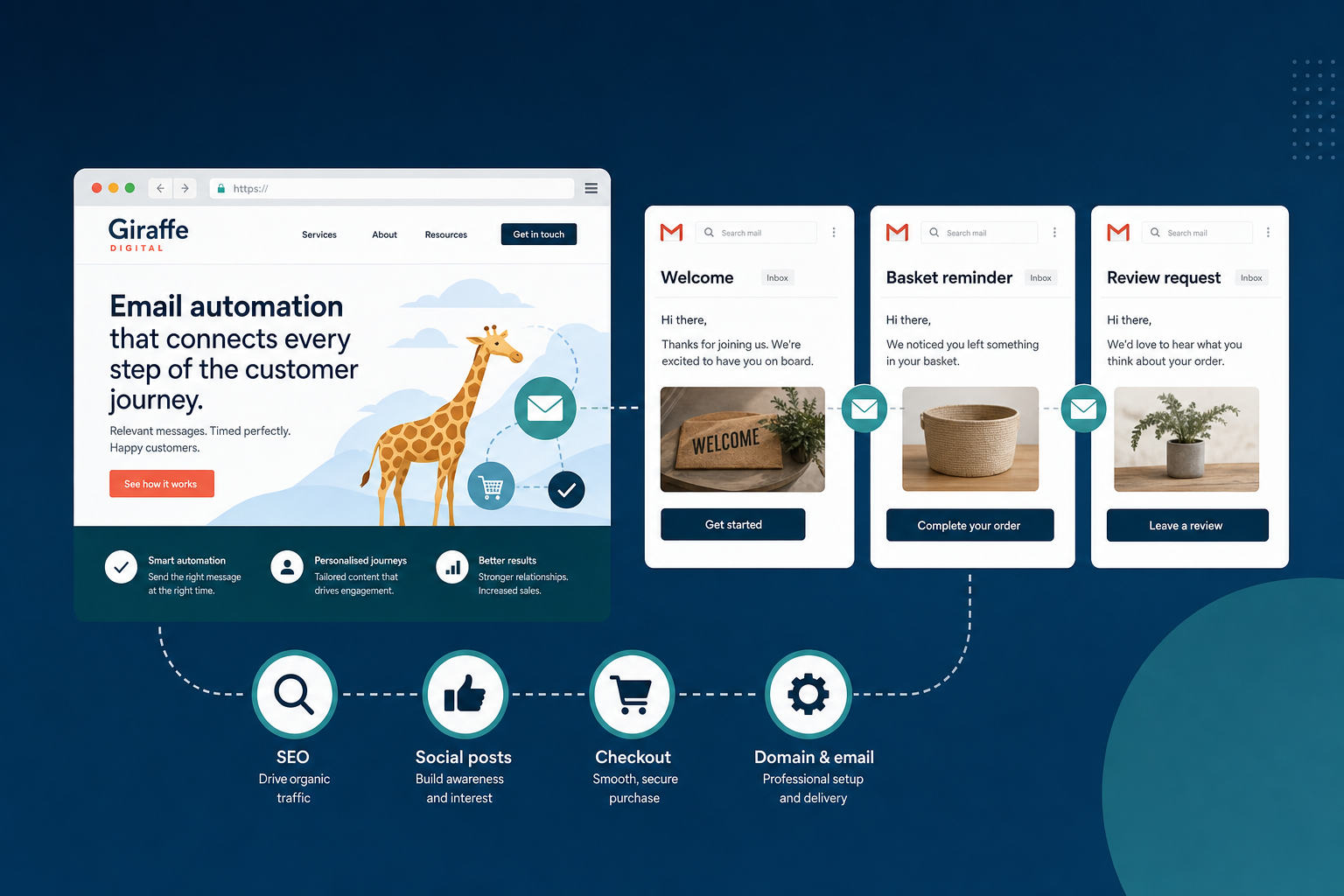
Email becomes more powerful when it supports the rest of your digital marketing. Search engine optimisation can help people find your advice, products and services. Social media can introduce your brand to new audiences and encourage ongoing engagement. Email can then nurture those relationships with more direct, personalised communication.
For example, a useful blog post created for SEO can be repurposed into an email tip, a short social media post and a downloadable checklist. A social media campaign promoting a new guide can encourage sign-ups to a segmented email list. Email can then deliver follow-up content based on the guide someone requested. This joined-up approach helps you get more value from each piece of content rather than treating every channel as a separate task.
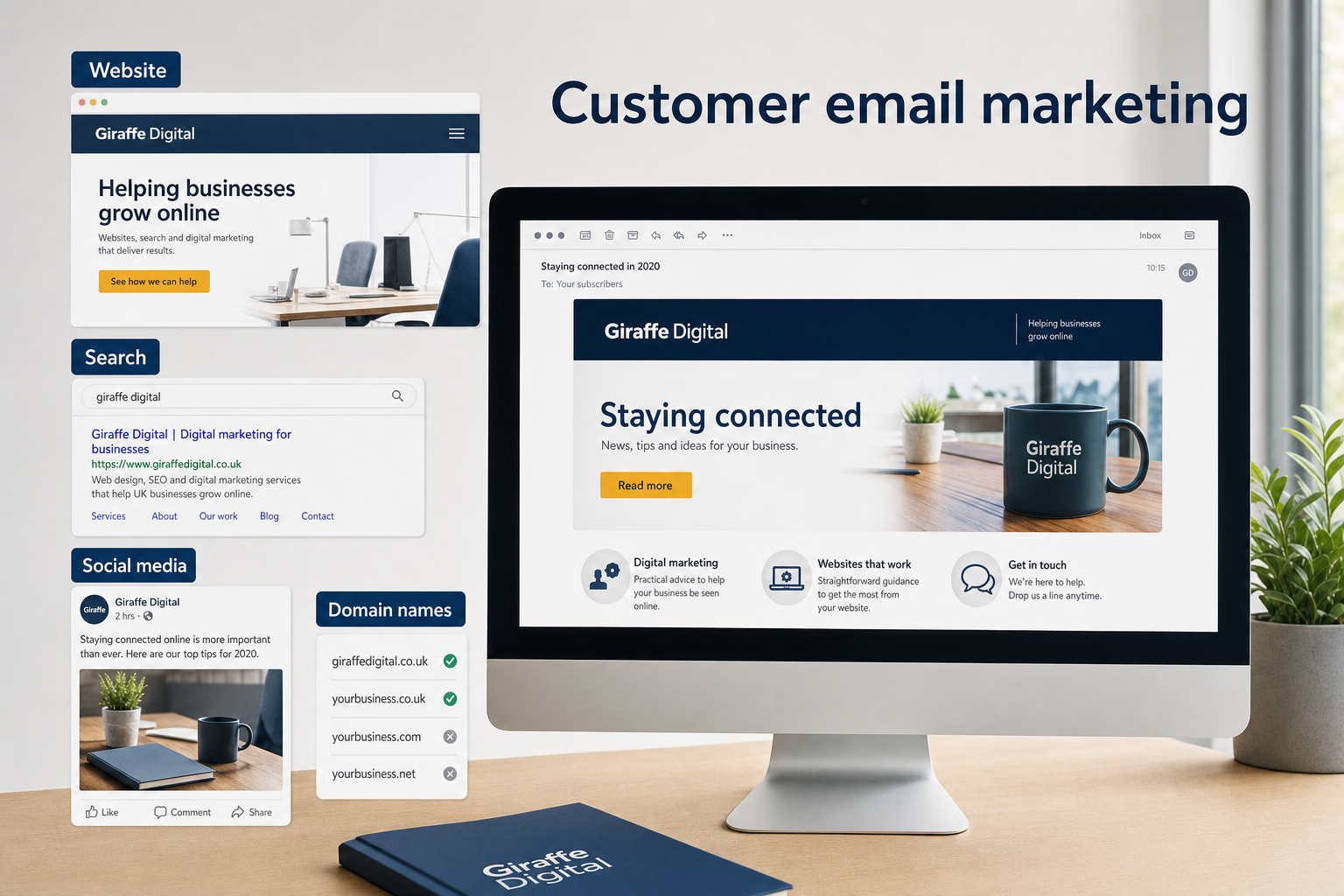
Brand consistency is also important. The tone, visuals and promises in your emails should match your website, social media profiles and printed materials. If your brand presents itself as expert and reassuring on the website but pushy and rushed in email, customers will notice the mismatch. A consistent brand experience builds trust over time.
Use data responsibly and make consent clear
UK businesses need to handle email data carefully. Email marketing should be built on clear consent, appropriate record keeping and respect for subscriber preferences. The UK GDPR and the Privacy and Electronic Communications Regulations remain important considerations, particularly for promotional messages. Businesses should make it clear what people are signing up to, avoid misleading consent wording and provide an easy unsubscribe option.
Good data practice is not only about compliance. It also improves performance. If people understand what they will receive and why it is useful, they are more likely to engage. If your list contains old, imported or poorly permissioned contacts, engagement will be weaker and complaints may increase. Regular list maintenance helps protect your sender reputation and ensures you are focusing on people who genuinely want to hear from you.
Preference centres can be useful where a business sends different types of communication. Rather than forcing someone to unsubscribe from everything, you may be able to let them choose product updates, event invitations, advice content or service reminders. This gives subscribers more control and helps you gather better segmentation data.
Domain names, trust and email deliverability
Your domain name is part of your digital identity. It appears on your website, in your email address and across your marketing materials. A clear, memorable domain can support trust, especially when it matches your brand and is used consistently. When registering a domain, choose a name that is easy to spell, avoids unnecessary hyphens where possible and gives customers confidence that they are dealing with the right organisation.
It is also sensible to keep domain ownership records organised, renew domains on time and ensure the correct people in the business know how the domain is managed. Losing control of a domain can affect your website, email and brand reputation. Businesses should also consider registering relevant variations where there is a clear brand protection reason, without overcomplicating the domain portfolio.
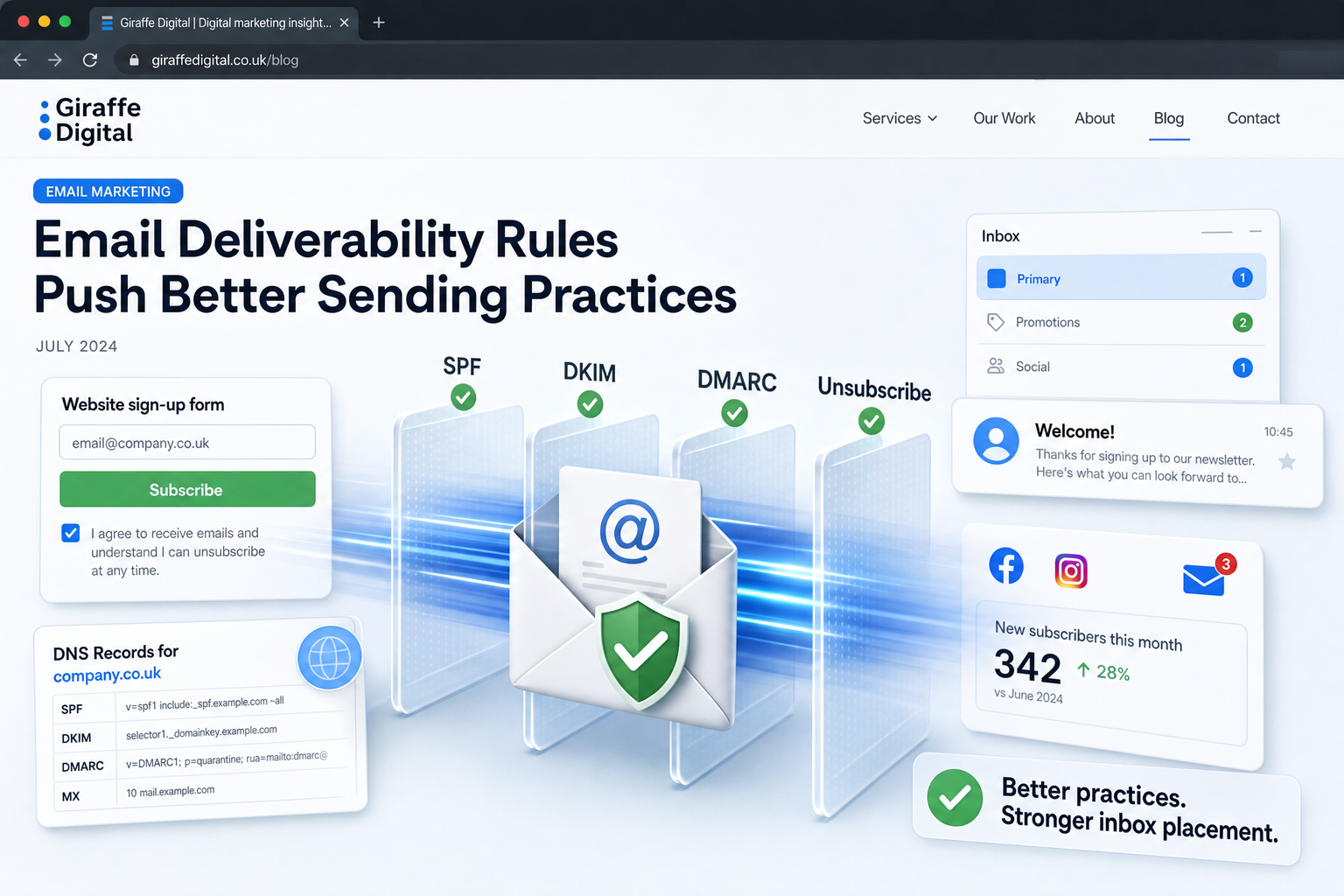
From an email perspective, technical configuration matters. Sender authentication records help receiving mail servers understand whether messages are genuinely from your domain. Your web or email support team should ensure that the appropriate records are in place for the systems you use. This is a practical step towards better deliverability and trust, particularly as inbox providers continue to filter unwanted or suspicious messages.
Practical examples of better email segmentation
Improving segmentation often starts with common sense. A business does not need a huge database or advanced automation to make progress. It needs to ask better questions about the audience and the customer journey.
Example: service enquiries
A business receiving enquiries through its website could add a simple field asking which service the visitor is interested in. Follow-up emails can then be tailored around that service, with relevant case-study-style explanations, frequently asked questions and clear next steps. Someone interested in a website redesign should not receive the same follow-up as someone asking about social media management.
Example: e-commerce repeat customers
An online retailer could send different post-purchase emails depending on the product category. One customer might receive usage tips, another might receive care instructions, and another might receive a reminder when a consumable product is likely to need replacing. These emails are more useful than a generic promotional blast because they relate to what the customer has actually bought.
Example: inactive subscribers
Inactive contacts should not be ignored indefinitely. A re-engagement campaign can ask whether they still want to hear from the business, offer a choice of content preferences or highlight the most useful recent resources. If someone remains inactive, removing them from regular campaigns can improve overall list quality.
Measure what supports real business decisions
Reporting should help you decide what to do next. Instead of only asking whether an email achieved a high open rate, look at the full journey. Which segments clicked? Which landing pages converted? Which subject lines attracted the right visitors? Which campaigns led to enquiries, bookings or sales? Which audiences repeatedly ignored certain topics?
Useful measures may include click-through rate, conversion rate, unsubscribe rate, spam complaint rate, revenue where e-commerce tracking is appropriate, form submissions, phone enquiries and repeat visits to key pages. Over time, these measures can show which types of content create the most value and which segments need a different approach.
It is also worth reviewing qualitative feedback. Replies to campaigns, sales team observations and customer questions can reveal what people care about. If several subscribers ask the same question after receiving an email, that may be a sign that your landing page, product information or service explanation needs improving.
How to improve email marketing value this quarter
For many UK businesses, the best next step is not a complete rebuild. It is a focused improvement plan. Start by auditing your current list, recent campaigns and website journey. Identify where the message becomes unclear, where the audience is too broad and where the next step is difficult.
- Define your main audience groups. Choose a small number of segments that reflect real customer differences.
- Clarify the value of each campaign. Before sending, ask what the reader gains from the email.
- Improve the landing page. Make sure the page matches the email and supports one clear action.
- Review consent and list quality. Remove poor-quality data and make subscription choices clear.
- Connect channels. Use SEO content, social media and email together rather than in isolation.
- Measure the whole journey. Look beyond opens and focus on actions that matter to the business.
Email marketing value improves when a business respects the reader’s time and creates a coherent journey from inbox to website. Better segmentation helps you say the right thing to the right people. Stronger content gives them a reason to pay attention. Good website design helps turn interest into action. When these elements work together, email becomes more than a promotional channel; it becomes a dependable part of your digital strategy.