Email marketing remains one of the most practical ways for a UK business to keep in touch with customers, prospects and professional contacts. While search engines, well-designed websites, and social media activity all play important roles, a useful email newsletter gives a business a direct line to people who have already shown interest. Used properly, it can encourage repeat visits, support enquiries, promote new services and help a brand stay front of mind without relying entirely on people finding the website again through search.
For many organisations, the appeal of an email newsletter is simple: it is measurable, flexible and comparatively quick to update. A short monthly email can highlight new articles, seasonal offers, case studies, events, product updates or changes to opening hours. It can also guide readers back to the website, where a stronger enquiry form, clearer service pages and better calls to action can turn interest into business. The best results usually come when email marketing is treated as part of a wider digital marketing programme, not as a one-off broadcast sent whenever sales need a lift.
Why email marketing still deserves attention
People are now exposed to a growing number of online channels. Search engines help customers find services at the point of need, while social networks make it easier to share updates and recommendations. Even so, email remains a familiar and regular habit for most office workers, consumers and decision-makers. A carefully written newsletter can sit alongside daily correspondence and be read when the recipient has time.
The real strength of email marketing lies in the quality of its audience. A search visitor may arrive once and leave. A social media follower may miss an update entirely. A newsletter subscriber, however, has permitted to be contacted and is therefore more likely to recognise the business name. This does not mean every subscriber will buy immediately, but it does mean the organisation has an opportunity to build trust through regular, useful communication.
Email is also valuable because it can support many different business aims. A professional services firm might send practical advice that demonstrates expertise. A retailer might feature seasonal products and new stock. A hotel or leisure business might promote local events and special breaks. A manufacturer might keep trade customers informed about specification changes or delivery information. The format is adaptable, provided the content is genuinely useful to the reader.
Build a list with permission and purpose
A strong newsletter begins with a good quality mailing list. It is better to have a smaller list of engaged subscribers than a large list of people who do not remember signing up. UK businesses should pay attention to permission, privacy and relevance. The Data Protection Act 1998 and the Privacy and Electronic Communications Regulations require sensible handling of personal information and care when sending promotional email. In practical terms, businesses should be clear about what people are signing up to and provide a simple way to unsubscribe.
Useful list-building methods include adding a newsletter sign-up form to the website, inviting customers to subscribe after an enquiry, collecting permission at exhibitions or events, and giving existing clients the option to receive occasional updates. The sign-up form should explain the likely frequency and type of content. For example, a message such as Join our monthly email update for practical website and marketing tips is clearer than a vague request to sign up for news.
Businesses should avoid buying lists unless they are completely confident about the source, permission and relevance. Sending to people who have not asked to hear from the organisation can damage reputation and increase complaints. It can also lead to poor response rates, blocked emails and a negative first impression of the brand. Permission is not just a legal issue; it is also a matter of professionalism.
Plan newsletter content that earns attention
The most effective newsletters are not simply sales leaflets sent by email. They give the recipient a reason to open, read and click. Before writing a newsletter, it helps to decide what the reader is likely to value. A business owner may appreciate a short checklist, a practical explanation or a reminder of an upcoming deadline. A consumer may prefer new arrivals, gift ideas, event details or helpful guidance before making a purchase.
Good email marketing content can include:
- Useful advice: short articles, guides, tips or answers to common customer questions.
- Website updates: links to new pages, blog posts, resources, downloads or announcements.
- Product or service highlights: clear explanations of what is available and who it is for.
- Company news: staff updates, new premises, award nominations or community involvement, where relevant.
- Seasonal reminders: timely messages connected to holidays, events, weather, financial year planning or industry cycles.
- Calls to action: a clear next step, such as requesting a quote, booking a consultation, reading a guide or visiting a product page.
Subject lines should be specific and honest. A subject line such as "Five ways to improve your website enquiries this summer" is more useful than "August Newsletter". It tells the recipient what to expect and gives them a reason to open. Overly dramatic or misleading subject lines may increase opens once, but they rarely build lasting confidence.
Design emails that are clear, readable and on brand
Newsletter design should support the message rather than compete with it. In 2010, many readers still use desktop email programmes in offices, while others read messages through webmail or on mobile devices. Different email clients can display the same message in different ways, so a simple, well-structured design is usually safer than a complicated layout.
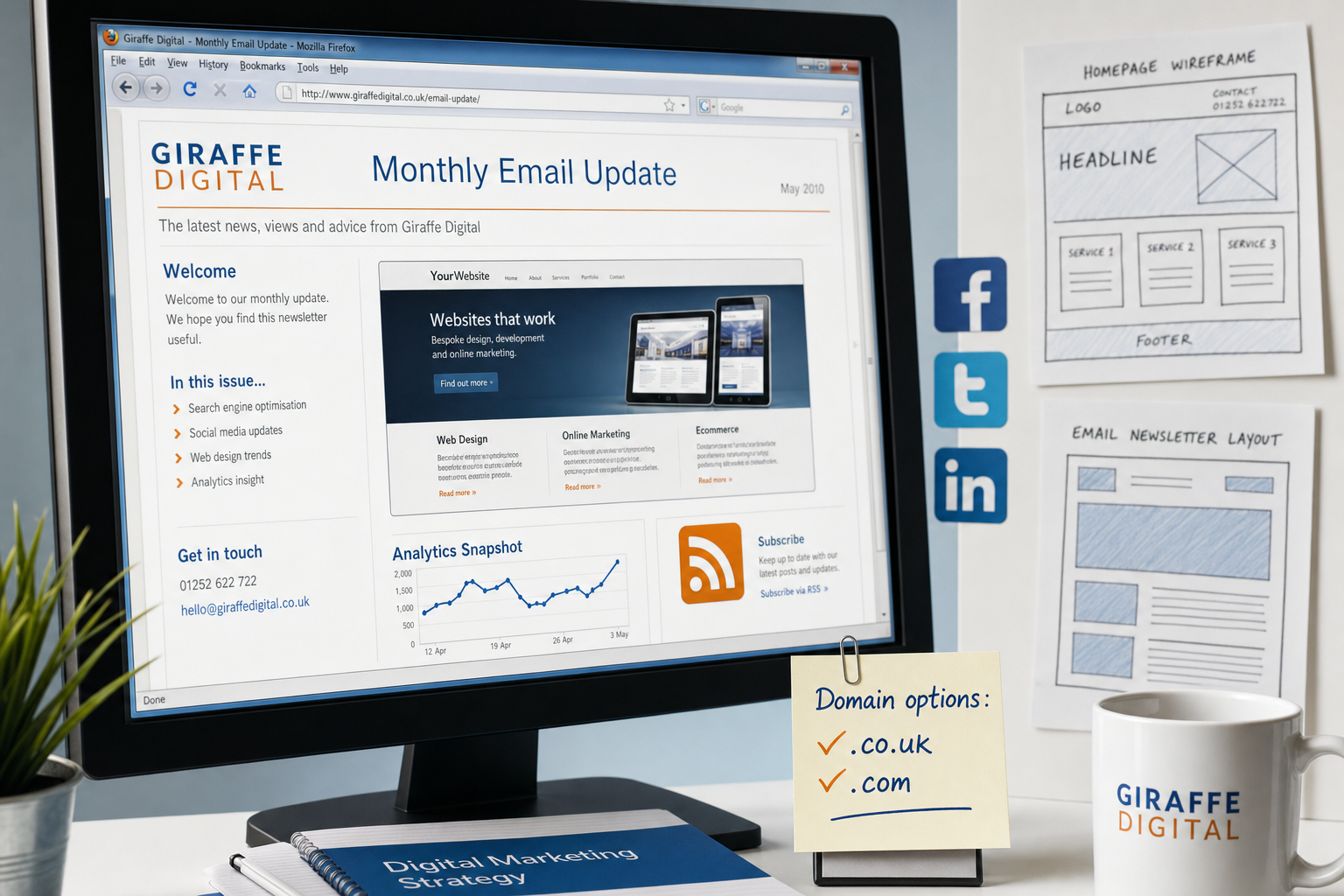
A good HTML email should use a clear header, concise copy, sensible spacing and obvious links. The brand identity should be recognisable through the logo, colours and tone of voice, but the design should not depend entirely on images. Some email programmes block images by default, so important information should appear as real text rather than only inside a graphic. Every message should also include a plain text version where possible.
Keep the width and structure practical. Long, cluttered emails can be difficult to scan, especially for busy readers. Many businesses find that a short introduction, two or three main stories and a clear closing call to action work well. If there is more to say, the newsletter can link through to the website. This approach keeps the email concise and encourages visitors to engage with pages that can be tracked, updated and optimised.
Consistency matters. A newsletter that changes style completely each month can feel disjointed. A simple template, designed to match the website and brand, helps readers quickly recognise the sender. It also saves time because the structure is already in place for future campaigns.
Use email to support the website and search marketing
Email marketing works best when the website is ready to receive visitors. If a newsletter encourages readers to click through, the landing page should match the promise made in the email. For example, if an email promotes a guide to choosing a new business website, the click should lead to that guide or a relevant service page, not simply the home page. This makes the experience smoother and improves the chance of an enquiry.
Search engine optimisation and email are often treated separately, but they can support each other. Newsletter topics can be based on the same questions customers type into search engines. A business might publish a helpful article on its website, optimise the page with a clear title and headings, then feature it in the next email update. The email brings immediate traffic from subscribers, while the article can continue to attract search visitors over time.
It is also worth keeping an archive of selected newsletters or articles on the website. This gives regular visitors more reasons to return and gives search engines more useful content to index. The content should be written for people first, with natural use of relevant phrases. For a company offering digital services, a term such as email marketing" should appear where it genuinely fits, but the article should not be keyword-stuffed. Clear, relevant writing is far more convincing to potential customers.
Connect newsletters with social media activi.ty
Social media is becoming a regular part of online marketing for many businesses. Services such as Facebook, Twitter and LinkedIn can help organisations share news, answer questions and build relationships. Email newsletters can work alongside these channels rather than competing with them.
A newsletter can invite readers to follow the business on social networks for shorter, more frequent updates. In the other direction, social media updates can encourage followers to subscribe to the newsletter for more detailed advice or early announcements. This gives people a choice in how they hear from the business. Some will prefer quick updates; others will prefer a monthly email they can file, forward or return to later.
Forwarding is another useful advantage of email. If the content is genuinely helpful, subscribers may send it to colleagues or friends. To encourage this, keep the newsletter professional, easy to read and not overly promotional. A practical guide, checklist or event invitation is more likely to be shared than a hard sales message.
Choose domain names and email addresses carefully
Trust is important in email marketing, and the sending address plays a part in that. A newsletter sent from a professional address using the organisation's own domain name usually looks more credible than one sent from a free personal account. It reinforces the brand and helps recipients recognise the business.
When registering a domain name, businesses should consider clarity, memorability and long-term use. A domain should be easy to spell, easy to say over the telephone and suitable for print as well as online marketing. UK organisations often consider a UK-focused domain as well as a more general extension, depending on their market and plans. It can also be sensible to register obvious variations to protect the brand and reduce confusion, provided those names are relevant and manageable.
Domain choice should connect with the wider digital strategy. The website address, email address, printed material and social media profiles should all feel like part of the same brand. If customers see one name in an advert, another in search results and a different address in an email newsletter, confidence may be reduced. Consistency helps people remember the business and find it again.
Measure what happens after each send
One of the advantages of email marketing is that it can be measured. Basic campaign reports can show how many messages were delivered, opened and clicked. These figures are useful, but they should not be viewed in isolation. The most important question is what the campaign helped people do next. Did subscribers visit the website, complete an enquiry form, telephone the business, download a document or book an appointment?
Website analytics can help connect email activity with visitor behaviour. By reviewing which links attracted interest and which pages led to enquiries, a business can improve future newsletters. If a practical advice article receives more clicks than a product announcement, that may suggest readers value guidance before making contact. If a landing page receives visits but few enquiries, the issue may be the page design, the offer, the form or the clarity of the next step.
Testing should be simple and purposeful. A business might try different subject lines, sending times, article topics or button wording. The aim is not to chase statistics for their own sake, but to learn what helps readers respond. Over time, these small improvements can make the newsletter more useful and more commercially effective.
Avoid the common newsletter mistakes
Many email campaigns underperform because they are rushed. A business may send irregular messages with no clear purpose, too much text, weak links or little attention to the reader's needs. Another common problem is sending only when the business wants to sell something. If every message feels like a demand for attention, subscribers may lose interest.
Frequency should be realistic. A monthly newsletter suits many organisations because it is regular enough to maintain contact without becoming a burden. Some businesses may need weekly updates, while others may do better with a carefully prepared quarterly email. The right schedule depends on the audience, the amount of useful content available and the nature of the business.
It is also important to check every newsletter before sending. Test the links, proofread the copy, review the subject line and make sure the unsubscribe option works. Send a test message to different email accounts where possible. Small mistakes can happen easily, but careful checking protects the brand and avoids unnecessary embarrassment.
Making email part of a stronger digital strategy
Email marketing is most effective when it is connected to good website design, search marketing, branding and ongoing content planning. A newsletter can bring people back to the website, but the website must then do its job. Pages should load reliably, explain services clearly, reflect the brand and make it easy for visitors to enquire. If a campaign sends traffic to a confusing or outdated site, potential value is lost.
For UK business owners, the opportunity lies in using email as a practical relationship-building tool. It can remind customers that the organisation exists, demonstrate knowledge, support repeat business and guide interested prospects towards the next step. It does not need to be complicated, but it does need to be planned, well written and properly integrated with the rest of the online presence.
A useful newsletter begins with a clear question: what can we send that our audience will be pleased to receive? When that question guides the content, design and timing, email marketing remains a strong and dependable part of digital marketing.