Local businesses have always relied on clear communication, but 2020 has made accurate online information essential. Customers are checking opening hours before leaving home, looking for delivery or collection options, reading safety guidance and comparing local providers from their phones. A well-planned local business website can give people the confidence to contact you, visit you or buy from you at a time when habits are changing quickly.
For many UK business owners, the priority is not to build something complicated. It is to make sure the information people need is easy to find, up to date and consistent across your website, search results and social media profiles. When your online presence answers the obvious questions clearly, it reduces confusion, saves staff time and helps customers choose you over a competitor.
Why better online information matters for local businesses
A local customer may discover your business in several ways. They might search for a service nearby, click through from a social media post, follow a recommendation from a friend or type your business name directly into a search engine. In each case, they are usually trying to answer practical questions quickly.
Common questions include whether you are open, where you are based, how to contact you, whether appointments are required, which services are available and what has changed because of current public health guidance. If these details are missing or inconsistent, customers may assume the information is out of date and move on.
Your website should act as the most reliable source of information about your business. Social media is useful for updates, and local listings are important for visibility, but your website gives you the most control over wording, structure, branding and calls to action. It is the place where you can explain what you offer in detail, provide reassurance and guide people towards the next step.
For example, a café offering takeaway, reduced seating and revised opening hours should not rely only on a social media post that may soon be pushed down the feed. A clear website notice, an updated contact page and consistent opening hours on local listings can prevent frustration and encourage more visits. The same principle applies to trades, clinics, shops, professional services and hospitality businesses.
Make your local business website the central source of truth
Your local business website should be treated as the central point for accurate customer information. This does not mean every page needs to be rewritten each week, but the key details should be easy to review and update whenever your operations change.
Start with the pages customers are most likely to visit before making a decision. Your homepage should explain who you are, what you do, where you operate and what action visitors should take next. Your contact page should include your address if customers visit you, your service area if you travel to customers, your phone number, email address, enquiry form and opening hours. If your hours change regularly, make that clear rather than hiding the information in an old news post.
Service pages are also important. A single list of services is rarely enough for search visibility or customer confidence. If you are a local electrician, beauty salon, accountant or estate agent, each core service should have enough detail to help a potential customer understand whether it is relevant to them. Explain the service in plain English, answer common questions and include a direct enquiry option.
If you have changed how customers can buy from you, make this prominent. Many businesses are adding options such as telephone ordering, appointment-only visits, click and collect, local delivery, online consultations or digital forms. These details should be visible on the relevant pages, not hidden away in a temporary announcement.
Keep opening hours, contact details and locations consistent
Consistency is one of the most practical improvements a local business can make. Search engines and customers both rely on clear business details. Your business name, address and phone number should be written consistently across your website, local listings and social profiles.
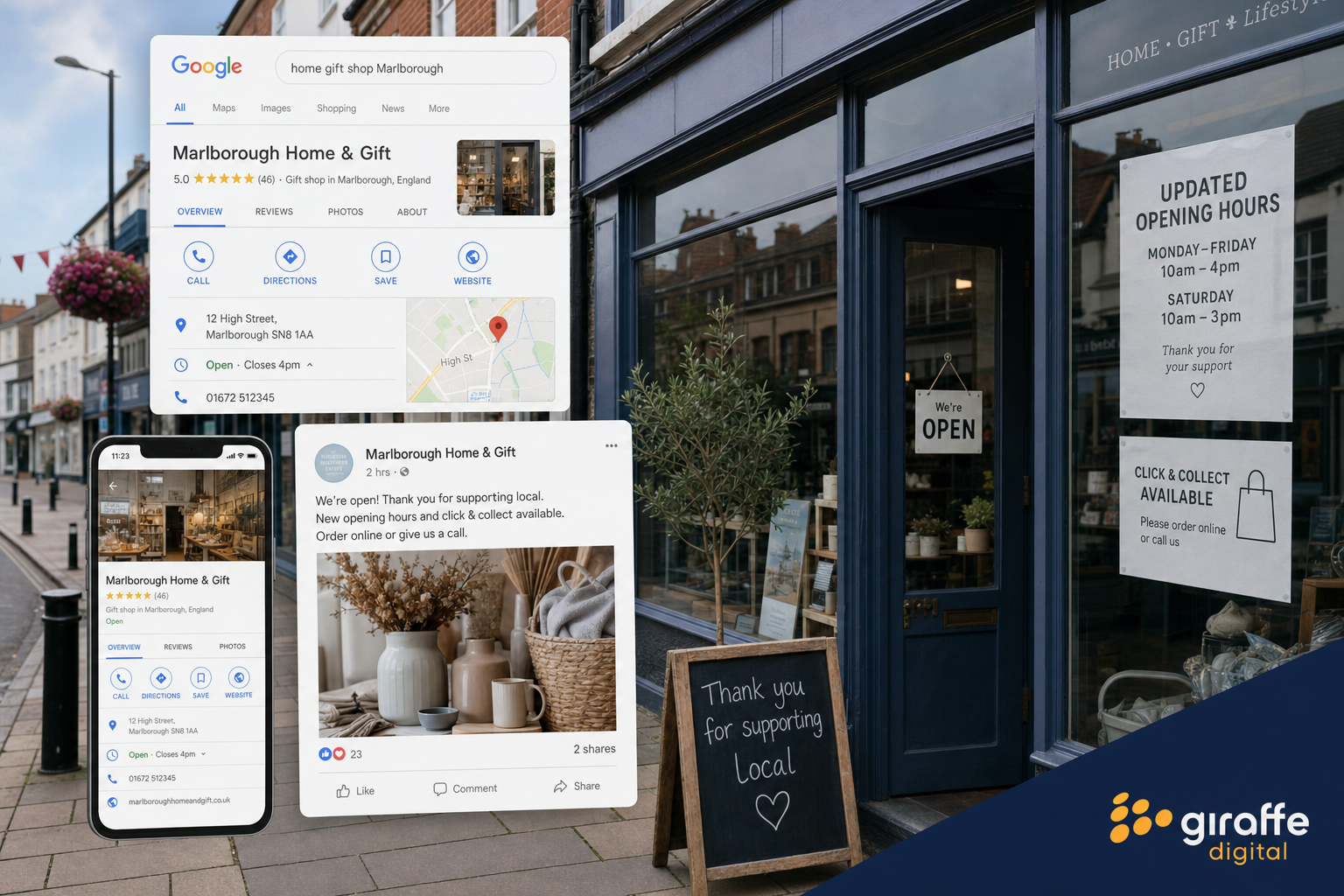
Check your Google My Business profile, Bing Places listing, Apple Maps presence and key industry directories. Make sure your opening hours, holiday hours, phone number, website address and business category are correct. If you have more than one location, each branch should have its own clear information and, ideally, a dedicated page on your website.
In August 2020, opening hours can be especially sensitive. If your physical premises are open at reduced times, say so. If visits are by appointment only, make that obvious. If your phone lines are busier than usual or your preferred contact method has changed, explain it. A short, well-written update can prevent repeated enquiries and reduce disappointment.
It is also helpful to include practical location information. Mention nearby landmarks, parking arrangements, public transport options or access instructions where relevant. These details are valuable for customers and can support local search relevance when written naturally.
Use website design to reduce friction
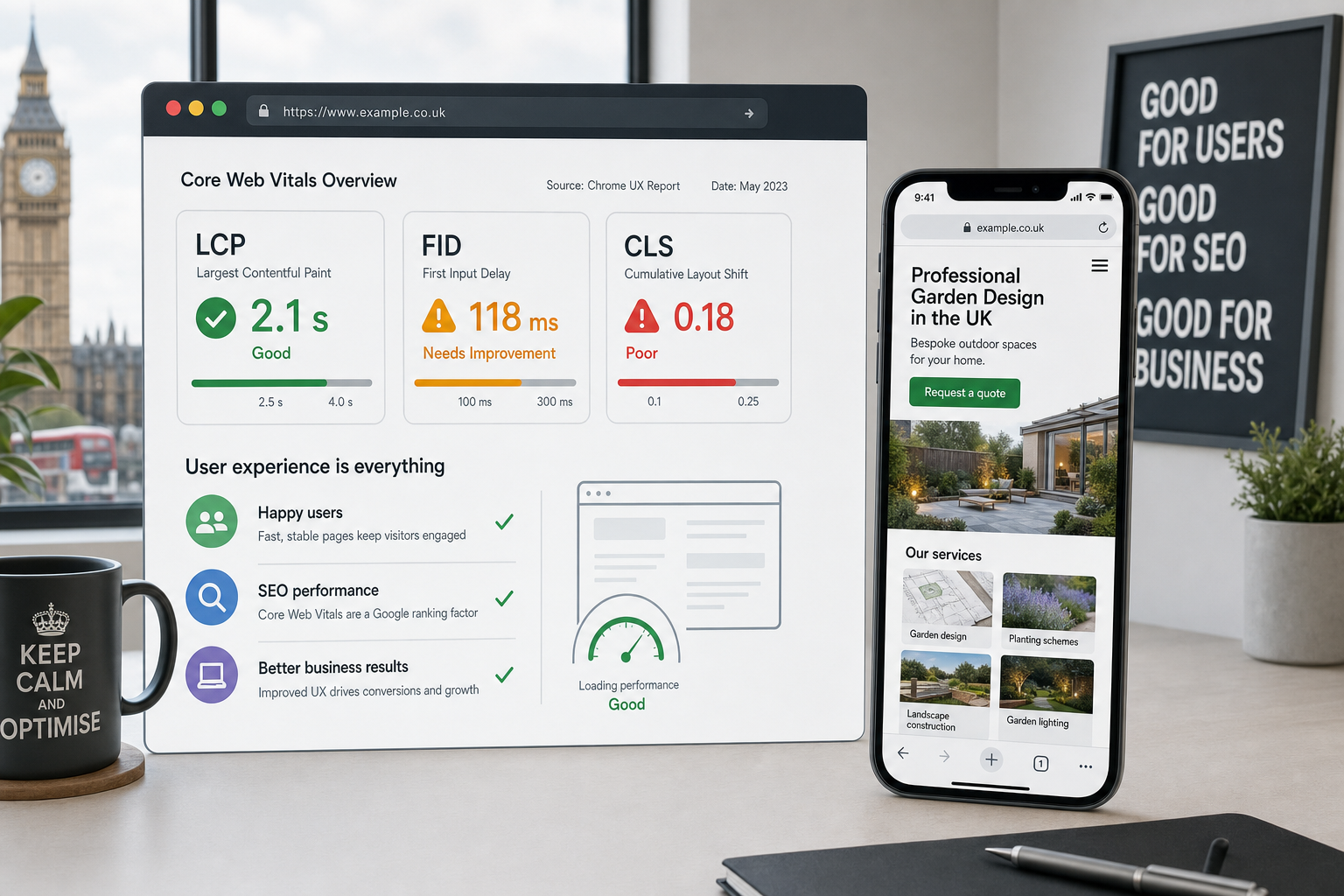
Good website design is not just about how a site looks. It is about how easily people can find what they need and take action. Local business websites should be clear, fast and comfortable to use on mobile devices, because many customers will be searching while they are out, commuting or comparing options at home on a phone.
Navigation should be simple. Avoid hiding essential information behind too many menu items or decorative sections. A visitor should be able to find your services, location, opening hours and contact options without thinking too hard. Prominent buttons such as Call us, Book an appointment, Request a quote or Order for collection can make a significant difference.
Mobile-friendly design is particularly important for local search. A site that is difficult to read or slow to load on a phone can lose enquiries, even if it looks acceptable on a desktop computer. Text should be readable, buttons should be easy to tap, forms should be short and important information should appear high on the page.
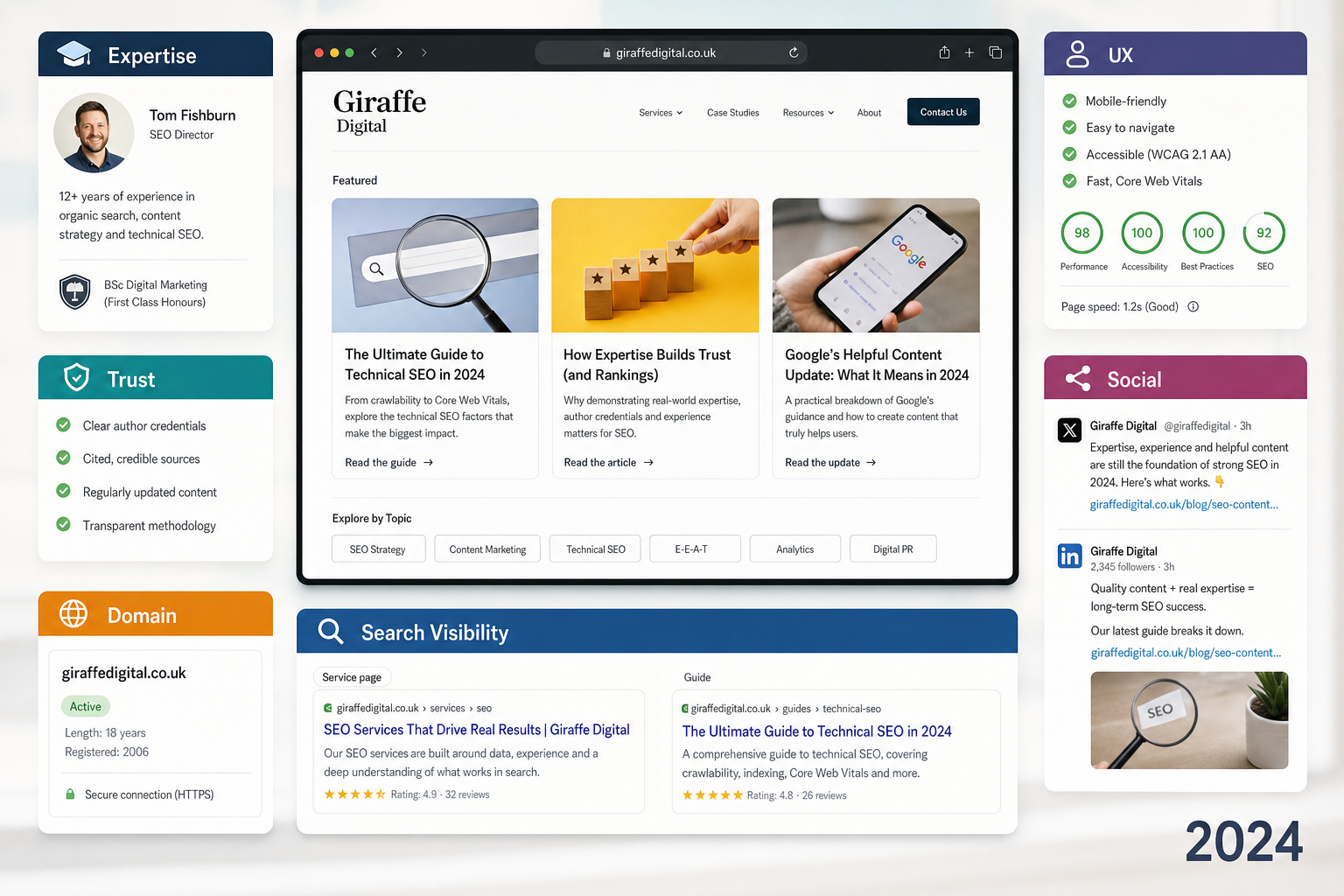
Trust signals also matter. Include real photographs where suitable, clear descriptions of your team or premises, professional branding, testimonials or reviews where you have permission to use them, and membership or accreditation details if relevant. Avoid clutter, stock imagery that feels unrelated to your business and vague claims that do not help customers make a decision.
Improve local SEO with useful, relevant content
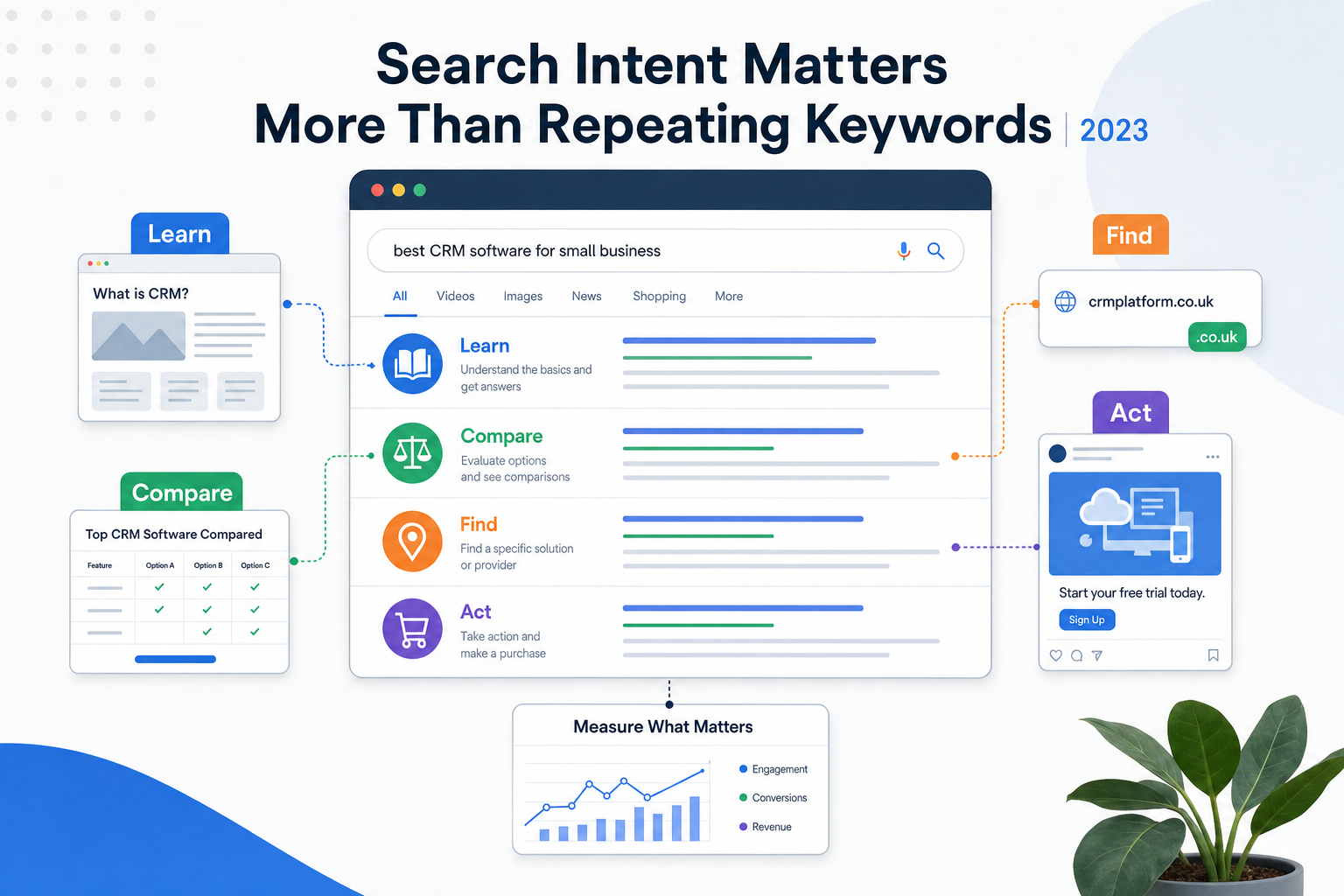
Search engine optimisation for a local business website should begin with helpful content and accurate information. You do not need to chase complicated tactics before the basics are in place. Search engines need to understand what you offer, where you offer it and why your pages are useful to searchers.
Each important service should have a clear page with a descriptive heading, useful copy and location relevance where natural. For example, a solicitor might create separate pages for conveyancing, family law and wills, while a heating engineer might have separate pages for boiler servicing, repairs and installations. These pages should avoid thin wording and instead answer real customer questions.
Location pages can be useful if your business serves several towns or areas, but they should not be duplicated with only the town name changed. A good location page might include details about the services provided in that area, travel or coverage information, local examples without inventing case studies, and relevant frequently asked questions.
Reviews are another important part of local search behaviour. Encourage satisfied customers to leave honest reviews on appropriate platforms, and respond professionally where the platform allows. Do not offer misleading incentives or write fake reviews. Genuine customer feedback builds confidence and can improve the likelihood that someone clicks through or contacts you.
Technical SEO should not be ignored. Your website should use HTTPS, load efficiently, have clear page titles and meta descriptions, and avoid broken links. If possible, use structured data for local business information so search engines can better understand details such as your address, opening hours and contact information. This should support, not replace, visible information on the page.
Use social media for updates, but do not rely on it alone
Social media marketing is valuable for local businesses, especially when customers are looking for timely updates. Facebook and Instagram can help retailers, restaurants, cafés, salons, fitness providers and community-focused businesses show what is available. LinkedIn may be more useful for professional services and business-to-business organisations. Twitter can work well for quick updates and customer service, depending on your audience.
The key is to use each platform with a clear purpose. Social media is excellent for announcements, photographs, behind-the-scenes updates, availability reminders, new product launches and community engagement. However, it should point people back to reliable information on your website when the details matter.
For example, if you announce a new booking system on Facebook, make sure the booking information is also on your website. If you post on Instagram about a weekend collection menu, provide a clear website page or contact method where people can order. If you change your opening hours, update the relevant listings and your website as well as posting on social channels.
This approach helps avoid the common problem of scattered information. A customer should not have to search through old posts to find your current arrangements. Social media can create attention, while your website should convert that attention into calls, bookings, orders or enquiries.
Choose and protect the right domain name
Your domain name is an important part of your brand. It appears on your website, email addresses, printed material, vehicles, signage and search results. A good domain should be easy to remember, easy to spell and closely connected to your business name where possible.
For UK local businesses, a domain ending that customers recognise can help build trust. Many organisations use a UK-focused domain, while others choose a broader commercial option. The best choice depends on your brand, audience and availability. Before registering, check that the spelling is clear when spoken aloud and that it does not create confusion with another organisation.
Avoid choosing a domain purely because it contains keywords. A name such as a service plus a town can sometimes be relevant, but it may restrict future growth or feel less distinctive than your actual brand. If your business may expand into new services or locations, consider whether the domain will still make sense in a few years.
Once you have chosen a domain, keep ownership details secure and make sure renewal reminders go to an address that will be monitored. Losing access to a domain can disrupt your website, email and marketing. It is also wise to register obvious variations where appropriate, especially if they protect your brand from confusion.
Measure what is working and keep improving
Digital marketing is easier to manage when you measure the right things. For a local business website, useful measures include phone calls, form enquiries, booking requests, online orders, direction requests, search visibility and page visits. Website analytics and search performance reports can show which pages attract visitors and where improvements are needed.
Look at customer behaviour as well as traffic. A page that receives many visits but few enquiries may need clearer calls to action, stronger service information or a simpler form. A page that ranks well for a service but does not mention your current availability may be missing commercial opportunities.
It is also worth asking staff what customers are asking by phone, email or in person. If the same question comes up repeatedly, answer it clearly on your website. This might include parking details, appointment rules, delivery areas, payment options, consultation processes or expected response times. Turning repeated questions into helpful website content can improve customer experience and reduce administration.
Regular reviews do not need to be complicated. Set aside time each month to check your core pages, local listings, social profiles and contact forms. Test your phone links on mobile, submit a test enquiry, check opening hours and make sure important announcements are still accurate. Small updates made consistently are often more valuable than occasional large redesigns.
Practical steps to take this month
If your online presence needs attention, start with the changes that will help customers immediately. The following steps are suitable for many local businesses in August 2020:
- Review your homepage and make sure it clearly states what you do, where you operate and how customers can contact you.
- Update opening hours on your website, Google My Business, Bing Places, Apple Maps and relevant social media profiles.
- Check your contact details for consistency, including phone numbers, email addresses and physical addresses.
- Add current service information such as delivery, collection, appointment-only visits, online consultations or revised processes.
- Improve mobile usability by checking that text, buttons, menus and forms work well on a smartphone.
- Create or improve service pages so customers and search engines can understand each important offer.
- Ask for genuine reviews from satisfied customers and respond professionally where appropriate.
- Use social media to promote updates while linking back to your website for full details.
- Check your domain and website access so renewal, hosting and administration details are under control.
- Monitor enquiries to see which pages, channels and messages are helping people take action.
A stronger online presence starts with clarity
Local businesses do not need to compete online by being the loudest. They often win by being the clearest, most useful and easiest to contact. When customers can quickly understand your services, current arrangements and next steps, they are more likely to trust your business.
A well-structured local business website sits at the centre of this effort. It supports search visibility, gives social media campaigns somewhere reliable to send people, strengthens your brand and helps your team answer customer questions efficiently. Whether you are updating an existing site or planning a new one, focus first on accurate information, simple journeys and practical business outcomes.
As customer behaviour continues to change, the businesses that keep their online information current will be better placed to adapt. Clear pages, consistent listings and helpful updates can make the difference between a missed enquiry and a new customer.