For many UK businesses, local search is one of the most valuable routes to new enquiries. When someone searches for a plumber, solicitor, café, accountant, estate agent, dentist or web designer near them, they are usually close to making a decision. The challenge is that llocal visibilityis no longer only about having a website and adding a town name to a page. Strong llocal SEOcontent, clear website structure and genuine customer reviews all work together to help search engines and potential customers understand why your business is relevant, trustworthy and worth contacting.
Local SEO is practical by nature. It connects what people search for with the services, locations and evidence presented on your website and business profiles. If your competitors have more helpful pages, clearer contact details, better reviews and stronger social proof, they may be chosen before you, even if your service is excellent. The good news is that many improvements are straightforward once you know where to focus.
Why local SEO content matters
Local SEO content is the information on your website that helps your business appear for searches with local intent. It may include service pages, location pages, case study-style project summaries, frequently asked questions, blog posts, contact details, opening hours and helpful guidance for customers in your area.
A good local page does more than repeat a town or county name. It explains what you do, who you help, where you work, what makes your service useful and what a customer should do next. Search engines need this context, but so do people. A page that feels thin, vague or copied from a national competitor will rarely build confidence.
For example, a roofing company serving Hampshire should not rely on a single page saying it offers roofing services in Hampshire. It could have a main roofing services page, a page for roof repairs, a page for flat roofing, a page explaining emergency call-outs and local information where there is a genuine service presence. Each page should answer the questions a customer is likely to ask: what problems are solved, what areas are covered, how the process works, whether surveys are available and how to request advice.
The same applies to professional services. An accountancy practice may benefit from pages for limited company accounts, self-assessment tax returns, payroll support and bookkeeping, with content that reflects local business needs. A restaurant may need clear menus, opening times, private hire information, accessibility details and content that reflects the neighbourhood it serves.
Better content starts with search intent
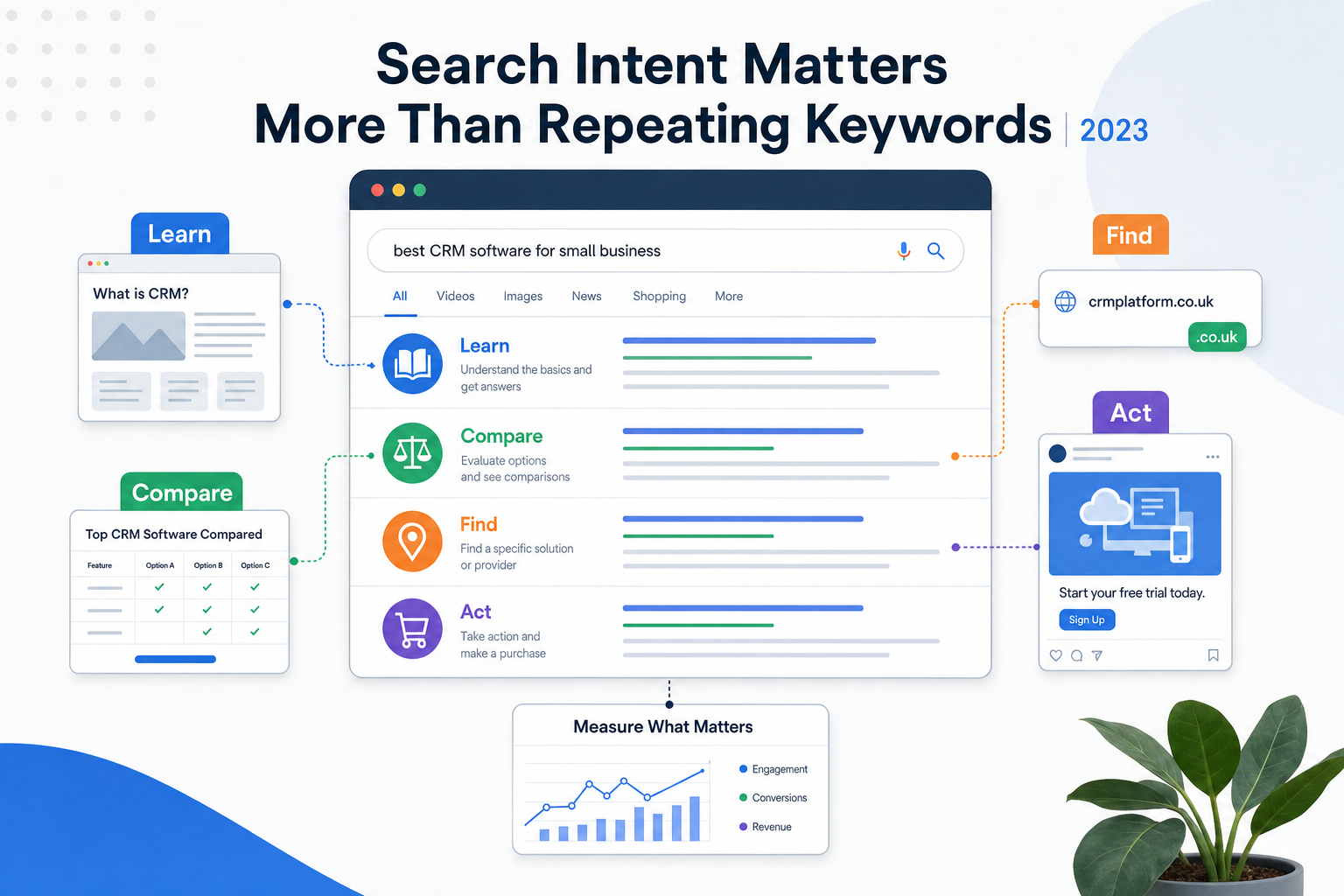
Search intent is the reason behind a search. A person looking for an emergency electrician near me has a different need from someone searching how often should a landlord get an electrical safety check. Both may become customers, but they need different content.
Before writing, consider the main types of local search your customers use:
- Service searches: for example, boiler repair in Bristol, family solicitor in Leeds or website design in Portsmouth.
- Problem searches: such as why is my website not showing on Google or how to remove mould from a bathroom ceiling.
- Comparison searches: such as best local estate agent or independent café near the station.
- Brand searches: where someone already knows your business name and wants your address, phone number, reviews or opening hours.
Your website should support each stage where relevant. Service pages help people who are ready to buy. Advice articles build familiarity earlier in the decision-making process. Contact and location pages help people confirm practical details. Reviews and testimonials help them feel reassured before they pick up the phone.
It is worth avoiding the temptation to write pages purely for search engines. Repeating phrases such as local SEO content or plumber in Southampton unnaturally will make copy difficult to read and may reduce trust. The best approach is to write clearly for customers, then make sure important phrases, locations and services are included naturally in headings, paragraphs, page titles and internal links.
What strong local pages should include
A strong local service page should be specific, useful and easy to act upon. Visitors should be able to understand what you offer within a few seconds, then find supporting detail if they need it. Search engines should be able to identify the service, location and business information without having to guess.
Useful elements include:
- A clear opening explanation: state the service and area in plain English.
- Relevant detail: explain what is included, who the service is for and common questions customers ask.
- Local signals: mention real areas served where appropriate, but only where your business genuinely operates.
- Trust signals: include reviews, accreditations, experience, guarantees, policies or examples where accurate.
- Contact options: make phone numbers, enquiry forms and email links easy to find.
- Consistent business details: keep your name, address and phone number consistent across your website and listings.
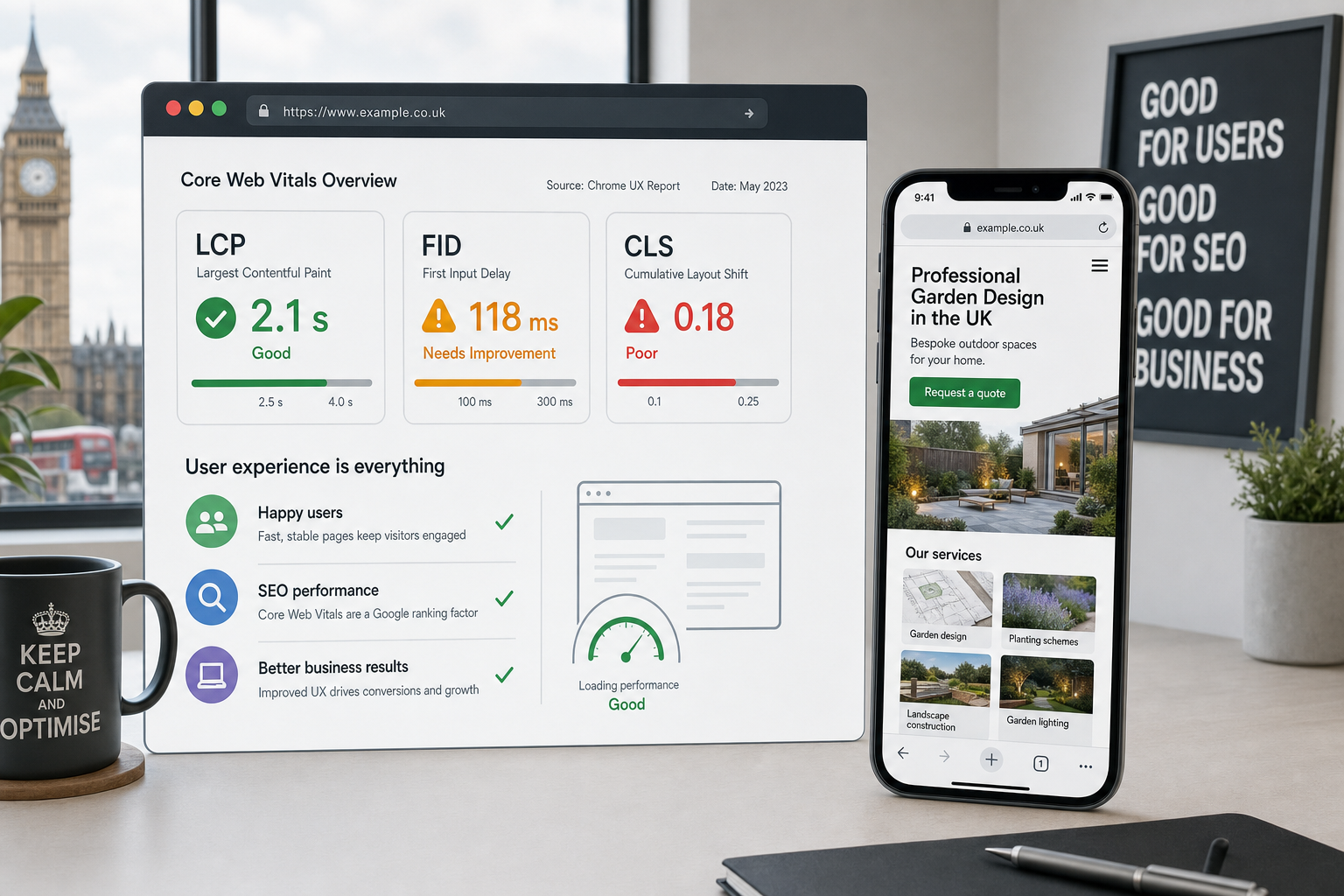
Design also plays a part. A well-designed local page should be fast enough to use comfortably, work properly on mobile and make key information easy to scan. Many local searches happen on phones, especially when people are out and about, so a responsive website is essential. If your telephone number is difficult to tap, your map is broken or your page takes too long to load, potential customers may return to the search results.
Reviews are part of your local content
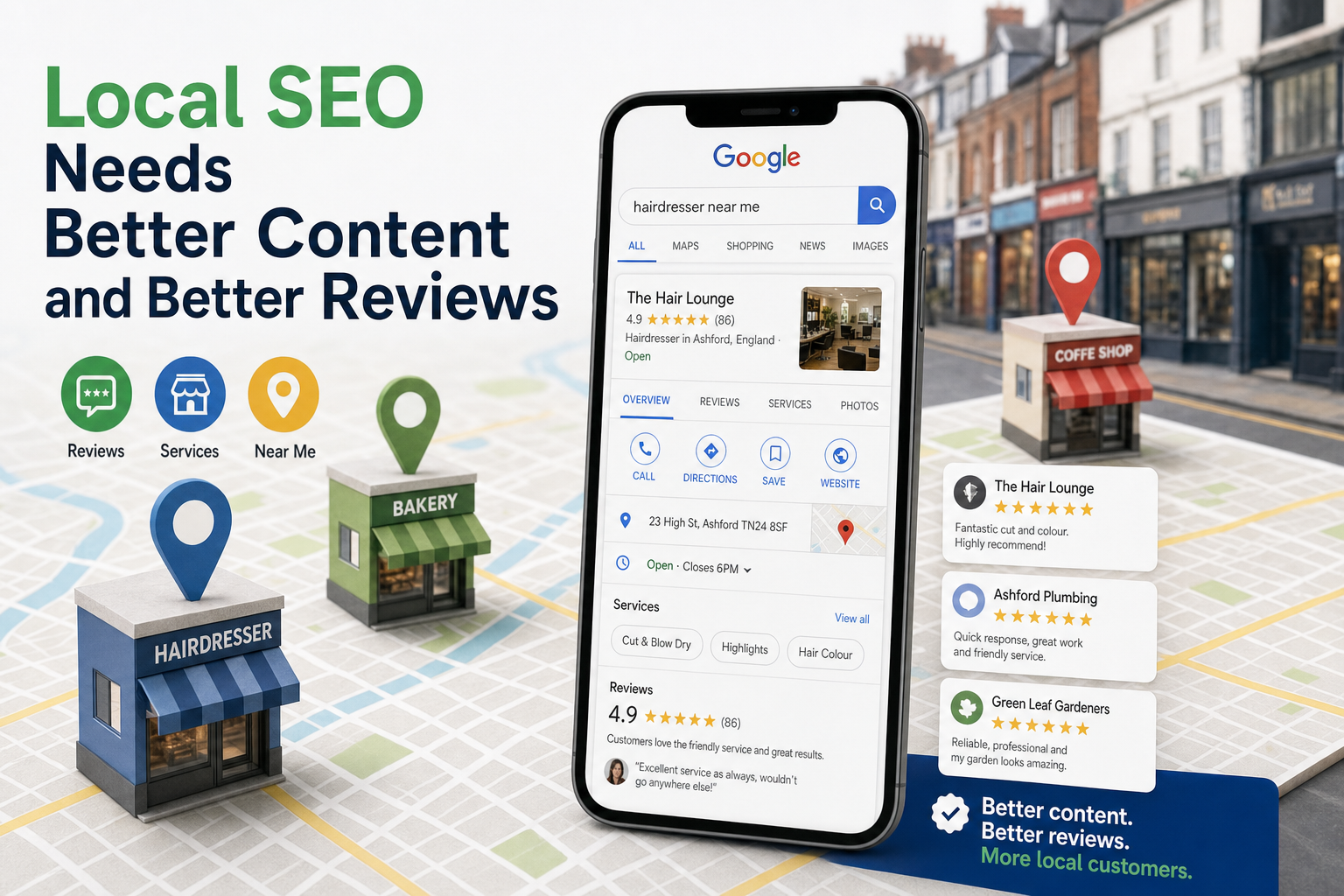
Reviews are not separate from content; they are some of the most persuasive content your business has. A business profile with recent, detailed reviews can stand out in local search results, particularly when compared with competitors that have only a handful of old ratings or no written feedback.
Google reviews are especially visible in local search and Google Maps. Facebook recommendations and sector-specific review platforms may also influence how customers feel about your business. The key is to encourage genuine feedback and respond professionally.
Good reviews often mention the service, location, staff member, outcome or customer experience. These details help prospective customers understand what it is like to work with you. A review that says excellent service is welcome, but one that explains how quickly you responded, how clearly you communicated and what problem you solved is far more helpful.
Businesses should make review requests part of their normal customer care process. After completing a job, delivering a project or serving a satisfied customer, politely ask whether they would be willing to leave a review. Keep the request simple and never pressure people. Do not offer misleading incentives, write fake reviews or ask staff to pose as customers. Trust is central to local SEO, and poor review practices can damage a brand quickly.
Responses matter too. Thank people for positive feedback and address negative comments calmly. A thoughtful response can show future customers that you listen, take responsibility and care about service quality. Avoid arguing in public. Where a complaint needs investigation, acknowledge it and invite the customer to contact you directly.
Connect your website, business listings and social media
Local SEO works best when your digital presence is consistent. Your website, Google My Business profile, Bing Places listing, Apple Maps information, Facebook page and other reputable directories should show the same core business details. Inconsistent addresses, old phone numbers or incorrect opening hours can confuse customers and search engines.
Google My Business is particularly important for local search in 2019. Businesses should check that categories are accurate, services are completed where available, photographs are up to date and opening hours are correct. Posts, questions and answers, and messaging features may be useful for some businesses, provided they can be managed properly. A half-finished profile is a missed opportunity.
Social media also supports local visibility, although it should not be treated as a direct replacement for a website. Facebook, Instagram, LinkedIn and Twitter can help businesses share updates, promote useful content, highlight reviews, show work in progress and build local awareness. A restaurant might share seasonal menus and event photographs. A trades business might share before-and-after images with permission. A professional services firm might post short explanations of common client questions.
The aim is not to post for the sake of it. Social updates should reinforce the same messages as your website: who you help, what you do, where you operate and why people can trust you. When social content links back to useful website pages, it can also encourage visitors to take the next step.
Website design and technical foundations still matter
Content and reviews need a reliable technical foundation. If a website is difficult to use, poorly structured or insecure, local SEO performance may suffer. Search engines want to send users to pages that work well, and customers expect a professional experience.
Important basics include mobile-friendly design, clear navigation, sensible internal linking, descriptive page titles, useful meta descriptions and readable content. HTTPS should be in place, particularly where forms are used. Images should be optimised so they look good without slowing pages unnecessarily. Contact forms should be tested regularly, and calls to action should be obvious without feeling aggressive.
Structured data can also help search engines understand your business information. LocalBusiness schema, where implemented correctly, can reinforce details such as name, address, telephone number and opening hours. It is not a magic shortcut, but it is a useful addition when the visible page content is already accurate and helpful.
Domain names deserve sensible consideration too. Choose a domain that is easy to spell, easy to say aloud and suitable for the long-term brand. A local keyword in a domain can sometimes make a business look relevant, but it should not come at the expense of credibility. Avoid awkward hyphens, confusing spellings or names that restrict growth if you may expand your services or area later. Register domains using accurate ownership details and keep renewal reminders organised so an important business asset is not lost.
Practical content ideas for local businesses
Many business owners know they need content but struggle to decide what to publish. The best ideas often come from real customer questions. If people ask the same thing on the phone, in meetings or by email, it is probably worth answering on your website.
Useful local SEO content ideas include:
- Service explainers: what is included, how long it takes, who it is suitable for and what to prepare.
- Area guides: pages that explain genuine service coverage and local considerations.
- Frequently asked questions: short, clear answers to practical queries.
- Project summaries: anonymised examples of work completed, with permission where needed and without inventing results.
- Seasonal advice: relevant guidance, such as preparing a garden for summer, checking heating before winter or planning Christmas bookings.
- Buying guides: explanations that help customers compare options without feeling pressured.
Freshness is useful, but quality is more important than volume. A monthly article that genuinely helps local customers is usually better than several thin posts written only to include keywords. Review existing content as well as creating new pages. Old pages may need clearer headings, better internal links, updated photographs, stronger calls to action or more accurate service information.
Measure what brings enquiries
Local SEO should be judged by business value, not only rankings. Rankings can vary by location, device and personalisation, so they are only one indicator. Track enquiry forms, phone calls where possible, direction requests, email clicks and visits to key service pages. Google Analytics and Search Console can help show which pages attract visitors and which search queries lead people to your site.
It is also useful to ask new customers how they found you. Some may say Google, while others may mention a review, a recommendation, a Facebook post or a page on your website. Local marketing often works through several touchpoints, so the aim is to make each one consistent and convincing.
If a page gets traffic but few enquiries, the issue may be content, design, trust or the call to action. If your profile appears often but competitors receive more calls, reviews and photographs may need attention. If people visit on mobile but leave quickly, speed or usability may be holding the site back.
A stronger local presence is built steadily
Local SEO is not a one-off task. It is a steady process of improving your website, strengthening your reviews, keeping business information accurate and publishing content that answers real customer needs. Businesses that invest in helpful local SEO content and genuine reputation-building are better placed to earn visibility and trust.
For UK business owners, the opportunity is clear. A well-designed website, accurate listings, active review management and practical content can turn local searches into meaningful enquiries. The businesses that explain their services clearly, show evidence of good customer experiences and make it easy to get in touch will have a stronger foundation for search marketing and digital growth.