
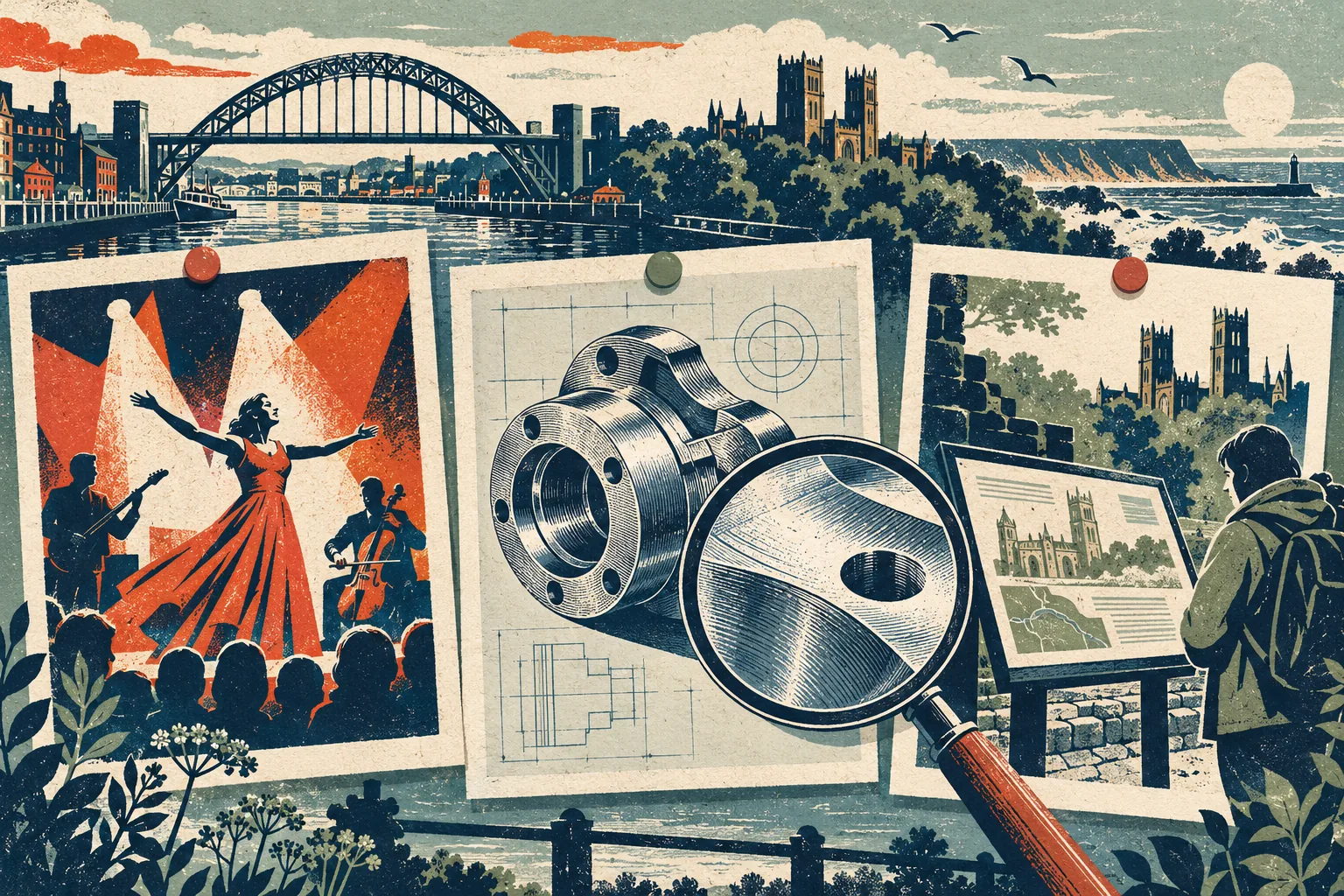
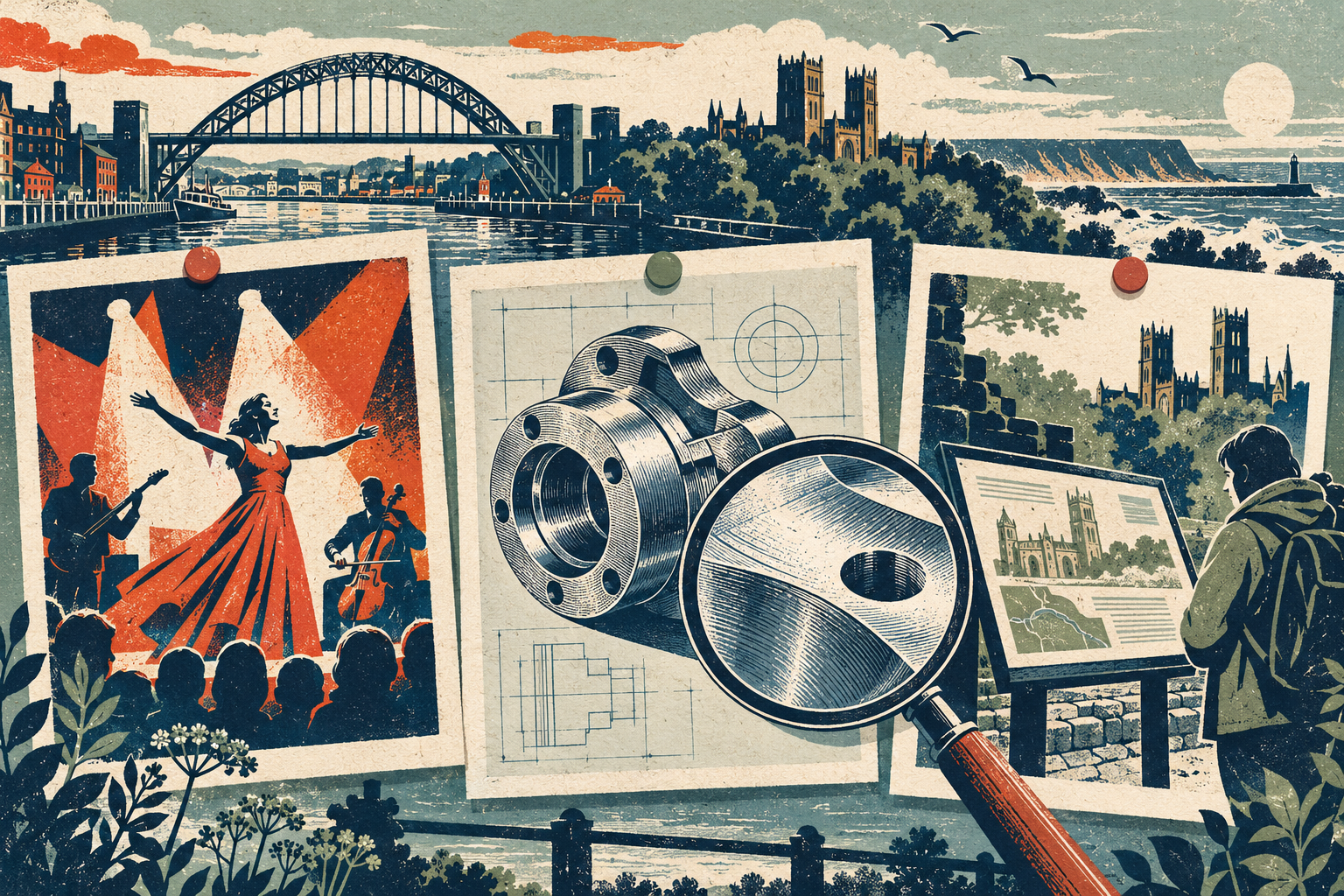
A strong portfolio helps a prospective customer understand the work behind the finished photograph. What problem were you asked to solve? Which part did your team deliver? What can the visitor judge from the example? Those questions matter whether you are presenting a performance, a manufactured component or an interpretation project.
Across the North East, there are useful reasons to think beyond a single gallery layout. Newcastle City Council describes the city centre's cultural and creative activity, while Sunderland's business support overview includes manufacturing, software and creative industries. Durham University's Repair and Care exhibition account shows how interpretation can bring together research, construction knowledge and different creative formats. These are different settings for one useful exercise: making the substance of a project easy to assess.
Choose examples by the question they answer
Start with the services you want customers to understand. Beside each service, write the question a cautious buyer would ask. A theatre producer might ask whether a team can work within an established production concept. An engineering buyer might need to understand a supplier's scope. A heritage organisation might want to see how complex material becomes accessible to visitors.
Now select an example that answers that question. The most visually impressive image may be less useful than a modest project with a clear brief and an intelligible contribution. A small set of well-explained examples gives readers more to work with than a large gallery in which every caption says only the project name.
For a Newcastle creative business, website design in Newcastle upon Tyne should make room for the explanation as well as the artwork. A caption, a short project story and a relevant service link can sit together without turning the page into a lengthy production diary.
Make your contribution visible
Collaborative work needs precise attribution within the project story. State the work you were commissioned to do, identify the parts delivered by others where necessary, and distinguish a design proposal from an installed or completed result. A visitor should be able to tell whether you developed the concept, produced the work, supplied one component or supported the wider team.
Consider an illustrative Sunderland supplier example. A photograph shows a finished assembly, but the business supplied only a machined part. The useful story identifies that part, explains the relevant production requirement in approved language and shows an appropriate detail. It should not imply responsibility for the whole assembly or disclose a customer's confidential specification.
For businesses reviewing branding in Sunderland, this precision also guides tone. A confident brand can describe its contribution directly. Broad claims about transforming an entire industry are harder to support and give buyers less practical information about the service.
Write captions that add evidence
A caption should explain something the image cannot. Useful details include the intended audience, a design constraint, the reason for a material choice or the stage of the work shown. Keep these details connected to the service being offered. A description of the photograph's colours does little to explain why a project is relevant to a new brief.
For a visitor-facing project in Durham, an illustrative caption could explain that a panel was designed to introduce a complex historical subject in a limited space. A second image might show the hierarchy of headings and the relationship between text and objects. The story can discuss the design decision without claiming that a particular number of visitors understood or enjoyed it.
When planning SEO in Durham, use project headings and surrounding text to describe the real subject and service. Readers looking for interpretation design need different information from readers looking for accommodation. Clear topic relationships are more useful than repeating the city name in every caption.
Separate what you observed from what you hope to achieve
Results deserve their own review. If a customer has approved a measured outcome, explain what was measured and when. If the only available evidence is that the work was delivered to an agreed brief, say that. A completed project is still worth presenting when its value lies in the approach, the technical detail or the quality of the finished work.
Do not turn an objective into a result. A brief to make information easier to navigate does not establish that navigation improved. A new identity intended to support a launch does not prove that it increased sales. Keep objectives, delivered work and verified outcomes distinct, so readers can evaluate each fairly.
Check permission before designing the page
Build a simple internal record for each selected project. Note who can approve the text, which photographs you can publish, whether names and logos may appear, and whether any material needs to remain private. This is a practical publishing checklist; any uncertain rights or contractual restrictions should be resolved with the relevant owner before publication.
It is easier to plan a useful page with approved material than to remove its central evidence at the end. If publication permission is limited, choose another example or describe the service approach without presenting it as an identifiable client project. Never fill the gap with a fictional testimonial or an invented result.
Run a portfolio review with three project cards
Choose three existing projects and prepare one card for each. Ask a colleague who was not involved in the work to read the cards without an explanation from the project team. Their questions will reveal which assumptions need to become visible on the website.
- Write the customer question that the example should answer.
- Summarise the brief and your exact contribution in plain language.
- Choose an approved image and add a caption that explains a decision.
- Separate the delivered work from any verified outcome.
- Record the publication approval and the person responsible for later corrections.
- Link the example to the service a new customer would need.
Use the review to identify gaps in your evidence before commissioning a larger gallery. Giraffe Digital's digital strategy support in the North East can help connect portfolio choices with the services, customer questions and content priorities behind a website brief.
Frequently asked questions
Practical answers to questions about putting this advice into use.
What makes a website portfolio useful to a prospective customer?
Show the work alongside the brief, your contribution and relevant details you can substantiate. A caption should explain why the example helps someone assess your service, rather than simply repeat the project name.
Can we publish client photographs and project results?
Check the permissions and any confidentiality restrictions before publication. Use results you can support with evidence, and distinguish an observed outcome from an aim or expectation.