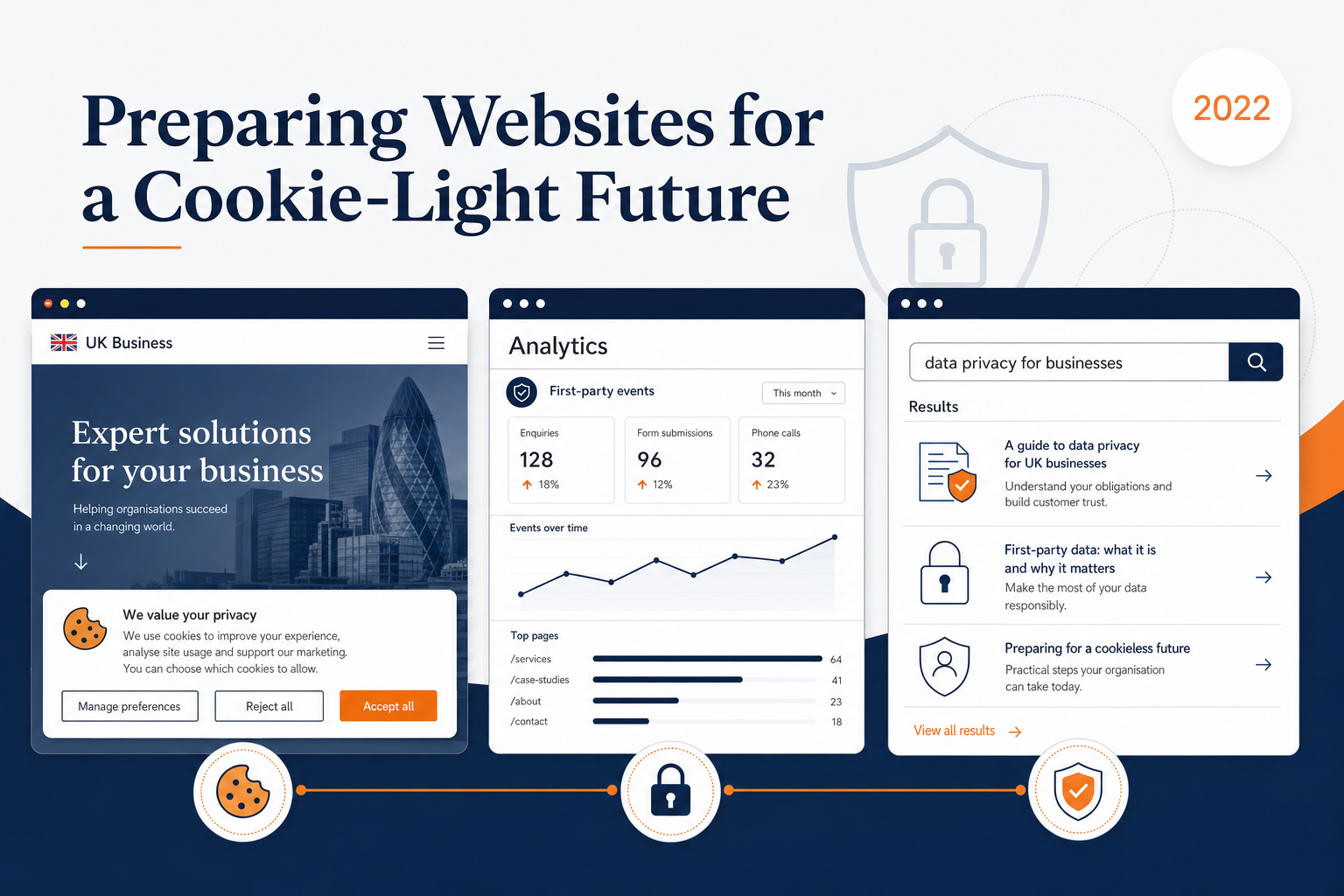
Cookies have helped businesses understand visitors, measure campaigns and personalise online experiences for many years. However, the way websites collect and use data is changing quickly. UK business owners need to prepare for a future where fewer visitors can be tracked through third-party cookies, consent must be clearer, and marketing decisions need to rely on stronger first-party data. This is where cookie-light marketing becomes valuable: it helps businesses keep improving their online performance while respecting privacy, strengthening trust and reducing dependence on tracking methods that are becoming less reliable.
For many organisations, this is not just a compliance issue. It affects website design, search marketing, social media advertising, analytics, customer relationships and long-term digital strategy. A cookie-light approach helps you build a website and marketing system that can continue to work as browsers, platforms and users place greater limits on tracking.
What cookie-light marketing means
Cookie-light marketing is a practical approach to digital marketing that uses fewer non-essential cookies and relies more on consented, first-party and contextual data. Rather than trying to follow every visitor across the internet, it focuses on understanding the people who choose to engage with your business directly.
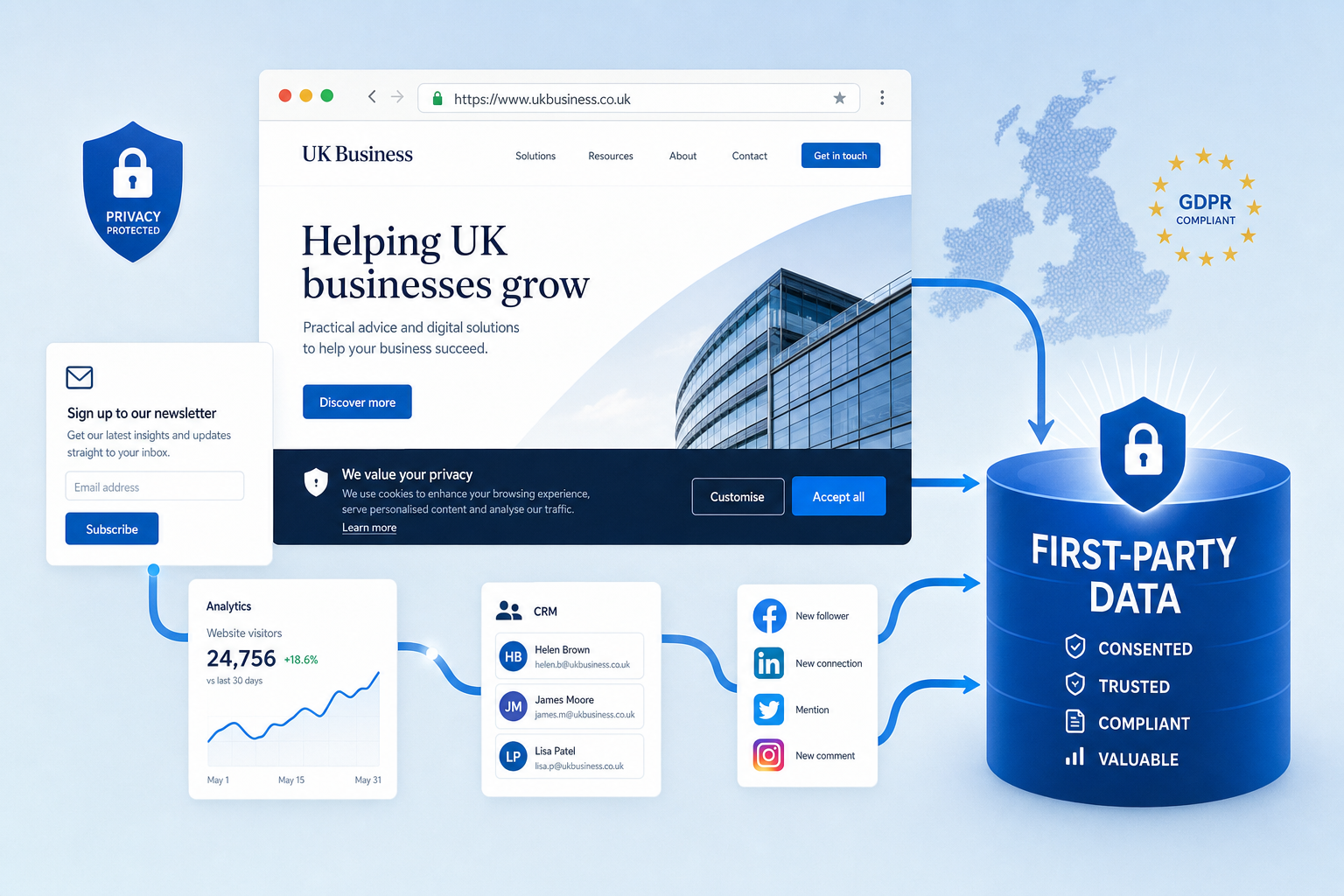
In simple terms, first-party data is information collected through your own website, forms, booking systems, email sign-ups, customer accounts, enquiries, purchases and direct interactions. It is data you earn through a relationship with the customer, rather than data purchased or inferred through third-party tracking.
A cookie-light strategy does not mean giving up on measurement or personalisation. It means designing better ways to collect useful information, explain your intentions clearly and make marketing decisions from higher-quality signals. For example, a local service business might measure completed enquiry forms, call button clicks and postcode interest rather than relying on broad third-party audience profiles. An e-commerce business might focus on product category engagement, email preferences and repeat purchase behaviour rather than retargeting every visitor aggressively.
The result can be a cleaner, more resilient marketing setup that gives customers more control and gives business owners more dependable insight.
Why this matters for UK businesses in 2022
Privacy expectations have moved into the mainstream. Many website visitors are now used to cookie banners, privacy choices and app tracking prompts. At the same time, browser restrictions and platform changes are making some older digital marketing techniques less effective.
Third-party cookies are already limited in several major browsers, and Google has stated that Chrome will phase out third-party cookies in the future, with the timeline extended into 2024. Apple’s App Tracking Transparency framework has also affected how some social media advertising data is reported. These changes mean businesses should not wait until measurement becomes weaker before improving their data foundations.
For UK businesses, there is also an important trust factor. Visitors are more likely to engage with a website that feels professional, secure and transparent. A confusing cookie banner, vague privacy wording or intrusive tracking can make a brand feel careless. By contrast, clear choices and useful content show that your business respects its audience.
Cookie-light marketing is therefore both a risk-reduction exercise and a growth opportunity. It encourages businesses to invest in assets they control: a well-designed website, strong search visibility, helpful content, email marketing, customer data quality and a recognisable brand.
Start with a clear audit of your current website tracking
The first step is to understand what your website is currently doing. Many businesses have accumulated tracking scripts over time through analytics tools, advertising pixels, embedded videos, live chat software, heatmapping tools and old campaign experiments. Some of these may still be useful; others may no longer be needed.
A practical audit should identify which cookies and scripts are running, what they do, whether they are essential or non-essential, and whether they are properly covered by consent. It should also check whether your privacy policy and cookie notice match what is actually happening on the site.
Questions worth asking include:
- Which analytics, advertising and third-party scripts are loaded on the website?
- Are any tags still present from old campaigns or previous agencies?
- Do non-essential cookies wait for the correct consent before loading?
- Is the cookie banner easy to understand and use?
- Are conversion actions being measured accurately?
- Is website data being shared with platforms unnecessarily?
This process often reveals quick wins. Removing unused scripts can improve website speed, reduce clutter and lower privacy risk. It can also make your analytics easier to understand, because you are no longer collecting data for tools the business does not use.
Build stronger first-party data into your website design
A cookie-light future places more importance on what your own website can capture with permission. This should influence website design from the planning stage, not be added as an afterthought.
Good first-party data collection begins with useful user journeys. Visitors need clear reasons to share information. That might be a quote request, consultation booking, product guide, email newsletter, event registration, account area, sample request, loyalty programme or downloadable checklist. The key is to offer genuine value and make the exchange clear.
For example, a professional services firm could invite visitors to request a tailored callback by selecting their business size, sector and main challenge. A home improvement company could provide a project planning guide in exchange for an email address and postcode area. A B2B supplier could offer specification sheets, product comparison tools or account-based enquiry forms that help qualify leads while giving prospects something useful.
Website design should support this with:
- Simple forms that only ask for information the business genuinely needs.
- Clear signposting for newsletter, enquiry and booking options.
- Helpful microcopy explaining why information is requested.
- Accessible layouts that work well on mobile devices.
- Prominent trust signals such as reviews, accreditations, case studies and contact details.
- Fast-loading pages that do not rely on unnecessary scripts.
It is also worth reviewing how forms feed into your customer relationship management process. If leads are exported manually, stored inconsistently or not followed up properly, the value of first-party data is reduced. A cookie-light strategy works best when marketing, sales and customer service processes are connected.
Use analytics that support better decisions, not just more data
Many businesses have become used to large volumes of analytics data, but more data is not always better. As cookies become less dependable, the focus should move towards meaningful measurement. You need to know which activities are helping people discover, trust and contact your business.
Google Analytics 4 is now an important consideration for many organisations, particularly as Universal Analytics is due to stop processing new standard property data in July 2023. GA4 uses an event-based model and is designed to work with changing privacy expectations, although it still needs thoughtful configuration. Businesses should avoid simply installing it and hoping for the best.
Useful events might include form submissions, phone link clicks, email link clicks, booking starts, file downloads, product enquiries, add-to-basket actions and checkout completions. These should be aligned with business goals rather than vanity metrics. A high number of page views is less useful than knowing which pages help generate qualified enquiries.
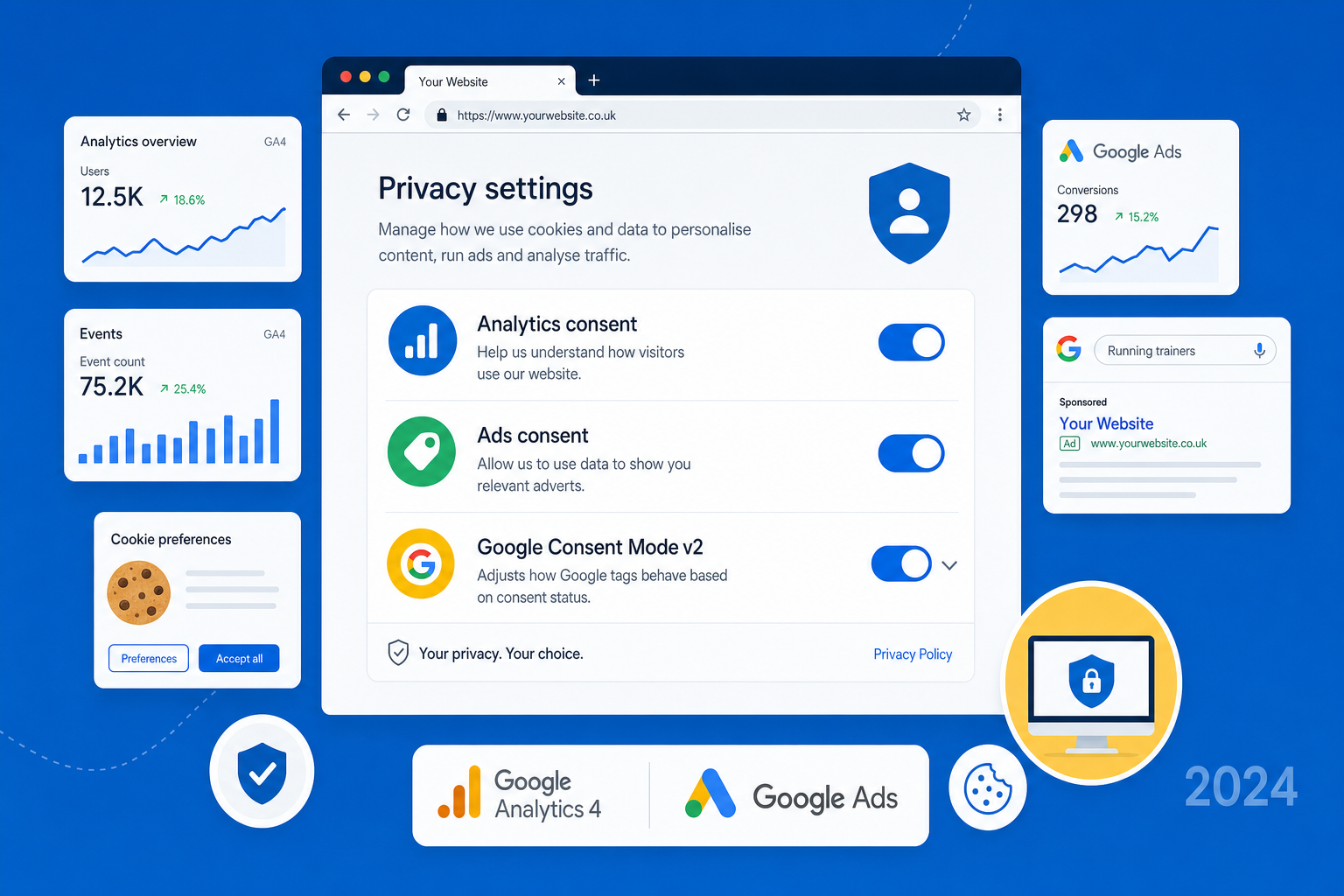
Consent settings also matter. Tools such as consent management platforms and tag management systems can help ensure that marketing and analytics tags behave according to the visitor’s choice. Google Consent Mode may be relevant for some setups, but it should be implemented carefully and with appropriate professional advice where needed.
For businesses running paid campaigns, it is sensible to compare platform-reported conversions with website enquiries, sales data and internal records. Advertising platforms may use modelling or attribution methods that do not perfectly match what your team sees day to day. A healthy reporting process should combine analytics with real business outcomes.
Make SEO a central part of cookie-light marketing
Search engine optimisation is especially valuable in a cookie-light environment because it does not depend on following people around the web. Strong organic visibility helps prospective customers find your business when they are actively looking for answers, products or services.
A focused SEO strategy should address the questions and needs of your audience. This includes service pages, location pages where appropriate, product information, comparison content, guides, frequently asked questions and helpful blog articles. The aim is to attract relevant visitors through useful content and then guide them towards a clear next step.
For example, a local accountancy practice might create content around tax deadlines, business structure choices and bookkeeping basics. A building contractor might publish guides on planning considerations, project stages and maintenance advice. A specialist retailer might improve category pages with buying guidance, product filters and clear delivery information.
Technical SEO is also important. Search engines and users both benefit from fast, well-structured websites. A site that loads quickly, uses clean navigation, has descriptive page titles, includes structured content and works well on mobile is more likely to perform effectively. Reducing unnecessary tracking scripts can support speed, which in turn can improve user experience.
SEO also supports first-party data growth. If your content attracts the right visitors, your forms, newsletters and enquiry routes are more likely to be used by people with genuine intent. This is a stronger foundation than relying heavily on rented audiences and opaque targeting.
Adapt social media marketing for a privacy-aware audience
Social media remains a useful channel for awareness, community building and demand generation, but reporting and targeting have changed. Businesses should be prepared for less precise attribution and should avoid judging social activity only by immediate tracked conversions.
A cookie-light social media strategy should combine platform activity with stronger owned assets. Use social channels to start conversations, showcase expertise, share useful content and drive visitors towards your website, email list or booking process. This helps move relationships from rented platforms into channels your business can manage more directly.
Paid social campaigns can still be effective, but they need clearer creative, stronger landing pages and better first-party conversion points. Rather than relying solely on narrow tracking-based audiences, consider broader audience testing, interest-based targeting, customer list activity where appropriate and creative that speaks clearly to customer needs. Meta’s Conversions API is also being adopted by some advertisers to improve data sharing between websites and advertising systems, although it must be configured responsibly and in line with consent and privacy obligations.
Organic social content should support trust. Behind-the-scenes posts, practical advice, product demonstrations, staff expertise, customer questions and community updates can all help people understand your brand before they are ready to enquire. The more useful and recognisable your brand becomes, the less dependent you are on intrusive tracking.
Review domain choices, brand consistency and customer trust
Your domain name and wider brand presentation have a role to play in a cookie-light strategy. When tracking is less visible or less complete, brand recognition becomes more important. People need to remember who you are and feel confident returning to your website directly.
If you are registering a new domain, choose something clear, memorable and easy to spell. Avoid confusing punctuation, unnecessary hyphens or wording that is too close to another organisation’s brand. For UK-focused businesses, consider whether a UK domain extension, a broader extension or both are appropriate for your plans. It is also sensible to register key variations where there is a clear business reason, such as protecting a core brand name from confusion.
Before committing to a domain, check that it aligns with your company name, social media handles and future marketing activity. A domain that looks professional on a business card, in search results, on signage and in email addresses will support trust. You should also ensure that the domain is registered using accurate ownership details and that renewal responsibilities are clearly managed within the business.
Brand consistency matters across the website, search listings, email signatures and social profiles. In a privacy-aware market, customers may compare multiple signals before contacting you. A well-maintained domain, secure website, consistent naming and clear contact information all reduce friction.
Improve consent without damaging the user experience
Cookie consent should not feel like a barrier between the customer and your business. It should be clear, fair and easy to use. A cluttered banner with confusing wording can reduce confidence, while a banner designed only to push people towards acceptance may create trust issues.
A good consent experience should explain the main cookie categories in plain English, allow users to make a genuine choice, and avoid loading non-essential tracking before consent is given. The design should be accessible, readable on mobile and consistent with the rest of the website.
It is also important to remember that cookie consent is only one part of privacy communication. Your privacy policy should explain how personal data is collected and used. Forms should include concise, relevant wording where necessary. Email sign-ups should make expectations clear. If you use marketing automation, remarketing or customer list uploads, make sure your data processes are properly documented.
Business owners should seek suitable legal or data protection advice where required, particularly if operating in regulated sectors or handling sensitive information. From a digital strategy perspective, the goal is simple: make privacy part of a professional customer experience, not a last-minute compliance overlay.
Create a practical cookie-light action plan
Preparing for cookie-light marketing does not require every business to rebuild everything at once. A staged plan is usually more effective. Start with the areas that reduce risk and improve measurement, then build towards stronger first-party relationships.
A sensible action plan might include:
- Audit all cookies, scripts and tracking tools currently used on the website.
- Remove redundant tags and improve website loading performance.
- Check that consent settings match how cookies and marketing tools actually behave.
- Review analytics goals and configure meaningful conversion events.
- Plan the move to GA4 if it has not already been completed.
- Improve lead forms, calls to action and enquiry journeys.
- Create useful SEO content that attracts visitors with genuine intent.
- Strengthen email sign-up opportunities and customer data quality.
- Review social media campaigns with more realistic attribution expectations.
- Make sure domain, brand, security and contact details support trust.
This work can be aligned with a website redesign, SEO programme or wider digital strategy review. In many cases, the same improvements that support cookie-light marketing also improve conversion rates, speed, usability and brand credibility.
Preparing now creates a stronger digital foundation
The shift towards fewer third-party cookies is not simply a technical change. It is part of a wider movement towards more transparent, customer-led digital marketing. Businesses that adapt early can build better websites, cleaner data systems and more meaningful relationships with their audiences.
Cookie-light marketing encourages organisations to focus on what they can control: useful content, clear design, trustworthy data collection, strong search visibility, consistent branding and excellent customer journeys. It also helps reduce dependence on fragile tracking methods that may become less effective over time.
For UK business owners planning a new website, reviewing SEO or improving digital performance, now is the right time to ask whether your marketing is ready for a cookie-light future. By making practical changes in 2022, you can create a more resilient online presence that respects privacy while still supporting measurable growth.