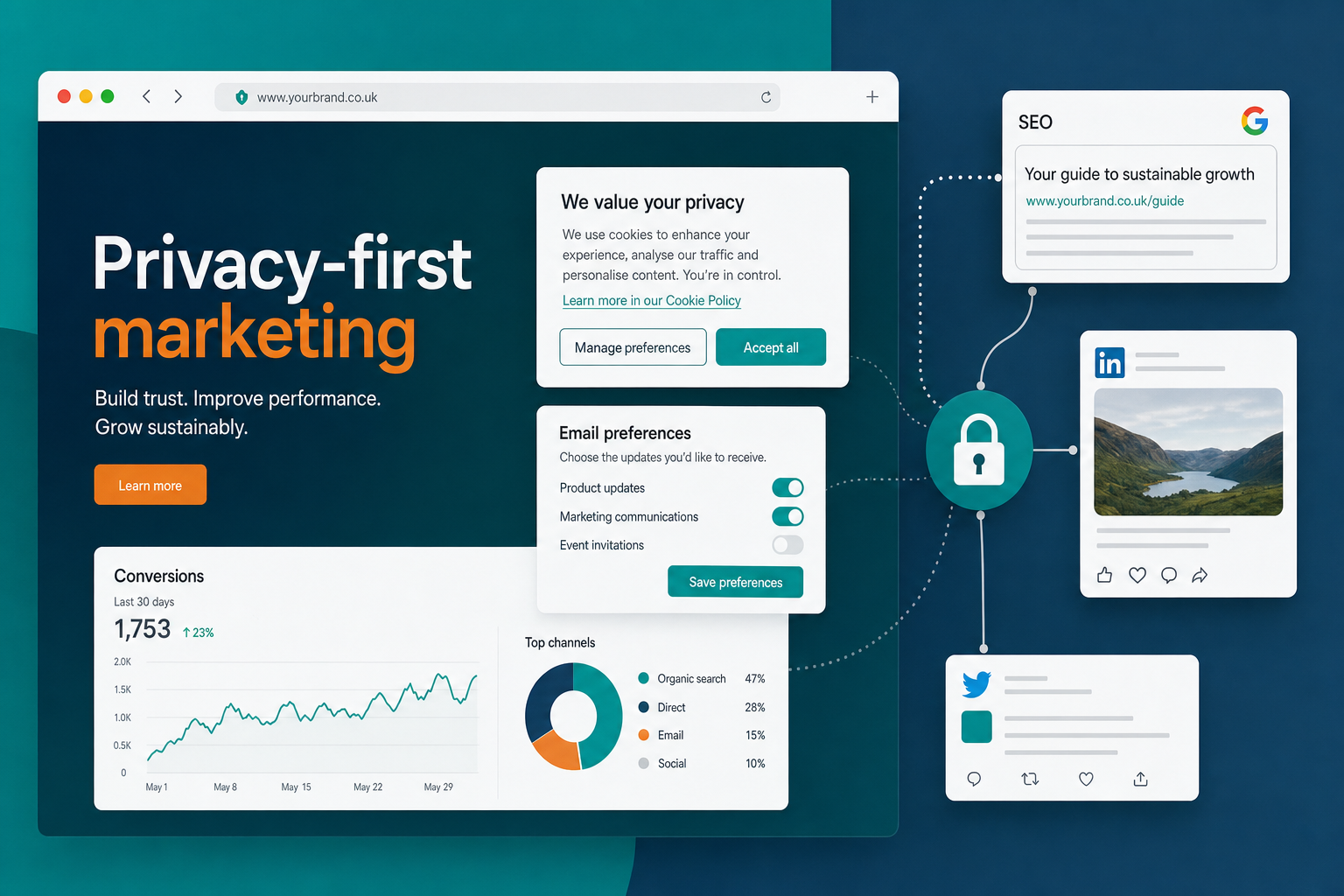
Privacy-first marketing is no longer a specialist topic reserved for compliance teams or large advertisers. For UK businesses planning a new website, improving search visibility or investing in social media, it is becoming a practical way to build trust, reduce wasted spend and prepare for a more privacy-conscious web. Customers are more aware of how their information is collected and used, browsers are restricting tracking, and advertising platforms are changing how campaigns are measured. The opportunity is to create marketing that is clearer, more useful and less dependent on intrusive data collection.
What privacy-first marketing means in 2022
Privacy-first marketing means designing your digital activity around permission, transparency and genuine customer value. Rather than collecting as much data as possible and deciding what to do with it later, a privacy-first approach starts with a simple question: what information do we need to serve customers well, and how can we collect it responsibly?
For a UK business, this sits alongside established responsibilities under UK GDPR and PECR. Consent must be meaningful where it is required, privacy information should be clear, and marketing communications should be sent to people who have given appropriate permission or where another lawful basis applies. This is not only about avoiding problems. It is also about creating a smoother, more trustworthy experience from the first website visit through to an enquiry, purchase or repeat contact.
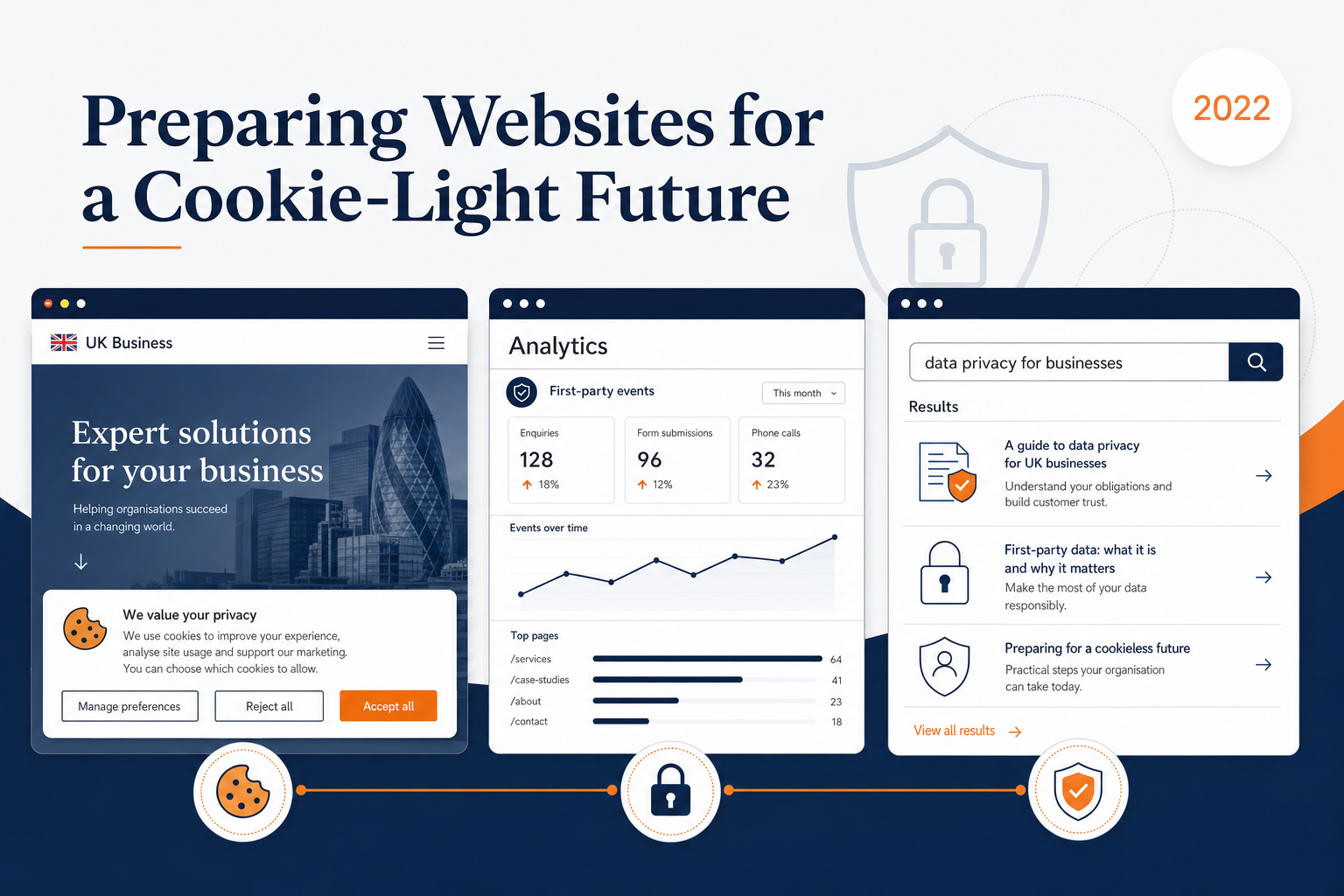
The digital landscape is also changing. Browser restrictions, cookie controls, app privacy prompts and platform measurement changes are making older forms of tracking less reliable. Third-party cookies are already limited in several browsers, and further changes are expected. Social media advertising has also become more challenging to measure since app tracking permissions became more visible to users. Businesses that rely only on platform-reported conversions or broad retargeting audiences may find performance harder to interpret.
A privacy-first marketing strategy helps by focusing on data you earn directly: enquiries, newsletter subscriptions, account preferences, customer feedback, search behaviour on your own website and clear consent choices. This gives you a stronger foundation than rented or opaque data sources.
Why this matters for business value
Privacy-first marketing is often framed as a restriction, but it can create commercial advantages. When customers understand why you are asking for information, they are more likely to share useful details. When your website explains choices clearly, people feel more confident contacting you. When your measurement is based on meaningful actions rather than vanity metrics, your marketing decisions become sharper.
For example, a professional services firm might not need to track every visitor across the web. It may be more valuable to understand which service pages lead to qualified enquiries, which downloadable guides attract decision-makers, and which search terms suggest strong buying intent. A retailer may benefit from clear email preferences, product interest data and post-purchase communication that feels relevant rather than excessive. A local business may gain more from accurate landing pages, helpful reviews and well-structured contact journeys than from aggressive remarketing.
Privacy-first marketing also supports brand positioning. A company that communicates clearly, avoids manipulative design and respects customer preferences appears more credible. For many sectors, especially finance, health, education, legal, property and business-to-business services, trust is central to conversion. People are more likely to enquire when the website feels professional, secure and straightforward.
Designing a privacy-conscious website
Your website is usually the centre of your digital marketing, so it is the best place to start. A privacy-conscious website should be easy to use, fast, secure and clear about how information is handled. This begins with the basics: an up-to-date privacy notice, appropriate cookie information, secure forms and an SSL certificate so pages load over HTTPS.
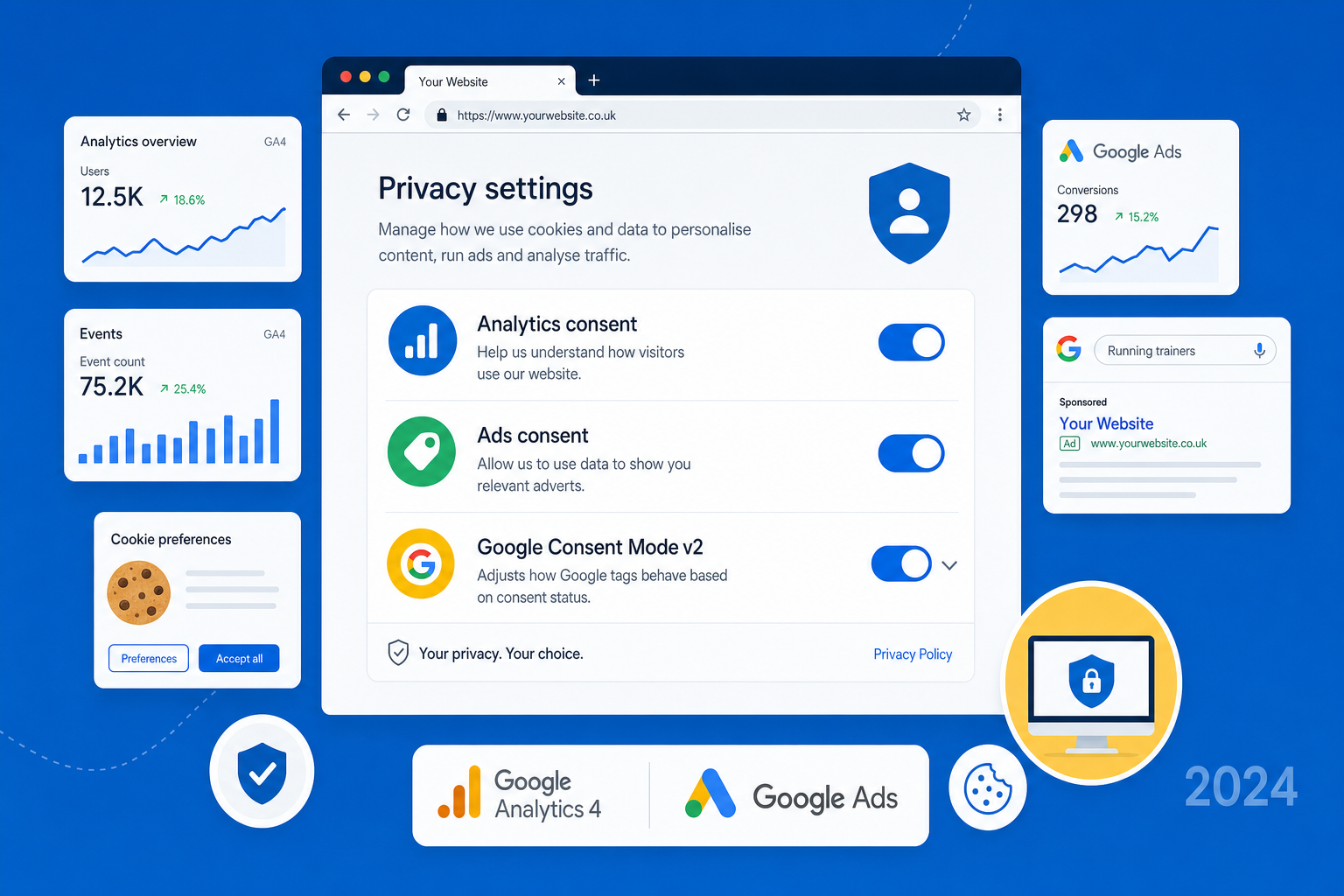
Cookie banners deserve particular attention. Many banners are confusing, visually intrusive or designed to push users towards acceptance. A better approach is to give clear choices, avoid unnecessary jargon and make it as easy to reject non-essential cookies as it is to accept them. Essential cookies can be explained separately from analytics, advertising or personalisation cookies. If you use analytics or advertising tags, make sure the consent journey matches how those tools are actually deployed.
Forms should collect only the information needed for the task. A brochure request may need a name and email address, not a full postal address and multiple phone numbers. A quotation form may need more detail, but each field should have a purpose. Shorter, clearer forms often improve completion rates as well as privacy.
Good website design also reduces the need for excessive tracking. Clear navigation, well-written service pages, strong calls to action and useful content help visitors make decisions without being chased around the internet. If your website answers common questions properly, more users will convert during the visit they are already making.
Use analytics carefully and purposefully
Analytics remains valuable, but it should be configured with care. Businesses should review what they are measuring, how long data is retained and whether IP anonymisation, consent controls or reduced data collection settings are appropriate. The aim is not to remove all measurement, but to focus on information that supports better decisions.
In May 2022, many businesses are also reviewing their analytics set-up because the next generation of widely used analytics platforms is becoming increasingly important. This is a sensible moment to audit events, goals and conversions rather than simply copying an old tracking structure. Key actions might include form submissions, phone number clicks, email link clicks, quote requests, downloads, purchases or booking starts. These actions are more useful than simply counting page views.
First-party data is becoming a stronger asset
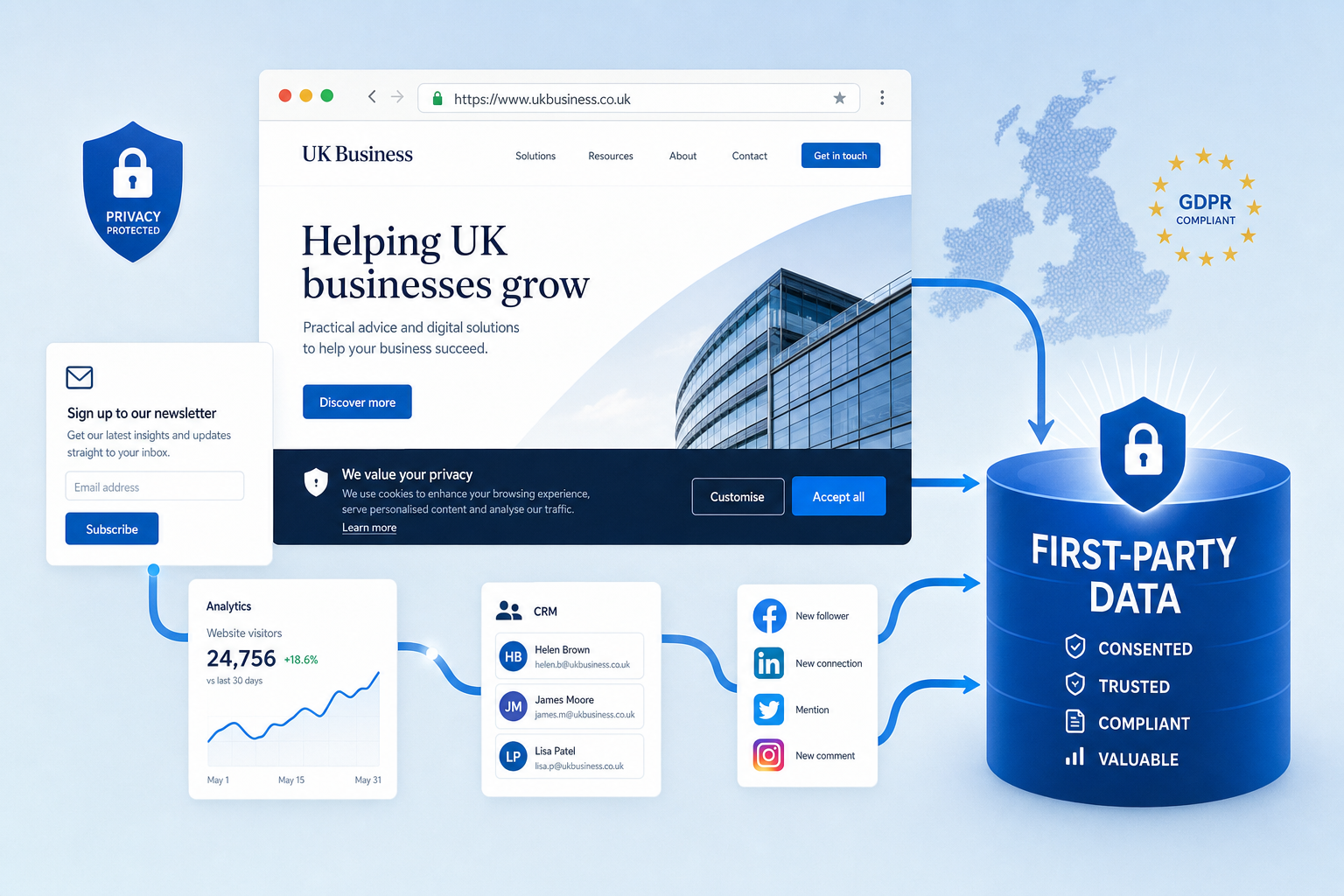
First-party data is information a business collects directly through its own channels, with appropriate notice and permission. Examples include email subscribers, customer accounts, enquiry histories, survey responses, preference centres, purchase records and interactions on your website. This data is usually more accurate and more relevant than data acquired indirectly.
The practical step is to give people a good reason to share their details. A generic newsletter sign-up box is rarely enough. Consider useful incentives such as guides, checklists, early access to events, practical tips, product updates, maintenance reminders or local insights. The value exchange should be honest: people should know what they will receive and how often they can expect to hear from you.
Preference centres can be particularly helpful. Instead of asking for a single blanket opt-in, allow customers to choose topics, frequency or communication type. A property business might separate market updates from new listing alerts. A training provider might allow people to choose courses by subject area. A trade supplier might separate technical updates from promotions. This improves relevance and can reduce unsubscribes.
Customer relationship management systems, email marketing platforms and website forms should be connected thoughtfully. Data should not be scattered across inboxes, spreadsheets and outdated plugins. A clean process helps teams respond quickly, avoid duplicate contact and maintain accurate records.
SEO works well with a privacy-first approach
Search engine optimisation is naturally suited to privacy-first marketing because it is based on intent rather than intrusive interruption. When someone searches for a service, comparison, location or solution, they are actively expressing a need. Your role is to provide useful, well-structured content that answers that need and encourages the next step.
For UK business owners, practical SEO should include clear service pages, location relevance where appropriate, helpful articles, frequently asked questions, strong internal linking and technical foundations such as fast loading, mobile-friendly layouts and clean page structures. Core Web Vitals, accessibility considerations and logical navigation all support both search performance and user trust.
Keyword research should be used to understand customer language, not to force repetitive phrases into every paragraph. A privacy-first marketing article, for example, should explain the topic naturally, answer real questions and guide the reader towards a sensible decision. The same applies to service pages. If a visitor lands on a page about website design, they should quickly understand what you offer, who it is for, what the process looks like and how to enquire.
Local SEO also benefits from accurate, trustworthy information. Business profiles, opening hours, service areas, reviews and location pages should be kept up to date. Encouraging genuine reviews is more sustainable than relying on tracking-heavy advertising alone. Reviews also provide social proof at the moment people are comparing options.
Social media marketing without relying on excessive tracking
Social media remains important, but businesses should be realistic about measurement. Platform dashboards are useful, yet they do not always show the full customer journey. Privacy controls, app permissions and cross-device behaviour can all affect attribution. This makes it risky to judge activity only by reported conversions.
A privacy-first approach to social media starts with content quality and audience relevance. Use social channels to demonstrate expertise, answer questions, show behind-the-scenes credibility, explain services and direct people to useful website pages. For business-to-business organisations, LinkedIn can support authority and relationship building. For consumer brands, channels such as Facebook, Instagram and TikTok may help with awareness, community and product discovery. The right choice depends on where customers spend time and what type of content they expect there.
Paid social campaigns can still work well, particularly when they are connected to strong landing pages and clear offers. Instead of depending solely on broad retargeting, build campaigns around first-party audiences where appropriate, contextual creative and strong messages. Lead forms, newsletter sign-ups, downloadable resources and enquiry pages can all provide measurable actions when set up responsibly.
Creative testing is also essential. If tracking is less precise, the quality of the message matters even more. Test different angles: trust, convenience, expertise, local knowledge, speed, sustainability, service quality or product benefits. Use comments, direct messages and sales conversations as feedback, not just advertising metrics.
Domain registration, trust and technical foundations
Privacy-first marketing is not only about cookies and email consent. It also includes the technical signals that make a business look legitimate online. Domain registration is one of those foundations. Choose a domain that is easy to spell, easy to say and clearly connected to your business name or service. For UK-focused organisations, a relevant UK domain can help customers recognise your location and market focus, while a broader domain may suit businesses with international plans.
When registering a domain, keep ownership details under the control of the business rather than an individual employee wherever possible. Record renewal dates, maintain access to the domain account and ensure more than one trusted person understands the process. Losing access to a domain can disrupt websites, email, advertising, search visibility and customer trust.
Privacy settings for public registration records should be reviewed in line with the type of registrant and applicable rules. Businesses should also ensure that DNS records are managed carefully. Email authentication records such as SPF, DKIM and DMARC can help protect your domain from spoofing and improve confidence in legitimate email. These details are often overlooked, but they matter when email is a key marketing and customer service channel.
Website hosting, backups, plugin maintenance and software updates also support trust. A privacy message is undermined if the site is slow, broken, insecure or filled with outdated third-party scripts. Technical housekeeping is part of brand reputation.
Building a practical privacy-first marketing plan
A useful plan does not have to be complicated. Start by auditing your current digital activity. List the data you collect through your website, analytics, advertising, email marketing, contact forms, booking tools and customer systems. Ask whether each item is necessary, whether people are clearly informed and whether the data is stored securely.
Next, review the customer journey. Look at your key landing pages, enquiry forms, cookie banner, privacy notice, email sign-up process and follow-up communications. Identify any points where the experience feels confusing, overly demanding or inconsistent. Small improvements can make a significant difference.
Then define the metrics that matter. These might include qualified enquiries, booked consultations, completed purchases, repeat orders, email engagement, organic search visibility, review growth or customer retention. Avoid building reports around numbers that look impressive but do not help decisions.
Finally, create content and campaigns that earn attention. Publish useful guidance, answer common questions, explain your process and make it easy for people to take the next step. Privacy-first marketing works best when it is connected to a strong brand proposition and a genuinely helpful website.
A better way to build digital confidence
Privacy-first marketing is becoming more practical because it aligns with what customers, regulators, browsers and platforms are already demanding: clearer choices, better data handling and more respectful communication. For UK businesses, this is an opportunity to improve digital performance rather than simply respond to restrictions.
The strongest approach is balanced. Keep measuring what matters, but avoid unnecessary tracking. Collect first-party data, but offer a fair value exchange. Use social media and advertising, but do not depend entirely on opaque attribution. Invest in SEO, content, website design and technical foundations that make your business easier to find and easier to trust.
Businesses that take these steps now will be better placed to adapt as privacy expectations continue to develop. More importantly, they will provide a clearer, more confident online experience for the people they want to reach.