Search Engine Optimisation (SEO) is one of the most effective ways to attract visitors to your website without paying for every click. When done correctly, SEO helps your website appear in search engine results when potential customers are looking for the products or services you offer.
Unlike paid advertising, the benefits of SEO often build over time. A well-optimised website can continue attracting visitors for months or even years after content has been published.
Many people believe SEO is complicated or reserved for large companies with significant marketing budgets. The reality is that there are many simple improvements every business can make to strengthen its online presence.
This guide shares practical SEO advice that you can begin using today.
What Is Search Engine Optimisation
Search Engine Optimisation is the process of improving your website so search engines can better understand your content and present it to people searching online.
Search engines consider many factors when ranking websites, including:
- Content quality
- Website speed
- Mobile usability
- Security
- User experience
- Internal linking
- Backlinks
- Technical performance
SEO is about creating a website that serves both your visitors and search engines.
Start With Keyword Research
Before writing any content, think about what your customers are actually searching for.
Instead of guessing, research the phrases people use.
For example, if you own a web design company, potential keywords could include:
- Website Design
- Web Development
- Business Website Design
- Responsive Website Design
- Website Designer Near Me
Longer search phrases often have less competition and attract visitors with a clearer intention.
Examples include:
- How much does a business website cost?
- Best website design company in the UK
- Website redesign for small businesses
Using these naturally throughout your content helps search engines understand what your page is about.
Write Content That Helps People
One of the biggest SEO mistakes is writing purely for search engines.
Google's goal is to provide useful answers to searchers.
Ask yourself:
- Does this answer a real question?
- Does it solve a problem?
- Would someone find this genuinely helpful?
The better your content serves readers, the more likely it is to perform well over time.
Avoid keyword stuffing or unnatural repetition of the same phrase.
Instead, write naturally and include related terms where appropriate.
Optimise Your Page Titles
Your page title is one of the first things both search engines and users see.
A good title should:
- Clearly describe the page.
- Include the main keyword.
- Encourage clicks.
- Be concise.
For example:
Search Engine Optimisation Tips for Small Businesses
This is much clearer than simply calling the page "SEO".
Write Better Meta Descriptions
Although meta descriptions are not a direct ranking factor, they influence whether people click your result.
A good meta description should explain what the page offers in around 150 to 160 characters.
For example:
"Learn practical Search Engine Optimisation tips that can improve your website's visibility, attract more visitors and help your business grow online."
Think of your meta description as a short advert for your page.
Use Proper Heading Structure
Organise your content using headings.
Your page should normally contain:
- One H1 heading
- Multiple H2 headings
- H3 headings where additional structure is helpful
This makes content easier to read and helps search engines understand the hierarchy of your information.
Long blocks of text can discourage readers from staying on the page.
Improve Website Speed
Website performance plays an important role in both user experience and SEO.
Visitors expect pages to load quickly.
Slow websites often experience:
- Higher bounce rates.
- Lower conversions.
- Reduced engagement.
Ways to improve speed include:
- Compressing images.
- Removing unnecessary plugins.
- Using browser caching.
- Choosing quality web hosting.
- Keeping software updated.
- Optimising databases.
Even small performance improvements can make a noticeable difference.
Make Your Website Mobile Friendly
Most searches now take place on mobile devices.
Your website should automatically adapt to different screen sizes while remaining easy to navigate.
Check that:
- Text is readable.
- Buttons are easy to tap.
- Images resize correctly.
- Menus work properly.
- Forms are simple to complete.
A poor mobile experience can result in lost customers.
Build Internal Links
Internal links connect one page of your website to another.
For example, a page about website design could link to related articles covering:
- Website hosting
- SEO
- Website security
- WordPress
- Web development
Internal linking helps visitors discover more content while allowing search engines to understand the relationship between different pages.
It also encourages visitors to spend longer exploring your website.
Earn High-Quality Backlinks
Backlinks remain one of the strongest signals search engines use when assessing website authority.
A backlink is created when another website links to yours.
The best backlinks come naturally from:
- Industry publications.
- News websites.
- Business directories.
- Professional organisations.
- Guest articles.
- Partners and suppliers.
Focus on earning links through useful content rather than attempting shortcuts.
Quality always outweighs quantity.
Keep Your Website Secure
Website security supports both user confidence and search engine trust.
Every website should use HTTPS through an SSL certificate.
You should also:
- Update plugins regularly.
- Update themes.
- Use secure passwords.
- Enable multi-factor authentication.
- Remove unused software.
- Monitor for malware.
A secure website protects both your business and your visitors.
Optimise Your Images
Large images often slow websites down unnecessarily.
Before uploading images:
- Resize them appropriately.
- Compress file sizes.
- Use descriptive filenames.
- Add meaningful alt text.
Alt text improves accessibility while also helping search engines understand what an image represents.
Publish Fresh Content
Search engines favour websites that continue providing useful information.
Regularly publishing articles can help you target new keywords while demonstrating your knowledge.
Content ideas include:
- Frequently asked questions.
- Industry news.
- How-to guides.
- Product updates.
- Customer case studies.
- Business announcements.
Quality should always come before quantity.
One well-written article is often more valuable than several rushed posts.
Monitor Your Performance
SEO should always be measured.
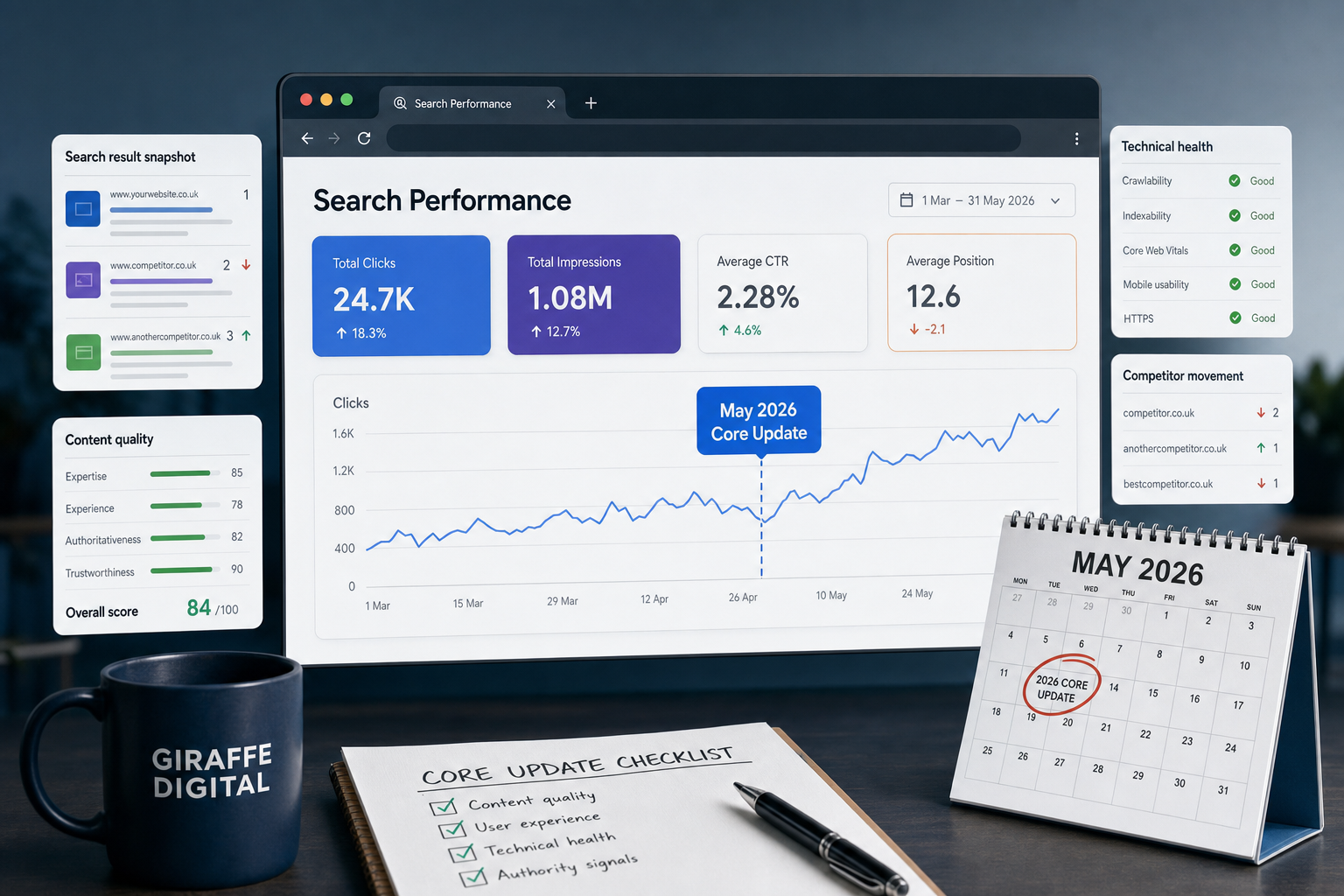
Free tools such as Google Search Console and Google Analytics provide valuable insights into:
- Website visitors.
- Search queries.
- Click-through rates.
- Indexed pages.
- Technical issues.
- User behaviour.
Reviewing this information helps identify opportunities for improvement.
Be Patient
SEO is a long-term investment.
Unlike paid advertising, results rarely appear overnight.
It can take weeks or months for search engines to understand and rank new content fully.
The businesses that achieve the best results are usually those that publish consistently, improve their websites regularly and focus on helping users rather than chasing quick wins.
Avoid Common SEO Mistakes
Many websites fail to reach their potential because of avoidable errors.
These include:
- Copying content from other websites.
- Ignoring mobile users.
- Slow page speeds.
- Broken links.
- Missing page titles.
- Poor navigation.
- Keyword stuffing.
- Neglecting technical maintenance.
Addressing these issues often provides immediate improvements.
Remember That SEO Is About People
Although search engines are important, your content should always be written for real people.
Ask yourself whether someone visiting your page would leave with their question answered.
If the answer is yes, you are moving in the right direction.
Search engines continue becoming better at recognising genuinely useful content.
How Giraffe Digital Can Help
At Giraffe Digital, we believe great SEO starts with a great website. We design and develop websites that are fast, secure, mobile-friendly and built using modern development practices. Combined with well-written content and ongoing optimisation, this creates strong foundations for long-term search engine visibility.
Whether you are launching a new website or improving an existing one, investing time in Search Engine Optimisation can deliver lasting benefits. By creating valuable content, improving technical performance, and focusing on your visitors' needs, you can increase your visibility, attract more qualified traffic, and build sustainable growth for your business.