Search intent is one of the most important ideas in modern SEO, yet it is often treated as an afterthought. Many business owners still hear that they need to “use the right keywords” and assume the job is to repeat a phrase often enough for search engines to notice. That approach is not only outdated; it can also lead to poor content, weak enquiries and frustrated visitors. In 2023, successful search marketing is less about squeezing keywords into every sentence and more about understanding what your potential customer is trying to achieve when they search.
For UK businesses investing in website design, SEO, branding or digital strategy, this matters because your website should not simply attract traffic. It should attract the right people, at the right stage of their decision-making process, and guide them towards a useful next step. When your content matches search intent, visitors are more likely to stay, read, enquire, buy, book or return.
What search intent actually means
Search intent is the reason behind a search query. It is the task, question or need that sits behind the words typed into a search engine. Two people might use similar keywords but want very different outcomes. For example, someone searching for “website design ideas” may be looking for visual inspiration, while someone searching for “website design agency for small business” is more likely to be considering a supplier.
Search engines have become much better at interpreting intent. They look at patterns in user behaviour, the wording of searches, the type of content that satisfies people and the wider context of a topic. This means a page stuffed with repeated keywords is unlikely to perform well if it does not provide the answer, comparison, guidance or service information the searcher expects.
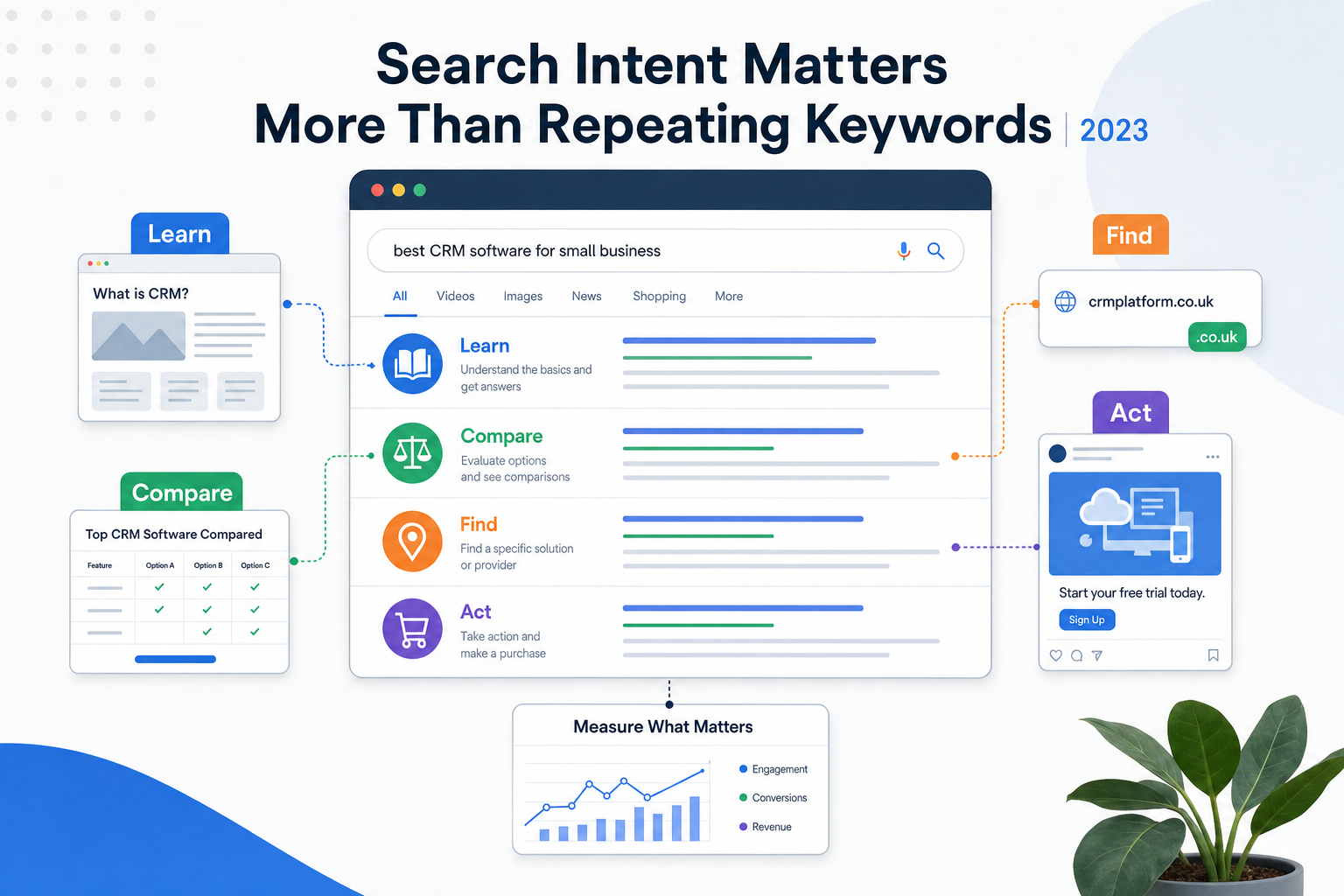
There are four broad types of search intent that business owners should understand:
- Informational intent: the user wants to learn something, such as “how to improve local SEO” or “what is responsive website design”.
- Navigational intent: the user wants to find a specific website, organisation or page.
- Commercial intent: the user is comparing options before making a decision, such as “best website platform for a small business” or “SEO agency versus freelance SEO consultant”.
- Transactional intent: the user is ready to take action, such as booking a consultation, requesting a quote, registering a domain or purchasing a product.
The same website can, and should, serve multiple types of intent, but each page needs a clear purpose. A blog article, service page, case study, landing page and frequently asked questions page should not all be written in the same way.
Why repeating keywords is not enough
Keyword research is still useful. It helps you understand how people describe their problems, what language they use and where demand exists. The mistake is treating keywords as a script rather than evidence. If a phrase appears in a keyword tool, it does not mean every page should repeat it awkwardly. It means there is a topic, question or opportunity worth understanding.
Repeating a keyword too often can make a page feel unnatural. It can also reduce trust. A potential customer can usually tell when a page has been written for an algorithm rather than for a person. If your website says “professional website design UK” in nearly every paragraph, it may technically include the target phrase, but it does not necessarily explain your process, reassure the reader or help them decide whether to contact you.
Search engines also evaluate the overall usefulness of a page. They consider whether the content answers the query, whether it demonstrates experience and expertise, whether the page is easy to use and whether visitors appear to find it helpful. A well-structured article that naturally discusses a topic in depth is usually stronger than a thin page with a repeated keyword.
For example, a page targeting “social media marketing for restaurants” should not simply repeat that phrase. It should explain the business problem, such as attracting local customers, improving bookings, promoting seasonal menus and encouraging reviews. It might discuss content planning, photography, short-form video, customer engagement, paid social campaigns and how social activity connects with search visibility. That is useful content built around intent.
How to identify the intent behind a search
You do not need complex tools to start assessing search intent. Begin by looking carefully at the wording of the query. Words such as “how”, “what”, “why” and “guide” usually suggest informational intent. Words such as “best”, “compare”, “reviews” and “ideas” often indicate commercial research. Words such as “buy”, “book”, “register”, “quote” and “near me” suggest someone is closer to taking action.
Next, look at the search results themselves. The pages that already appear are a useful clue to what search engines believe people want. If the results are mostly guides, your sales page may struggle to rank for that query. If the results are mostly service pages or local business listings, an educational blog post may not be the best match. This does not mean copying competitors, but it does mean understanding the format and depth that searchers expect.
Consider the stage of the customer journey. A person searching “what is a domain name” needs a simple explanation. A person searching “choose domain name for new business” is likely to want practical naming advice. A person searching “register domain name for company website” may be ready to act. Each of those searches relates to domains, but the right content is different.
It is also worth reviewing your own analytics and enquiry data. By July 2023, many businesses are moving fully into Google Analytics 4 reporting, which can help you understand engagement, conversions and user journeys when configured properly. Search Console data can show which queries bring people to your site. Your sales conversations, contact forms and customer questions are just as valuable because they reveal the language real people use when making decisions.
Designing pages around intent
Search intent should influence website design as well as written content. A page that answers an informational query should be easy to scan, with clear headings, concise explanations and supporting examples. A page aimed at commercial intent should make comparison and decision-making easier. A transactional page should reduce friction and make the next step obvious.
For a service-based UK business, this might mean designing different page types for different jobs:
- Educational blog posts that answer common questions and build trust early in the buying journey.
- Service pages that explain what you do, who it is for, how the process works and what outcomes customers can expect.
- Location pages where local relevance is genuine and useful, not created simply to target place names.
- Case studies that show approach, challenges and solutions without inventing exaggerated results.
- Contact or booking pages that make it simple for a qualified visitor to take action.
Good design supports intent by removing confusion. Navigation should be logical. Calls to action should match the user’s readiness. A first-time visitor reading a guide may respond better to “speak to us about your project” than to a forceful sales message. Someone on a detailed service page may need reassurance, proof of expertise and a simple enquiry route.
Technical performance also matters. Mobile usability, fast loading, clear layouts and accessible content all affect how people experience your website. Core Web Vitals, secure browsing, structured pages and responsive design are not separate from search intent; they help users complete the task they came for. If a page answers the right question but is slow, cluttered or difficult to use on a phone, it may still underperform.
Creating content that satisfies real business searches
To write useful SEO content, start with the customer’s situation rather than the keyword. Ask what they know already, what they are worried about, what decision they need to make and what information would help them move forward. Then build the page around that need.
Imagine a small business owner searching for “new website for trades business”. Their intent may include wanting a professional design, clear service pages, local visibility, easy contact options and confidence that the website will generate enquiries. A useful page would explain planning, structure, copywriting, photography, local SEO, trust signals, reviews and ongoing maintenance. It would not simply repeat “new website for trades business” several times.
For e-commerce, intent can be even more specific. Someone searching for a product category may still be browsing, while someone searching for a precise product specification is much closer to purchase. Category pages should help people compare and filter. Product pages should answer practical questions about size, compatibility, delivery, returns and support. Blog content can then support earlier searches, such as buying guides, care advice or comparisons.
For professional services, the challenge is often trust. People may search for explanations before they are ready to contact anyone. Articles that answer common questions can demonstrate expertise, but they should also guide readers towards a sensible next step. That could be reading a related service page, downloading a resource, booking a consultation or asking a question.
Using social media to support search intent
Social media marketing does not replace SEO, but it can strengthen your understanding of intent. Comments, messages, saves and shares show what your audience cares about. The questions people ask on social platforms can become blog topics, frequently asked questions, service page improvements or short educational videos.
Different platforms also reveal different types of behaviour. Visual platforms can highlight interest in design, style, process and behind-the-scenes content. Professional networks may reveal commercial questions, industry concerns and decision-making topics. Short-form video can help explain simple concepts quickly, while longer website content can provide the depth that search visitors need.
A joined-up digital strategy uses social content and search content together. For instance, a short post about choosing a business domain name could lead to a detailed website guide about naming, branding and search visibility. A video explaining three common website mistakes could support a blog article about improving conversion rates. The aim is not to post everywhere for the sake of it, but to use each channel according to how customers behave there.
Domain names, branding and intent
Domain registration is often treated as a quick technical task, but it has a branding and search role too. A domain name should be easy to remember, easy to spell and suitable for the type of business you are building. It does not need to contain every keyword. In many cases, a clear brand name is stronger than a long, keyword-heavy domain that looks generic or awkward.
When choosing a domain, think about user intent and trust. If someone hears your business name in conversation, can they find it easily? If your domain appears in search results, does it look credible? Is it suitable for future services or locations if your business grows? These questions are more useful than asking whether you can fit an exact-match keyword into the address.
It is sensible to check availability carefully, avoid names that could be confused with existing organisations and keep ownership details properly managed. Businesses should also make sure the domain is registered in the correct name, renewal reminders are monitored and access is not tied to a single individual’s personal email account. These practical details help protect your online presence.
Search intent checklist
Before creating or updating a page, use a simple checklist to keep the focus on usefulness:
- Define the searcher: who is likely to search for this topic and what situation are they in?
- Identify the intent: are they learning, comparing, finding a specific page or ready to act?
- Choose the right page type: guide, service page, product page, case study, FAQ or landing page.
- Answer the main question early: do not make visitors work too hard to understand the page.
- Cover related concerns: include practical details, examples and next steps.
- Use natural language: include important phrases, but write for people first.
- Support the journey: link or guide visitors to the next relevant action.
- Review performance: use search and website data to improve pages over time.
This approach is especially valuable when refreshing older content. A page that once performed well may no longer match what searchers expect. Rather than simply adding more keywords, review whether the page answers the query fully, whether the format is still appropriate and whether the call to action reflects the reader’s stage of awareness.
The business value of getting intent right
Matching search intent can improve more than rankings. It can increase the quality of enquiries, reduce wasted traffic and make your website feel more professional. Visitors who find clear, relevant information are more likely to trust your organisation. They are also more likely to understand whether your service is right for them before they get in touch.
For business owners, this means SEO should not be seen as a separate technical exercise. It connects with brand positioning, website design, content strategy, social media, analytics and customer service. The best results often come when these areas work together around the same question: what does the customer need at this moment?
Keywords still matter, but they are the starting point, not the strategy. Search intent gives those keywords meaning. When you understand why someone is searching, you can create pages that answer properly, design journeys that make sense and build a digital presence that supports real business goals.
If your website attracts traffic but does not generate the right enquiries, or if your content feels written for search engines rather than customers, it may be time to review the intent behind your key pages. A focused, intent-led approach can make your website clearer, more useful and more effective for the people you want to reach.