Helpful content has always mattered, but it is becoming a much bigger conversation for business owners who rely on their websites to attract enquiries, explain services and support sales. Search engines are becoming better at recognising whether a page genuinely answers a user’s question, and customers are becoming less patient with vague, thin or over-optimised pages. For UK businesses planning a new website, improving search visibility or reviewing their digital marketing, this is a useful moment to ask a simple question: is our content genuinely helping people make better decisions?
That question matters because content is no longer just a case of adding words to a page. It affects website design, navigation, search engine optimisation, social media marketing, brand trust, lead quality and even the way a business chooses and protects its domain name. Helpful content gives visitors confidence. It explains what you do, who you help, where you operate and what someone should do next. When it is planned properly, it also gives search engines clearer signals about the purpose and relevance of your website.
What helpful content means for business websites
Helpful content is content created with the user’s needs at the centre. It answers real questions, explains services clearly, removes confusion and supports a practical next step. It is not simply content written to include keywords, nor is it a collection of generic paragraphs that could appear on any competitor’s website.
For example, a local accountancy firm might publish a page explaining bookkeeping support for limited companies, including what is usually included, what information a client needs to provide and common reasons a growing business may outsource the work. A building contractor might explain the difference between a renovation, an extension and a structural alteration, with notes on planning considerations and typical project stages. A retailer might create a buying guide that helps customers compare materials, sizes, maintenance requirements or delivery options.
In each case, the content helps the visitor before asking them to enquire. That is the key difference. It is useful in its own right, not merely a sales pitch. This does not mean every page must be long. A concise answer can be more helpful than a lengthy page if it gives the right information at the right point in the customer journey.
Why helpful content supports SEO in 2022
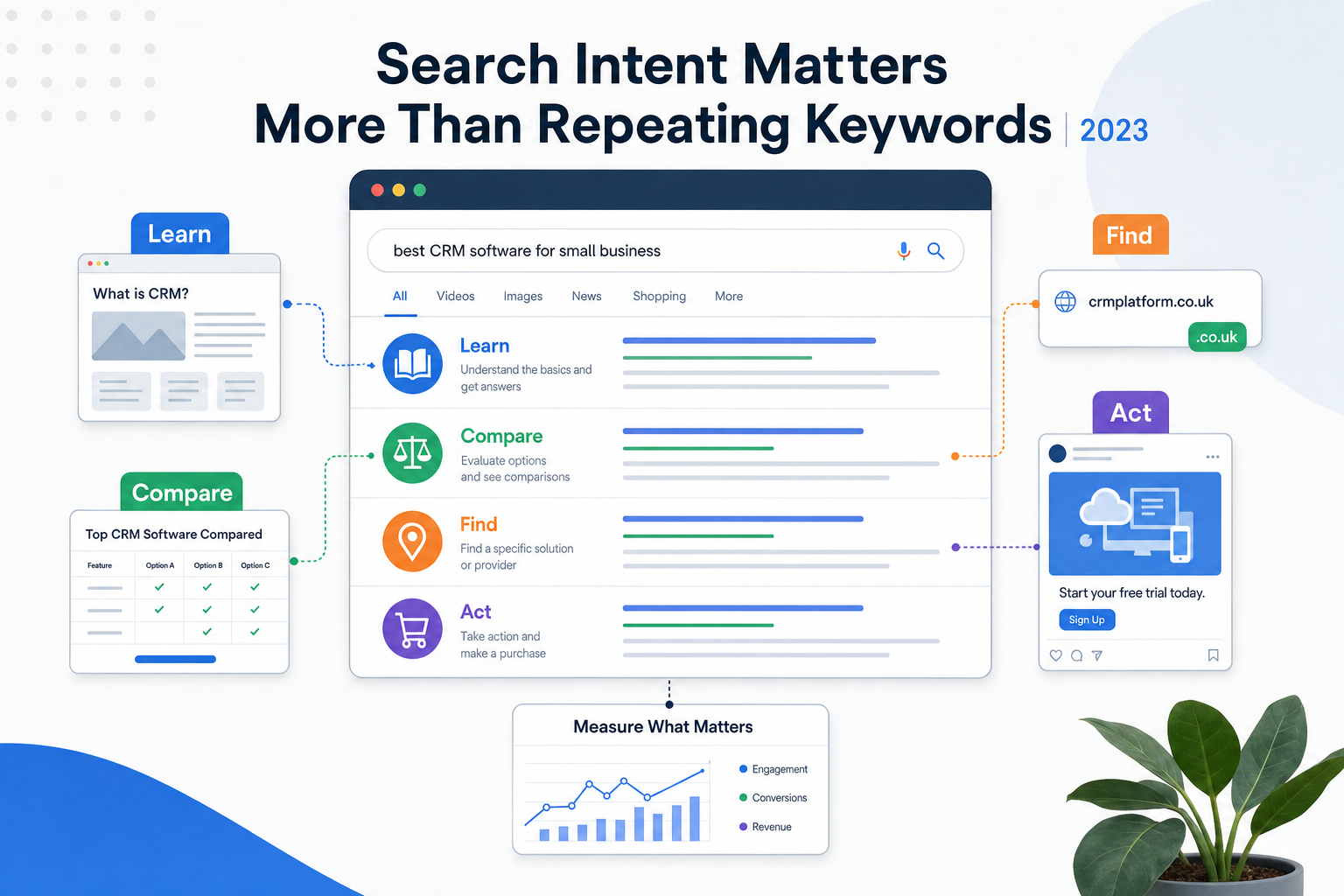
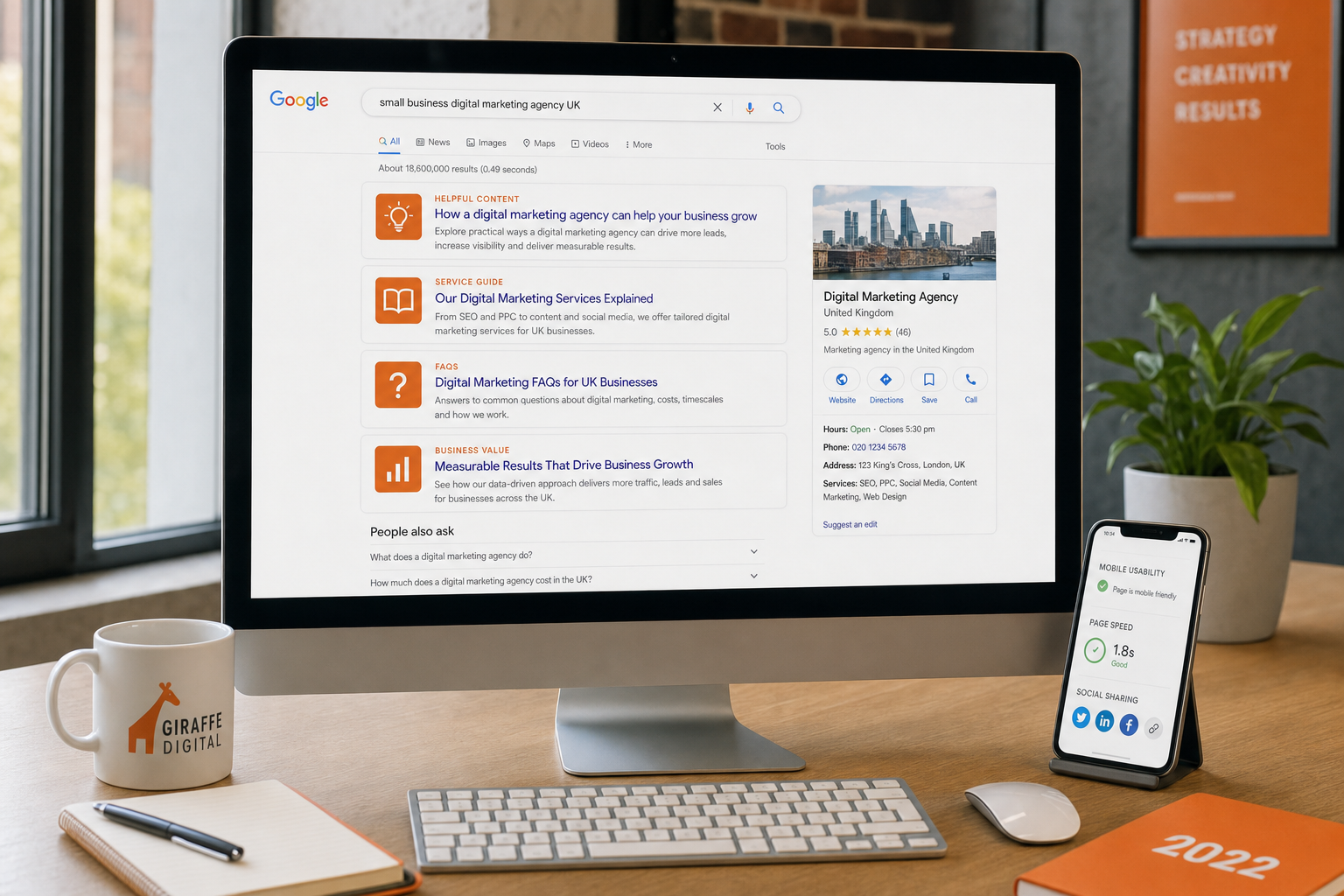
Search engine optimisation is often discussed in terms of rankings, links and technical performance, but the quality and usefulness of a website’s content remain central. Search engines aim to return results that satisfy the intent behind a search. If someone searches for a service, they may want to compare providers, understand costs in general terms, check locations served, find examples of expertise or learn what happens after making an enquiry.
A helpful page gives search engines more context. It naturally includes relevant terminology, related topics and clear explanations because it is written around the subject rather than around a single phrase. This can help a page appear for a broader range of searches, including longer, more specific queries that often indicate stronger intent.
For instance, a page targeting web design services should not only say that a business offers web design. It may also explain responsive layouts, content management, accessibility considerations, hosting support, website speed, search-friendly structure and the importance of clear calls to action. These details are useful for potential clients and help search engines understand the depth of the service being offered.
Helpful content also improves engagement. If visitors land on a page and quickly leave because the answer is vague or the design is frustrating, that is unlikely to support long-term performance. If they read, click through to related pages, view case-study information, submit an enquiry or save the page for later, the website is doing a better job of serving its audience.
Start with the questions your customers actually ask
A focused content strategy often begins with customer questions. Sales calls, enquiry emails, social media comments, live chat messages and face-to-face conversations can all reveal the information people need before they are ready to buy. These questions are valuable because they reflect real uncertainty, not assumptions made in a marketing meeting.
Useful questions to gather include:
- What does your service include, and what is not included?
- How long does the process usually take?
- Which areas do you cover?
- What should a customer prepare before contacting you?
- How do you work with businesses of different sizes?
- What are the common mistakes customers should avoid?
- What makes one option more suitable than another?
- What happens after someone submits an enquiry?
These questions can become service page sections, frequently asked questions, blog posts, downloadable guides, social media posts or email newsletter topics. The aim is not to answer everything on one page, but to build a connected set of content that helps visitors move from awareness to confidence.
Website design and content should be planned together
Helpful content is much stronger when the website design supports it. A well-written page can still perform poorly if it is buried in confusing navigation, displayed in a dense block of text or surrounded by distractions. Design should make the message easier to understand.
Good content-led website design usually includes clear headings, short paragraphs, useful internal links and visible next steps. Service pages should be easy to scan. Contact details should be simple to find. On mobile devices, text should be readable without pinching and zooming, buttons should be easy to tap and pages should load quickly on everyday connections.
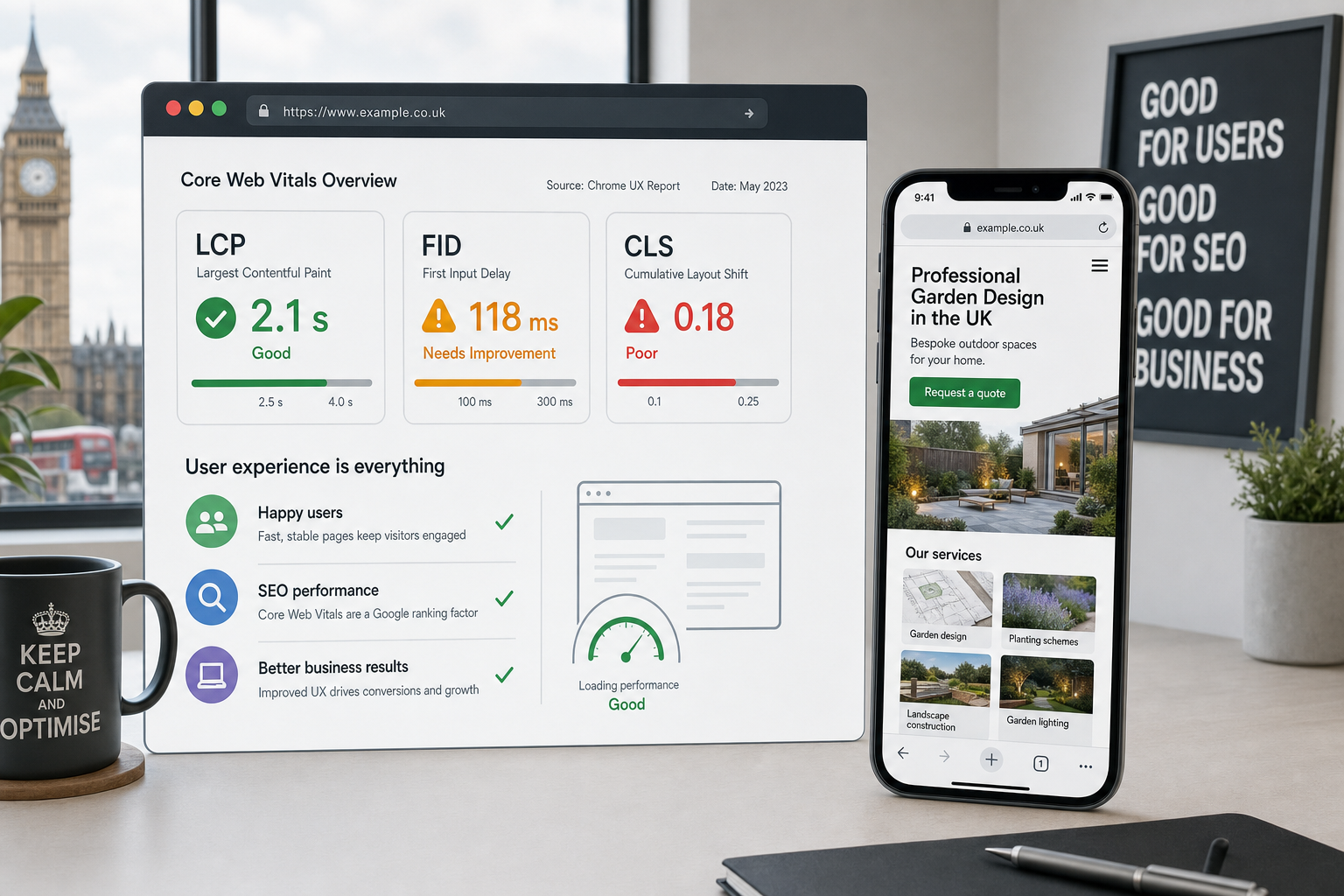
By 2022, page experience and Core Web Vitals had become part of the wider SEO conversation. This does not mean content can be ignored in favour of speed scores, but it does mean businesses should consider both together. A useful page that loads slowly, shifts around as it appears or feels awkward on mobile will not provide the best experience. Equally, a fast page with thin content will not properly serve the visitor.
For many UK businesses, a sensible approach is to review the most important pages first: the homepage, main service pages, location pages, product category pages, contact page and any pages that already attract organic search traffic. Improving these can often deliver more value than publishing large volumes of new content without a plan.
Using social media to extend the value of helpful content
Social media marketing works best when it gives people a reason to pay attention. Helpful content can provide that reason. Rather than only posting promotional updates, businesses can repurpose website content into practical social posts that answer common questions, highlight advice and start conversations.
A detailed website guide might become a short LinkedIn post explaining three common mistakes to avoid. A frequently asked question could become an Instagram carousel. A product comparison could be adapted into a short video for Facebook, Instagram or TikTok where suitable for the audience. A seasonal reminder could be shared on Twitter with a link to a fuller article.
The important point is to keep the advice genuinely useful. Social platforms are busy, and audiences can quickly recognise posts that offer little beyond a sales message. If your content helps someone understand a problem, make a decision or avoid a mistake, it is more likely to be saved, shared or remembered.
Businesses should also make sure their social profiles and website support one another. A social post should lead to a relevant page, not simply the homepage if a more specific resource exists. Similarly, website pages can include links to active social channels where visitors may want to see updates, examples of work or community involvement.
Domain names, trust and helpful online presentation
A domain name is often one of the first brand signals a potential customer sees. It appears in search results, email addresses, adverts, printed materials and social profiles. While a domain name alone will not create helpful content, it can support trust when it is clear, professional and consistent with the organisation’s brand.
When choosing a domain, businesses should aim for something easy to read, easy to say and difficult to misspell. Shorter names are often more practical, but clarity matters more than being clever. If a business serves a UK audience, it is worth considering whether a UK-focused domain extension, an international extension or both would best support the brand. The right choice depends on the business model, audience and future plans.
It is also sensible to check for potential confusion with existing brands, avoid unnecessary hyphens where possible and think about how the domain will look in an email address. A domain that looks credible in search results can support the helpful impression created by the website itself.
After registration, domain management should not be forgotten. Businesses should keep contact details up to date, use secure account access, renew domains in good time and make sure DNS records are managed carefully. A strong content strategy is of little use if the website or email becomes unavailable because basic domain administration has been neglected.
Technology choices should make content easier to manage
The technology behind a website should help a business publish, improve and maintain content without unnecessary friction. For many organisations, that means using a content management system that makes it straightforward to update service pages, add blog posts, manage images, edit metadata and create internal links.
When reviewing website technology in 2022, business owners should consider more than the visual design. They should ask whether the platform supports responsive layouts, secure connections, clean page structures, fast loading, image optimisation, form handling and sensible SEO controls. It should also be possible to add tracking so that marketing activity can be measured properly.
Analytics is important because helpful content should be judged by usefulness, not guesswork. Businesses can look at which pages attract visitors, which search queries appear to bring people in, how users move through the site and which pages contribute to enquiries. This evidence can guide future improvements.
However, measurement should be interpreted carefully. A page that receives modest traffic but generates strong enquiries may be more valuable than a post that receives many casual visits and no commercial action. The aim is not simply to grow page views, but to create content that supports business objectives and customer needs.
How to audit your existing content
Before commissioning large amounts of new content, it is worth reviewing what already exists. Many businesses have useful information hidden in old blog posts, PDFs, service descriptions or email templates. An audit can identify what should be improved, combined, removed or republished in a more effective format.
A practical audit can include the following steps:
- List the main pages on your website and note the purpose of each one.
- Check whether each page answers the questions a visitor is likely to have.
- Review whether headings, paragraphs and calls to action are clear.
- Look for duplicated, outdated or very thin content.
- Check whether important pages link to related information.
- Review page titles and descriptions to make sure they are accurate and persuasive.
- Test important pages on mobile devices.
- Use analytics and search data to identify pages with potential for improvement.
This process often reveals quick wins. A service page may need clearer structure. A blog post may need updating with current advice. A popular article may need a stronger call to action. A location page may need more specific information about the areas served. Small improvements across important pages can make a meaningful difference.
Avoid content created only for search engines
It is still common to see websites filled with repetitive phrases, near-identical location pages or blog posts written only to capture a keyword. This approach may create pages, but it rarely creates confidence. Visitors want clear, trustworthy information. If a page feels artificial, they may question the quality of the business behind it.
Search engines are also becoming more effective at understanding topics and intent. Repeating the same phrase many times is not a substitute for expertise, relevance or clarity. The primary keyword still has a role, and it is sensible to use the language your audience searches for, but it should sit naturally within content that is written for people first.
A better approach is to build pages around meaningful topics. If the topic is helpful content, for example, a strong article might explain what it means, why it matters for SEO, how it affects website design, how to use it on social media and how to measure whether it is working. That depth is more valuable than a short page that repeats the phrase without adding substance.
Creating a practical content plan for the year ahead
A helpful content plan does not need to be complicated. It should connect business goals with customer needs. Start by identifying your priority services, most profitable enquiries, key locations and common customer questions. Then decide which pages or resources would help people understand those services better.
A simple quarterly plan might include refreshing one core service page, publishing two genuinely useful blog posts, creating a short downloadable guide, improving internal links and repurposing key advice for social media. Over time, this creates a stronger body of content without overwhelming the business.
It is also worth assigning responsibility. Someone should own the accuracy of the content, someone should review it for marketing quality and someone should make sure it is published correctly on the website. For regulated sectors or technical services, subject-matter experts should be involved so that the advice remains reliable.
Helpful content is not about writing more for the sake of it. It is about making your website more useful, more trustworthy and easier for customers to act on.
Making helpful content part of your digital strategy
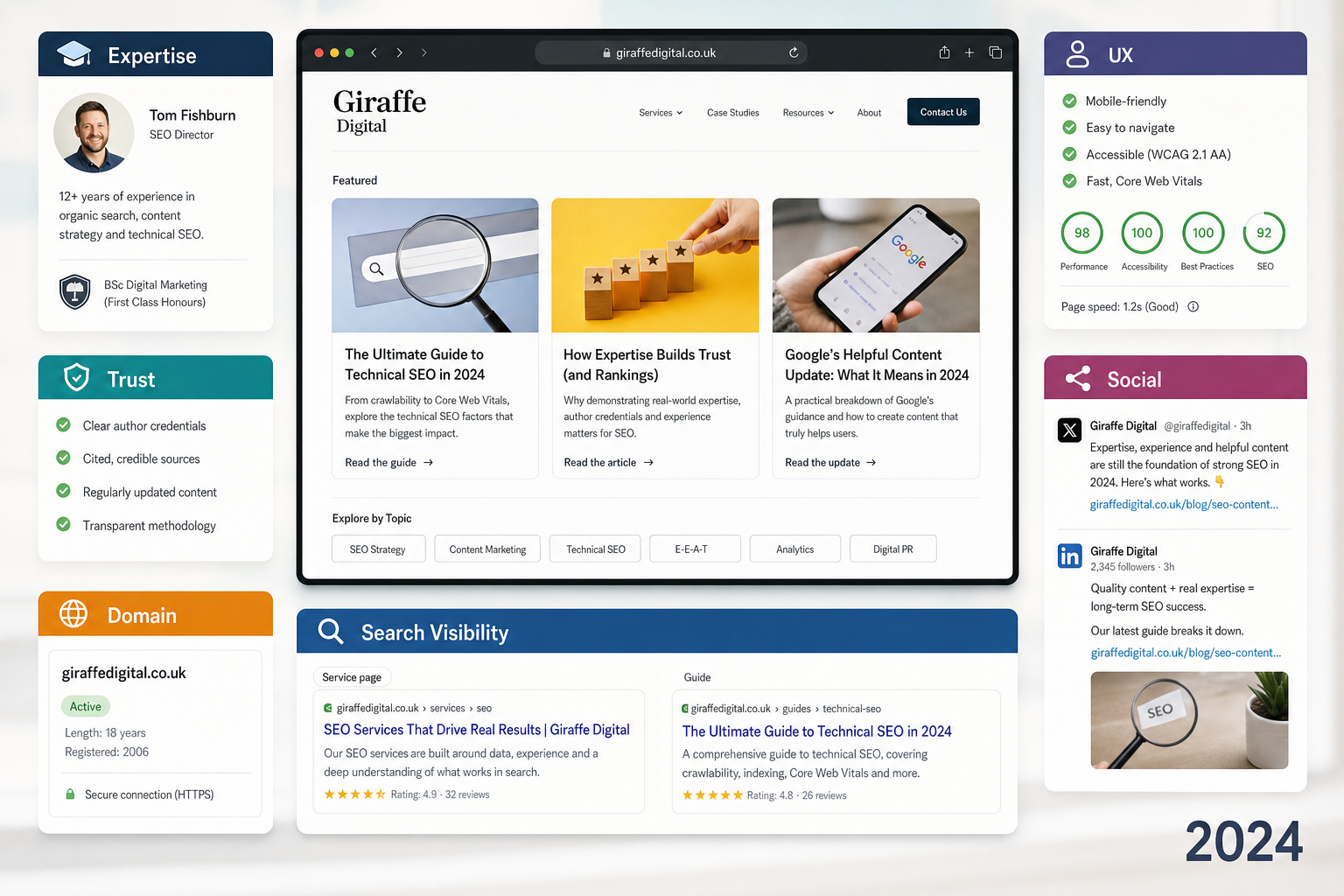
For UK business owners, helpful content is not a passing SEO tactic. It is a practical way to improve the quality of your website, strengthen your brand and support better marketing across search and social media. It helps customers understand what you offer, reassures them that you know your subject and gives them clearer reasons to get in touch.
The best results usually come when content is treated as part of a wider digital strategy. Website design, SEO, domain choices, technology, analytics and social media should all support the same message. When these elements work together, your online presence becomes easier to find, easier to understand and easier to trust.
If your website has not been reviewed for some time, start with the pages that matter most to your customers and your business. Ask whether they answer real questions, reflect your current services and guide visitors towards a sensible next step. In many cases, making content more helpful is one of the most valuable improvements a business can make to its digital presence in 2022.