Website speed and user experience are no longer separate considerations that sit quietly in the background of a digital project. For UK businesses investing in a new website, search marketing, social media activity or a wider digital strategy, the speed of a site now has a direct effect on how people feel about the brand. A slow website creates frustration before a visitor has read a headline, viewed a product or completed an enquiry form. A fast website, by contrast, helps people move confidently from interest to action.
As more customers browse on mobiles and tablets, often using variable connections, speed has become part of the user experience rather than a separate engineering concern. A page may look excellent in a design presentation, but if it takes too long to load on a real phone during a commute or lunch break, the experience quickly falls apart. The best-performing websites in 2017 are those that combine attractive design, clear content, sensible technology and disciplined performance planning.
Why website speed and user experience matter for business
Every business website has a purpose. It may need to generate enquiries, sell products, explain services, build trust, support recruitment or encourage people to visit a physical location. In each case, slow loading gets in the way. Visitors are not usually patient when they are comparing suppliers. If a competitor’s site loads quickly and yours feels heavy, the decision may be made before the visitor has properly seen what you offer.
Speed also influences perception. A responsive, quick website feels more professional and more reliable. This is especially important for smaller businesses that need to build credibility quickly. A slow site can make even a well-established organisation look dated or under-resourced, while a fast site can make a clear brand feel sharper and more dependable.
The connection between speed and conversion is easy to understand. If someone clicks from a search result or a social media post and lands on a page that takes too long to display, they may leave without contacting you. If the page loads promptly, displays the right message and presents a clear next step, the visitor is more likely to continue. This is not simply a matter of saving a few seconds. It is about reducing doubt, interruption and effort.
How speed affects search and discovery
Search engines aim to send users to pages that answer their query well and provide a good experience. Page speed has been a ranking consideration for several years, and while relevance, authority and content quality remain vital, performance supports all of them. A slow website can make it harder for users to engage with useful content, and poor engagement can limit the value of otherwise strong search visibility.
Mobile behaviour is especially important. Many searches now begin on a smartphone, even when the final enquiry or purchase happens later on a desktop computer. If your site is hard to load or difficult to use on a mobile device, your digital marketing is working with a serious disadvantage. Mobile-friendly design and speed should therefore be treated as part of the same conversation.
There is also a practical crawling consideration. Clean, efficient websites are often easier for search engines to understand. Bloated templates, unnecessary scripts and poorly structured pages can create barriers. Good technical SEO is not about chasing tricks; it is about making a website easy for people and search engines to access, read and trust.
Design choices that can slow a website down
Modern website design offers many possibilities: large photography, video backgrounds, animated panels, sliders, embedded maps, feeds, forms and third-party scripts. Used carefully, these elements can support a brand and help a visitor understand a business. Used without discipline, they can make a site slow, cluttered and difficult to use.
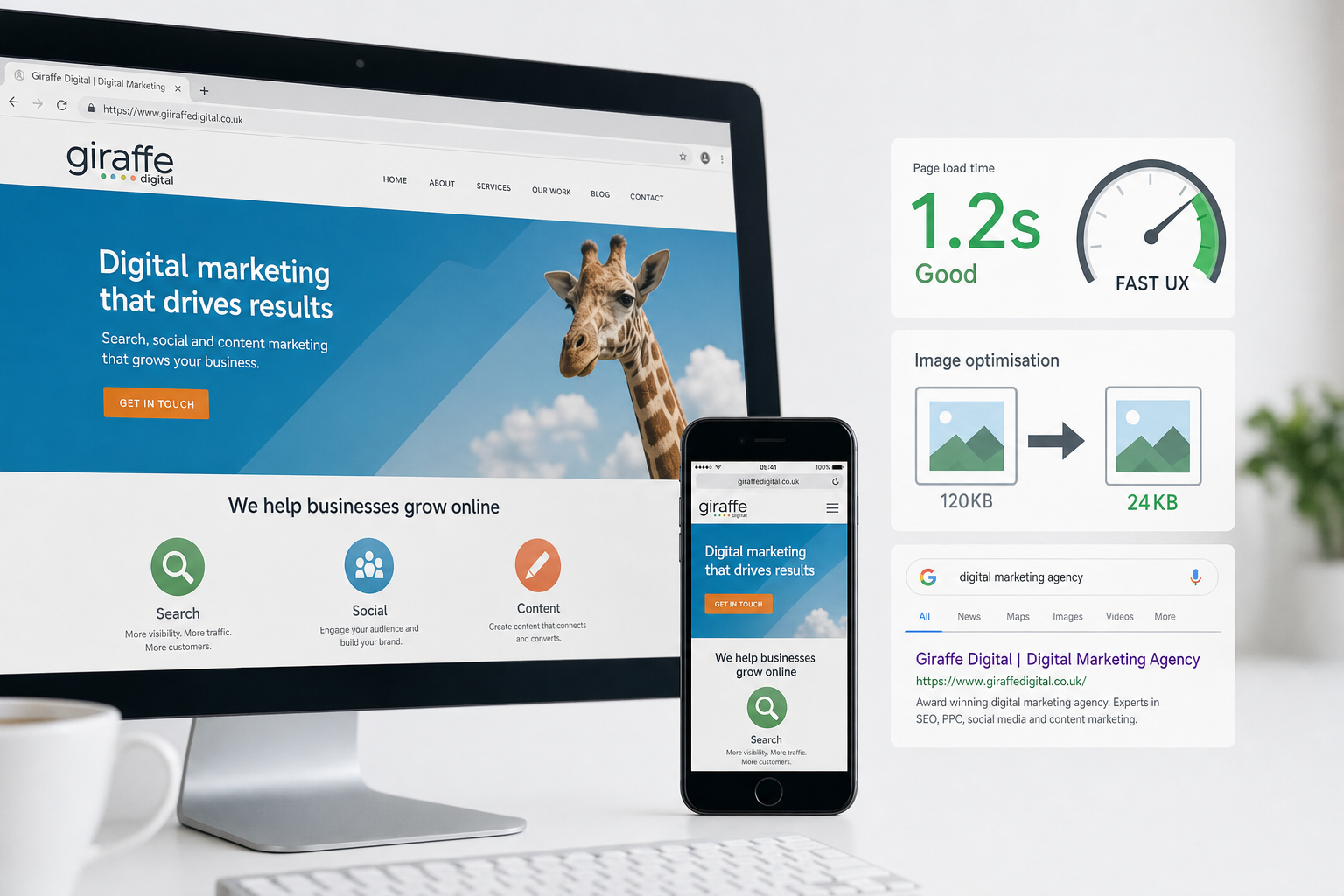
One of the most common causes of slow loading is oversized imagery. High-quality photography is valuable, particularly for brands where trust, appearance or product detail matters. However, uploading very large image files straight from a camera is rarely appropriate. Images should be resized for their intended use and compressed sensibly, so they look good without placing unnecessary weight on the page.
Another issue is visual complexity. A page with too many competing elements asks the browser to do more work and asks the user to make more decisions. Effective design is not simply about adding features. It is about prioritising the visitor’s journey. A clear layout, strong hierarchy, readable type and direct calls to action often produce a better experience than a page packed with effects.
Fonts can also affect performance. Web fonts have become an important part of brand presentation, but loading many font families and weights can slow a site. A practical approach is to choose a small number of styles that support the brand and keep the design consistent. The aim is to look distinctive without making every page unnecessarily heavy.
Speed, social media and first impressions
Social media marketing makes the speed issue even more visible. A user scrolling through Facebook, Twitter, LinkedIn or Instagram may tap a link because a headline, image or offer catches their attention. That moment of attention is brief. If the landing page hesitates, the user may return to the feed and move on.
This is particularly important for campaign landing pages. Businesses often spend time crafting social posts, selecting images and planning content calendars, yet the destination page receives less attention. A strong social campaign should lead to a page that loads quickly, confirms the promise made in the post and presents a clear action. That action might be calling the business, completing a form, downloading a guide or viewing a product range.
Consistency also matters. If a social advert or post presents a polished brand but the website feels slow or awkward, the experience becomes disjointed. Website speed and user experience help bridge that gap. Together, they ensure the brand feels as professional on the landing page as it did in the social channel.
Practical ways to improve website speed and user experience
Improving speed does not always require a complete rebuild. Many businesses can make meaningful progress by auditing the current website and addressing the main sources of delay. The right priorities will depend on the platform, hosting environment, design and content, but the following areas are usually worth reviewing.
Optimise images before and after upload
Images should be supplied at suitable dimensions and compressed before they are added to the site. Banner images, team photographs, product shots and blog graphics all need different treatment. A full-width hero image may need more detail than a thumbnail, but neither should be larger than necessary. Alternative text should also be considered, supporting accessibility and helping search engines understand the content.
Use caching and compression
Caching can reduce the amount of work required each time a page loads, while server compression can reduce the size of files delivered to the browser. These are not glamorous improvements, but they often have a noticeable effect. They are especially useful for websites with regular repeat visitors, such as membership organisations, publishers and e-commerce sites.
Reduce unnecessary scripts and plugins
Content management systems make it easy to add features, but every plugin, widget or third-party script should justify its place. Live chat, analytics, social feeds, tracking pixels, booking tools and embedded media can all be useful, yet they can also add weight. A regular review helps ensure that only valuable features remain in use.
Minimise code where appropriate
CSS and JavaScript files can often be minified, combined or loaded more efficiently. This should be done carefully, particularly on established websites where scripts may support forms, menus or e-commerce functions. The objective is not to strip away useful functionality, but to deliver it in a cleaner and more efficient way.
Choose suitable hosting
Hosting is part of user experience. A well-built website can still feel slow if it sits on an underpowered or poorly configured hosting environment. UK businesses should consider where their audience is based, what level of support they require and whether the hosting can handle busy periods. For some websites, a content delivery network may also be useful, particularly where visitors are spread across different regions.
Domain registration and technical foundations
Website speed and user experience begin with the foundations of a digital presence. Domain registration may seem separate from performance, but the choices made at this stage can affect trust, continuity and future marketing flexibility. A good domain name should be easy to spell, easy to remember and suitable for spoken recommendations. Avoid unnecessary hyphens, confusing wording or names that are too close to another organisation’s brand.
Businesses should register domains through a reputable accredited registrar and keep ownership details, renewal dates and access credentials properly managed. It is sensible to register the main domain for the business and consider appropriate variations, such as common misspellings or relevant UK extensions, where they protect the brand. Do not rely on a former supplier, employee or unrelated third party to control important domain access.
DNS settings should also be documented. If a website is moved, email is changed or a new landing page is launched, clear records reduce the risk of downtime. Technical housekeeping may not be visible to customers, but it protects the experience they receive.
Measuring performance without losing sight of people
Tools such as PageSpeed Insights, WebPageTest, browser developer tools and analytics reports can help identify performance issues. They can show load times, file sizes, server responses and opportunities for improvement. These measurements are useful, but they should be interpreted with the user journey in mind.
A home page that loads quickly but hides the main call to action is not a complete success. A product page that has a good score but uses unclear copy may still underperform. Website speed and user experience are about combining technical performance with clarity, relevance and trust.
It is also worth testing on real devices. A site that feels fast on an office broadband connection may feel very different on a mobile connection. Ask how quickly key pages become usable, not only when every last file has finished loading. Visitors care about when they can read, tap, scroll and decide.
What UK business owners should prioritise
If you are planning a new website or reviewing an existing one, speed should be discussed early rather than treated as a final technical check. The design team, developers, content writers and marketing specialists all have a role to play. Performance is easier to protect when everyone understands the commercial aim of the website.
- Set clear goals: decide whether the site needs more enquiries, sales, bookings, downloads or calls.
- Plan content carefully: write useful pages that answer real customer questions without unnecessary clutter.
- Design for mobile users: ensure navigation, forms and calls to action work comfortably on smaller screens.
- Keep pages focused: avoid adding visual features that do not help the visitor make progress.
- Review performance regularly: new content, plugins and scripts can slow a site over time.
The most successful websites are rarely the ones with the most effects. They are the ones that help visitors understand, trust and act. A fast, well-structured site gives your marketing a stronger platform. Search campaigns, social media activity, email marketing and offline promotion all work better when the destination is quick and easy to use.
Speed is now part of the brand experience
For businesses competing online, speed has become part of reputation. Customers may not describe a site as technically inefficient, but they will notice if it feels slow, confusing or unreliable. They may also make assumptions about the service behind the website. If the digital experience feels smooth, the business feels more capable.
Website speed and user experience should therefore be seen as business issues, not only development issues. They support search visibility, improve the value of social media traffic, strengthen user confidence and help turn interest into action. Whether you are commissioning a new website, refreshing an existing design or reviewing your digital marketing strategy, performance deserves a place at the centre of the discussion.
A good website in 2017 needs to look professional, communicate clearly and load quickly. When those elements work together, visitors are more likely to stay, explore and enquire. That is the practical value of linking website speed with user experience.