Registering a domain name is one of the first practical steps in bringing a business online. It is also one of the easiest steps to rush. Many website owners choose a name, complete the registration, connect it to a website and then move on to design, content and marketing. Yet the information attached to that domain can affect privacy, reputation, day-to-day administration and even the way a business handles unwanted sales approaches. Domain privacy is therefore not a minor technical extra; for many organisations, it is a sensible part of protecting an online presence.
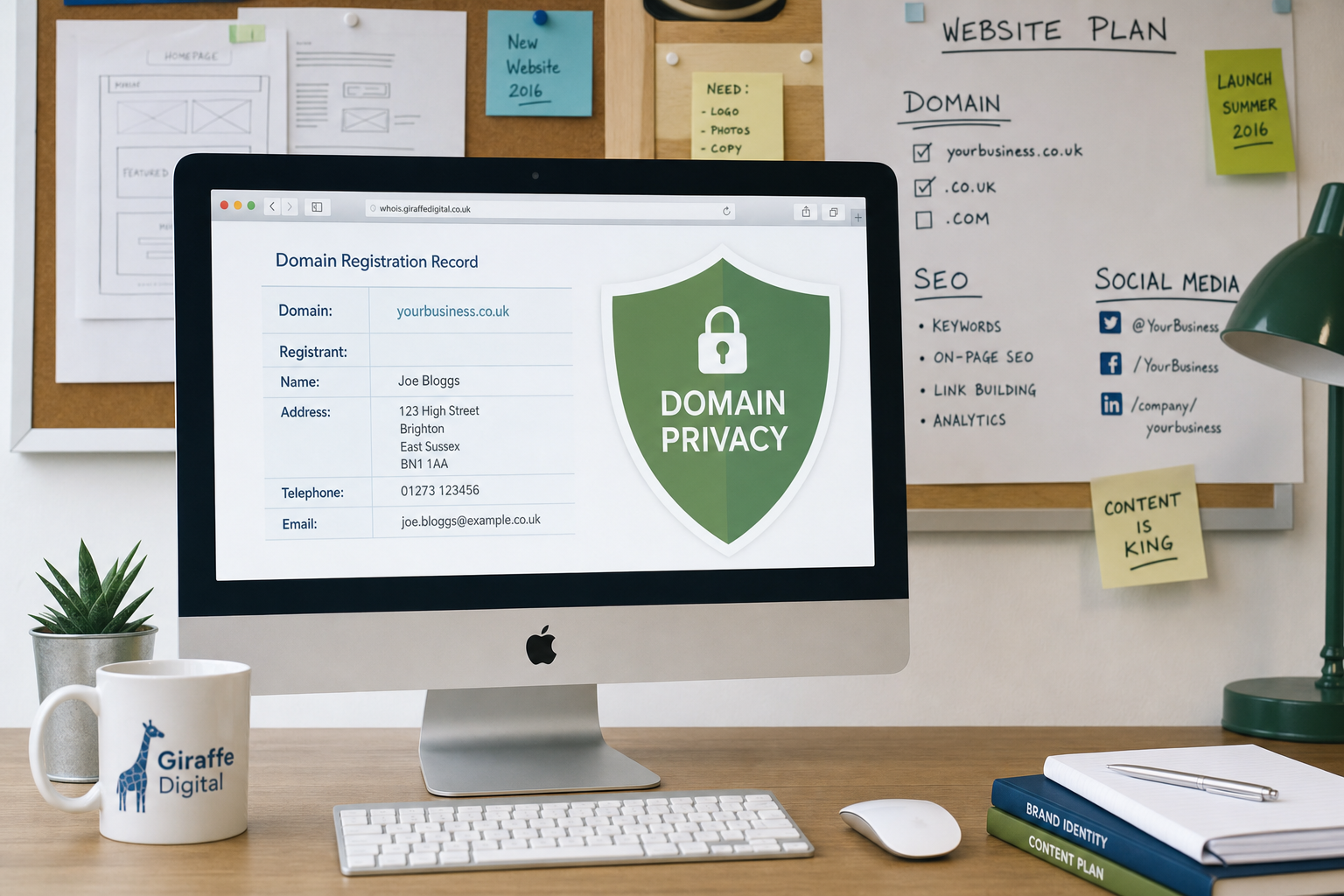
When a domain is registered, certain contact details are usually recorded in a public directory. Depending on the domain extension, the type of registrant and the registration rules, those details may include a name, postal address, telephone number and email address. Domain privacy, sometimes called privacy protection or proxy registration, is designed to reduce the amount of personal or direct contact information visible to the public. For a business owner working from home, a start-up using a temporary office or a sole trader building a new brand, that can be particularly valuable.
What domain privacy actually protects
Domain ownership records exist for a reason. They help identify who is responsible for a domain and provide a route for technical, legal or administrative contact. However, a public listing can also expose information that is useful to spammers, unsolicited sales teams, data harvesters and, in some cases, competitors. Domain privacy helps place a layer between your public domain record and your personal or direct business details.
In practice, privacy protection may replace the visible registrant contact information with the details of a privacy or proxy service. Messages can often still be forwarded to the domain owner, but the owner’s direct email address, phone number or postal address is not placed openly in a searchable public record. The exact arrangement depends on the type of domain and the rules that apply to it.
It is important to understand that domain privacy is not a way to hide unlawful activity or avoid legitimate responsibilities. If a domain is involved in a dispute, legal request or abuse investigation, the relevant authorities and registry processes may still be able to reach or identify the registrant. For respectable businesses, the aim is not secrecy; it is sensible data minimisation. You can remain contactable as a business without publishing more private information than is necessary.
Why it matters for UK business owners
Many UK businesses are run from small offices, shared workspaces or home addresses. A public domain record can reveal details that a business owner would not otherwise choose to advertise. If you are a consultant, tradesperson, creative professional or early-stage company director, your domain registration may connect your brand with your personal address or mobile number. Once that information is collected by third parties, it can be copied into other databases and become difficult to remove.
Domain privacy can also reduce the volume of nuisance contact that often follows a new domain registration. Website owners frequently receive unsolicited emails offering web design, search engine optimisation, directory listings, app development, logo design or social media services soon after registering a domain. Some approaches are simply irrelevant; others are misleading or designed to look like official renewal notices. A private domain record will not stop every unwanted message, but it can reduce the ease with which your details are harvested.
For businesses investing in a new website, privacy also supports brand control. Before a site launches, a domain record can signal a forthcoming project, a new product name or a rebrand. Competitors may monitor registrations in their sector, and automated systems can gather newly registered domains. If you are preparing a campaign, a microsite or a new trading name, limiting unnecessary public information can help keep plans quieter until your website, content and social media profiles are ready.
Privacy, trust and professional presentation
Some business owners worry that using domain privacy might look untrustworthy. In reality, trust is built across the whole online experience. A clear website, accurate contact page, proper business information, useful content, consistent branding and professional communication all matter far more to visitors than whether a public domain record displays a personal address. Most customers will not check domain ownership records before enquiring, but they will notice a poorly designed website, inconsistent messaging or missing contact details.
That said, privacy should not be used as an excuse to make a business hard to reach. If you are a limited company or another registered organisation, you may have obligations to display certain company information on your website and business communications. Domain privacy does not remove those responsibilities. A good approach is to protect personal or unnecessary administrative details at domain level while presenting clear, appropriate business contact details on the website itself.
For example, a small consultancy might use domain privacy to avoid publishing the owner’s home address in the registration record, while still displaying a business email address, contact form, telephone number and registered company details where required. This gives prospective clients confidence without exposing personal information in a public directory that is frequently scraped by automated tools.
How domain privacy connects with website design
Good website design is not only about colours, typography and layout. It is also about making a website feel safe, coherent and dependable. Domain privacy contributes to this broader picture because it helps separate public-facing brand communication from back-end administration. Your website should be designed around the information customers need: who you are, what you offer, where you operate, how you can help and how to contact you. Your domain registration record should not be treated as a marketing brochure or a customer service channel.
When planning a new website, it is worth discussing domain ownership and administration at the same time as hosting, email, analytics and content management. Too many businesses discover later that a domain was registered with the wrong contact details, an old email address or a member of staff who has since moved on. Privacy is useful, but correct ownership is essential. The business should know who controls the domain, which email address receives renewal notices and how administrative access is managed.
A polished website can be undermined by poor domain management. If renewal emails are missed, a domain can expire, causing the website and email to stop working. If ownership is unclear, a redesign or hosting move can become unnecessarily difficult. Domain privacy should therefore sit within a wider housekeeping process: accurate registrant details, secure account access, renewal reminders and a clear record of who is responsible for updates.
Search marketing and domain privacy
Domain privacy is not a shortcut to better search rankings, and it should not be presented as one. Search engines are far more concerned with the quality, relevance and accessibility of your website than whether your registration details are publicly visible. Strong search marketing in 2016 still depends on clear site structure, useful content, sensible page titles, descriptive copy, mobile-friendly design, fast-loading pages, appropriate internal links and reputable mentions from other websites.
However, domain privacy can indirectly support search marketing by reducing distractions and protecting administrative stability. A business owner who is not overwhelmed by spam, misleading renewal notices and irrelevant SEO sales emails is better placed to focus on genuine improvement. Keeping domain contact details controlled also reduces the risk of falling for messages that appear to be official but are actually attempts to sell low-quality directory listings, keyword reports or questionable link packages.
It is also worth noting that registering a domain for several years, adding privacy protection or choosing a particular extension will not compensate for thin content or a weak website. A well-chosen domain can support branding and memorability, but it does not replace a proper digital strategy. The domain should be easy to spell, suitable for your audience and consistent with your broader brand. Domain privacy then helps protect the administrative layer behind that brand.
Social media, campaigns and brand protection
Domain names and social media profiles often work together. A business may use its domain on printed materials, email signatures, social media bios, advertising, exhibition stands and campaign graphics. If you are launching a new brand, it is sensible to consider domain registration, website design and social media naming at the same time. Consistency helps customers recognise you across different channels.
Privacy becomes useful when a business is preparing a launch and wants to avoid drawing attention too early. Registering a domain can leave a trail, particularly if the details are public. If a new product name, campaign idea or trading style appears in a domain record before the website and social profiles are ready, the business may lose some control over timing. Domain privacy cannot guarantee confidentiality, but it can reduce the amount of information made immediately available.
For ongoing social media marketing, domain privacy also helps keep public contact channels intentional. Customers should be encouraged to use the routes you actively manage, such as your website enquiry form, published business email address or social media accounts. Public domain records are not designed for customer engagement. By keeping administrative details separate, you can maintain a cleaner, more professional communication structure.
When domain privacy may not be available or appropriate
Not every domain extension allows the same level of privacy. Some registries have specific eligibility, publication or verification rules. Certain UK domain arrangements may treat individuals and trading organisations differently, and businesses should not assume that every detail can be hidden. The availability of privacy protection depends on the extension, the registrar’s processes and the nature of the registrant.
There are also situations where a business may choose not to use privacy protection. Larger organisations, public bodies and well-established companies may prefer full transparency in registration records, especially where they already publish a registered office address and formal contact details. In other cases, legal, regulatory or sector-specific expectations may influence the decision. The key is to make a deliberate choice rather than accepting the default without understanding it.
If your business uses domain privacy, make sure the underlying registrant information is still accurate. Privacy protection should mask details from public view where permitted; it should not encourage sloppy records. If the registry or registrar needs to contact the domain owner, outdated details can cause serious problems. Use a monitored business email address, keep contact information current and record access details securely.
Practical steps before registering a domain
Before you register a domain for a new website, campaign or rebrand, take a few minutes to consider the administrative implications. A simple checklist can prevent avoidable issues later.
- Choose the registrant carefully: where possible, the domain should be registered to the business or appropriate owner, not casually to an individual employee or temporary supplier.
- Use a monitored email address: renewal, verification and technical messages should go to an inbox that will be checked regularly.
- Check whether privacy is available: different domain extensions have different rules, so confirm what can and cannot be hidden before completing the registration.
- Keep business obligations in mind: domain privacy does not replace the need to display proper company or trading information on your website where required.
- Record renewal dates: an expired domain can take your website and email offline, which can damage enquiries, search visibility and customer confidence.
- Secure the account: use strong passwords and limit access to people who genuinely need it.
- Coordinate with your website plans: consider hosting, email, analytics, content management and social media usernames as part of the same digital set-up.
These steps are not complicated, but they are often overlooked because domain registration feels like a quick technical purchase. Treating it as part of your wider digital strategy makes the business less vulnerable to disruption.
Domain privacy as part of a sensible digital strategy
A successful website is built on many small decisions. Some are visible to customers, such as design, photography, copywriting and navigation. Others sit behind the scenes, including domain ownership, hosting, email configuration and privacy settings. Domain privacy belongs in that second group: it may not win a customer on its own, but it can help protect the business while the visible parts of the brand do their job.
For UK business owners, the main benefit is control. You decide which contact details are presented on your website, how customers should reach you and how much personal information is exposed through technical records. That control is especially useful for smaller businesses, sole traders and new ventures that may not yet have separate premises or a large administrative team.
If you are planning a new website or reviewing an existing one, take the opportunity to check your domain records. Confirm who owns the domain, which details are attached to it, whether privacy protection is available and whether the renewal process is clear. At the same time, review the public-facing contact details on your website to ensure they are accurate, professional and compliant with your business obligations.
Domain privacy is not about hiding from customers. It is about protecting unnecessary personal information, reducing avoidable nuisance contact and keeping your brand’s online foundations tidy. Combined with good website design, credible content, consistent social media activity and responsible search marketing, it helps create a more secure and professional presence for your business online.