As AI-generated content becomes more common across websites, search results and social platforms, customers are paying closer attention to the signals that help them decide whether a business is genuine. One of the most important signals is also one of the most familiar: the domain name. For UK business owners, domain trust is not just a technical SEO topic. It affects brand perception, website design, click-through rates, social media confidence and the overall credibility of your digital presence.
A strong domain can make your business easier to remember, easier to recommend and easier to recognise across marketing channels. A weak, confusing or poorly protected domain can create doubt before a customer has even read your homepage. In a web environment where automated content can be produced at scale, the details that prove legitimacy are becoming more valuable.
What domain trust means for a business website
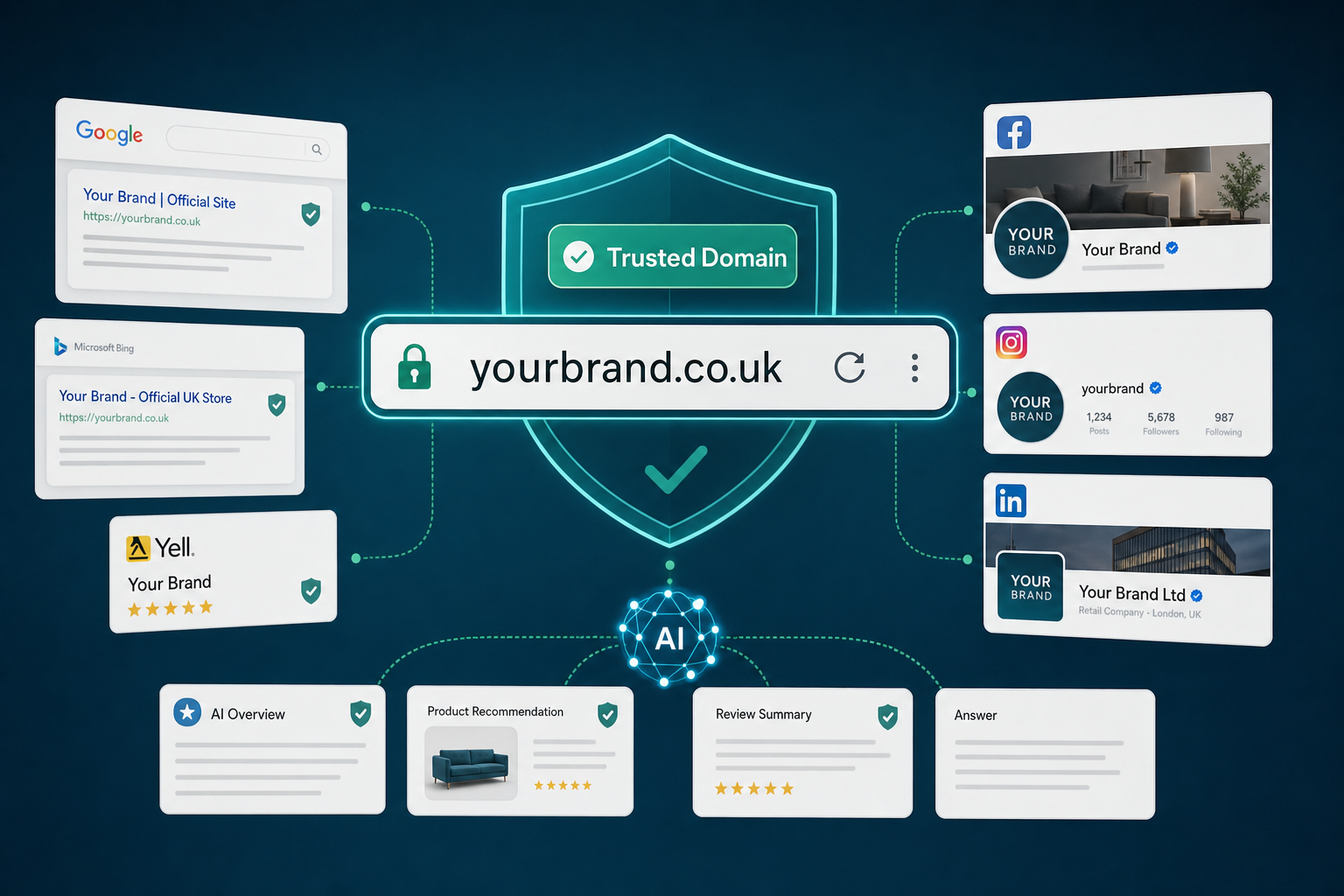
Domain trust is the level of confidence that customers, search engines and digital platforms associate with your website address. It is influenced by the domain name itself, the quality of the website connected to it, the consistency of your brand presence, the technical health of the site and the reputation you build over time.
For a customer, domain trust often begins with a quick impression. Does the address look professional? Is it easy to spell? Does it match the business name? Does the website load securely? Is the content clear and helpful? These judgements can happen in seconds, especially when someone is comparing suppliers, trades, professional services or e-commerce options.
For search engines, trust is not based on one single factor. A domain connected to useful content, clean technical foundations, natural links, consistent business information and a positive user experience is more likely to build authority than one connected to thin pages, spam-like behaviour or confusing redirects. Domain trust is therefore best understood as a combination of branding, SEO, design and ongoing digital reputation management.
Why domain trust matters more as AI content grows
AI writing tools are making it easier for businesses to draft web copy, create social posts and plan campaigns. Used carefully, they can support productivity. Used carelessly, they can fill the web with generic pages that sound plausible but offer little value. This creates a challenge for genuine businesses: how do you demonstrate that there is a real organisation behind the website?
Your domain name is part of that answer. A professional, stable domain supports the idea that your business is established and accountable. When it is paired with clear contact details, recognisable branding, useful service pages and original content, it helps customers feel that they are dealing with a real team rather than an anonymous website.
This is particularly important for businesses where trust is essential to the decision. Legal services, healthcare, property, finance, home improvement, education, recruitment and business-to-business services all depend on confidence. Even for lifestyle, hospitality and retail brands, customers are becoming more alert to suspicious websites, copycat branding and poor-quality content.
AI does not remove the need for human credibility. In many ways, it makes credibility more important. Businesses that invest in clear brand signals, helpful content and secure digital foundations will be better placed to stand out from generic online noise.
Choosing a domain name that supports credibility
A trustworthy domain should be clear, memorable and closely connected to your brand. The best choice is often your business name, provided it is not too long, difficult to spell or easily confused with another organisation. If your exact name is not available, consider a simple variation that still feels natural and professional.
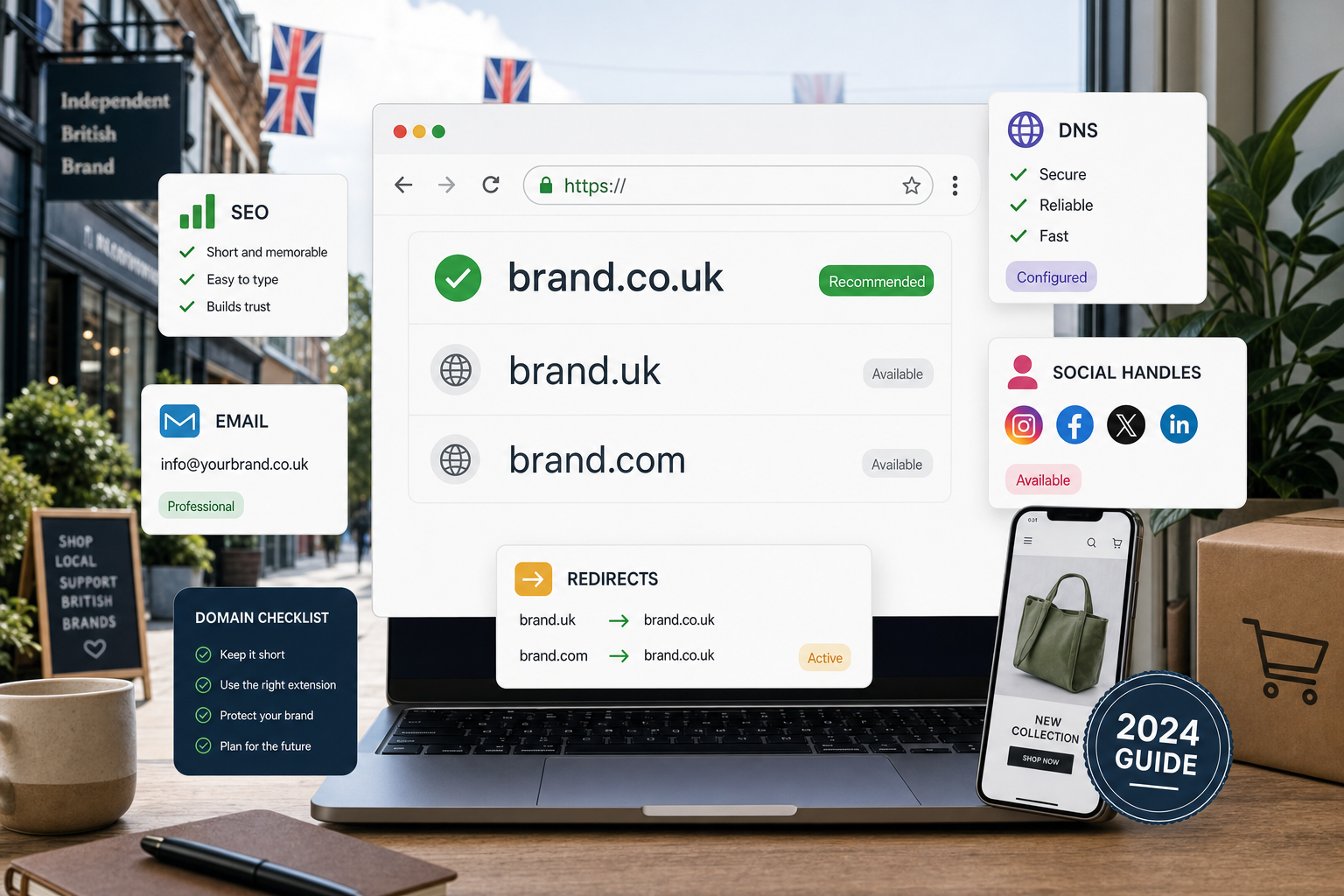
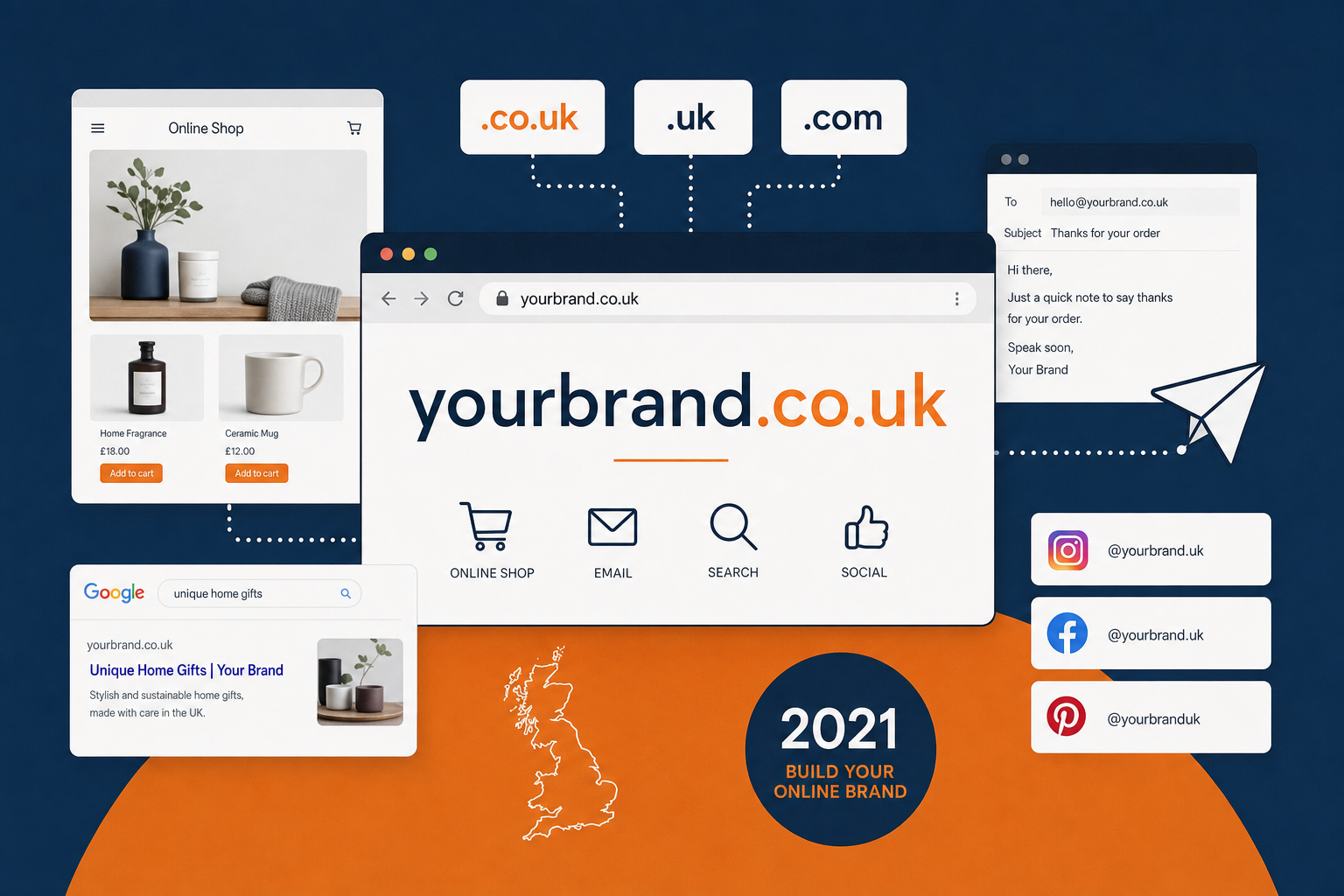
For UK businesses, a country-specific extension can help communicate local relevance. A .co.uk domain remains familiar to many UK customers, while .uk is also widely recognised. A .com domain may be suitable if you trade internationally or want a broader commercial feel. The right choice depends on your audience, your brand ambitions and how customers are likely to search for you.
Avoid domain names that rely on excessive hyphens, unusual spellings or unnecessary numbers. These can make your address harder to say aloud, remember or type correctly. They can also look less established in search results, email addresses and printed materials.
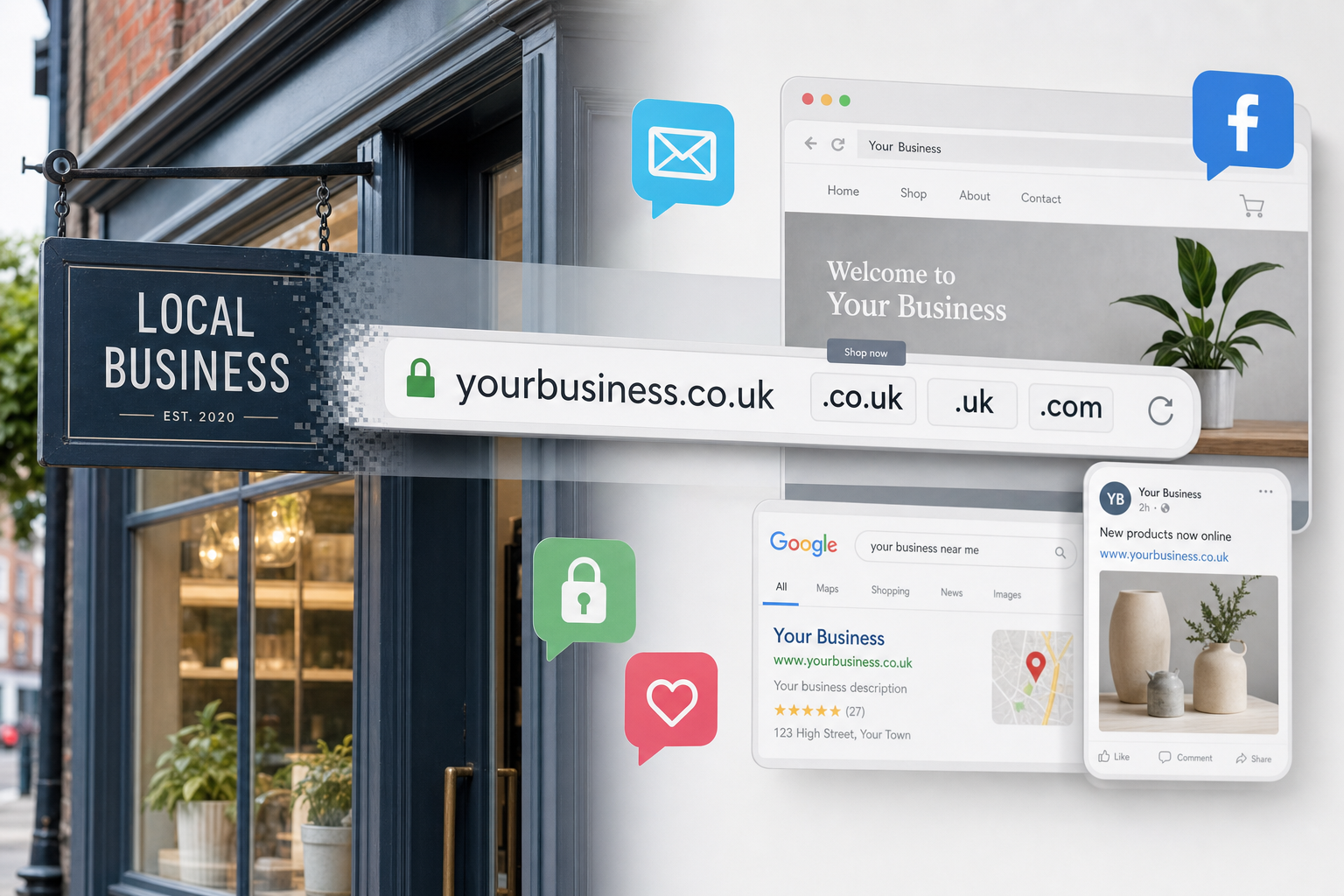
It is also worth considering how your domain will appear across your wider marketing. Will it fit comfortably on a van, shop sign, brochure, business card, email signature and social media profile? A domain that works well in multiple settings is more valuable than one that only looks acceptable in a browser bar.
Examples of stronger domain choices
If your business is called Greenfield Accountants, a domain closely matching the name is likely to feel more trustworthy than a vague, keyword-heavy address. A domain such as greenfieldaccountants.co.uk would usually be clearer than best-tax-help-uk-online.co.uk. The first supports brand recognition; the second may look less personal and more transactional.
Similarly, a local service business may benefit from including a place name if it is a natural part of the brand. However, forcing too many locations or keywords into a domain can make it look dated. A good domain should balance search relevance with long-term brand value.
Registering and managing your domain carefully
Domain registration should be treated as a business asset decision, not a quick admin task. Use an established registration provider, keep ownership details accurate and ensure the domain is registered in the correct business or director name. Avoid situations where a former employee, freelancer or temporary supplier controls the domain without a clear written agreement.
Set calendar reminders well ahead of renewal dates and keep payment details up to date. Losing a domain can disrupt your website, email, advertising, printed materials and customer communications. It can also create an opportunity for another party to register a similar or expired address.
Where appropriate, consider registering sensible variations of your domain. This may include common misspellings, the .co.uk and .uk versions, or a .com version if your brand is likely to expand. You do not need to register every possible extension, but protecting the obvious ones can reduce confusion and support brand security.
It is also wise to use strong account security for domain management. Enable additional login protection where available, limit access to trusted people and keep a record of who can make changes. A domain is a gateway to your website and often your email, so it deserves the same care as other critical business systems.
Website design signals that strengthen domain trust
A good domain can only do so much if the website itself feels unfinished or inconsistent. Customers judge credibility through design, structure, language and usability. A professional website should reassure visitors that they are in the right place and that the business can deliver what it promises.
Clear navigation is essential. Visitors should be able to understand what you offer, where you operate and how to contact you without searching through confusing menus. Service pages should be specific rather than vague. Contact details should be easy to find. If you have a physical location, display it consistently with your wider business listings.
Visual consistency also matters. Your logo, colours, typography and tone of voice should feel aligned across the site. If your domain, website design and social media profiles all look like separate projects, customers may question whether the business is organised. A joined-up brand presence creates confidence.
Mobile design is especially important. Many customers will first encounter your domain through a mobile search result, a social media post or an email link. If the website is hard to use on a phone, slow to load or difficult to read, the trust created by a strong domain can quickly be lost.
Security and technical basics
A secure website connection is now expected. Your site should use HTTPS, with a valid security certificate, so visitors see a secure connection in their browser. While most customers may not understand the technical detail, many recognise warning messages and will leave if a site appears unsafe.
Website performance is another trust signal. Slow pages can make a business appear less professional and can reduce conversions. Compressing images, using reliable hosting, maintaining plugins and avoiding unnecessary scripts all contribute to a smoother experience.
Technical maintenance should be ongoing. Broken links, outdated pages, missing images and old copyright dates can make a website look neglected. Regular checks help preserve the trust you have built.
How domain trust supports SEO
Search engine optimisation is not simply about keywords. It is about helping search engines and users understand that your website is relevant, useful and reliable. Domain trust supports this by providing a stable foundation for content, links and brand recognition.
When your domain is consistent across business listings, social profiles, email marketing and digital PR, it becomes easier for search engines to connect those signals. Consistency reduces ambiguity. If your business name, address, phone number and website URL vary across the web, it can weaken confidence and create confusion.
Quality content remains central. Pages should answer real customer questions, explain your services clearly and reflect genuine expertise. AI-assisted drafting can be useful, but published content should be reviewed, edited and improved by someone who understands the business. Avoid filling your site with near-duplicate pages or generic articles that do not help the reader.
Backlinks can also influence domain trust, but quality matters more than volume. Links from relevant local organisations, industry bodies, suppliers, partners, publications or community projects are generally more meaningful than large numbers of low-quality directory links. Focus on relationships, usefulness and genuine reasons for other websites to mention you.
Search result presentation
Your domain appears in search results alongside your page titles and descriptions. A clear, professional domain can improve confidence before a click. If the domain looks unrelated to the brand, overly promotional or difficult to read, potential customers may choose a competitor instead.
Optimised page titles and meta descriptions should support this first impression. They should describe the page accurately, include relevant service or product terms where natural, and avoid exaggerated claims. Search visibility is valuable, but trust is what helps turn visibility into enquiries.
Domain trust and social media marketing
Social media often acts as a bridge between discovery and decision. A potential customer may see your post on Instagram, Facebook, LinkedIn or TikTok, then check your website before making contact. If your social profile links to a domain that looks professional and matches your brand, the journey feels coherent.
Use the same domain consistently across social bios, post links, adverts and profile buttons. Avoid sending users to a patchwork of unrelated short links unless there is a clear reason. Short links can be useful for campaigns, but your main website address should remain visible and recognisable wherever possible.
Brand handles should also be aligned with your domain and business name. If customers see one name on social media, a different name in an advert and another variation in the website address, trust can weaken. Consistency helps people remember you and reduces the chance of confusion with another business.
For paid social campaigns, the destination page is just as important as the advert. A polished ad that leads to a poorly designed or suspicious-looking domain can waste attention. Landing pages should match the promise of the advert, load quickly and provide clear next steps.
Email, domain trust and customer confidence
Your domain is not only used for your website. It is also part of your email identity. A professional email address using your own domain usually inspires more confidence than a generic personal email address, particularly for established businesses and service providers.
Email trust is important because customers may receive quotations, invoices, booking confirmations, support messages and marketing updates from your team. If your email domain matches your website, it reinforces legitimacy. If it does not, recipients may hesitate, especially when money or personal information is involved.
Technical email authentication can also support deliverability and reduce misuse. Speak to your web or IT provider about appropriate email records for your domain. These measures help receiving mail systems understand which servers are authorised to send messages on your behalf.
Protecting your brand from confusion and copycats
As your business grows, your domain can become a target for imitation or confusion. Competitors, resellers, scammers or unrelated businesses may register similar names. While not every variation is a threat, it is sensible to monitor the most obvious risks.
Search for your brand name occasionally and review what appears. Check whether similar domains are active and whether customers are likely to mistake them for you. If your brand is distinctive and commercially important, consider taking advice on trade mark protection as part of your broader brand strategy.
Make sure customers can verify that they are dealing with you. Publish clear contact information, link to official social profiles and keep business listings accurate. If you operate in a sector where scams are common, consider adding guidance on how customers can recognise genuine communications from your business.
A domain trust checklist for UK businesses
- Choose a clear domain: keep it close to your business name and easy to spell.
- Select the right extension: consider .co.uk, .uk or .com depending on your audience and ambitions.
- Keep ownership secure: ensure the domain is registered to the right person or organisation.
- Renew on time: set reminders and keep account details current.
- Use HTTPS: provide a secure connection for visitors.
- Maintain design quality: ensure your website looks professional on desktop and mobile.
- Be consistent: use the same domain across search listings, social profiles, email and marketing materials.
- Publish useful content: answer real customer questions and avoid generic filler.
- Protect your email identity: use domain-based email and appropriate authentication.
- Monitor your brand: check for confusingly similar domains or inconsistent online mentions.
Building trust is a long-term digital strategy
Domain trust is not built in a single afternoon. It grows through consistent decisions: a strong domain name, a reliable website, useful content, secure technology, coherent social media and careful brand management. Each of these elements helps customers feel more confident about taking the next step.
For business owners planning a new website, rebrand or SEO campaign, the domain should be discussed early. It affects design, messaging, analytics, advertising, email and long-term search performance. Changing a domain later can be done, but it requires careful planning to protect visibility and avoid confusing customers.
In an AI-driven web, trust is becoming a competitive advantage. Businesses that look genuine, communicate clearly and maintain a professional digital presence will be easier for customers to choose. Your domain name is one of the first signals in that journey, and it deserves strategic attention.
If you are reviewing your website, brand identity or digital marketing plans, start by asking a simple question: does our domain help people trust us? If the answer is unclear, it may be time to strengthen the foundations before investing more heavily in traffic, content or advertising.