Trust is one of the most important reasons a visitor chooses to enquire, buy, book or leave. A well-designed website can attract attention, but clear content is what helps people feel confident enough to take the next step. For many UK businesses, website trust is built through a combination of honest wording, reliable technology, consistent branding and small details that prove there are real people behind the organisation.
When someone lands on your website for the first time, they are often making quick judgements. They may be comparing you with several competitors, checking whether you look credible, or deciding whether it is safe to share their details. Your content should answer those concerns quickly and calmly. It should explain who you are, what you do, where you operate, how you help and why a visitor should believe you.
Why website trust matters for business growth
A trustworthy website supports almost every part of digital marketing. It can improve the performance of search traffic, paid campaigns, social media referrals and email marketing because visitors are more likely to stay, read and act. If your website feels unclear, outdated or incomplete, even strong marketing activity can lose value at the final stage.
Trust is especially important when your service involves expertise, personal data, payment details, appointments, property, healthcare, legal advice, finance, home improvements or business support. In these areas, visitors want reassurance before they make contact. They want to see that you understand their problem, operate professionally and can be reached easily if something goes wrong.
Good website content reduces uncertainty. Instead of vague promises such as we offer the best service, it gives useful information: what is included, who the service is for, what the process looks like, what happens after an enquiry and how long a typical next step may take. This does not mean overloading the page with every possible detail. It means giving enough substance for a potential customer to feel informed.
Start with clear, honest page content
Clear wording is one of the simplest ways to build website trust. Visitors should not have to decode industry jargon or guess what your business actually offers. Each main page should have a clear purpose, a helpful introduction and content that matches the search or referral journey that brought the visitor there.
For example, a firm offering commercial cleaning should explain the types of premises it works with, the geographical area it covers, whether regular contracts are available and how a site visit or quote is arranged. A design agency should explain its services, its process, the kind of clients it suits and what information a prospect should prepare before an initial conversation. A trades business should make accreditations, service areas and contact routes obvious.
Trustworthy content avoids exaggeration. Claims such as market-leading, world-class or unbeatable can sound empty unless they are supported by evidence. Stronger alternatives include specific experience, genuine testimonials, recognised qualifications, examples of work, photographs of completed projects, professional memberships or clear service guarantees where appropriate.
Make your important details easy to find
Many trust signals are practical rather than persuasive. Visitors look for signs that your business is established, contactable and accountable. Your website should make the following information easy to find where relevant:
- Your business name and a consistent description of what you do.
- A clear contact page with a telephone number, email address or enquiry form.
- Your trading location, service area or appointment arrangements.
- Company registration details where suitable for your type of organisation.
- Opening hours or expected response times.
- Names, roles or team information when personal credibility matters.
- Terms, privacy information and cookie details in plain language.
This information does not need to dominate every page, but it should not be hidden. A visitor who has to hunt for basic details may start to question whether the business is reliable.
Design choices that increase confidence
Website design has a direct effect on trust. A site can have excellent written content, but if the layout is confusing, slow or inconsistent, visitors may doubt the professionalism of the organisation. Good design should make information easier to understand, not simply make the website look decorative.
In 2018, many visitors will view your site on a mobile phone before they ever see it on a desktop computer. Your pages should be responsive, readable and easy to navigate on smaller screens. Buttons should be large enough to tap, forms should be simple to complete and important contact details should not disappear on mobile layouts.
Consistency is also important. Colours, typography, imagery and tone of voice should feel connected across the website and your wider branding. If your homepage looks polished but your service pages look neglected, or if your social media graphics use a completely different style, the overall impression can weaken.
Use images with care
Images can make a business feel more real, but they need to be chosen carefully. Genuine photographs of premises, products, staff, events or completed work often create more trust than generic stock images. Where stock photography is used, it should be relevant, tasteful and consistent with the brand. Overly staged images can make a small business feel less authentic, particularly if the wording on the page is personal and local.
For e-commerce and product-led websites, clear product images, accurate descriptions and visible delivery or returns information can reduce hesitation. For service businesses, before-and-after examples, project galleries and professional headshots can help visitors picture who they will be dealing with.
Technical trust signals: security, speed and stability
Website trust is not only about words and design. The technology behind your site also sends signals to visitors and search engines. A secure, well-maintained website feels more dependable and reduces the risk of problems that could damage your reputation.
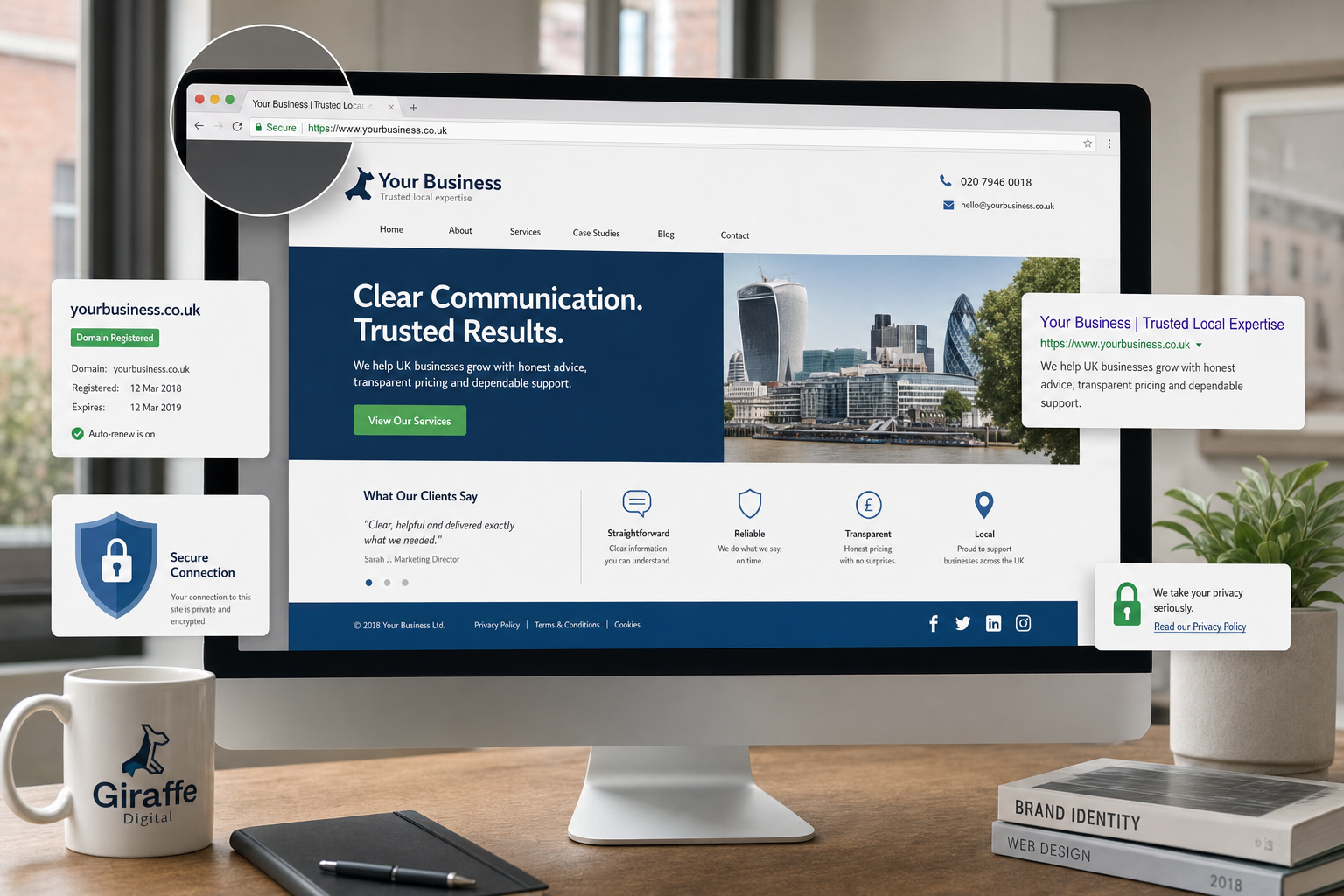
One of the most visible trust signals is HTTPS. A website with a valid SSL certificate shows a padlock in the browser and helps protect information passed between the visitor and the site. This is particularly important for contact forms, logins and payment journeys, but it is now sensible for standard business websites too. Browsers are becoming more direct about labelling non-secure pages, so leaving a site on HTTP can undermine confidence before a visitor has even read your content.
Page speed also matters. Slow pages frustrate visitors and can reduce enquiries, especially on mobile connections. Search engines increasingly take mobile experience seriously, so a heavy, sluggish site can affect both user satisfaction and search performance. Compressing images, using efficient hosting, keeping code tidy and avoiding unnecessary scripts can all help.
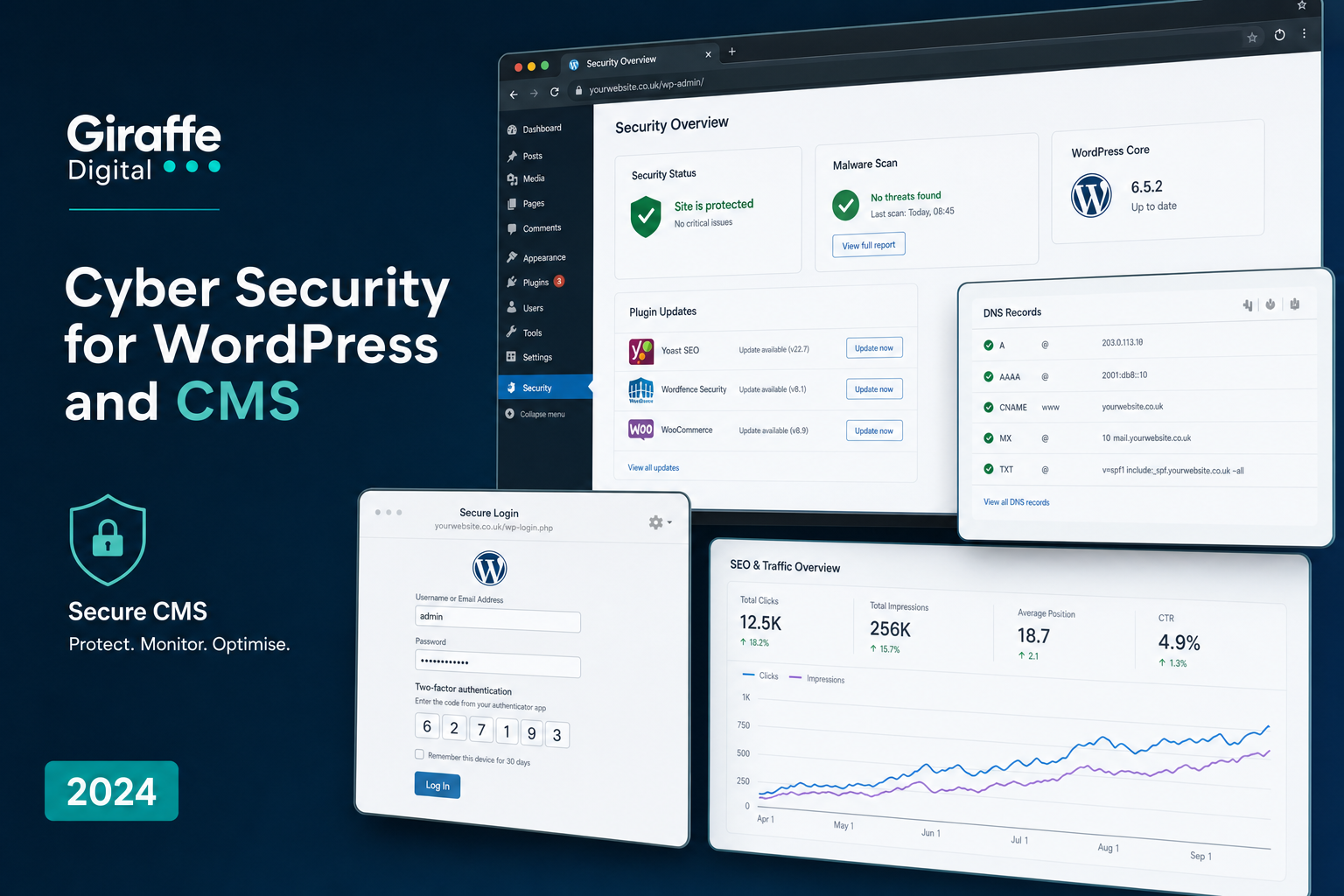
Stability is another important factor. Broken links, missing images, error pages and outdated plugins suggest neglect. Regular maintenance should include software updates, backups, form testing, security checks and a review of key pages. If your website is built on a content management system, it should not be left unattended for months at a time.
Domain names and professional presentation
Your domain name is often the first piece of your website that someone sees. It appears in search results, email addresses, printed materials, social profiles and word-of-mouth recommendations. A clear, suitable domain can support website trust by making your business easier to remember and easier to recognise.
For UK organisations, a domain ending such as .co.uk or .uk may be appropriate, while some businesses may prefer a broader option depending on their market. The most important point is that the domain should be simple, relevant and not easily confused with another organisation. Avoid unnecessary hyphens, awkward spellings or names that are hard to say over the phone.
When registering a domain, use accurate ownership details and keep renewal information up to date. The domain should be registered in a way that the business can control, rather than being tied to an individual who may leave or an old supplier relationship that becomes difficult to manage. It is also sensible to use a professional email address connected to your domain rather than relying solely on a free personal email account for business enquiries.
If you change your domain, plan the move carefully. Redirect old pages to the most relevant new pages, update business listings and social profiles, and monitor search performance. A poorly managed domain change can cause confusion for customers and loss of visibility in search.
Social proof and reputation signals
Visitors often want evidence that other people have used your business successfully. Social proof can include testimonials, reviews, case studies, awards, accreditations, press mentions, portfolio examples and client logos where permission has been given. The strongest examples are specific and believable.
A useful testimonial explains what problem was solved, what the experience was like or what outcome was achieved. Short quotes can work well on service pages, while longer case studies can help visitors understand your process in more detail. Avoid anonymous, overly polished quotes that sound as though they could apply to any business.
Review platforms and social media pages can also influence trust. Many potential customers will look beyond your website before contacting you. If your Facebook page has not been updated for a year, your Twitter feed is full of automated posts, or your LinkedIn company page has inconsistent information, it can create doubt. You do not need to be active everywhere, but the channels you use should be kept tidy, accurate and aligned with your website.
Connect social media with the website journey
Social media marketing is most effective when it supports the trust already being built on your website. A post might introduce a helpful article, show a completed project, share a team update or answer a common customer question. When people click through, the landing page should continue the same message and give them a clear next step.
For example, if a LinkedIn post promotes a guide for business owners, the page it links to should not be a vague homepage with no mention of the guide. If an Instagram post shows a new product, the linked page should give useful product details, availability and contact or purchase options. Consistency between social content and website content helps visitors feel they are in the right place.
Privacy, consent and responsible data handling
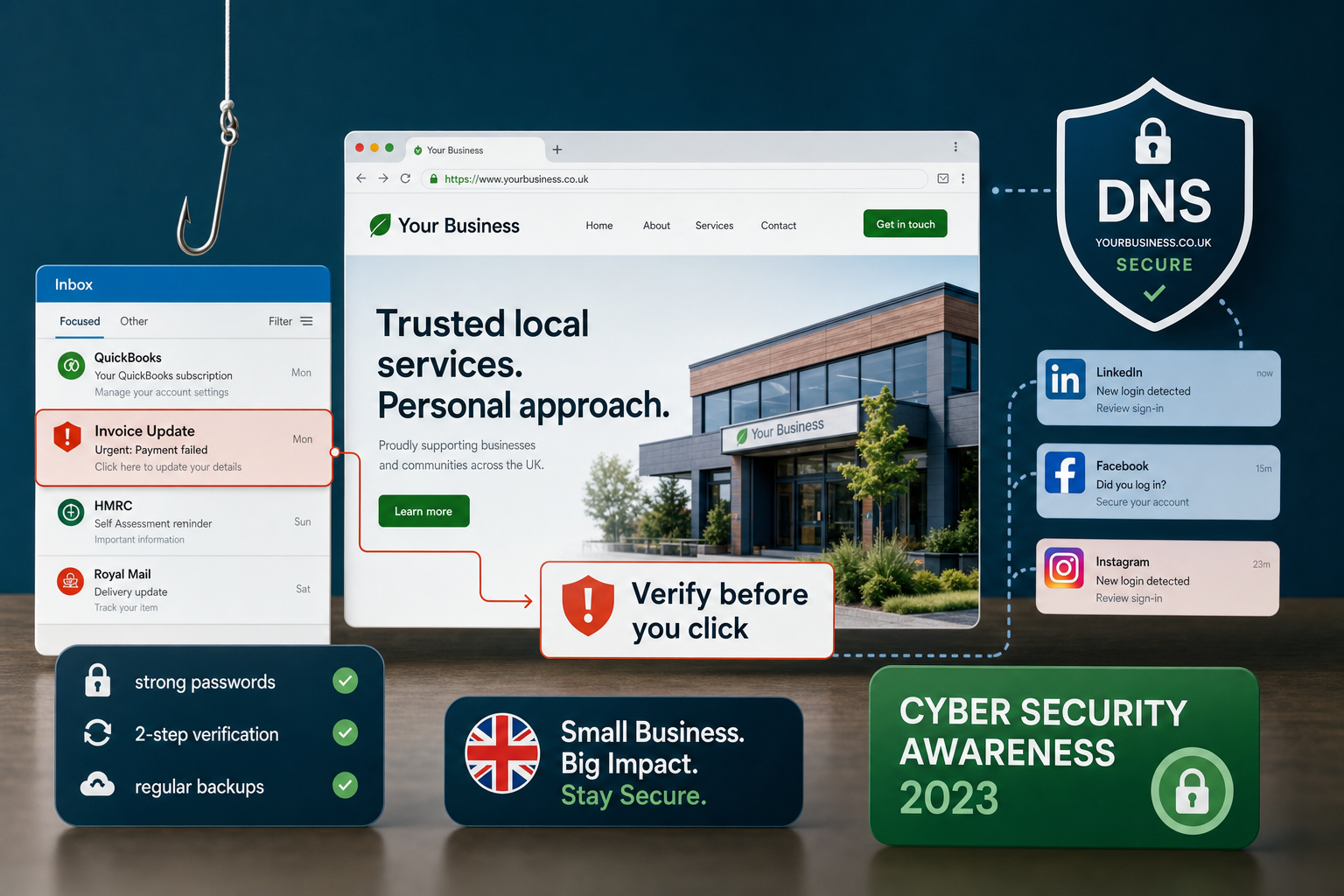
Trust also depends on how you handle personal data. Since the General Data Protection Regulation came into force in May 2018, many UK businesses have reviewed how they collect, store and explain the use of customer information. Your website should make privacy information accessible and understandable, especially where forms, newsletter sign-ups, analytics or advertising tools are used.
Contact forms should only ask for information you genuinely need. If someone is making a basic enquiry, asking for excessive personal details can put them off. Newsletter sign-ups should make it clear what the person is subscribing to, and consent should not be hidden in vague wording. Cookie notices and privacy pages should be written in plain English wherever possible.
Responsible data handling is not just a legal matter; it is part of the customer experience. When a visitor understands why information is being requested and how it will be used, they are more likely to feel comfortable completing a form.
Search marketing and trust work together
Search engine optimisation is often discussed in terms of rankings, keywords and traffic, but trust plays a major role in whether that traffic becomes business. A page may appear in search results, but if it does not satisfy the visitor’s question or looks unreliable, the opportunity is lost.
Strong SEO content should be useful, well-structured and relevant to the searcher’s intent. Service pages should answer practical buying questions. Blog posts should provide genuine guidance rather than thin commentary. Location pages should be written for real customers in those areas, not simply produced as near-duplicate pages with place names changed.
Metadata, headings and page titles should accurately reflect the page content. Misleading search snippets may attract clicks, but they can also increase bounce rates and reduce confidence. Search marketing works best when the promise made in the search result is fulfilled on the page.
It is also worth considering how your business appears across the wider web. Consistent names, addresses, phone numbers and descriptions across directories, maps, social platforms and industry listings can support both visibility and credibility. Inconsistent details make it harder for customers and search engines to understand which information is correct.
Checklist for improving website trust
Improving trust does not always require a full redesign. Many businesses can make meaningful progress by reviewing key pages and fixing obvious gaps. Start with the pages that receive the most traffic or support the most important enquiries.
- Check that every main service page clearly explains who the service is for and what happens next.
- Make contact details visible and test all forms, phone links and email links.
- Ensure the website uses HTTPS and that the SSL certificate is valid.
- Review mobile layouts for readability, spacing and ease of navigation.
- Replace vague claims with specific evidence, examples or explanations.
- Add genuine testimonials, portfolio items or case studies where appropriate.
- Update privacy, cookie and data collection information.
- Remove broken links, outdated announcements and old campaign pages that are no longer relevant.
- Keep social media profiles consistent with the website’s branding and contact information.
- Review page speed, image sizes and hosting performance.
A useful approach is to ask someone outside the business to complete a simple task on your site, such as finding a service, making an enquiry or checking whether you operate in their area. Watch where they hesitate. Those moments often reveal where trust is being lost.
Building trust is an ongoing process
Website trust is not created by a single badge, statement or design feature. It is built through a series of consistent signals: clear content, secure technology, honest claims, professional design, visible contact details and a reliable presence across search and social media.
For UK business owners, the commercial value is straightforward. A trustworthy website can help more visitors become enquiries, improve the return from marketing activity and strengthen the perception of your brand. It can also reduce wasted conversations by giving potential customers the information they need before they contact you.
The best place to start is with clarity. Look at your website through the eyes of a cautious first-time visitor. Are you easy to understand? Are you easy to contact? Do your claims feel believable? Does your site look secure and up to date? If the answer to any of those questions is uncertain, there is an opportunity to improve both trust and performance.