Chatbots are beginning to move from a technical curiosity into a practical customer service tool for businesses online. For UK business owners, the opportunity is not to replace every conversation, but to make the first stage of customer support faster, clearer and more convenient. A well-planned chatbot can answer common questions, guide visitors to the right information, collect enquiry details and help customers take the next step without waiting for an email reply.
The technology is still developing, and it should be approached with sensible expectations. In July 2016, most chatbots work best when they are focused on a defined set of tasks, such as answering questions about opening hours, checking availability, explaining delivery options or directing a website visitor to the right department. They are not a complete substitute for trained staff, but they can reduce repetitive work and provide a more immediate response when a customer is browsing your website or contacting you through social media.
What is a chatbot
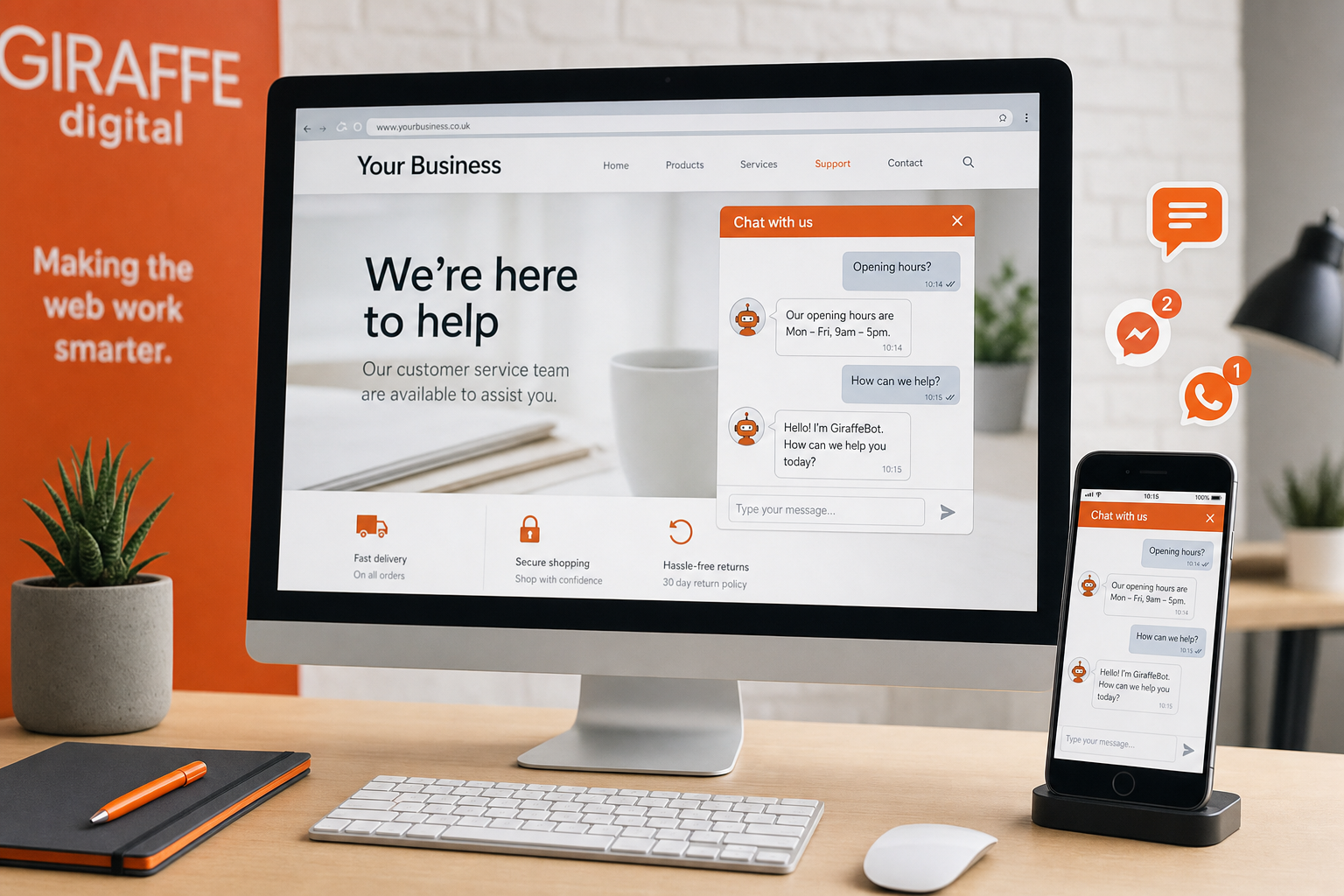
A chatbot is a program that can respond to a user through a messaging-style interface. Some chatbots follow a set of rules and present customers with clear options. Others use natural language processing to interpret what the customer has typed and return a suitable answer. In practical business use, many of the most reliable chatbots are relatively simple: they ask a question, offer a small number of choices and move the customer towards a useful outcome.
This is one reason chatbots are attracting attention in customer service. People are already familiar with messaging. They use text messages, website live chat and social media messages to contact organisations. A chatbot uses a similar format, but automates part of the conversation so that a customer can get a quick response without searching through several pages of a website.
For example, a local retailer might use a chatbot to answer questions such as whether an item is in stock, what time the shop closes, how to return a product or how to book a fitting appointment. A professional services firm might use one to qualify an enquiry before passing it to the right member of staff. A hospitality business might use one to provide directions, explain booking policies or send a menu link.
Why chatbots are becoming relevant for customer service
Customer expectations have changed as more interactions move online. Visitors often expect quick answers, especially when they are using a mobile phone. If they cannot find information easily, they may leave the website, abandon an enquiry or ask a competitor instead. Chatbots can help by making frequently requested information easier to access.
The growth of social messaging is also important. Platforms such as Facebook Messenger are opening up more opportunities for businesses to have structured conversations with customers. For many organisations, this means customer service is no longer limited to telephone calls and email. A customer might discover a business on Facebook, ask a question through Messenger, visit the website and then complete an enquiry form. A chatbot can help support that journey by offering consistent answers at the right moment.
There is also an efficiency benefit. Many businesses receive the same questions every week. Staff spend time replying to enquiries about opening times, delivery, appointments, returns, booking requirements or service areas. If those questions can be answered instantly by a chatbot, staff can spend more time on enquiries that genuinely require human judgement.
Where chatbots can add value on a business website
The most effective chatbot is usually placed where a customer is likely to need assistance. On a website, this might be a contact page, product page, service page, booking page or support section. The chatbot should not interrupt the visitor unnecessarily. It should offer help clearly and politely, then allow the user to continue browsing if they do not need assistance.
For website design, this means the chatbot needs to be considered as part of the wider user experience. It should not be a decorative add-on or a novelty. The design should make it clear what the chatbot can do and when a human response is available. If the bot can only answer a limited range of questions, it is better to say so than to pretend it can handle everything.
Useful website chatbot functions include:
- Answering frequently asked questions about services, products or opening hours.
- Helping visitors choose the right page or service category.
- Collecting basic enquiry information before a member of staff follows up.
- Directing support questions to the correct email address or telephone number.
- Providing delivery, returns or booking information in a quick, conversational format.
- Offering links to key pages such as contact details, testimonials, location information or product guides.
A chatbot should support the structure of the website, not hide poor navigation. If visitors are repeatedly asking the same basic questions, that may also be a sign that the website content needs improving. In that sense, chatbot conversations can reveal useful insight into what customers are trying to find.
Chatbots and social media marketing
Social media marketing is often focused on awareness, engagement and customer relationships. Chatbots can support these aims by helping a business respond more consistently to messages generated from social posts, campaigns or adverts. If a customer sees a post and asks a question, a chatbot can provide an immediate first response rather than leaving the message unanswered until the next working day.
This is particularly useful for businesses that receive seasonal peaks in enquiries. A retailer promoting a sale, a venue advertising an event or a service business running a local campaign may suddenly receive more questions than usual. A chatbot can help manage simple responses while staff concentrate on sales, fulfilment or more detailed enquiries.
However, automation must be handled carefully. Social media users expect a human tone, and they can quickly become frustrated if a bot gives irrelevant or repetitive answers. The language should be friendly, brief and clear. It should also provide an easy route to a human member of staff when the issue is sensitive, urgent or unusual.
Businesses should also keep their brand voice consistent. If your website, social media posts and printed materials all sound professional and reassuring, the chatbot should not suddenly become overly informal. Equally, a youth-focused brand may choose a lighter tone, provided the information remains accurate and helpful.
Planning a useful chatbot before building one
Before investing time in a chatbot, decide what it is meant to achieve. A common mistake is to start with the technology rather than the customer need. The best starting point is to list the questions your business receives most often. Speak to the people who answer the telephone, reply to emails and manage social media messages. They will usually know which enquiries could be handled more efficiently.
Once you have a list of common questions, group them into themes. These might include bookings, availability, delivery, returns, locations, service areas, product information or aftercare. Then decide which answers can be safely automated and which should always go to a person.
A sensible planning process might include:
- Identify the most frequent customer questions.
- Choose one or two clear tasks for the chatbot to handle first.
- Write concise answers in plain English.
- Create a simple conversation flow with limited choices.
- Decide when the chatbot should hand over to a human.
- Test the chatbot with staff before making it public.
- Review conversations regularly and improve the responses.
It is better to launch a small, useful chatbot than a large, confusing one. Customers will forgive limited features if the bot is honest and helpful. They are less likely to forgive a bot that traps them in a circular conversation or gives the wrong answer.
Search marketing and content considerations
Chatbots can support digital marketing, but they are not a replacement for strong website content or search engine optimisation. Search engines still need clear, indexable pages that explain what your business offers, where you operate and why customers should choose you. Important information should remain available on normal website pages, not only inside a chatbot conversation.
For SEO, a chatbot can help indirectly by improving the user experience. If visitors can find answers quickly, they may be more likely to stay on the website, make an enquiry or return later. It can also reveal gaps in your content. If customers keep asking whether you serve a particular town, offer a certain service or provide a specific guarantee, that information may deserve its own place on the website.
When writing chatbot responses, use the same clear terminology that customers use when searching. Avoid internal jargon. If customers ask about wedding flowers, say wedding flowers rather than using a technical category name. If they ask about emergency plumbing, make sure the answer uses language they recognise. This helps keep the entire customer journey consistent, from search result to website visit to enquiry.
Branding, trust and data protection
A chatbot represents your business, so it should be designed with the same care as your website and brand identity. The greeting, colours, icon, wording and behaviour all contribute to the customer’s impression. A rushed or confusing bot can make a business look less professional, while a clear and helpful one can reinforce trust.
Trust is particularly important when collecting customer details. If the chatbot asks for a name, email address, telephone number or order reference, explain why that information is needed. Keep the request proportionate. Do not ask for sensitive information unless it is genuinely required and appropriate for the service being provided.
UK businesses should also consider their responsibilities under data protection law. Customer information collected through a chatbot should be handled securely and used only for appropriate purposes. Staff should know where enquiries are stored, who can access them and how follow-up communication will be managed. A chatbot should make customer service easier without creating unnecessary risk.
Domain names, websites and a joined-up digital presence
If a chatbot is part of a wider digital strategy, it should sit within a professional online presence. Your domain name, website design, content, social channels and customer service processes should all feel connected. A customer who moves from a social media message to your website should immediately recognise that they are dealing with the same business.
When choosing a domain name, keep it clear, memorable and easy to spell. For many UK businesses, a name that reflects the brand and is suitable for British customers will be more useful than something overly clever or difficult to pronounce. Avoid unnecessary hyphens, confusing abbreviations and spellings that are easy to mistype. If your business operates locally, consider whether your brand name and website content make your location clear without making the domain itself too restrictive for future growth.
It is also sensible to register a domain that you can use consistently across your website, email addresses and marketing materials. A professional email address using your own domain will usually create more trust than a generic email account. This matters when chatbot enquiries are passed to a human member of staff, as the follow-up should feel credible and connected to the original interaction.
Common chatbot mistakes to avoid
As with any digital tool, a chatbot needs careful implementation. A poor chatbot can damage the customer experience more than having no chatbot at all. The aim should be to make service easier, not to put a barrier between the customer and the business.
Common mistakes include trying to automate too much at once, using vague answers, failing to offer a human contact option, launching without testing and neglecting to update the responses. Businesses should also avoid making the chatbot too intrusive. A window that repeatedly pops up or covers important content can frustrate users, particularly on mobile screens.
Another mistake is treating the chatbot as separate from the rest of the marketing strategy. If a campaign promotes a particular product, event or service, the chatbot should be prepared to answer likely questions about it. If the website has recently changed, the chatbot should be updated so that its links and advice remain accurate.
How to decide whether your business is ready
A chatbot may be worth exploring if your business receives regular online enquiries, has a clear set of frequently asked questions or wants to improve response times outside normal office hours. It may also be useful if you are investing in website design, social media marketing or a broader digital strategy and want customer service to feel more immediate.
It may not be the right first priority if your website is outdated, difficult to use or lacking essential information. In that case, improving the website structure, page content, contact details and mobile experience may deliver more value before adding automation. A chatbot works best when it is built on top of a strong digital foundation.
For many businesses, the best approach is to start modestly. Choose a small number of customer service tasks, write helpful responses, test them properly and measure the quality of enquiries that come through. Over time, the chatbot can be refined as you learn more about customer behaviour.
A successful chatbot is not the one that sounds the most advanced. It is the one that helps customers get a useful answer quickly and gives staff better information to work with.
Final thoughts
Chatbots are still at an early stage, but they are already showing practical value for customer service. Used carefully, they can help UK businesses respond faster, guide website visitors, support social media enquiries and reduce the time spent answering repetitive questions. The key is to plan around real customer needs rather than novelty.
For business owners considering website design, SEO, branding or digital strategy, chatbots should be viewed as one part of the wider customer journey. They work best when the website is clear, the content is useful, the brand voice is consistent and there is a reliable process for human follow-up. With sensible planning, chatbots can become a helpful addition to the way businesses communicate online.