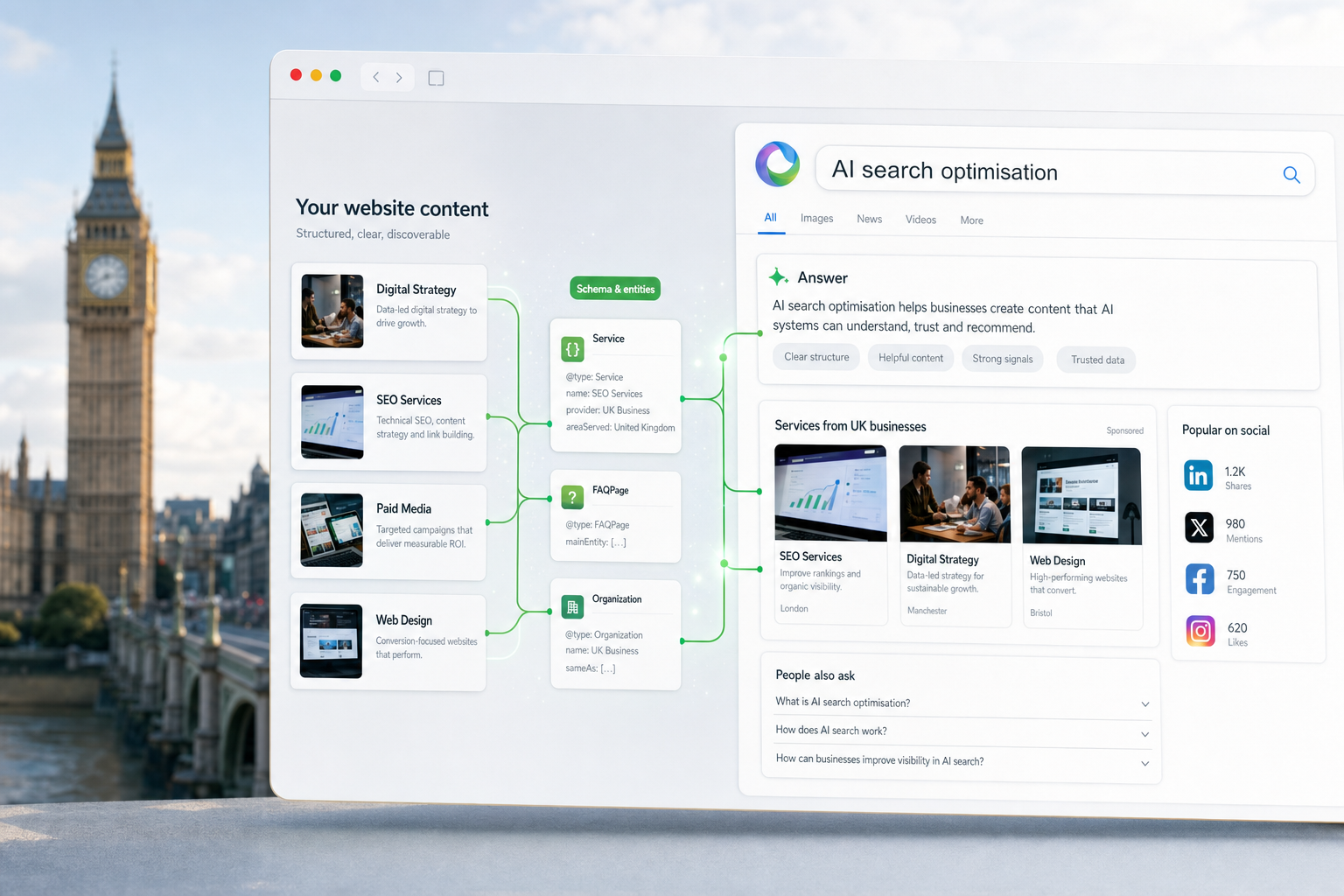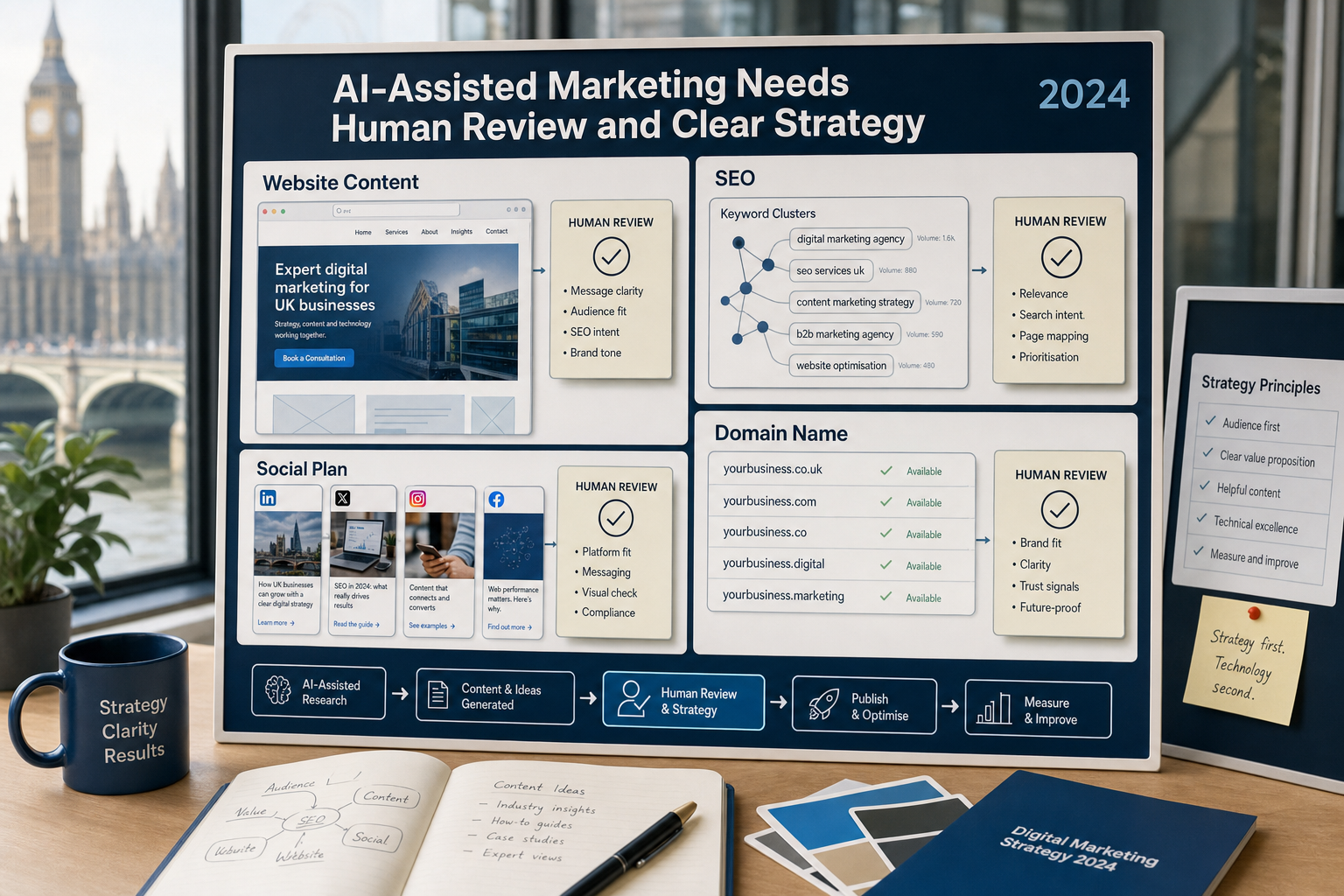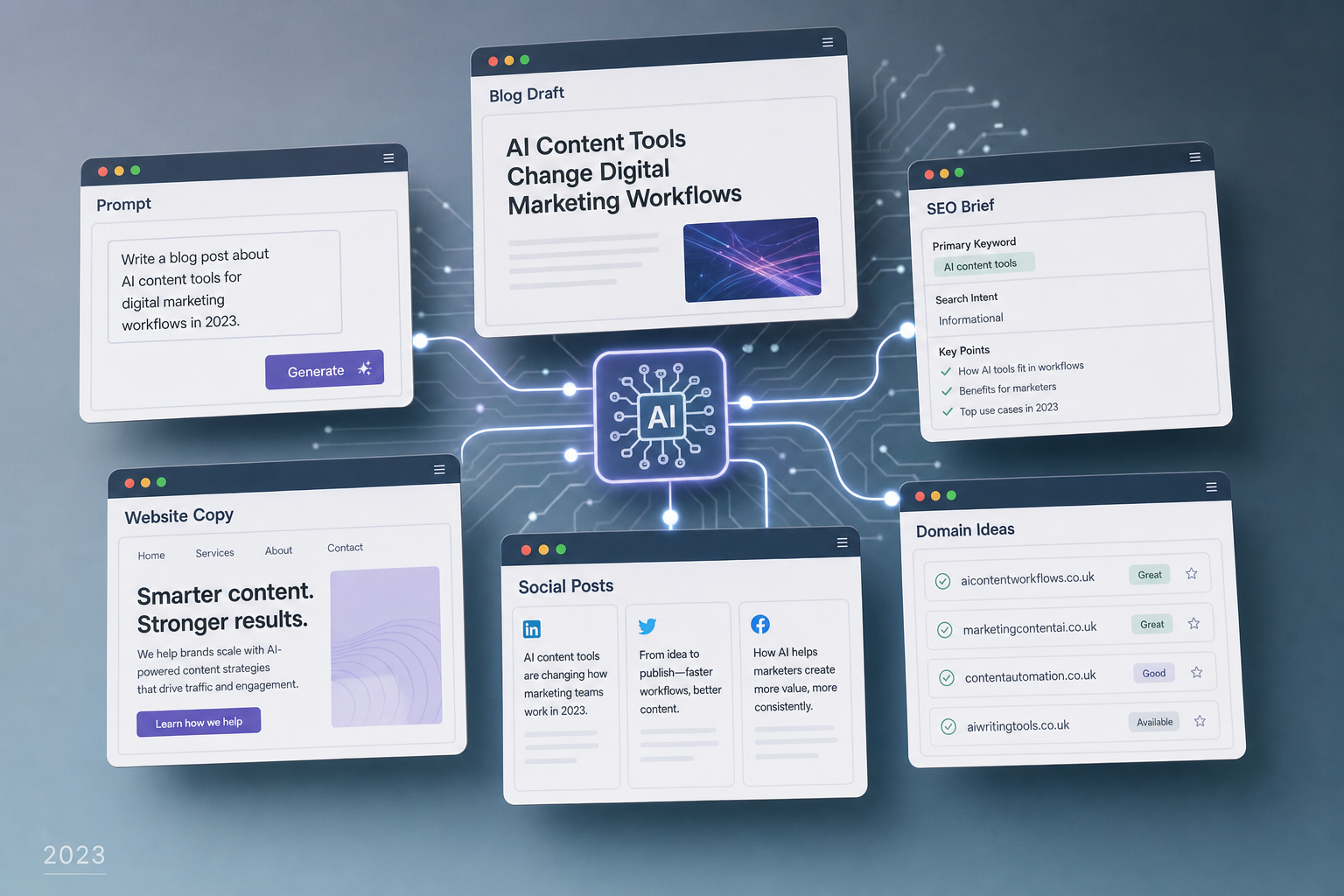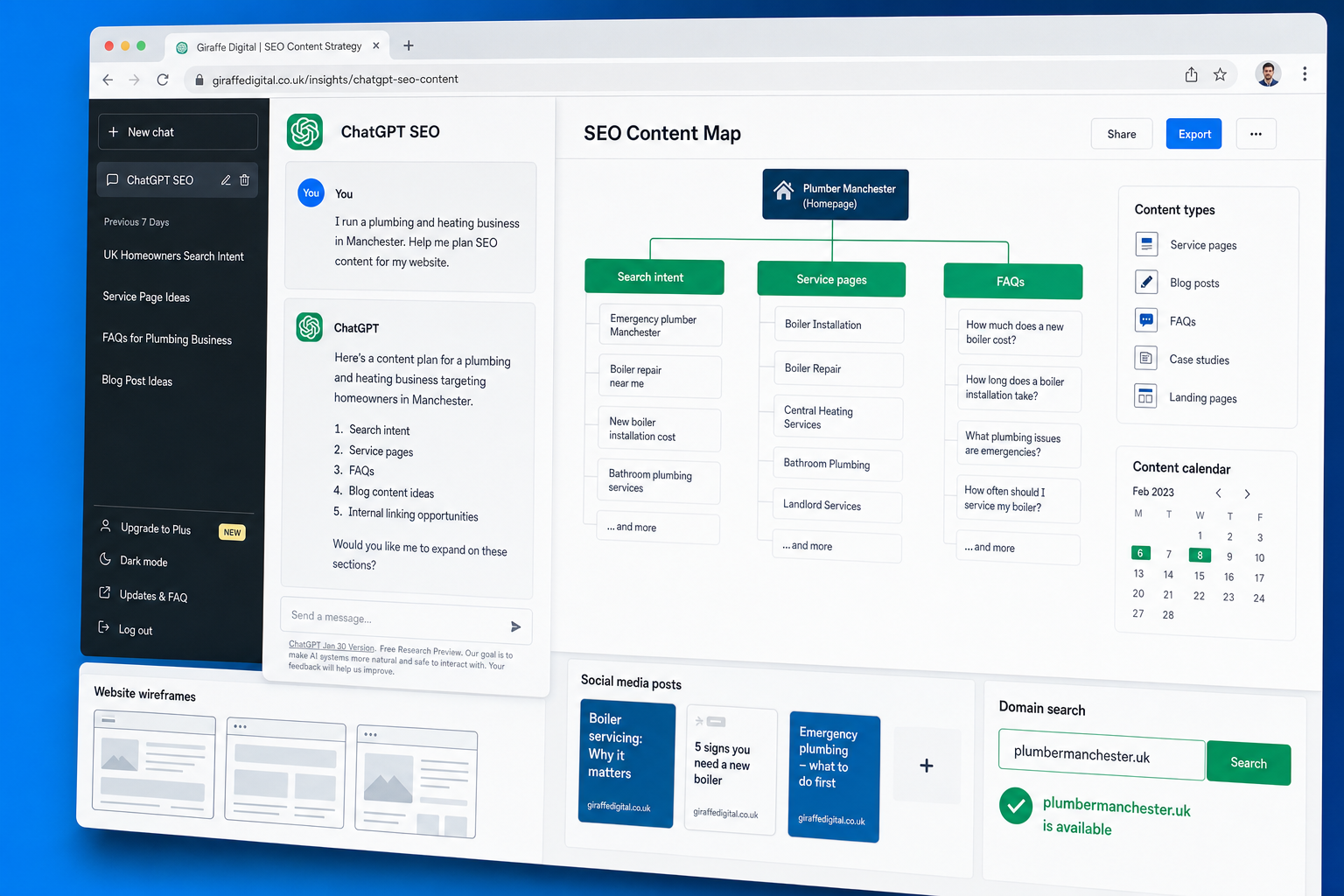
ChatGPT has quickly become one of the most discussed tools in digital marketing, and for good reason. It can draft ideas, summarise information, suggest headings, rework copy and help businesses think more clearly about the questions their customers are asking. For UK business owners, the opportunity is exciting, but it also raises important questions about SEO content, quality, trust and the long-term value of a website.
ChatGPT SEO is not simply a matter of asking an AI tool to write a blog post and publishing the result. Search engines still need to understand your website, customers still need to trust your business, and your content still needs to be accurate, useful and distinctive. Used well, ChatGPT can support a stronger content process. Used carelessly, it can lead to generic pages, factual errors and copy that fails to reflect your brand.
What ChatGPT Means for SEO Content in 2023
ChatGPT is a large language model that produces text in response to prompts. It does not think like a search strategist, know your business in depth or automatically understand your customers. It predicts likely words and phrases based on patterns in data. That means it can be extremely useful for generating structures, angles and first drafts, but it should not be treated as a complete SEO solution.
For SEO, the most immediate impact is speed. Tasks that once took a content team a long time at the planning stage can now be accelerated. A business might use ChatGPT to outline a service page, create a list of frequently asked questions, compare different headline options or turn a technical explanation into clearer customer-facing language.
However, speed is only useful if it improves the finished work. Search visibility depends on relevance, clarity, authority and user satisfaction. If every business in a sector asks similar prompts and publishes similar content, the web will quickly fill with pages that sound polished but say very little. That is not a strong basis for ranking, conversion or brand trust.
The better approach is to use ChatGPT as an assistant within a considered SEO workflow. It can help you move faster, but your strategy should still be guided by search intent, keyword research, customer insight, technical SEO, website design and a clear understanding of what makes your business credible.
How UK Businesses Can Use ChatGPT SEO Sensibly
For many organisations, the best use of ChatGPT is not to replace writers or marketers, but to reduce blank-page time. It can help turn knowledge already inside the business into structured content. A solicitor, manufacturer, dental practice, charity, retailer or professional services firm may all have valuable expertise, but that expertise is often scattered across emails, sales conversations, brochures and internal documents.
ChatGPT can help organise that knowledge. For example, you could ask it to suggest a blog structure for common customer questions, create plain-English explanations of technical services, or propose comparison tables showing the difference between service options. The output should then be checked, refined and edited by someone who understands the business and the audience.
Useful ChatGPT SEO tasks include:
- Topic planning: generating content ideas around customer problems, seasonal demand or service categories.
- Search intent mapping: exploring whether a keyword suggests an informational, commercial or local enquiry.
- Drafting page outlines: creating logical heading structures for blogs, landing pages and guides.
- Reworking existing copy: making dense or outdated website text clearer and more customer friendly.
- Creating FAQs: suggesting questions that can be answered by your team and refined for accuracy.
- Repurposing content: turning a blog post into social media captions, email snippets or video talking points.
The key is to add your own evidence, experience and examples. A generic AI answer may say that a website should be fast, mobile friendly and well structured. A stronger piece of content explains what that means for a specific UK business, such as reducing friction in a booking journey, making local service areas clear, improving accessibility or helping visitors compare options before they enquire.
Quality, Expertise and Trust Still Matter
Search engines have spent years improving their ability to identify content that is genuinely useful. The arrival of AI-generated copy does not remove that requirement. If anything, it makes human judgement more important. Businesses should be especially careful in sectors where advice can affect someone’s finances, health, safety or legal position.
Before publishing AI-assisted content, ask whether it is accurate, original and genuinely helpful. Has it been reviewed by someone with subject knowledge? Does it reflect your services as they are actually delivered? Are claims supported? Does it answer the question better than existing pages on the web, or does it merely repeat broad statements?
ChatGPT may also produce confident but inaccurate information. This is one of the biggest risks for business content. It can misunderstand a regulation, invent a statistic, misstate a platform feature or suggest a marketing tactic that is not suitable for your audience. Every factual statement should be checked before it reaches your website.
Brand voice matters too. Many AI drafts sound balanced and professional, but they can also feel vague. Strong content should sound like it belongs to your organisation. It should reflect your positioning, your customer service style, your sector knowledge and the language your customers use when they speak to you.
ChatGPT can help produce words, but SEO success still depends on usefulness, relevance, accuracy and trust.
ChatGPT and Website Design Work Best Together
SEO content does not sit in isolation. It works best when it is supported by clear website design, sensible navigation and a well-planned user journey. A page that has been carefully written but buried in a confusing website will not deliver the same value as content placed within a thoughtful structure.
ChatGPT can help at the planning stage by suggesting page hierarchies, service categories and content themes. For example, a trades business might use it to group services into main categories, supporting pages and local landing pages. A professional services firm might use it to identify which client questions belong on a main service page and which deserve their own guide.
Design decisions should still be made with real users in mind. A strong SEO landing page needs a clear heading, concise introductory copy, supporting details, trust signals, relevant calls to action and easy routes to the next step. For local businesses, it should also make the service area and enquiry options obvious.
Website performance remains important. Pages should load quickly, display well on mobile devices and be easy to navigate. ChatGPT cannot fix poor hosting, bloated code, unclear menus or weak conversion paths. It can support the content layer, but technical SEO, development standards and design quality remain essential.
Examples of ChatGPT SEO Prompts
The quality of the output depends heavily on the quality of the prompt. A vague prompt such as “ write a blog about SEO” will usually produce a vague answer. A better prompt gives context, audience, tone, structure and purpose.
For example, a UK business might use prompts such as:
- “ Create a blog outline for a UK small business audience explaining how to choose a website design agency. Include sections on goals, portfolio review, SEO, content and ongoing support.”
- “ Suggest ten customer questions about commercial cleaning services that could be answered on an FAQ page. Focus on practical buying concerns rather than generic definitions.”
- “ Rewrite this service page introduction in clear British English for business owners. Keep it professional, avoid exaggeration and include a stronger call to action.”
- “ Group these keywords by search intent and suggest which ones should be blog topics, service pages or supporting FAQs.”
These prompts do not ask ChatGPT to make strategic decisions on its own. Instead, they use the tool to organise thinking. A marketer, designer or business owner can then review the suggestions, remove weak ideas and develop the strongest ones into high-quality content.
Using ChatGPT for Social Media Marketing
ChatGPT can also support social media marketing, particularly when a business wants to make more use of existing website content. A well-researched blog post can become several social captions, a short email introduction, a discussion prompt or a script for a short video.
This is useful because many businesses publish a helpful article and then fail to promote it properly. ChatGPT can suggest different ways to frame the same topic for different platforms. A LinkedIn post might focus on business value and decision-making, while an Instagram caption might use a more concise, visual angle. The core message should remain consistent, but the presentation can be adapted.
As with SEO content, social posts should not feel automated or detached from the brand. Edit AI-generated captions so they sound natural, include real observations and avoid empty phrases. If you are discussing customer pain points, make sure the wording reflects what customers actually say, not just what a generic marketing tool predicts.
Domain Names, Branding and AI-Assisted Ideas
Businesses at the start of a website project may be tempted to use ChatGPT to generate domain name ideas. This can be helpful for brainstorming, especially when exploring brand names, service descriptors or memorable phrases. However, choosing a domain name should involve more than a list of suggestions.
A good domain should be easy to spell, easy to say, appropriate for the brand and suitable for long-term use. If your organisation serves a UK audience, consider whether a UK-focused domain extension makes sense, but also think about future growth. Avoid names that are too close to competitors, difficult to remember or likely to be misunderstood when spoken aloud.
Before committing to a domain, check availability through an accredited registration provider, review possible trade mark issues and make sure the name works across email addresses and social media handles. Do not choose a domain purely because an AI tool suggested it. The final decision should support your brand strategy, not just your keyword ambitions.
It is also worth being cautious with exact-match domains. A keyword-rich domain may look attractive, but it is not a substitute for a trustworthy brand, strong content and a well-built website. For most businesses, a clear and credible brand name will be more valuable than a domain chosen only to chase search traffic.
Where ChatGPT Fits in a Wider Digital Strategy
ChatGPT SEO should be seen as part of a wider digital marketing programme. Content is only one element. To generate business value, it needs to work alongside design, analytics, conversion rate optimisation, technical SEO, paid media where appropriate, email marketing and social media activity.
For example, ChatGPT might help outline a guide for people comparing website design options. That guide still needs keyword research, expert review, internal links, page design, metadata, image planning and a clear next step for readers. Once published, it may need to be shared on social channels, included in email campaigns and monitored in analytics to see whether it attracts relevant visitors.
AI can also help identify gaps in your content. If your website explains what you do but not who it is for, how the process works or what customers should consider before enquiring, those gaps can limit conversions. ChatGPT can prompt useful questions, but your team should decide which answers are strategically important.
A Responsible Approach to ChatGPT SEO
The businesses that benefit most from ChatGPT are likely to be those that use it with discipline. That means setting clear standards for accuracy, tone, originality and review. It also means deciding which tasks are suitable for AI assistance and which require direct human expertise from the start.
A structured workflow might look like this:
- Research the topic: confirm the keyword, audience, search intent and business objective.
- Create an outline: use ChatGPT to explore structure and questions, then refine the plan manually.
- Add expertise: include your own knowledge, examples, process details and sector insight.
- Draft and edit: use AI where helpful, but rewrite for clarity, accuracy and brand voice.
- Optimise the page: review headings, metadata, internal links, calls to action and readability.
- Check before publishing: verify facts, remove generic filler and ensure the content genuinely helps the reader.
This approach keeps the benefits of AI without handing over responsibility for your reputation. It also creates content that is more likely to support both search visibility and customer confidence.
Final Thoughts
ChatGPT is a significant development for content marketing, but it is not a shortcut to effortless SEO success. It can make planning faster, help organise ideas and support more consistent publishing. It can also create risks if businesses publish unreviewed, generic or inaccurate copy.
For UK business owners, the best way forward is to treat ChatGPT as a useful tool within a professional digital strategy. Combine it with strong website design, careful SEO research, clear branding, social media promotion and human expertise. ChatGPT SEO is most valuable when it helps your business communicate better, not merely publish more.