When a business needs to move online quickly, the domain name is one of the first decisions that can shape everything that follows. It affects how customers find you, how professional your emails look, how memorable your brand feels and how easily your website can grow. For UK business owners responding to changing trading conditions, business domain registration is not just a technical task. It is a practical step towards protecting your brand, reaching customers and building trust online.
A strong domain does not need to be clever or complicated. It needs to be clear, easy to type, easy to say aloud and suitable for the way your business plans to operate. Whether you are adding online orders, taking enquiries through a new website, offering consultations remotely or making sure customers can still find accurate information, your domain name gives that activity a stable home.
Why your domain name matters when moving online
Your domain name is often the first branded asset a customer sees in search results, email addresses, social media profiles, printed materials and adverts. If it looks clear and credible, customers are more likely to feel confident clicking through. If it is confusing, overly long or inconsistent with your business name, it can create doubt at exactly the wrong moment.
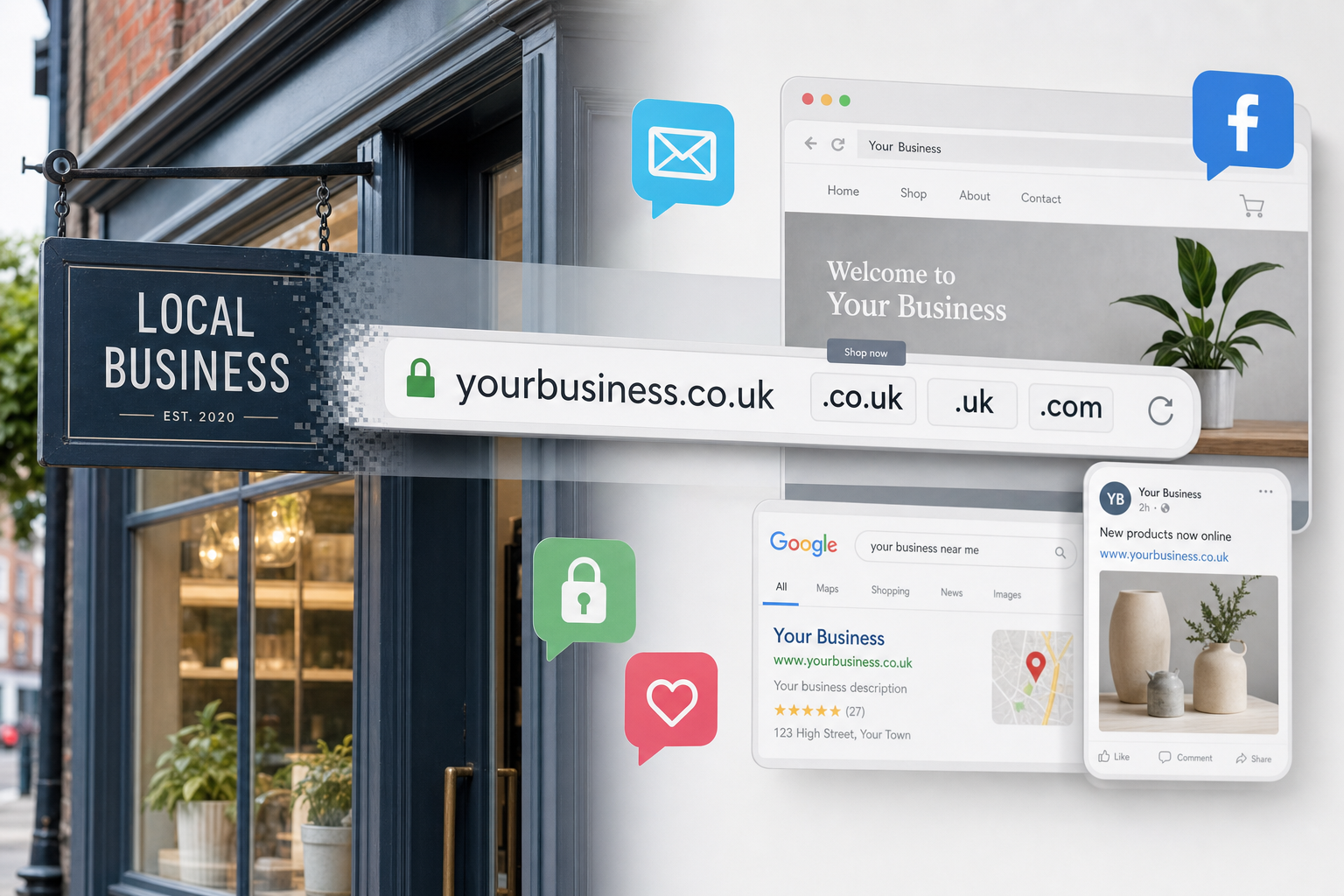
For businesses that have traditionally relied on premises, recommendations or local footfall, a domain also helps make the move online feel official. A dedicated website gives you somewhere to explain what has changed, publish opening arrangements, promote services, collect enquiries and direct people from social media. It is far more flexible than relying only on a social profile, because you control the structure, content and messaging.
Your domain also supports professional email. An address that uses your own domain generally looks more trustworthy than a generic email account, especially when customers are placing orders, requesting quotes or sharing personal details. Even if your first website is simple, a branded email address can immediately improve how your business is presented.
Choosing a domain name that is practical and memorable
The best domain names are usually straightforward. Start with your business name if it is available. If it is not, consider a sensible variation that reflects your location, service or trading style without becoming too wordy. A plumber in Bristol, for example, may find that a short name combining the brand and location is easier to remember than a long phrase filled with keywords.
Try saying the domain out loud. If you need to spell it repeatedly, explain unusual punctuation or clarify confusing words, it may cause friction. Customers may hear the name over the phone, see it on signage, receive it in an email signature or type it after seeing a social media post. The fewer obstacles you create, the better.
Avoid unnecessary hyphens and numbers where possible. They can be misheard, forgotten or entered incorrectly. There are exceptions, particularly if they are part of an established brand, but for most businesses a clean, word-based domain is more reliable. Also consider whether the name could be misunderstood when written without spaces. A domain may look fine in your head but read differently when placed in a browser bar.
Understanding domain extensions for UK businesses
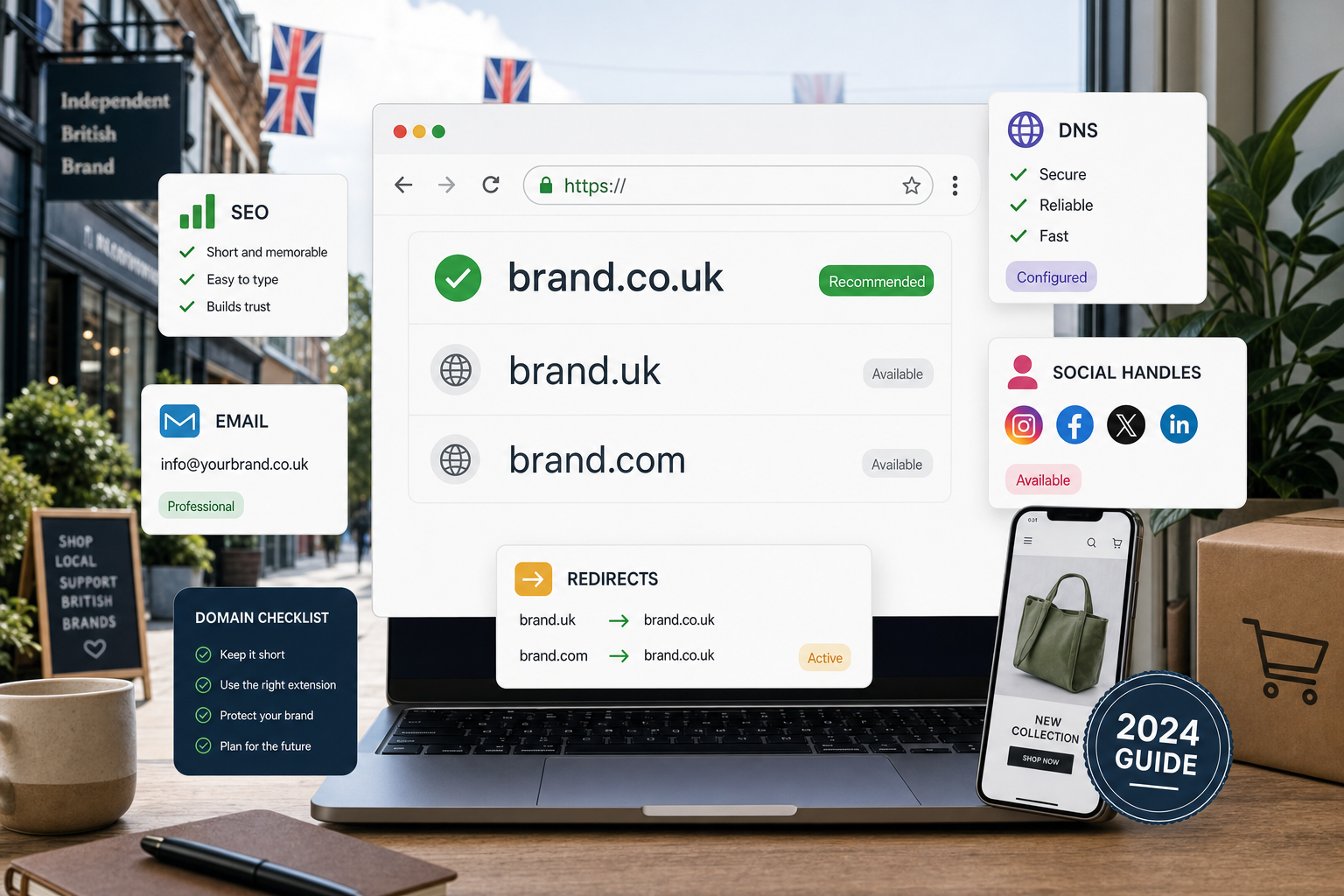
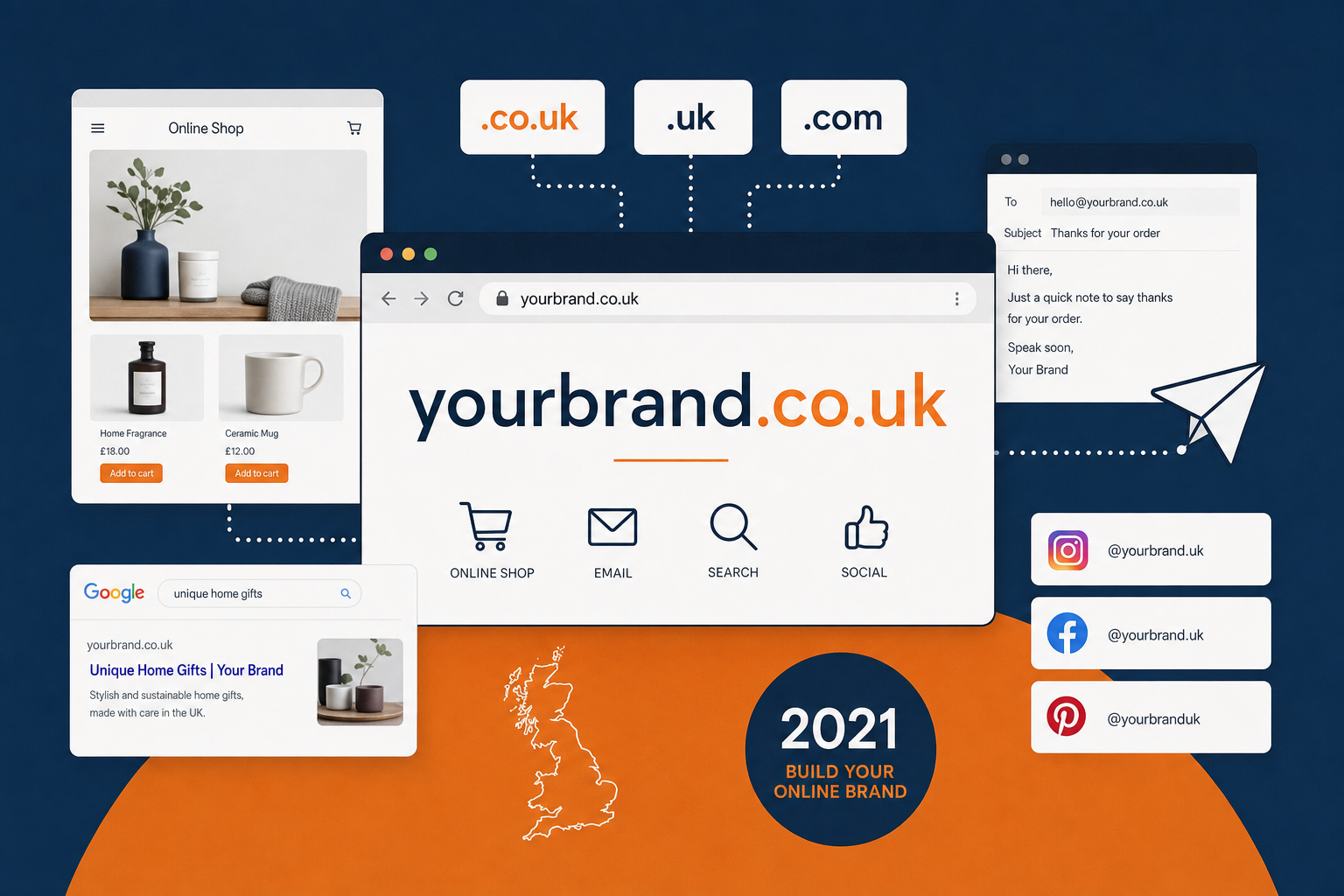
The extension is the part at the end of the domain, such as .co.uk, .uk or .com. For many UK businesses, a UK-focused extension can be a sensible choice because it reinforces local relevance and familiarity. A .com domain can also be useful, particularly for companies that trade internationally or want a widely recognised option.
If your ideal domain is available in more than one suitable extension, it can be worth registering the key versions to protect the brand. That does not mean you need to build several websites. In many cases, one domain becomes the main website address and the others simply redirect to it. This helps reduce customer confusion and prevents others from registering a similar name that may be mistaken for your business.
Be careful with unusual extensions if your audience is broad or less technical. Some modern-looking endings can be effective for certain sectors, but they may also be harder for customers to remember. When speed and clarity are priorities, familiar options tend to perform better.
Checking availability without rushing the decision
Business domain registration often feels urgent, especially when a website is needed quickly. Even so, it is worth taking a little time to check the name properly before committing to it. Look for obvious conflicts with existing businesses, similar names in your sector and any wording that could cause confusion. A domain may be technically available but still be a poor choice if it is too close to another organisation.
Search for the name as a customer would. Look at the results page, map listings and social media references. If the search results are dominated by another business with a very similar name, you may find it harder to build visibility. A distinctive domain can make SEO, brand recall and word-of-mouth recommendations much easier.
It is also sensible to check matching social media handles where possible. Your domain and social profiles do not have to be identical, but they should feel connected. If your website uses one brand format and your social channels use another, customers may wonder whether they have found the right organisation.
How your domain supports search marketing
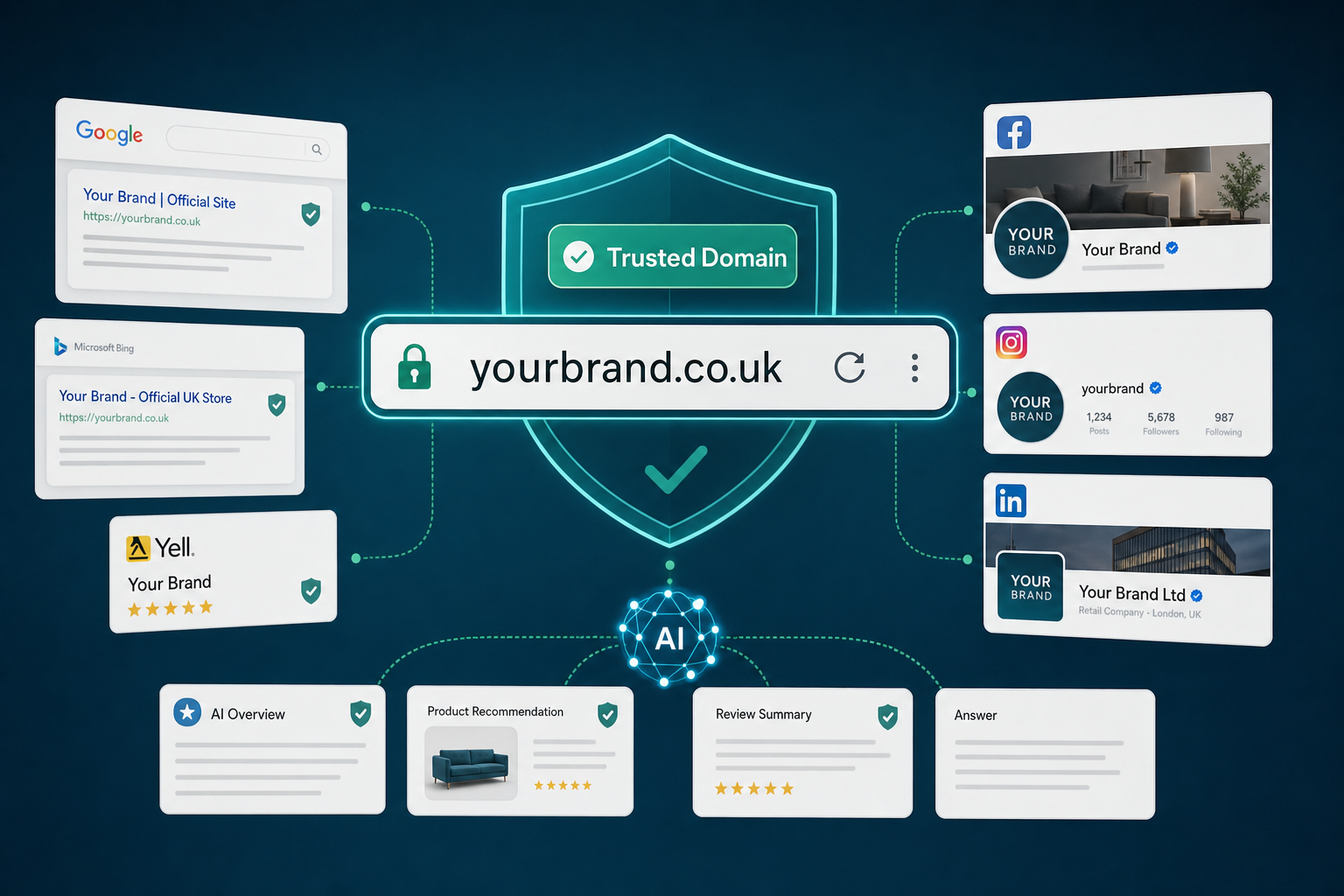
A good domain name can support search marketing, but it is not a shortcut to rankings. Search engines look at many signals, including the quality of your content, the relevance of your pages, the technical condition of your website, user experience and links from other trusted websites. A clear domain helps users recognise your business, but the website still needs useful content.
For local businesses, the domain should work alongside accurate page content. If you serve a specific town, city or region, explain that naturally on the website. Add service pages, location information, opening arrangements, delivery details and clear contact options. This gives search engines and customers a better understanding of what you do and where you operate.
Avoid registering a keyword-stuffed domain simply because it appears to match a popular search phrase. Long combinations of service, area and keyword can look unprofessional and are often difficult to remember. A brandable, credible name supported by well-structured content is usually a stronger long-term approach.
Connecting your domain to a useful first website
Once your domain is chosen, the next step is to make it useful. A first website does not need to be large, but it should answer the questions customers are most likely to ask. What do you offer? Who do you help? Where do you operate? How can people buy, book, enquire or get support? What has changed about your service?
For a quick move online, a practical starting structure might include a homepage, an about page, a services or products page, a contact page and a page explaining current availability, delivery, collection or remote support. If you take enquiries, keep forms short and make phone and email details easy to find. If you sell products, ensure the route to purchase is simple and clearly explained.
Website design should reflect the trust customers already have in your business. Use consistent colours, readable typography, good photographs where available and plain language. Avoid clutter. Many customers will visit from a mobile phone, so responsive design is essential. Pages should load quickly, buttons should be easy to tap and important information should not be hidden behind complicated menus.
Protecting trust with security and clear ownership
Your domain and website should be set up in a way that protects the business. Make sure the domain is registered using accurate ownership details and that someone responsible within the organisation knows how it is managed. Losing access to a domain can cause serious disruption, particularly once email, search visibility and advertising are connected to it.
Security also matters. A website should use HTTPS so visitors see the secure padlock in their browser. This is particularly important if customers are completing forms, logging in or making payments, but it is now expected for general business websites as well. Security certificates, reliable hosting, regular updates and sensible password management all contribute to customer confidence.
Keep records of renewal dates, login details and key contacts in a secure place. Domains are easy to overlook once the website is live, but they are business-critical assets. Treat them with the same care as signage, telephone numbers and customer databases.
Using your domain across social media and offline marketing
A domain becomes more valuable when it is used consistently. Add it to your social media profiles, email signatures, printed leaflets, shop windows, packaging, invoices and voicemail messages. If customers already follow you on social channels, use posts to direct them to the website for full details rather than trying to fit every update into a short caption.
Social media is excellent for conversation, visibility and quick announcements, but your website should hold the most complete and reliable information. This is particularly important when opening times, service availability or booking arrangements change. A clear website page gives you one place to update, then social posts can point towards it.
If you are running paid social or search advertising, a relevant domain and well-designed landing page can improve the experience after the click. Make sure the page matches the advert. If an advert promotes online consultations, collection slots or a specific service, the landing page should continue that message and make the next action obvious.
Planning for growth beyond the first launch
Moving online quickly should not mean boxing the business into a short-term solution. Choose a domain that can grow with you. A name based on one emergency service or temporary offer may feel limiting later. If your business could expand into e-commerce, online booking, digital resources or new service areas, choose a domain broad enough to accommodate that growth.
The same applies to website structure. Even if the initial launch is modest, plan content in a way that can be expanded. Service pages can become more detailed. Frequently asked questions can be added. Case studies, blog posts, articles and resources can support SEO over time. Your domain is the permanent address for that growing body of content.
Analytics and search performance tools can also help you understand how people find and use the site. Over time, you can see which pages attract visitors, which search phrases lead to enquiries and where improvements are needed. This allows your digital marketing to become more informed rather than relying on guesswork.
A simple checklist before registering a business domain
- Keep it clear: choose a domain that is easy to spell, say and remember.
- Match the brand: use your business name or a close, sensible variation.
- Think locally: consider whether a UK-focused extension supports customer trust.
- Check for confusion: search for similar names in your sector and area.
- Consider protection: register important alternative extensions where appropriate.
- Plan professional email: use the domain for credible business communication.
- Prepare for SEO: support the domain with useful pages and relevant content.
- Secure access: keep ownership details, renewal information and logins safe.
- Use it everywhere: add the domain to social profiles, print materials and email signatures.
- Allow room to grow: avoid names that limit future services or locations.
Making a confident start online
For many UK businesses, getting online quickly is a practical necessity. The domain name is the foundation for that move. It gives your website a clear address, supports professional email, strengthens brand consistency and provides a platform for search marketing, social media and future digital activity.
The right domain will not do the whole job on its own, but it makes every other part of your online presence easier. Combined with a well-designed website, clear content, secure setup and a focused digital marketing plan, business domain registration becomes a valuable step towards serving customers more effectively online.
If you are choosing a domain for a new website or reviewing whether your current online presence is fit for purpose, take the time to get the basics right. A clear, credible domain can help customers find you, trust you and return to you as your digital presence develops.