Content marketing is moving from a fashionable phrase to a serious business discipline. For UK business owners, it offers a practical way to make a website more useful, improve search visibility, support social media activity and give potential customers a reason to trust an organisation before they make an enquiry. It is not simply about writing more pages or posting more often. Done properly, content marketing connects business goals with the questions, concerns and interests of real customers.
A well-designed website can look professional, load quickly and display the right contact details, but it still needs substance. Visitors want reassurance. They want to know whether a company understands their problem, whether it can explain its services clearly and whether it is active and credible. Search engines also need useful, well-structured information to understand what a website is about. This is where content marketing becomes valuable: it turns a website from a brochure into a working business asset.
What content marketing means for a business website
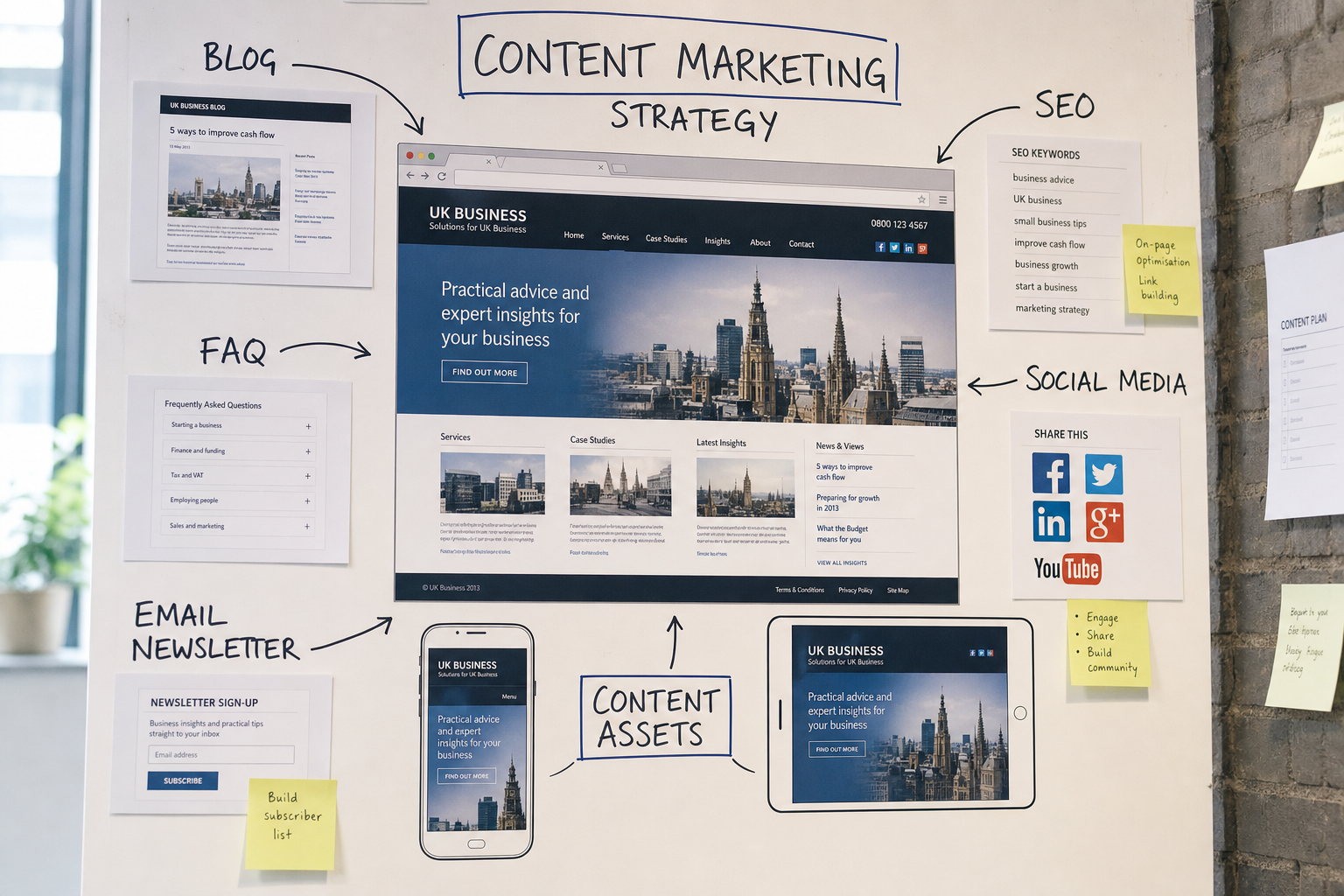
Content marketing is the planning, creation and publication of useful material that helps customers make better decisions. It can include blog articles, buying guides, frequently asked questions, service pages, case studies, newsletters, videos, diagrams, checklists and social media updates. The format matters less than the purpose. The best content answers a genuine question, removes confusion or demonstrates expertise.
For example, a local accountancy firm might publish guidance on choosing bookkeeping software, understanding VAT registration or preparing records for a year-end meeting. A building contractor might explain planning considerations, maintenance tips or what to ask before commissioning an extension. A retailer might produce product comparisons, seasonal advice or care instructions. Each of these pieces helps a customer while also giving search engines more relevant information to index.
This approach is different from traditional advertising. An advert interrupts; useful content attracts. A sales brochure often speaks mainly about the company; content marketing speaks first about the customer's need. That does not mean being timid about selling. It means earning attention before asking for the enquiry.
Why content has become central to search marketing
Search engine optimisation has changed considerably in recent years. It is no longer sensible to rely on repeating keywords, creating thin pages or chasing poor-quality links. Search engines are getting better at identifying websites that provide genuine value, and updates such as Panda and Penguin have made low-quality tactics much riskier. Businesses that invest in original, helpful content are better placed to build sustainable visibility.
The primary keyword still matters. A page about content marketing should use the phrase naturally, particularly in headings, introductory copy and page titles where appropriate. However, it should also include related language that reflects how customers actually search. People may look for online marketing advice, website copywriting, social media strategy, business blogging or SEO content. A good article can cover these ideas naturally without resorting to awkward repetition.
Content also creates opportunities for internal linking. A blog post about choosing the right domain name can link to a website design service page. A guide to social media planning can link to branding or digital strategy support. Internal links help visitors continue their journey and help search engines understand the relationship between pages. The key is to make links useful rather than excessive.
Business owners should also remember that search results increasingly reward freshness and depth where freshness is relevant. A website that has not changed for two years can appear neglected. Regular publishing shows that the organisation is active, knowledgeable and responsive to current customer questions. This does not mean posting daily for the sake of it. A steady programme of well-considered articles will usually do more good than a burst of rushed posts followed by silence.
Content should be planned, not improvised
Many companies begin content marketing enthusiastically and then run out of ideas. The solution is to treat content as a business programme rather than a spare-time activity. Start by identifying the audiences you need to reach. These might include homeowners, facilities managers, finance directors, parents, retailers, tradespeople or professional buyers. Each audience has different priorities and different levels of knowledge.
Next, list the questions customers ask before they buy. Sales staff, reception teams and account managers are often the best sources of ideas. Common questions make strong article topics because they are already proven to matter. If customers regularly ask how long a project takes, what information they need to provide, how to compare options or what happens after purchase, those questions deserve clear answers on the website.
It is also useful to map content to the buying process. Early-stage visitors may need educational pieces, such as introductions, checklists and explanations. Visitors who are comparing suppliers may need service pages, sector experience, process information and evidence of competence. Existing customers may need support articles, maintenance advice or updates. When content covers the full journey, the website supports marketing, sales and customer service at the same time.
Make the website design support the message
Content marketing will not perform well if it is hidden inside a confusing website. Design and content must work together. Clear navigation, readable typography, logical headings and strong calls to action all help visitors move from interest to enquiry. A beautifully written article is wasted if the text is cramped, the page takes too long to load or the next step is unclear.
Mobile browsing is becoming increasingly important, so website owners should consider how content appears on smartphones and tablets as well as desktop computers. Responsive web design is an effective way to present the same content in a layout that adapts to different screen sizes. At a practical level, this means avoiding tiny text, oversized images, awkward menus and forms that are difficult to complete on a smaller screen.
Good page structure is also important. Each page should have a clear purpose. Headings should guide the reader. Paragraphs should be short enough to scan. Important information should not be buried at the bottom of the page. If a visitor arrives from a search result, they should be able to understand quickly where they are, why the page is relevant and what they can do next.
Strong content can also influence the visual direction of a website. A company with substantial guides, resources and advice may need a prominent blog or knowledge centre. A business that depends on trust may need space for staff expertise, process explanations and testimonials. Content should not be squeezed into a design as an afterthought; it should help shape the design from the start.
Use social media to distribute useful ideas
Social media gives content a wider life beyond the website. Facebook Pages, Twitter, LinkedIn, Google+, YouTube and Pinterest can all play a role, depending on the audience and the type of business. The important point is not to be everywhere, but to be present where customers and referrers are likely to pay attention.
A professional services firm may find LinkedIn useful for sharing practical articles and joining sector discussions. A restaurant, retailer or venue may gain more from Facebook updates and visual content. A manufacturer or training provider may use YouTube to explain processes, demonstrate products or answer common questions. Pinterest can be useful for visually led businesses such as interiors, fashion, food, design and events.
Social media should not be treated as a separate activity from content marketing. A useful blog post can be shared several times with different introductions. A frequently asked question can become a short social update. A presentation can become a video, an article or a series of tips. This makes the content work harder and keeps communication consistent.
It is also worth remembering that social media is conversational. Businesses should avoid using these channels only as noticeboards for offers. Responding to questions, acknowledging comments and sharing genuinely useful information are all part of building trust. A modest but consistent presence is usually more credible than occasional bursts of self-promotion.
Domain names, branding and long-term visibility
Domain registration is often one of the first practical steps in building an online presence. A good domain name should be easy to spell, easy to say and closely connected to the business name or proposition. For UK organisations, a .co.uk domain remains a familiar and trusted choice, while a .com may also be worth securing where it is available and relevant. The right decision depends on the market, the brand and future plans.
Business owners should avoid making a domain too long or too clever. Hyphens can make a domain harder to communicate verbally, and unusual spellings can lead to confusion. Exact-match domains that contain only a keyword may seem attractive, but they are not a substitute for a strong brand, a useful website and good content. A memorable brand-led domain can support marketing for years.
Before registering a domain, check that the name does not create confusion with another organisation and that it can be used consistently across web, email and social media profiles. It is also wise to keep ownership details and renewal responsibilities clear within the business. Losing control of a domain can cause serious disruption to email, search traffic and customer confidence.
Measure content against business objectives
Content marketing should be creative, but it should also be measured. The right measures depend on the goal. If the aim is search visibility, track organic visits, landing pages and keyword themes. If the aim is lead generation, track enquiries, telephone calls, contact form submissions and downloads. If the aim is customer support, track whether common questions are being answered more efficiently.
Analytics packages can show which articles bring visitors to the site, how long people stay and whether they continue to other pages. Search query data, where available, can reveal the phrases people use to find the website. Social media statistics can show which updates attract attention, although likes and shares should not be mistaken for business results on their own.
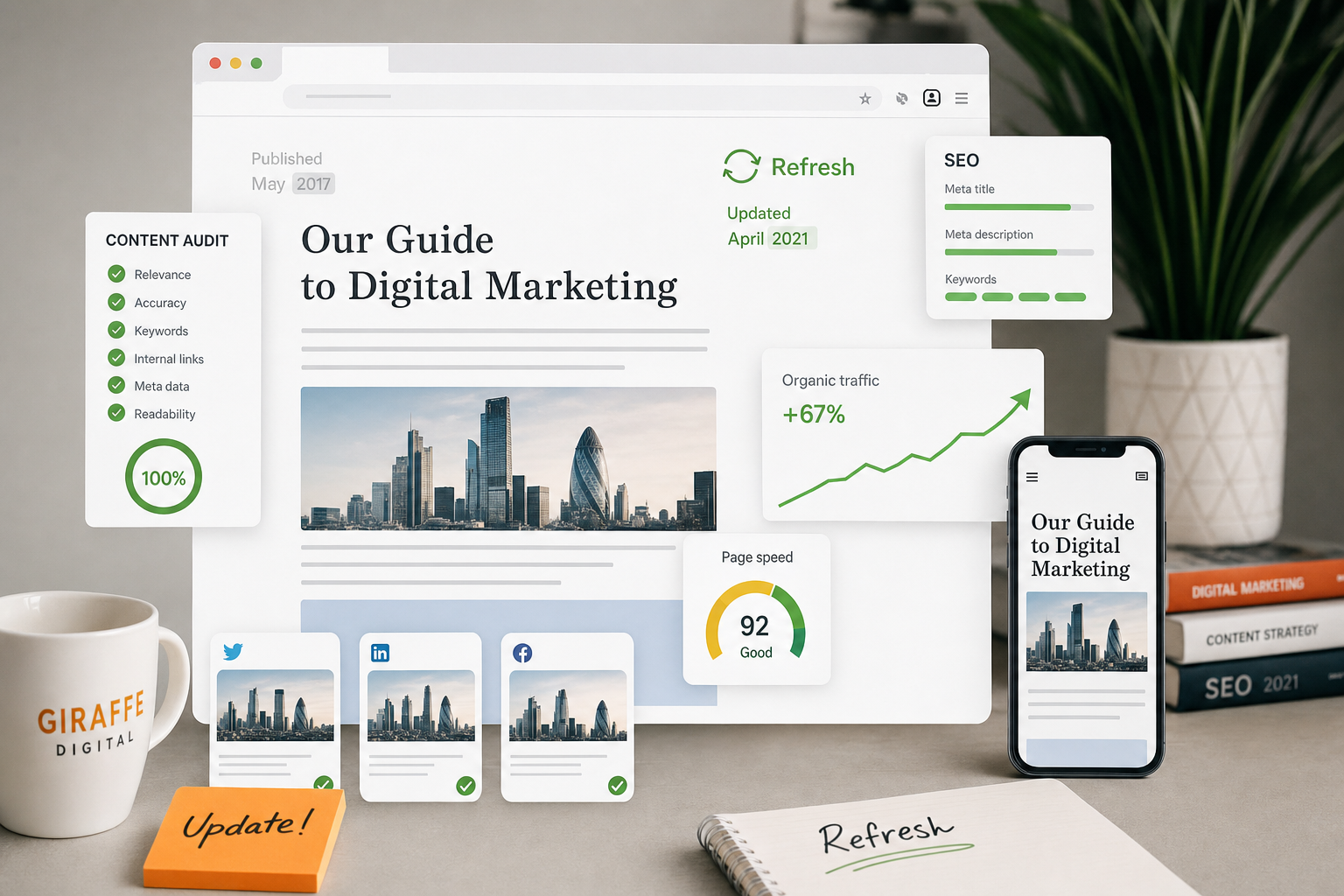
It is sensible to review content regularly. Some articles will remain useful for a long time; others will need updating as services, regulations or customer expectations change. Old content should not be ignored if it continues to attract visitors. Updating a strong article can be more valuable than publishing something entirely new.
How to start without becoming overwhelmed
For many small and medium-sized businesses, the biggest challenge is knowing where to begin. A simple starting point is to create a list of ten customer questions and answer each one properly. These answers can become blog posts, support pages or additions to existing service pages. Once this foundation is in place, the business can plan more substantial guides or campaigns.
A practical content programme might include one detailed article each month, two or three shorter updates, a quarterly email newsletter and regular social media sharing. The exact frequency should reflect available resources and the quality standard the business can maintain. Consistency matters, but quality matters more.
It is also important to decide who is responsible. Subject experts may have the knowledge, but they may need help turning that knowledge into clear web copy. Marketing staff may understand the audience, but they may need input from sales or technical teams. A good content process gathers expertise from across the organisation and presents it in a way that customers can understand.
Content marketing is not a quick trick. It is a long-term approach to building visibility, credibility and trust. For UK businesses investing in website design, SEO, branding or digital strategy, it deserves a place at the centre of the plan. A company that explains clearly, publishes consistently and helps customers make confident decisions is far more likely to stand out online.