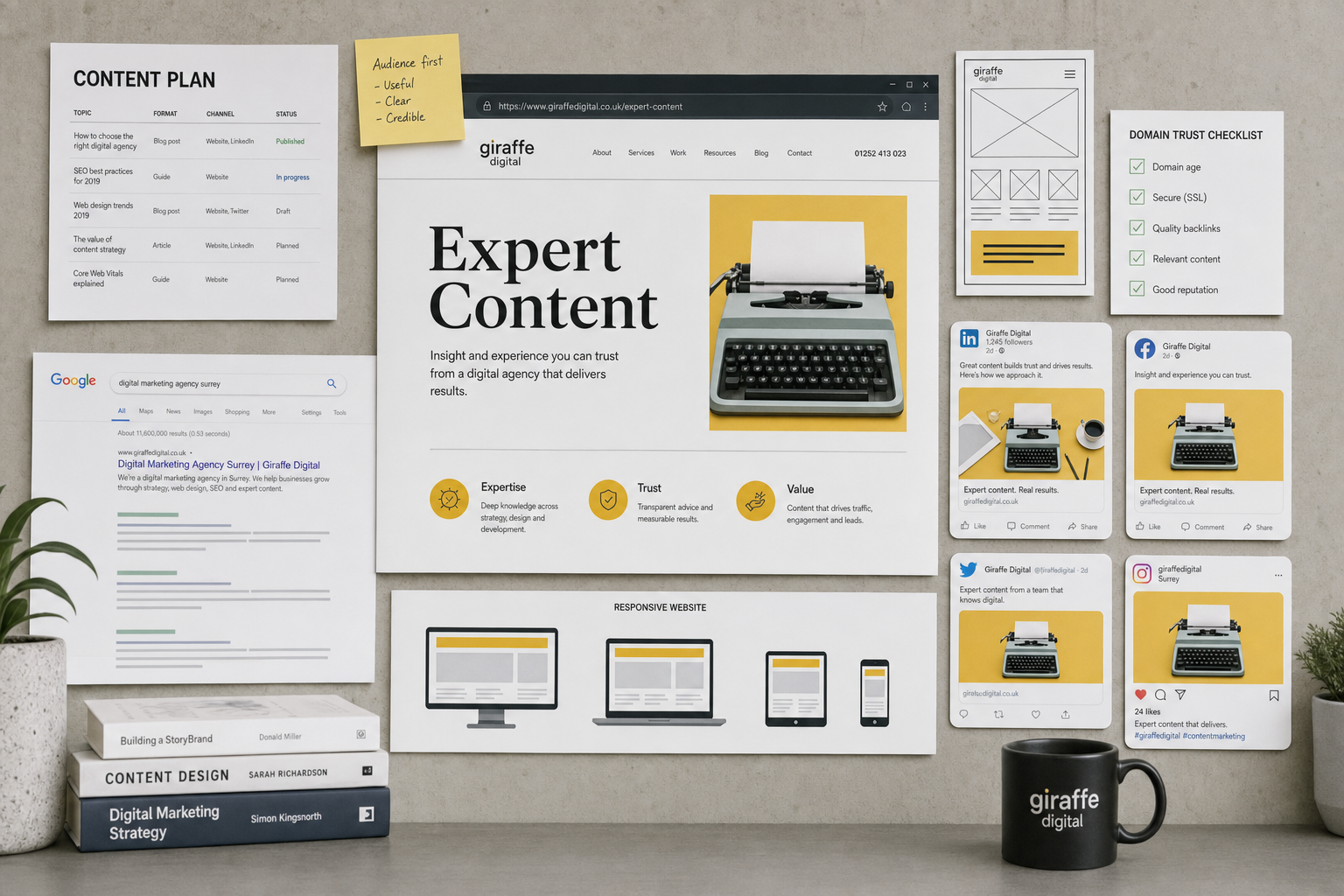
Good content marketing is not simply a matter of publishing more words. For UK businesses that rely on their website, search visibility, social media and reputation to generate enquiries, content has to prove something useful. It should show that the business understands its customers, knows its subject and can be trusted to give sound advice. That is why content marketing needs expertise and trust. Expert content turns a website from a brochure into a practical resource, helping potential customers make decisions with greater confidence.
Why expertise and trust matter online
When someone searches for a product, service or local supplier, they are usually trying to solve a problem. They may be comparing options, checking whether a business is credible, or looking for evidence that a company can deliver what it promises. A well-designed website can create a strong first impression, but content is often what confirms whether the business is knowledgeable and reliable.
Search engines also aim to reward pages that provide useful, accurate and relevant information. In competitive sectors, thin pages with generic claims are unlikely to stand out. A page that clearly explains a service, answers common questions and demonstrates real understanding is far more likely to satisfy both visitors and search engines.
This is particularly important for subjects where poor advice could lead to financial, legal, health or safety consequences. However, the principle applies widely. Whether a business designs gardens, installs heating systems, provides accountancy advice, sells specialist equipment or offers digital marketing services, customers want to feel they are dealing with people who know what they are doing.
What expert content actually looks like
Expert content is not about using complicated language. In fact, the best expert content often makes a difficult subject easier to understand. It explains the important points clearly, gives practical context and helps the reader make a better decision.
For example, a website design agency could publish an article explaining what a small business should prepare before starting a new website project. Rather than simply saying that professional design is important, the article might cover brand assets, page structure, photography, calls to action, search considerations and how the website will support future marketing. That kind of content demonstrates expertise by being useful.
A professional services firm might create a guide to common mistakes businesses make when choosing a supplier. A trades business might explain how to spot warning signs before a repair becomes urgent. A retailer might publish buying guides that compare materials, sizes or use cases without resorting to exaggerated sales language.
Strong expert content often includes:
- Clear explanations of the issue the customer is trying to understand.
- Practical examples based on realistic situations.
- Accurate terminology used in a way that ordinary customers can follow.
- Helpful next steps so the reader knows what to do after reading.
- Evidence of experience, such as process details, checklists, comparisons or lessons learned.
It is also important to avoid pretending to know more than you do. If a subject requires specialist qualifications, regulated advice or legal interpretation, content should be written or reviewed by someone with the right knowledge. Trust is built through accuracy and honesty, not through overstatement.
The business value of expert content
For many business owners, content marketing can feel like an extra task on an already long list. The value becomes clearer when it is connected to business outcomes. Expert content can support several important goals at once.
First, it can improve the quality of website traffic. People who find a detailed, relevant guide through search are often more informed and more motivated than those who arrive from a vague advert. They have a specific question, and your content gives them a reason to stay.
Second, it helps shorten the sales conversation. If your website explains your services, process, frequently asked questions and suitability criteria, prospects are less likely to contact you with very basic queries. Your team can spend more time speaking to people who already understand what you offer.
Third, it builds trust before the first conversation. A potential customer may read several pages, return later, compare your advice with competitors and then decide to enquire. In that situation, your content has been working quietly in the background, reducing uncertainty and improving confidence.
Finally, expert content gives other marketing activity something stronger to promote. Social media posts, email campaigns, printed materials and sales conversations all become more effective when they can point people towards genuinely helpful resources on your website.
How expert content supports search marketing
Search marketing in 2019 is not about repeating keywords as many times as possible. Pages still need to be well optimised, but they must also meet the intent behind the search. If someone searches for advice, they expect guidance. If they search for a local service, they expect clear information about location, availability and suitability. If they compare options, they expect balanced detail.
The primary keyword for a page should appear naturally in the title, introduction, headings where appropriate and body copy. For this article, the phrase Content Marketing Needs Expertise and Trust is central because it reflects the core argument: content performs best when it is credible, useful and grounded in knowledge. A page should also include related phrases that reflect how real people search. These may include terms such as content marketing, expert content, website content, useful guides, trusted advice, business expertise and service information.
Structure matters as well. Clear headings help visitors scan a page, while concise paragraphs make content easier to read on mobile devices. Descriptive page titles and meta descriptions help users understand what a search result offers before they click. Internal links can guide readers towards related services, case studies, contact pages or deeper guides.
Technical foundations should not be ignored. A useful page will struggle if the website is slow, difficult to use on a phone, not secure, or poorly organised. In 2019, responsive design, HTTPS, sensible URL structures, XML sitemaps and a clean content management system should be considered standard requirements for a serious business website.
Website design and content should be planned together
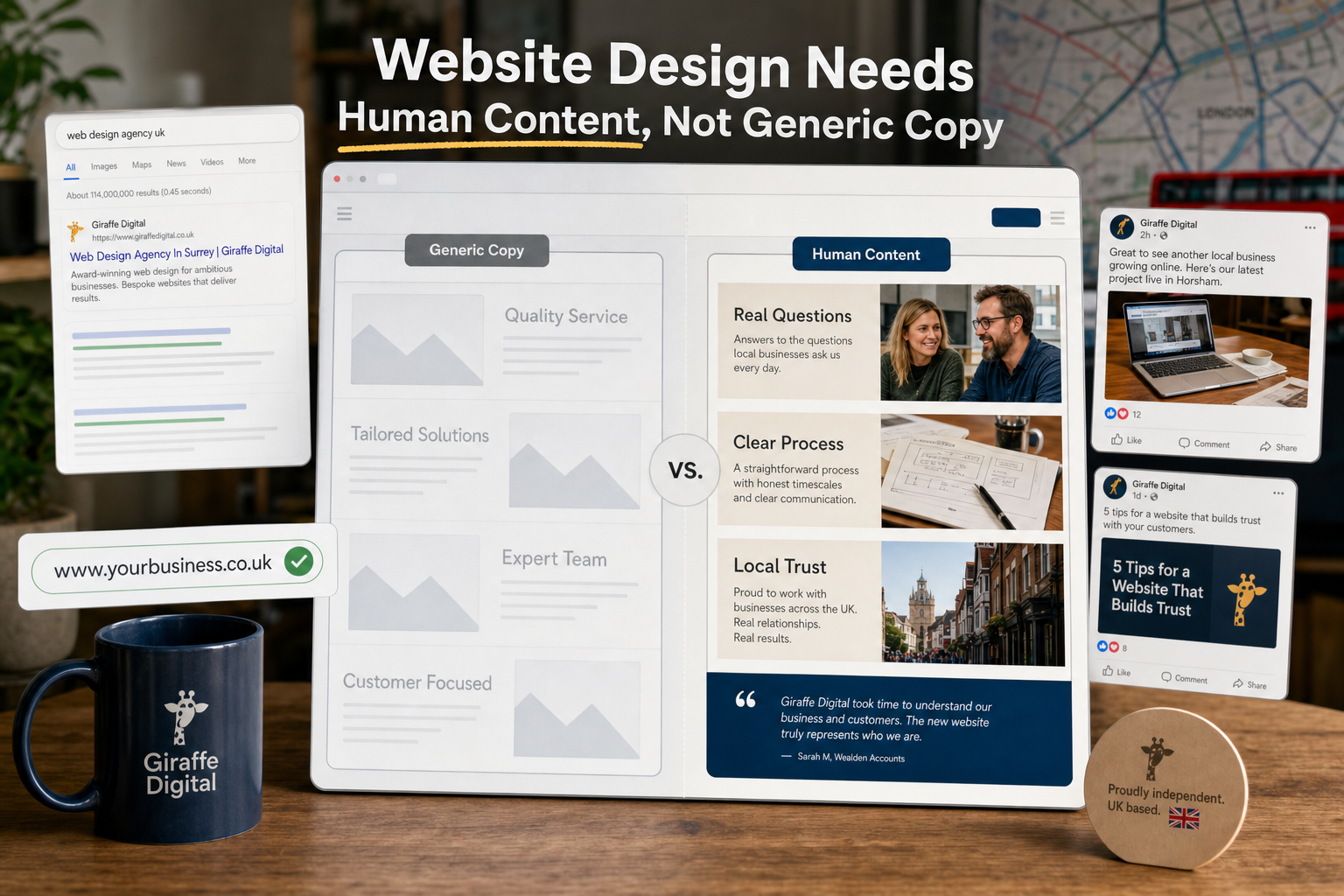
A common mistake is to treat website design and content as separate projects. The design is created first, then the content is squeezed into whatever space remains. This often leads to vague headings, weak service pages and missed opportunities for search visibility.
A better approach is to plan the website around the information customers need. Start by listing the main audiences, their questions and the actions you want them to take. Then decide which pages are required and what each page must achieve.
For example, a service page should usually explain who the service is for, what problem it solves, how the process works, what makes the business credible and what the visitor should do next. A strong layout will make this information easy to follow, with clear headings, readable text, useful imagery and prominent calls to action.
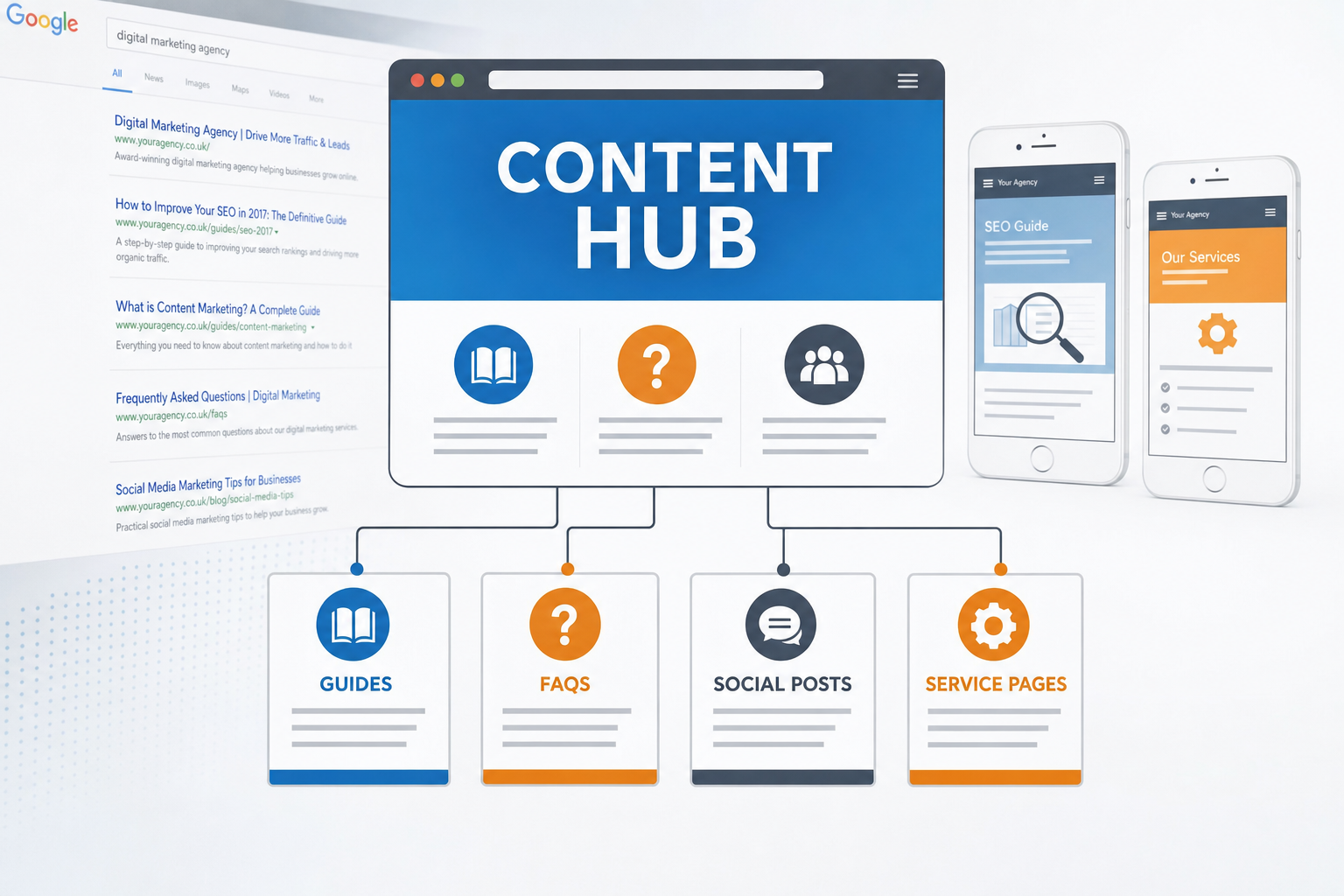
Expert content also helps shape design decisions. If a business has detailed guides, resources, FAQs or insights, the website should make them easy to find. A blog hidden away without categories, search functionality or internal links is unlikely to deliver its full value. A well-planned resource area can support SEO, sales and customer service at the same time.
Using social media to extend trust
Social media marketing should not be limited to quick promotional updates. Platforms such as Facebook, Instagram, LinkedIn, Twitter and YouTube can help businesses share knowledge, answer questions and direct people back to useful website content.
The right platform depends on the audience. LinkedIn may be suitable for professional services, recruitment, business consultancy and B2B suppliers. Instagram can work well for visual sectors such as interiors, food, fashion, fitness, property and creative services. Facebook remains useful for local businesses, community engagement and remarketing activity. YouTube can support educational content, demonstrations and product explanations.
Expert content gives social media more substance. A single guide on your website can be repurposed into a series of short posts, questions, infographics, videos or discussion points. For example, an article about preparing for a website redesign could become a LinkedIn checklist, a short video on common planning mistakes and several tweets linking to specific sections of the guide.
Consistency is important. If a business presents itself as professional and knowledgeable on its website but posts careless, rushed or inaccurate updates on social media, trust can be weakened. The tone does not need to be formal all the time, but it should be appropriate, clear and aligned with the brand.
Domain names, branding and credibility
A domain name is often one of the first brand signals a customer sees. It appears in search results, email addresses, business cards, social profiles and advertising. Choosing the right domain supports trust, memorability and long-term marketing.
For UK businesses, a domain should usually be simple, easy to spell and closely connected to the brand name. Avoid unnecessary hyphens, confusing abbreviations or wording that could limit the business as it grows. If your business serves a UK audience, a UK-focused domain can be appropriate, while a broader domain may suit businesses with wider ambitions.
Before registering a domain, check that the name is not too similar to another organisation in your sector, that it is practical to say aloud, and that matching or compatible social media handles are available where possible. It is also sensible to keep registration details well organised, renew domains promptly and ensure that key people in the business know where domain access is held.
Domain choice alone will not make a website successful, but it forms part of the wider trust picture. A professional domain, secure website, consistent branding and helpful expert content all reinforce one another.
Building a practical expert content plan
A useful content plan starts with customer questions, not with a blank calendar. Speak to sales teams, customer service staff, account managers and anyone else who deals directly with enquiries. Ask what people regularly misunderstand, what objections they raise, what comparisons they make and what information helps them decide.
From there, group topics into sensible themes. A website design business, for instance, might create themes around planning, branding, SEO, content writing, e-commerce, hosting and ongoing support. A legal firm might group content around business formation, contracts, employment and dispute prevention, while taking care to keep advice accurate and appropriately qualified.
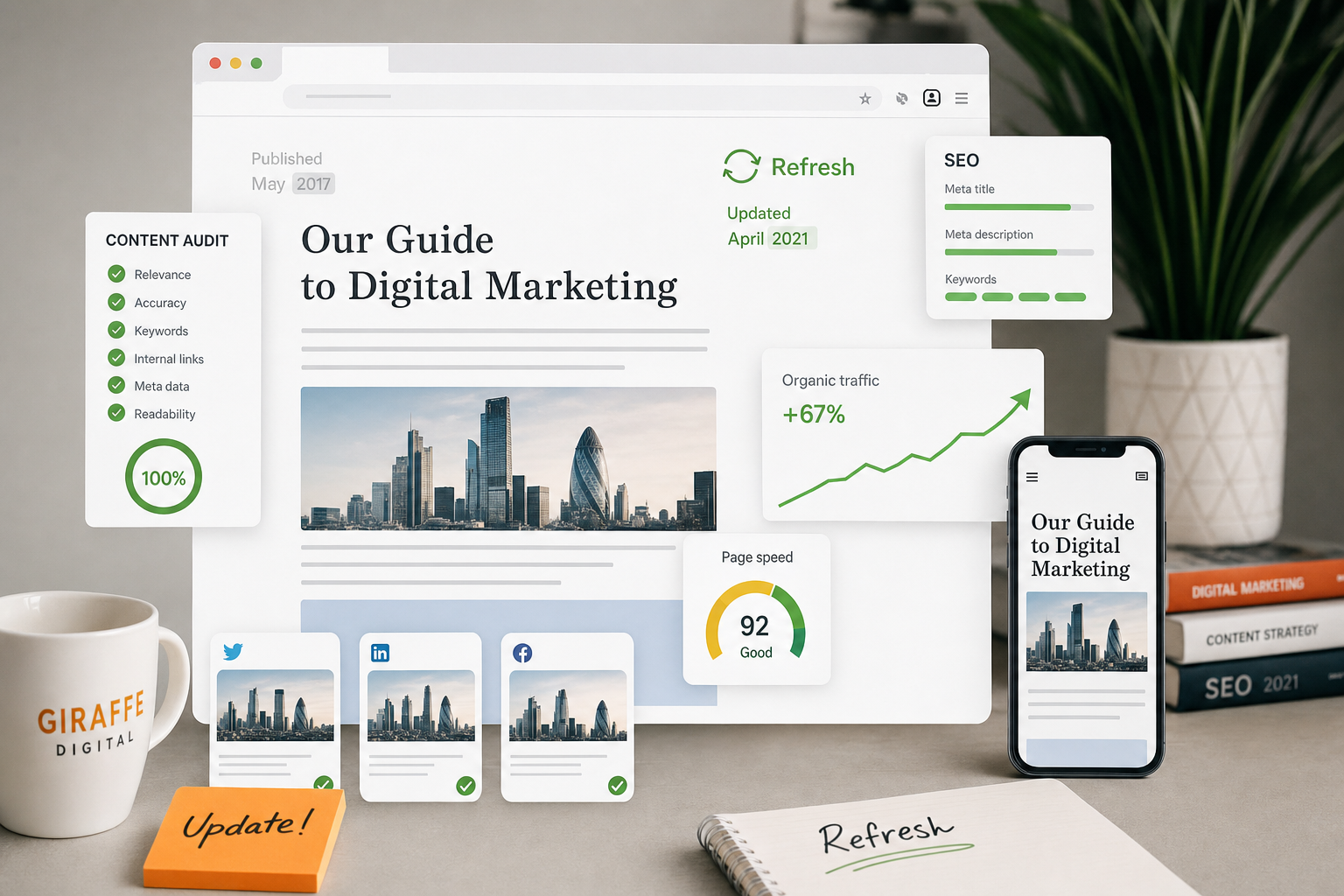
It is better to publish fewer high-quality pieces than to publish frequent content that adds little value. A strong article can continue attracting visitors for months or years if it answers a real question and is kept up to date. Schedule periodic reviews so that guidance, screenshots, legislation references, platform details and service information remain accurate.
Each piece of content should have a clear purpose. Some articles are designed to attract new visitors through search. Others help convert prospects who are already comparing suppliers. Some support existing customers by reducing repeated questions. Understanding the purpose makes it easier to choose the right format, length and call to action.
Measuring whether content is working
Expert content should be measured, but not only by page views. A guide that attracts fewer visitors but generates strong enquiries may be more valuable than a popular article that brings in the wrong audience.
Useful measures include organic search traffic, enquiry form submissions, phone calls, email clicks, time on page, scroll behaviour and assisted conversions. Search Console data can show which queries bring people to a page, while analytics data can help identify whether visitors move on to service pages or leave quickly.
Qualitative feedback is valuable too. If prospects mention that they read a guide before getting in touch, that is a sign the content is building confidence. If sales staff use an article during conversations, it may be supporting the buying process even when it is not the final source of an enquiry.
Content should be improved over time. Add missing answers, refine headings, update examples, improve internal links and make calls to action clearer. Expert content is not a one-off exercise; it is part of maintaining a credible digital presence.
Trust is earned through usefulness
Businesses do not earn trust online by saying they are trustworthy. They earn it by being clear, accurate, consistent and genuinely helpful. Expert content gives customers a reason to believe in the quality of your thinking before they commit to a conversation.
For UK business owners investing in website design, SEO, branding or digital strategy, content should be treated as a core asset rather than an afterthought. A well-built website provides the structure, but expert content provides much of the substance. When the two work together, your digital marketing becomes more useful to customers and more valuable to the business.