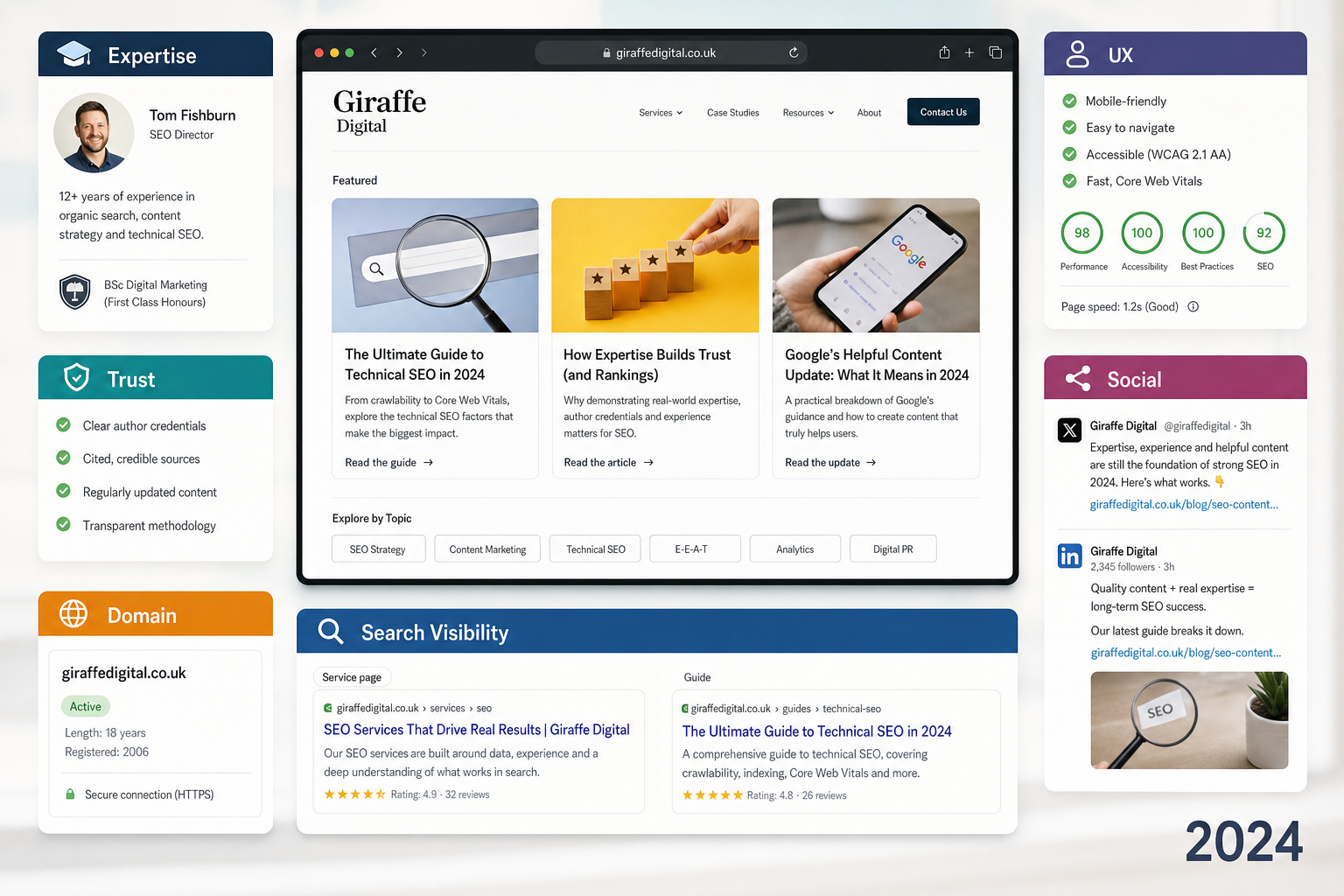
Search visibility is becoming harder to earn. More businesses are publishing articles, guides, videos and social updates, while search engines are getting better at judging whether a page genuinely helps the person searching. For UK business owners, this makes competitive content marketing less about producing more pages and more about producing the right pages: useful, well-structured content that supports a clear commercial purpose.
A good content programme can improve search traffic, strengthen trust, give your sales team better material to share and make your website feel more authoritative. However, content is only valuable when it is planned around your audience, your offer and the competitive search landscape. Publishing an occasional news post without research, promotion or measurement is unlikely to move the needle, especially in markets where several firms are already investing in SEO, design and social media marketing.
Why content marketing has become more competitive
For several years, many businesses treated content as a simple search engine tactic. They wrote pages around keywords, added a few internal links and expected rankings to follow. That approach is no longer enough. Search results now include a wider mix of ads, local listings, maps, images, videos, reviews and well-established editorial pages. A small business is not only competing with local rivals; it may also be competing with directories, publishers, marketplaces and national brands.
This does not mean smaller organisations cannot perform well. It means they need to be more focused. A local accountant, tradesperson, solicitor, retailer or specialist consultancy can often create more useful content than a large general website because they understand their customers’ real questions. The opportunity is in being specific, credible and helpful.
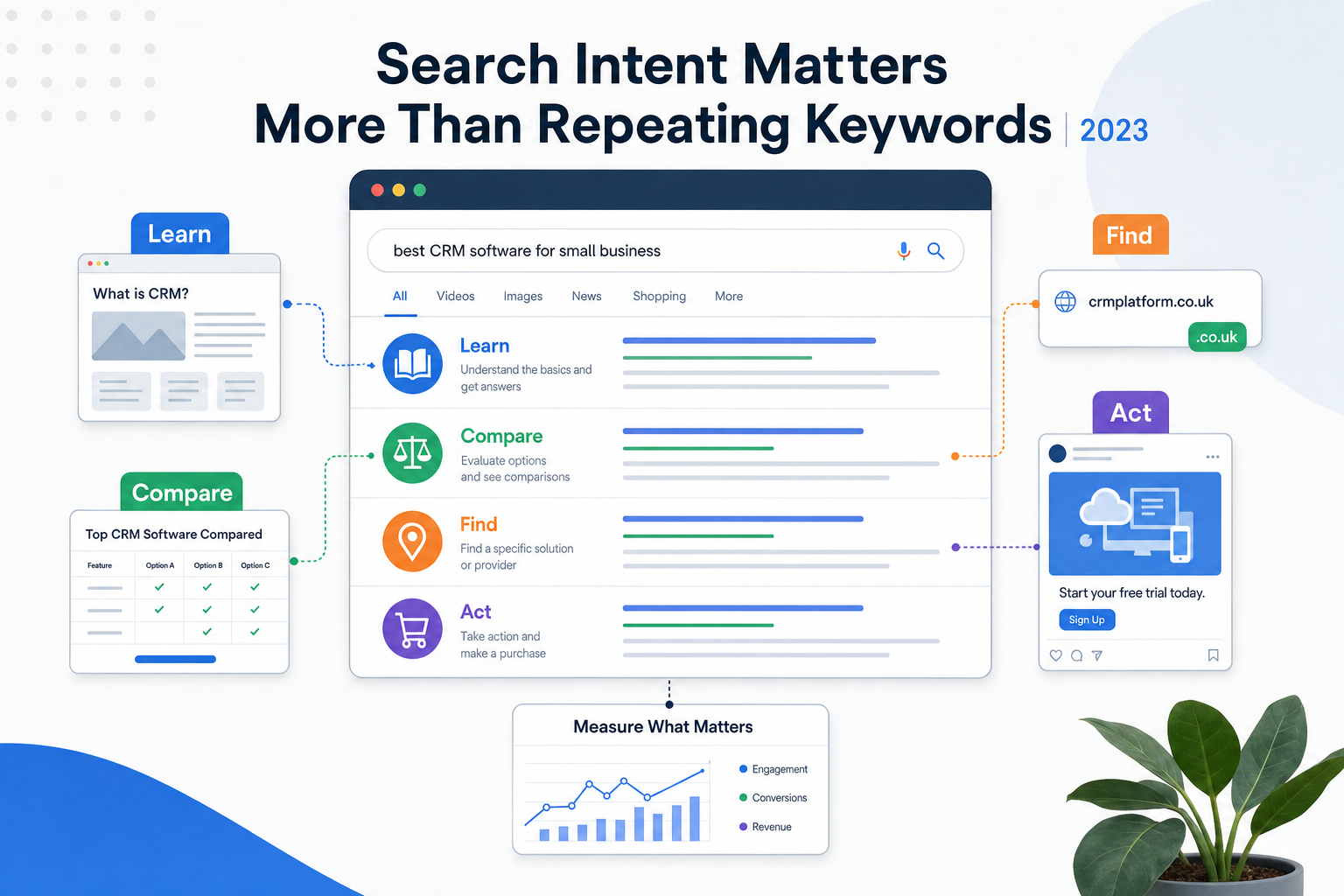
Competitive content marketing starts by asking what the searcher needs at each stage of their decision. Someone searching for a broad phrase such as “wewebsite designmay be researching options. Someone searching for “responsive website design for accountants in Hampshire” is showing a more specific intent. The content required for each search is different. A broad guide may build awareness, while a focused service page may generate an enquiry.
Begin with business value, not just keywords
Keyword research remains important, but it should not be the only starting point. The strongest content plans connect search demand with business value. Before writing, consider which services you want to promote, which customer questions slow down enquiries, which objections your team hears regularly and which topics demonstrate genuine expertise.
For example, a company offering website design might create practical content explaining the difference between a brochure website and an e-commerce site, what to prepare before a redesign, how responsive layouts improve mobile browsing and why page structure matters for SEO. Each piece can be useful to a prospective customer and can also support a relevant service.
Likewise, a business advising on branding could produce articles about choosing a consistent visual identity, writing clearer website copy, aligning social media graphics and using brand guidelines across printed and digital material. This helps the reader while showing the value of a professional approach.
When choosing topics, look for areas where you can add detail that generic websites cannot. Include practical examples, common mistakes, checklists and explanations based on real experience. Avoid thin pages that repeat the same phrases. Search engines and readers both respond better to content that answers a question properly.
Build content around search intent
Search intent is the reason behind a query. Understanding it is central to competitive content marketing because two similar keywords can require very different pages. A person searching “how to choose a domain name” wants advice. A person searching “register domain name for business” may be closer to taking action. A person searching your brand name wants reassurance that they have found the right organisation.
Most business websites need a mixture of content types:
- Service pages that clearly explain what you offer, who it is for and why your approach is suitable.
- Guides and articles that answer common questions and support longer research journeys.
- Case study-style summaries that explain your process without inventing or exaggerating results.
- Frequently asked questions that reduce uncertainty before a customer makes contact.
- Location-focused pages where there is a genuine local service offering, not simply duplicated text with town names changed.
The aim is to make every page earn its place. If two pages target the same topic in the same way, they may compete with each other. If an article attracts visitors but gives them no next step, it may fail to create value. Strong internal linking helps guide users from informational content to relevant services, enquiries or contact options.
Website design matters to content performance
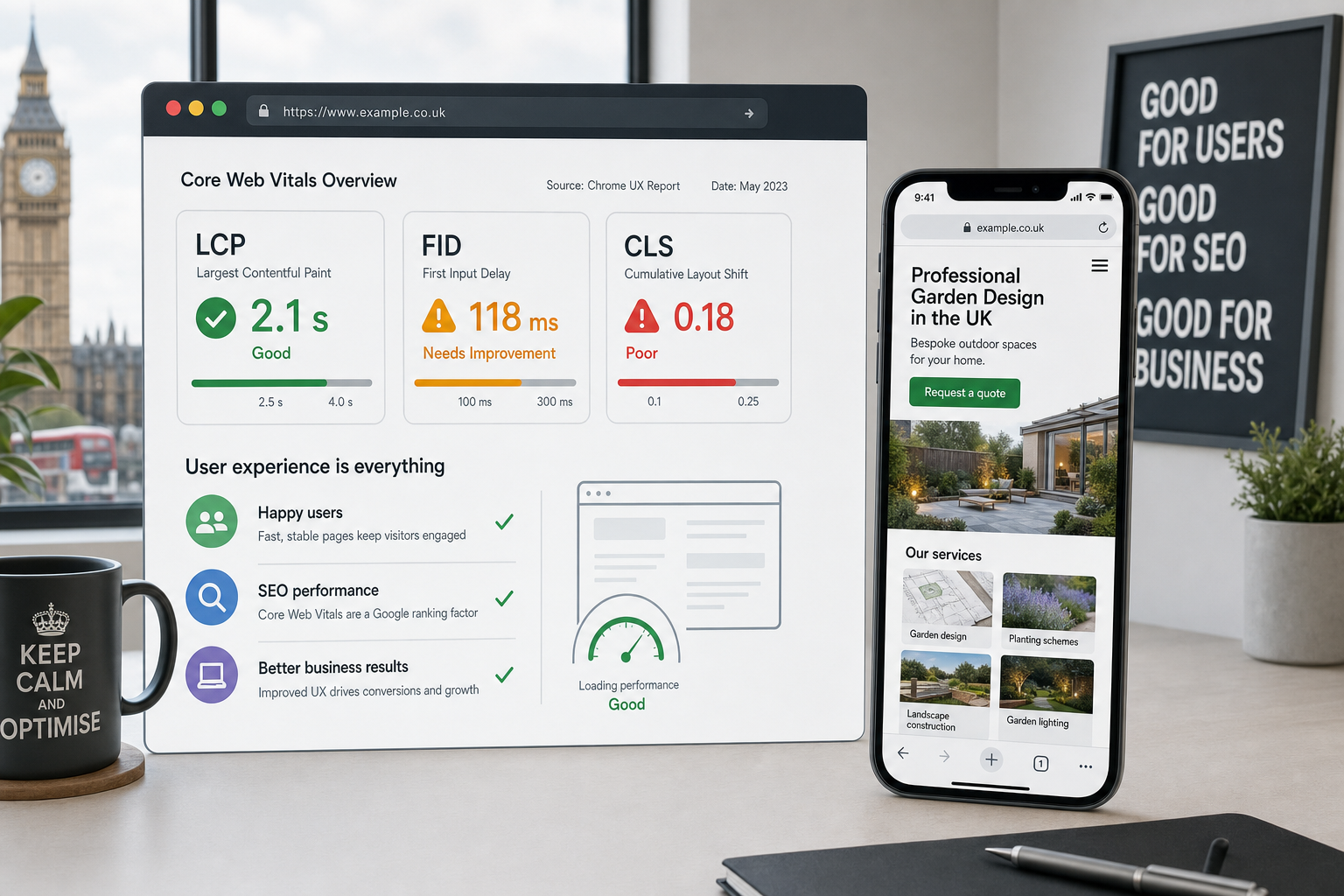
Even excellent content can underperform on a poor website. Design influences whether visitors stay, read and take action. In 2016, responsive design is no longer a nice extra; it is expected. Many potential customers will reach your website from a mobile search, social media link or email newsletter. If the page is difficult to read on a phone, slow to load or awkward to navigate, you may lose the enquiry before your content has done its job.
A content-friendly website should have clear navigation, readable typography, sensible headings and obvious calls to action. The best pages make it easy for visitors to understand where they are, what they can learn and what they should do next. Long paragraphs, cluttered sidebars, intrusive pop-ups and dated layouts can undermine credibility.
Technical foundations also matter. Search engines need to crawl and understand your website. A clear URL structure, descriptive page titles, well-written meta descriptions, fast-loading pages, image optimisation and a reliable content management system all support better performance. A secure website, appropriate redirects and clean handling of old pages are also important when redesigning or migrating a site.
Content and design should be planned together. If a business invests in a new website but leaves content until the end, the finished site may look attractive yet fail to answer important customer questions. If content is written without thought for layout, it may become hard to read. A coordinated approach produces stronger results.
Use social media to support, not replace, search
Social media marketing is a valuable partner to content marketing, but it should not be treated as a substitute for a well-structured website. Posts on Facebook, Twitter, LinkedIn, Instagram, Pinterest, Google+ and YouTube can help distribute content, start conversations and reach people who are not actively searching at that moment. However, social posts are often short-lived. Your website should remain the central home for important advice, service information and lead generation.
The best social promotion is tailored to the platform. A detailed business guide may perform well when introduced on LinkedIn with a clear professional summary. A visual project, product or design-led piece may suit Instagram or Pinterest. A short practical tip can work on Twitter, particularly when linked to a fuller article. Video demonstrations or explanatory clips can add value on YouTube and can be embedded in relevant pages.
Do not simply paste the same message everywhere. Adapt the wording, image and call to action. Encourage useful engagement by asking a focused question or highlighting a specific problem the article solves. For businesses with a local customer base, social media can also help reinforce community presence, promote events and share timely updates.
Paid social promotion may be useful for key content, particularly when launching a guide, promoting a campaign or reaching a defined audience. Even a modest campaign should have a clear objective, such as attracting newsletter sign-ups, enquiries or visits to a particular service page. Avoid boosting posts without knowing what success should look like.
Domain names and brand trust
Your domain name is a small but important part of your digital presence. It appears in search results, email addresses, printed materials and social profiles. A good domain is memorable, easy to spell and aligned with your brand. For many UK businesses, a .co.uk or .uk domain can signal local relevance, while a .com may be suitable for organisations with broader or international ambitions.
When choosing a domain, avoid names that are overly long, awkward to say aloud or easily confused with another business. Hyphens and unusual spellings can create problems when customers try to remember or type the address. It is also sensible to secure closely related variations where appropriate, particularly to protect your brand, but the main website should have one clear primary domain.
Do not rely on an exact-match domain as a shortcut to search success. A name packed with keywords may look dated or untrustworthy if it does not reflect a real brand. Search visibility is built through relevance, authority, quality content and user satisfaction, not the domain alone.
If you are changing domain as part of a rebrand or website redesign, plan the move carefully. Redirect old pages to the most relevant new pages, update important listings and check that analytics and search tools are tracking the new site correctly. A poorly handled migration can damage visibility, even when the new website is better.
Create a practical editorial plan
Competitive content marketing needs consistency, but consistency does not mean publishing for the sake of it. A small number of well-researched articles can be more valuable than a large archive of short, unfocused posts. Start with a manageable plan that supports your commercial priorities.
A useful editorial plan might include:
- Core service content reviewed and improved before new articles are added.
- Monthly advice articles answering high-value customer questions.
- Seasonal content where your market has predictable peaks or planning periods.
- Downloadable resources such as checklists or briefing forms, where appropriate.
- Social media themes that help promote each new piece more than once.
Each topic should have a purpose. Is it intended to attract search traffic, support a sales conversation, earn links, build email subscribers or explain a complex service? Knowing the purpose helps decide the format, length, tone and call to action.
It is also worth refreshing existing content. Older pages may still receive visits but contain out-of-date information, weak headings or unclear next steps. Improving a page that already has some visibility can sometimes produce better results than starting from scratch. Review content regularly and remove, merge or update pages that no longer serve your audience.
Measure what matters
Measurement keeps content marketing grounded in business value. Page views alone do not tell the full story. A page may attract many casual visitors and few enquiries, while a more specialist page may attract fewer people but better prospects. Look at a combination of indicators.
Useful measures include organic search visits, rankings for priority themes, enquiry form submissions, phone calls where tracked, newsletter sign-ups, time on page, bounce rate, returning visitors and assisted conversions. Search Console can show which queries are generating impressions and clicks, while analytics data can show how users behave once they arrive.
For service businesses, qualitative feedback is also important. If prospects mention a guide during a call, if sales conversations become easier or if a useful article helps answer repeated questions, the content is doing valuable work. Not every benefit appears immediately in a ranking report.
Set realistic expectations. Content marketing is a long-term asset, not a quick fix. New content may take time to be discovered, indexed, shared and trusted. Competitive sectors require sustained effort, technical quality and promotion. The reward is a stronger website that continues to support your brand beyond a single campaign.
Quality and credibility will win more often
As search markets become more crowded, businesses need to be clearer about why their content deserves attention. That does not mean every article must be lengthy or complicated. It means every page should be accurate, useful and connected to a real customer need.
Write in plain English. Explain terms where necessary. Show your process. Use examples that reflect genuine situations. Keep your website easy to use and ensure your social media activity leads people towards helpful resources rather than noise. A professional, joined-up digital presence builds confidence before a prospect ever makes contact.
Competitive content marketing is ultimately about earning trust. A business that understands its audience, invests in a well-designed website, chooses a sensible domain, promotes content through the right social channels and measures meaningful outcomes will be better placed to compete in search. The market may be busier, but there is still room for organisations that publish with purpose and put the customer first.