Choosing a brand domain name is one of the earliest digital decisions a new business will make, and it is also one of the most visible. It appears in search results, on business cards, in email addresses, across social media profiles, on signage, in adverts and in every conversation where someone recommends your website. In a crowded market, the right domain name can help a brand feel more credible, memorable and easy to find. The wrong one can create confusion before a potential customer has even reached your website.
For UK business owners planning a new website, rebrand or digital marketing campaign, a domain name should never be treated as a technical afterthought. It is a practical branding asset. It needs to suit the business now, allow room for growth and support the way people search, type, share and remember information online.
Why a brand domain name matters
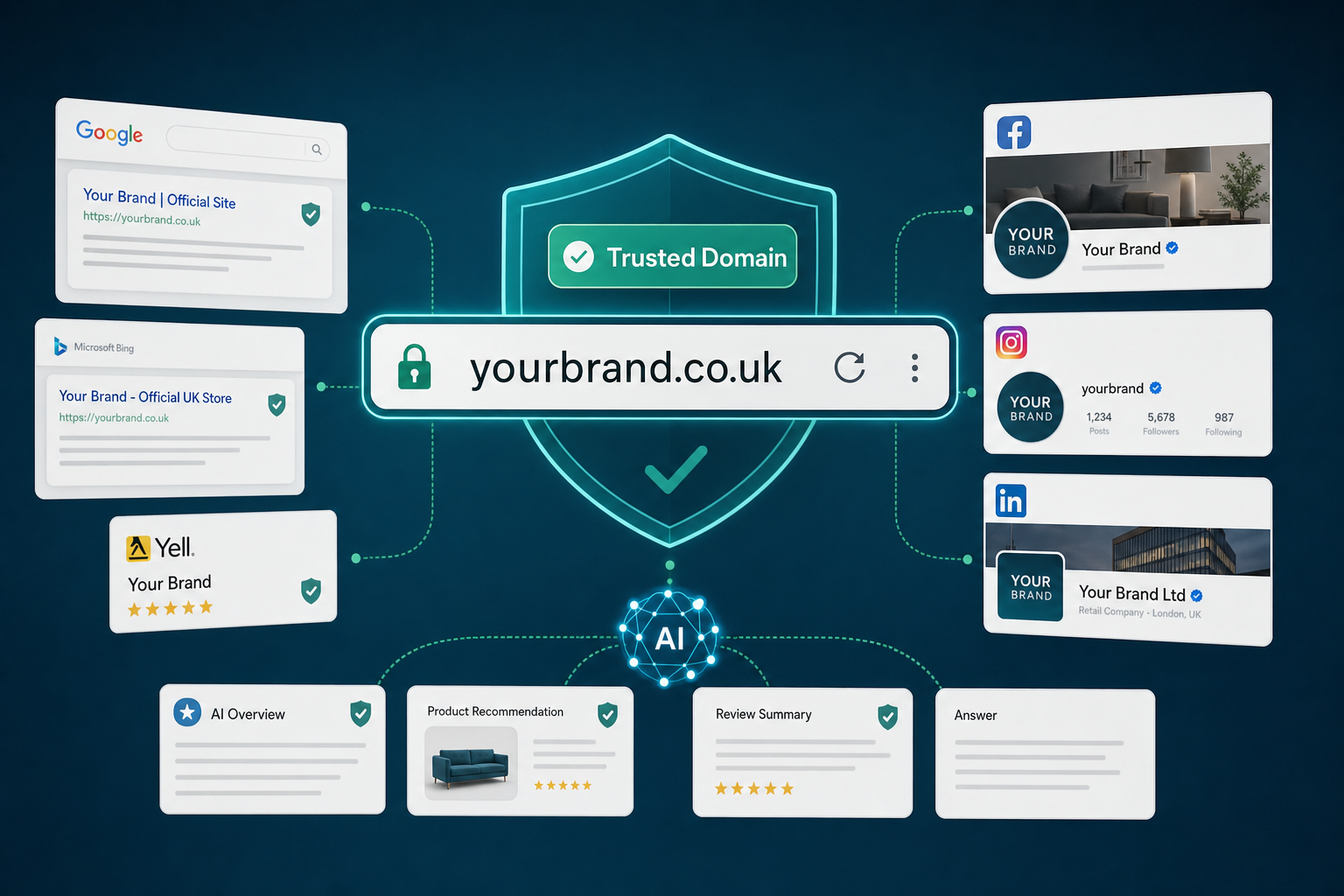
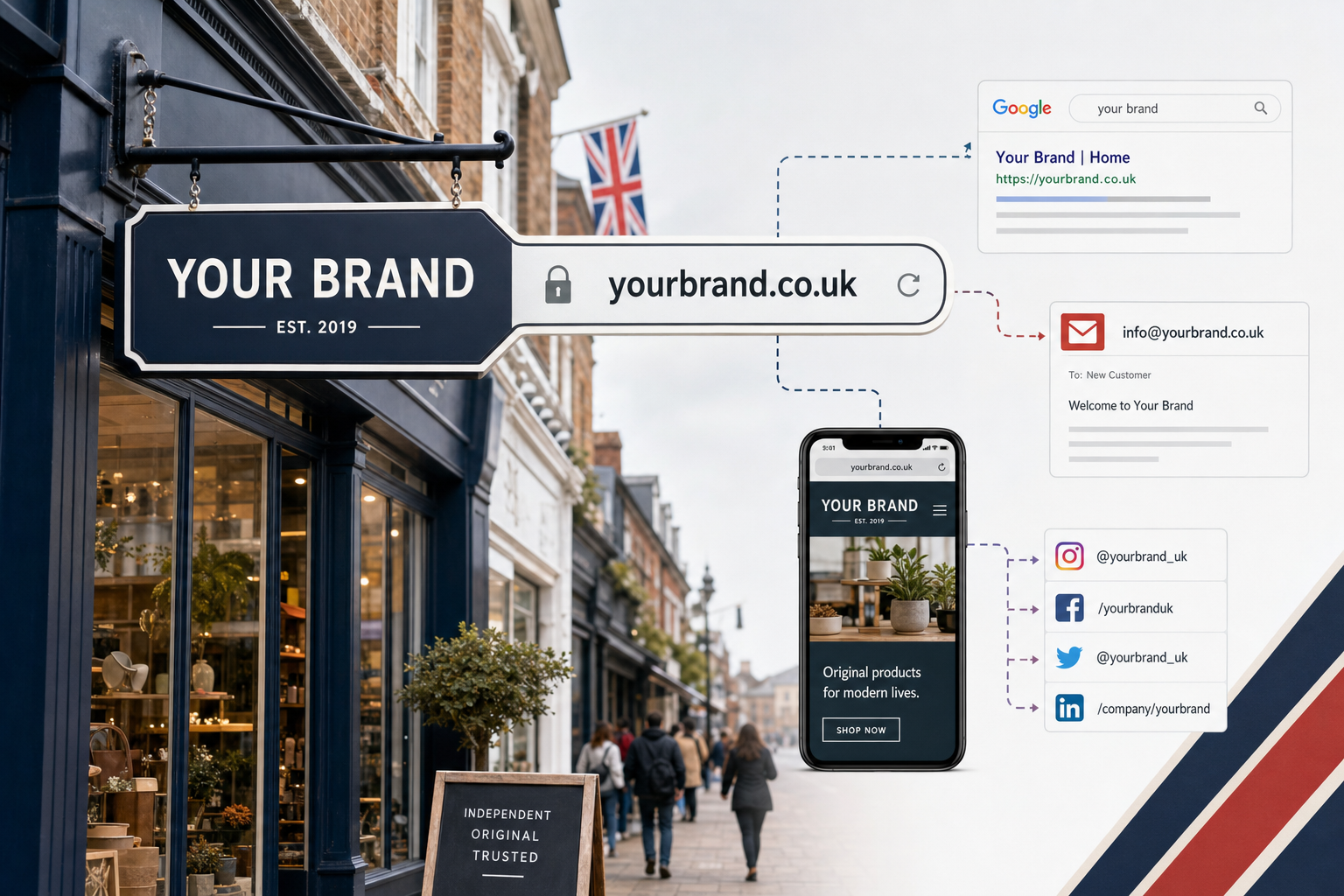
A brand domain name is more than the address of your website. It is a signal of identity. It tells people who you are, gives them a route back to you and helps create a consistent digital presence across web, email and social media.
In competitive sectors, customers often compare several businesses before making an enquiry. If your domain looks professional, matches your trading name and is easy to type, it reduces friction. A clear domain can make it easier for people to return to your site after seeing an advert, hearing about you from a friend or finding you through a local search.
It also has value beyond the website itself. A branded email address using your own domain usually appears more trustworthy than a generic email account. For example, enquiries@yourbrand.co.uk looks more established than a free email address, particularly for professional services, trades, e-commerce and B2B organisations. Trust is not created by a domain alone, but a well-chosen domain supports the broader impression your brand is trying to make.
Brand-led names usually work better than keyword stuffing
It can be tempting to choose a domain that tries to include every service and location you want to rank for, such as bestplumbermanchesteremergencyrepairs.co.uk. While descriptive words can sometimes be useful, overloading a domain often makes it harder to remember, awkward to say aloud and less suitable as the business grows.
Search engines have become much better at understanding the relevance and quality of a website based on its content, structure, links, location signals and user experience. Having a keyword in a domain can still provide some clarity, but it should not be the main strategy. A strong brand domain name, supported by useful pages and sound SEO work, is normally a better long-term choice than a clumsy exact-match domain.
Consider the difference between a name that is built to last and one that is built only around a search phrase. If a company starts as a local garden maintenance firm but later adds landscaping, fencing and commercial contracts, a very narrow domain may become restrictive. A brand-led domain gives the business more flexibility.
Keep it simple, memorable and easy to share
The best domain names tend to be simple enough to say once and be remembered later. That matters because not every visitor will arrive by clicking a link. Some will type your address after seeing a van, leaflet, exhibition stand, networking slide or print advert.
When reviewing domain ideas, ask whether the name passes a few common-sense tests:
- Can someone spell it correctly after hearing it on the phone?
- Is it short enough to fit neatly on marketing materials?
- Does it avoid confusing hyphens, unusual spellings or unnecessary numbers?
- Does it look professional when used in an email address?
- Will it still make sense if the business expands its services or location?
Hyphens are not always wrong, but they can make a domain harder to explain. Numbers can also cause confusion, especially where people may not know whether to type the number as a digit or a word. If your chosen brand name includes an unusual spelling, make sure there is a good reason for it and that it can be supported by consistent branding.
Choosing the right domain extension
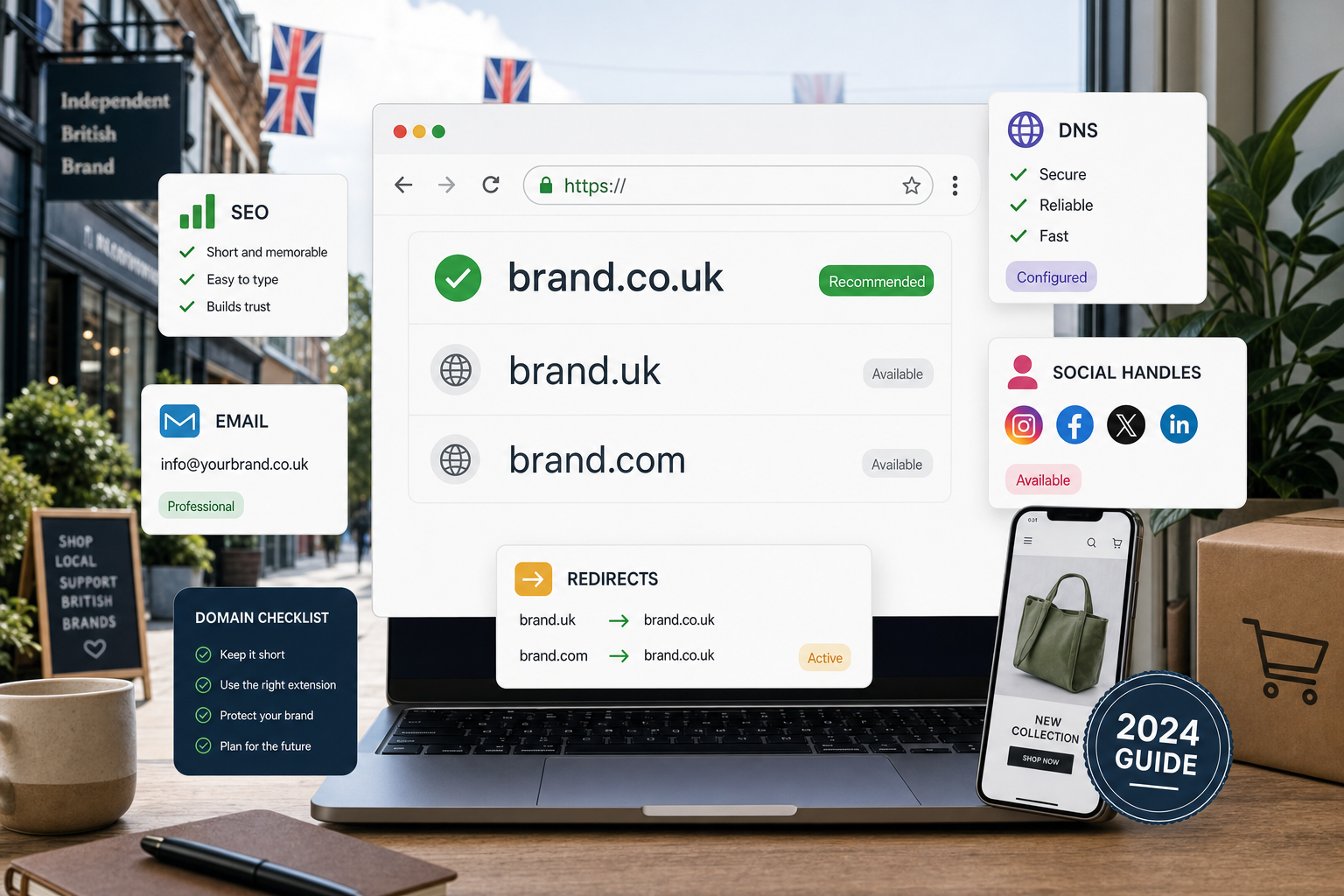
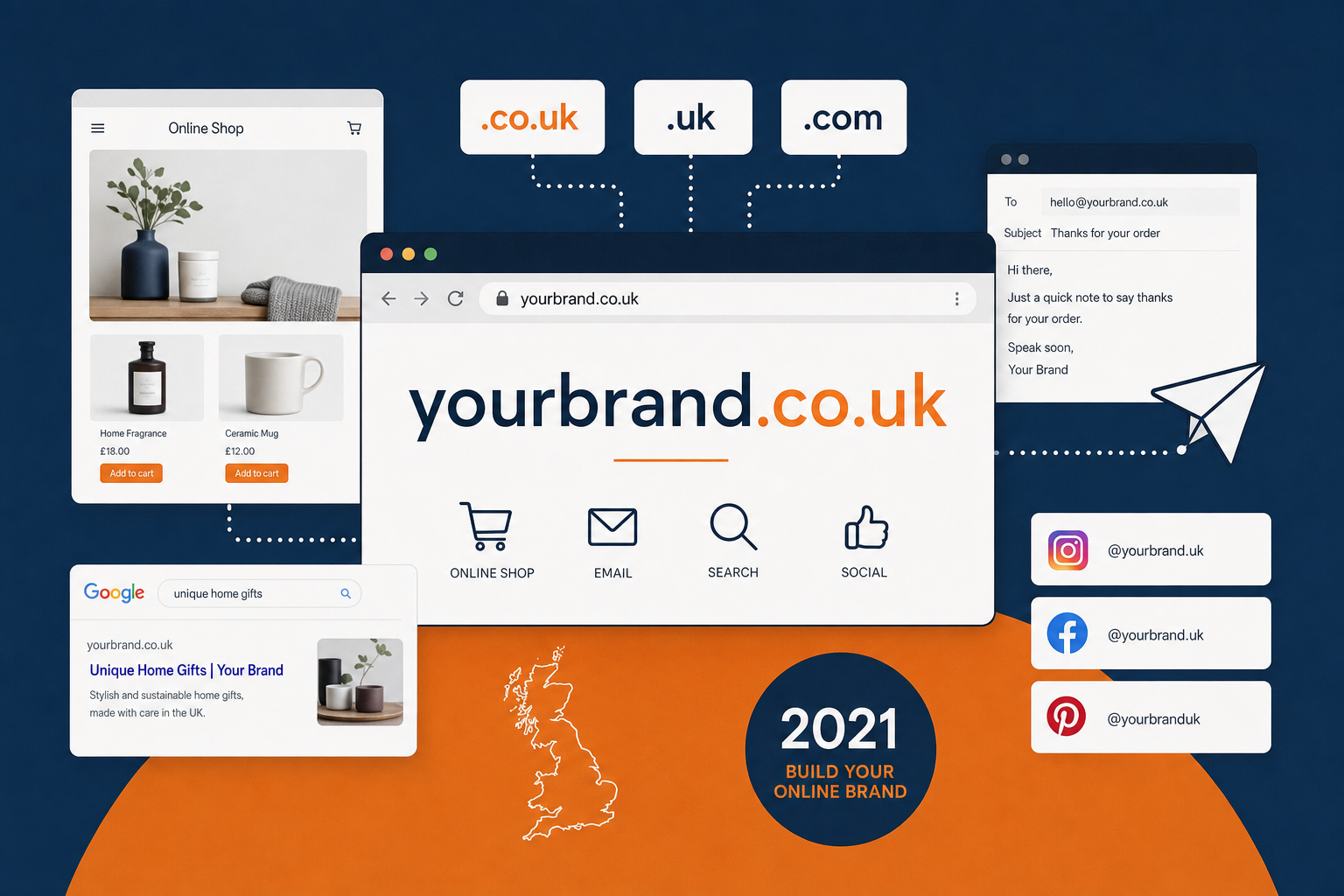
For many UK businesses, a .co.uk domain remains a familiar and trusted option. It clearly signals a UK presence and is widely recognised by customers. A .uk domain can also be suitable, particularly for shorter, cleaner branding. Where possible, it is sensible to consider securing both versions to protect the brand and avoid customer confusion.
A .com domain is still valuable, especially for businesses with international ambitions or brands that want a global feel. However, availability can be more limited, and a short .com may be harder to obtain. Newer domain extensions can provide additional choice, but they should be chosen carefully. A creative extension might suit a technology, design or campaign-led brand, but it may be less familiar to some customers than .co.uk, .uk or .com.
The most important question is not simply which extension is fashionable, but which one your audience will trust, remember and type correctly. If you serve a local or national UK market, a UK-focused extension is often a strong choice. If you plan to sell internationally, think about whether your domain structure will support that growth.
Check availability beyond the domain itself
Before committing to a domain, check how the name works across the wider digital landscape. Your website address is only one part of your online presence. Customers may also look for you on Facebook, Instagram, Twitter, LinkedIn, YouTube or sector-specific directories.
Try to secure consistent social media handles where possible. They do not have to be identical in every case, but they should be recognisably connected to the same brand. If your domain is yourbrand.co.uk but your social handle has to become yourbranduk or yourbrandofficial, that can still work provided it is clear, tidy and used consistently.
It is also worth searching for similar business names, particularly within your sector. If another organisation already has a very similar name, customers may confuse the two brands. There may also be legal considerations around trading names and trade marks, so take professional advice where appropriate before investing heavily in design, signage or advertising.
Think about search visibility from the beginning
A domain name alone will not make a website rank well. Search visibility depends on a much broader set of factors, including the quality of your content, technical setup, mobile usability, page speed, local relevance and the authority your site builds over time.
However, a good domain can support SEO indirectly. If the name is memorable, people are more likely to search for it, click it, link to it and share it accurately. If it matches the brand used in your page titles, social profiles, Google My Business listing and offline materials, it helps reinforce consistency.
For a new brand, the early SEO priority should be to create a website that clearly explains who you help, what you offer and where you operate. Service pages should be specific and useful. Local businesses should make their location information clear. Blog content can answer common customer questions, but it should be written for real people rather than filled with repeated phrases.
When launching a new site, make sure the domain is set up properly with secure HTTPS, clear page URLs, a logical site structure and analytics. Submit the website to search engines through the appropriate webmaster tools and check that important pages can be crawled and indexed. These technical basics are often more valuable than trying to force a keyword into the domain.
Consider website design and user experience
Your domain name creates the first step, but the website must fulfil the promise. A professional domain that leads to a slow, confusing or dated site can damage confidence. Website design should make it easy for visitors to understand your offer, navigate your services and take the next step, whether that is calling, completing an enquiry form, booking an appointment or making a purchase.
Mobile experience is particularly important. Many customers will first visit your site from a smartphone after seeing your brand on social media, in search results or while on the move. A domain may be easy to remember, but if the site is difficult to use on a smaller screen, visitors may leave before making contact.
Good design also reinforces the domain visually. The brand name, logo, colours, messaging and calls to action should feel joined up. If your domain is short and distinctive, use it confidently across marketing materials. If it is more descriptive, make sure the brand identity gives it personality and makes it easier to remember.
Register carefully and manage the domain properly
When registering a domain, use accurate ownership and contact details. A domain should be registered in the name of the business or appropriate owner, not casually under an individual who may later leave the organisation. Losing access to a domain can cause serious disruption to email, website traffic and marketing activity.
Keep login details secure and record renewal dates. Enable renewal reminders and consider who within the business is responsible for domain administration. A missed renewal can lead to downtime, lost enquiries and reputational damage. It is also sensible to keep domain access separate from day-to-day website editing access, so that only trusted people can make critical changes.
DNS settings, email records and SSL certificates are technical areas, but they have practical consequences. Incorrect settings can stop a website loading or prevent email from being delivered reliably. If you are not confident managing these areas, ask your web team or IT support to handle them with care.
Protect the brand where it makes sense
New businesses do not need to register every possible domain variation, but some defensive registration can be worthwhile. Common options include the main UK extensions, obvious spelling variations and a .com if international activity is likely. This can prevent confusion and protect future marketing plans.
Think about how customers might mistype or misremember the name. If a common misspelling is likely, registering it and redirecting it to the main website may be useful. Equally, if your brand uses a plural word, consider whether the singular version might be typed by mistake.
Avoid building multiple duplicate websites on different domains. In most cases, it is better to choose one primary domain and redirect alternatives to it. This keeps your SEO signals focused and avoids splitting attention across several addresses.
Plan for future growth
A good domain should support the next stage of the business, not only the launch. If you are starting with one product but expect to add more, avoid a domain that boxes you in too tightly. If you are operating in one town but plan to expand across the region, think carefully before putting a very specific location into the brand domain name.
That does not mean every name must be broad or abstract. A local name can be powerful if local trust is central to the business. The key is to choose deliberately. Ask whether the domain will still feel right in three to five years if your services, team or geography change.
Rebranding a domain later is possible, but it requires careful planning. Redirects, email changes, search visibility, printed materials and customer communication all need attention. Starting with a considered domain reduces the likelihood of expensive disruption later.
Checklist for choosing your domain
Before making a final decision, take time to review the name from a customer’s point of view. A good brand domain name should feel natural, credible and useful across marketing channels.
- Write the domain down and read it aloud.
- Ask someone unfamiliar with the business to spell it after hearing it.
- Check that it does not create unintended words when written without spaces.
- Review availability of relevant UK and international extensions.
- Check social media handle availability and consistency.
- Search for similar brands in your sector and region.
- Consider how it will look on email addresses, vans, signage and adverts.
- Decide which domain will be the primary version and redirect alternatives to it.
- Make sure ownership, renewal and DNS management are clearly controlled.
- Plan the website structure, content and SEO foundations around the chosen brand.
Final thoughts
In a crowded market, a domain name cannot do all the work of branding, design or marketing, but it can make each of those activities easier. A strong domain gives customers a clear route to your business, supports professional communication and helps your digital presence feel consistent.
The best choice is usually simple, brandable, easy to remember and suitable for the way your business will grow. When combined with a well-designed website, useful content, secure technical setup and joined-up social media marketing, your domain becomes more than an address. It becomes a practical asset at the centre of your online brand.