AI content tools have moved quickly from niche software into everyday marketing conversations. For UK business owners, the important question is not whether artificial intelligence sounds impressive, but whether it can help your team create better website content, plan campaigns more efficiently and support a clearer digital strategy. Used well, these tools can save time, improve consistency and make it easier to turn ideas into useful marketing assets. Used carelessly, they can produce generic copy, factual errors and content that does little for search visibility or brand trust.
As we move through January 2023, the most practical approach is to treat AI as a capable assistant rather than a replacement for skilled marketing, design and strategy. Tools based on large language models can help draft blog outlines, social media captions, email subject lines, landing page sections and research prompts. However, they still need human judgement, accurate information, editorial standards and a clear understanding of your customers. For businesses reviewing their website, SEO, branding or content marketing, AI content tools are best seen as part of a stronger workflow.
What AI content tools can do for business marketing
AI content tools use machine learning to generate or refine written content from prompts. A prompt might be as simple as a request for five blog ideas for a local accountancy firm, or as detailed as a landing page brief that includes audience, tone of voice, service benefits, search intent and calls to action. The better the prompt, the more useful the output is likely to be.
For business owners, the main benefit is speed at the early stages of content creation. A blank page can slow down marketing activity, particularly when your team is balancing sales, operations and customer service. AI can suggest angles, structure a draft, summarise notes or adapt an existing message for different channels. This can make marketing less dependent on sudden bursts of inspiration.
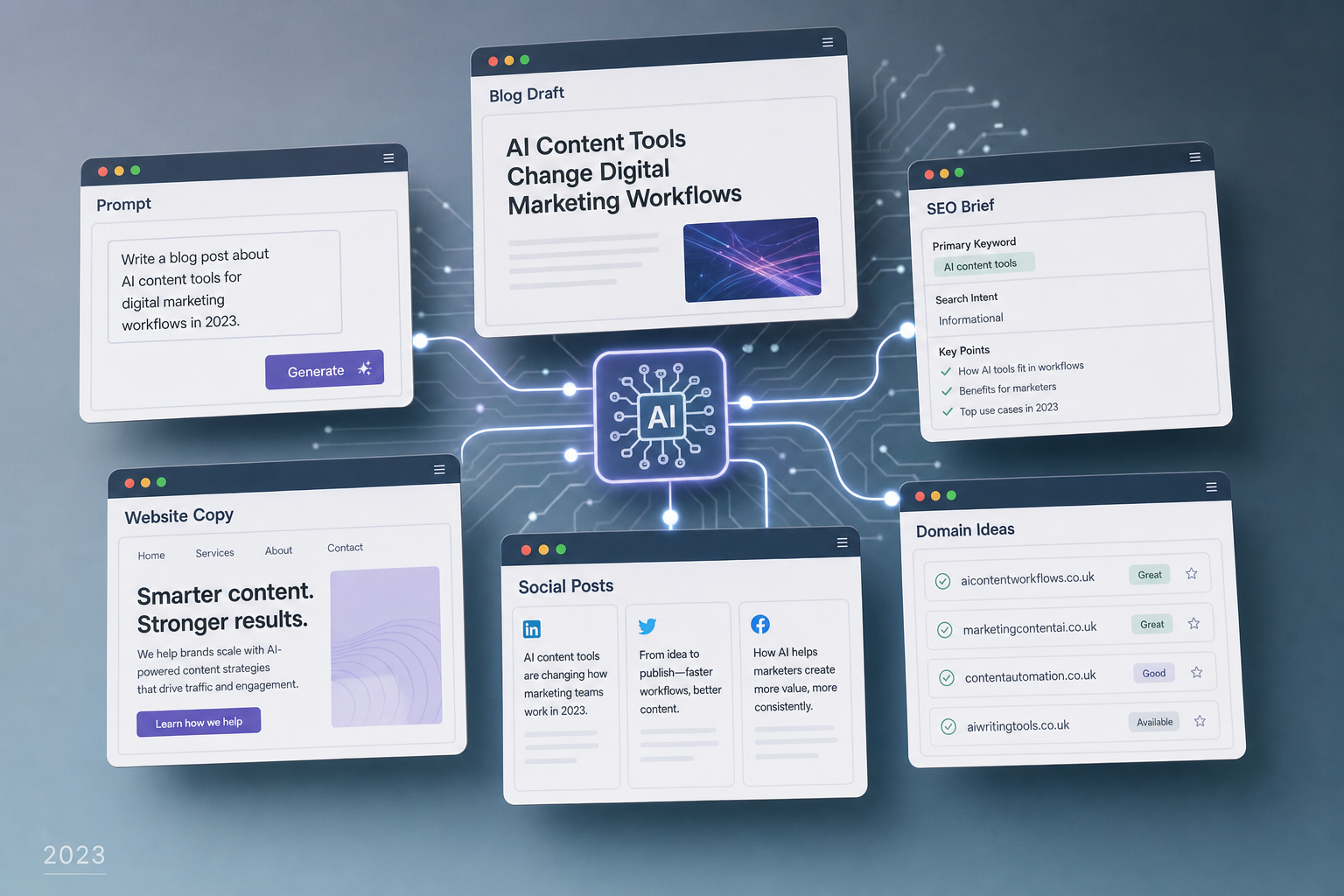
Common uses include drafting blog outlines, creating frequently asked questions, turning a service description into social media posts, summarising long documents, writing alternative headline options and generating email newsletter ideas. AI can also help internal teams produce a first draft before a designer, copywriter or SEO specialist refines the content for publication.
The value is not simply faster writing. AI content tools can help organisations think more systematically about their marketing. For example, a business launching a new service can ask for content ideas across the customer journey: awareness articles, comparison pages, trust-building case studies, email follow-ups and social media talking points. This can highlight gaps in the website or campaign plan before design and development work begins.
Where AI fits within a digital marketing workflow
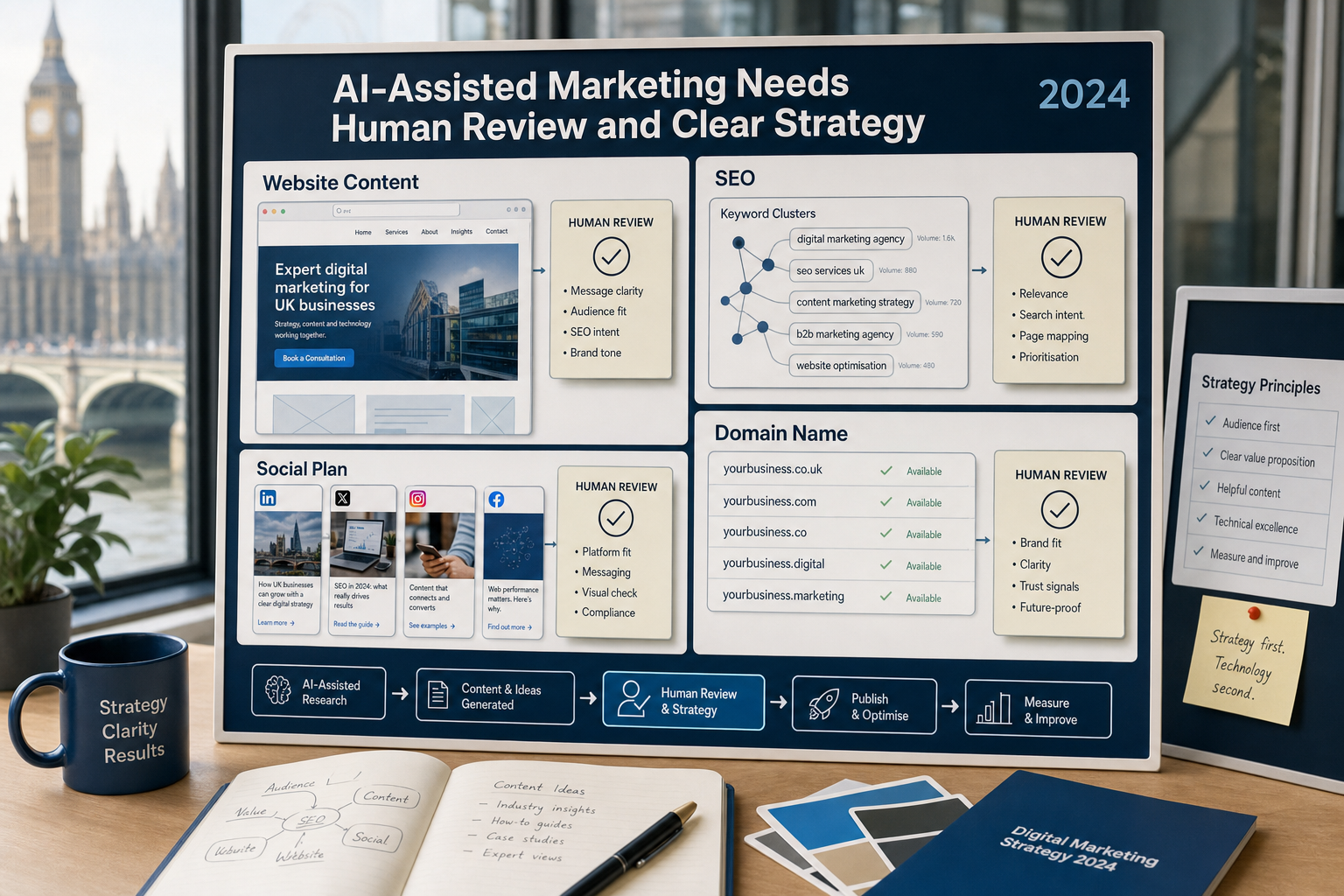
A strong digital marketing workflow usually includes research, strategy, content planning, production, review, publication and measurement. AI can support several of these stages, but it should not take control of all of them. The most reliable results come when your business combines AI-generated ideas with brand knowledge, customer insight and professional review.
Research and idea generation
At the research stage, AI can help explore themes and questions that may matter to your audience. For example, a building contractor might ask for common questions homeowners have before planning an extension. A care provider might ask for content themes that explain trust, safety and service quality in plain English. These ideas can then be checked against real search data, customer enquiries and sales conversations.
This is particularly useful for businesses that know their industry well but have not translated that knowledge into website content. AI can help organise expertise into topic clusters, article outlines and service page sections. However, the facts must always be checked. AI tools can produce confident-sounding statements that are incomplete, outdated or simply wrong.
Drafting and editing
When drafting, AI content tools can provide a starting point for copy. A business might ask for an introduction to a guide, a list of benefits for a service page or a plain-English explanation of a technical process. The draft should then be edited to match the organisation’s voice, accuracy standards and commercial priorities.
Good editing is essential. Generic AI copy often relies on broad claims such as excellent customer service, tailored solutions or high-quality results. These phrases may be true, but they are rarely distinctive on their own. A stronger final version should include specific details about your process, team, location, accreditations, customer concerns and the next step you want the reader to take.
Repurposing content
One of the most useful applications is repurposing. A well-written blog post can become a short LinkedIn update, a series of Facebook posts, an email introduction, a list of frequently asked questions and a short script for a video. AI can help create these variations quickly, while your team checks that the message remains accurate and appropriate for each platform.
This matters because digital marketing often fails when content is created once and then left unused. If your business invests in a strong website article, it should also support social media marketing, sales conversations and email communication. AI can reduce the time needed to adapt the same core message for different audiences and channels.
AI content tools and SEO in January 2023
Search engine optimisation is one of the areas where business owners are most interested in AI content tools. The potential is clear: faster article production, broader keyword coverage and easier content planning. The risk is also clear: publishing large amounts of weak, repetitive or unverified content can damage user trust and may not support long-term search performance.
The most important SEO principle remains simple: content should be useful to people. Search engines are increasingly focused on helpful, relevant information that satisfies the intent behind a search. In January 2023, businesses should be especially careful not to treat AI as a shortcut to mass-producing pages with little expertise. A page that reads smoothly but says nothing new is unlikely to become a lasting asset.
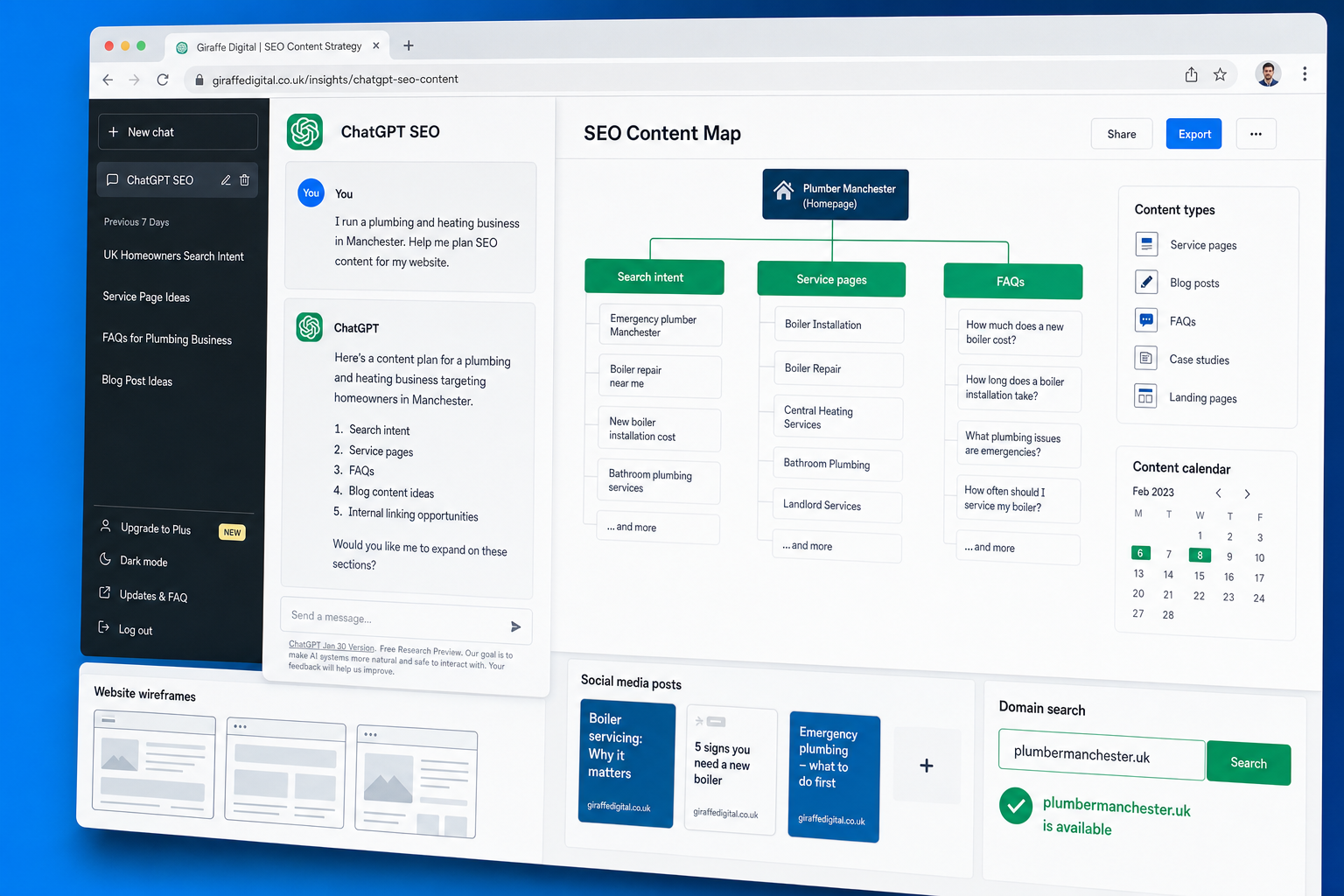
AI can support SEO by helping you map topics, draft meta descriptions, write title options, group customer questions and improve the structure of existing pages. It can also help identify where a service page may need clearer headings, stronger explanations or more specific calls to action. However, keyword research, competitor review, technical SEO and content quality checks still require human expertise.
For UK businesses, local relevance is also important. If your company serves customers in a specific region, your content should reflect real service areas, local considerations and practical details. AI may produce generic national copy unless prompted carefully. For example, instead of asking for a page about commercial cleaning, provide context about the types of premises served, the region, common customer concerns and the standards your team follows.
It is also sensible to maintain an editorial checklist before publishing AI-assisted content. Check that the page answers a real customer need, includes accurate information, avoids exaggerated claims, uses natural language and has a clear purpose. If the topic involves health, finance, law, safety or other sensitive decisions, expert review is even more important.
Improving website design and content together
Website design and content should not be treated as separate projects. A visually polished website will struggle if the copy is vague, while excellent copy can be weakened by poor layout, confusing navigation or slow performance. AI content tools can help during website planning by creating draft page structures and identifying the information users may expect to find.
For example, when planning a new service page, AI can suggest sections such as an opening value proposition, common problems, service benefits, process overview, trust signals, frequently asked questions and enquiry prompts. This gives designers and marketers a starting framework. The final page should then be shaped around the actual customer journey and the business’s commercial goals.
AI can also help make website copy easier to understand. Many businesses write about their services from an internal point of view, using technical language or industry phrases that customers may not search for. By asking an AI tool to simplify a paragraph for a non-specialist audience, you can often identify where the original wording is too complex. This does not mean making the brand sound simplistic; it means making the message accessible.
During a redesign, AI-assisted content planning can be useful for auditing existing pages. It can help summarise what each page is about, suggest missing questions, propose clearer headings and highlight duplicated themes. A human reviewer should then decide what to keep, merge, rewrite or remove. This can make the website project more organised before design layouts are finalised.
Social media marketing with AI support
Social media marketing is another area where AI content tools can improve consistency. Many business owners know they should post regularly, but struggle to decide what to say. AI can help turn business activity into post ideas: a completed project, a frequently asked question, a seasonal reminder, a team update or a useful tip.
Different platforms need different styles. LinkedIn often suits professional insight, recruitment updates and business-to-business education. Facebook can work well for community-focused updates, service reminders and local engagement. Instagram may need concise captions that support stronger visual content. AI can adapt a message for each channel, but it should not remove the human character of the business.
A useful approach is to create a monthly content plan with themes rather than isolated posts. For example, a professional services firm might plan one educational post, one team post, one client question, one service explanation and one trust-building update each week. AI can suggest captions, but the business should add real examples, photographs where appropriate and details that only the team would know.
It is also worth using AI to create variations rather than final posts. Ask for several options, then choose the one that feels most natural. Avoid posting content that sounds overly polished but says little. Social media works best when it is specific, timely and recognisably connected to the organisation behind it.
Brand voice, accuracy and governance
AI content tools can produce a wide range of tones, from formal and technical to friendly and conversational. This flexibility is useful, but it can also create inconsistency. If different team members use AI without guidance, your website, emails and social posts may begin to sound like several different brands.
Businesses should define a simple tone of voice guide before relying heavily on AI-assisted content. This guide might include preferred words, phrases to avoid, the level of formality, how to describe services and how to handle claims. It should also cover practical rules such as using British English, avoiding unsupported promises and checking all statistics before publication.
Governance does not need to be complicated. A clear review process can protect the brand. Decide who can generate drafts, who checks technical accuracy, who approves publication and how published content is monitored. This is particularly important for regulated industries or any business giving advice that could affect significant customer decisions.
Confidentiality also matters. Staff should avoid entering sensitive customer information, private business data or unpublished commercial plans into AI tools unless the organisation has assessed the tool’s terms and data handling carefully. As with any digital platform, businesses should understand what information is being shared and why.
Domain names, digital assets and online presence
AI content tools can assist with naming ideas, campaign themes and website structure, but domain registration still needs careful human judgement. A domain name should be easy to spell, simple to say aloud and clearly connected to the business or brand. For UK organisations, it is often sensible to consider whether the domain supports local trust and long-term brand recognition.
When choosing a domain, avoid names that are too long, awkwardly hyphenated or easily confused with another business. Check that the name fits your wider brand identity, email address format and social media handles where possible. It is also important to think beyond the immediate campaign. A domain that feels suitable for one product launch may be too narrow if the business grows.
AI can generate potential domain ideas, but it cannot reliably judge legal risk, brand distinctiveness or customer perception. Before registering a domain, businesses should carry out appropriate checks, consider trade mark implications and make sure the name does not create confusion. Keep records of domain ownership, renewal dates and access details so that an important digital asset is not dependent on one individual’s inbox.
Practical ways to start using AI content tools
The best way to begin is with a controlled, low-risk workflow. Rather than asking AI to write an entire website, start with tasks that save time without creating major publication risk. For example, ask it to create blog outlines, rewrite rough notes into clearer paragraphs, suggest social media variations or produce questions for a customer guide.
Use detailed prompts. Include the audience, purpose, tone, location, service context and desired format. A prompt such as asking for a blog post about website design is likely to produce generic copy. A stronger prompt would explain that the article is for UK business owners considering a website redesign, should use British English, should focus on lead generation and should include useful points about navigation, content and calls to action.
Build review into the process. Every AI-assisted draft should be checked for accuracy, originality, tone, SEO value and usefulness. If the content is important to your sales journey, treat the AI draft as raw material rather than finished copy. The strongest results often come when a specialist uses AI to accelerate production while still applying professional judgement.
Measure the impact in the same way you would measure any marketing activity. Look at enquiries, rankings, engagement, time on page, assisted conversions and the quality of conversations generated by the content. If AI helps your team publish more consistently but the content does not attract the right audience, the workflow needs refining.
A balanced future for AI-assisted marketing
AI content tools are already changing how businesses plan and produce digital marketing. They can help teams move faster, explore more ideas and make better use of existing expertise. For business owners, the opportunity is not to replace strategy, creativity or quality control, but to remove some of the friction that stops useful content being created.
The businesses most likely to benefit are those that combine AI with clear positioning, a well-designed website, sound SEO practice and a consistent brand voice. AI can draft, suggest and restructure, but it cannot fully understand your customers, your reputation or the commercial nuance of your services. That understanding remains a human advantage.
If your organisation is considering AI content tools in 2023, start with practical workflows, keep quality standards high and make sure every published piece has a clear purpose. Used responsibly, AI can become a valuable part of your digital marketing process, helping your business communicate more clearly and compete more effectively online.