Email automation is one of the most practical ways for a business to improve its customer journey without adding unnecessary manual work. When set up properly, it helps you send the right message at the right time, based on what a visitor, lead or customer has actually done. For UK business owners investing in website design, SEO, branding or wider digital strategy, it can turn a good online presence into a more joined-up commercial system.
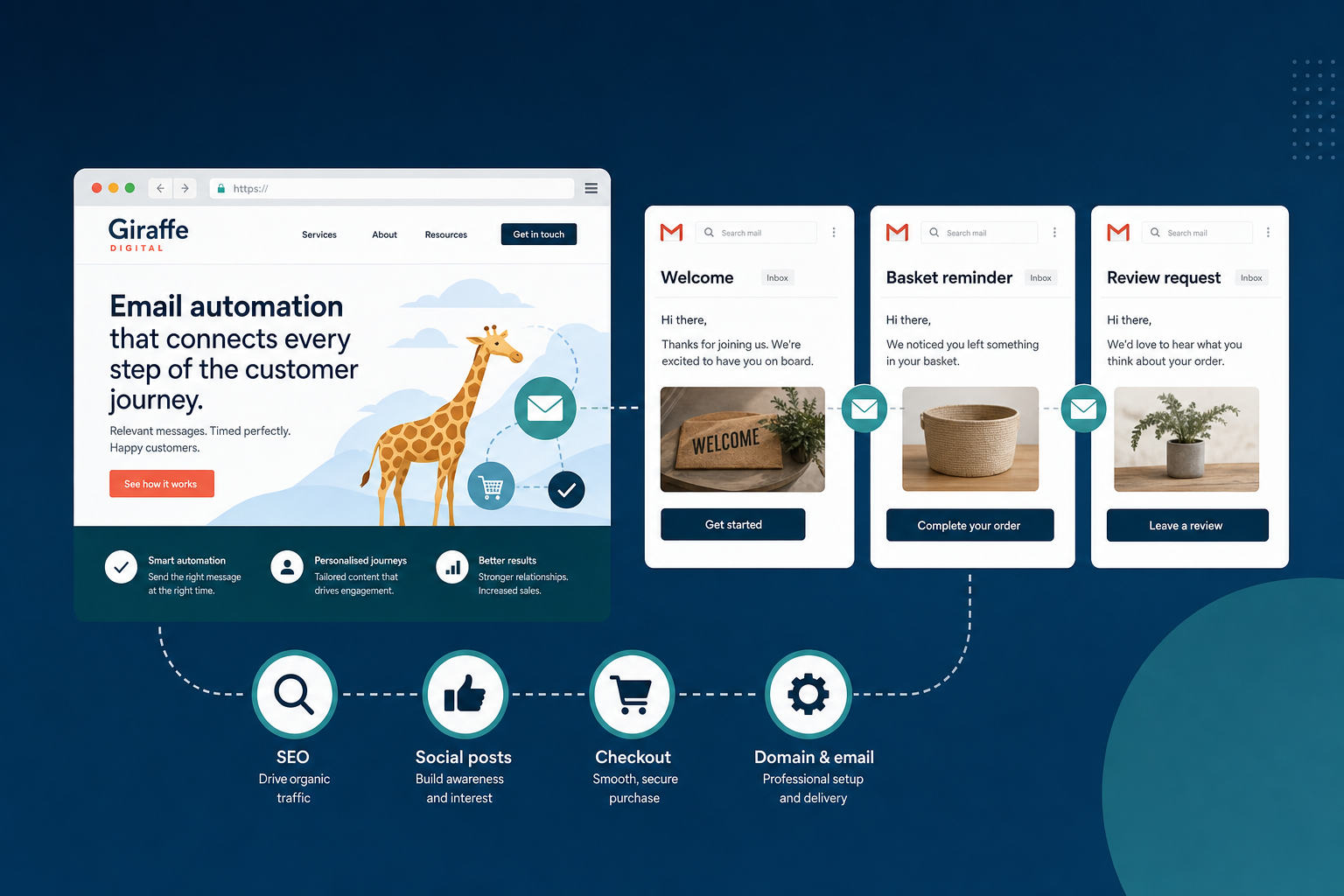
Rather than treating email as a one-off newsletter, automation connects your website, contact forms, ecommerce activity, social media campaigns and customer data. It can welcome new subscribers, follow up enquiries, recover abandoned baskets, request reviews, re-engage quiet customers and support repeat purchases. The result is a more consistent experience for customers and a more efficient process for your team.
What email automation means for a growing business
Email automation is the use of pre-planned email sequences that are triggered by specific actions, dates or customer characteristics. A visitor might sign up to a mailing list, download a guide, complete a quote form, buy a product, abandon a basket or fail to engage for several months. Each of those actions can trigger a relevant email or series of emails.
The value is not simply that messages are sent automatically. The value comes from relevance. A well-planned automated email should feel timely, helpful and connected to the customer’s needs. It should not feel like a generic broadcast sent to everyone at once.
For example, a professional services business might send a short welcome email after someone completes an enquiry form, followed by a helpful guide explaining the next steps in the process. An online retailer might send a basket reminder if a customer leaves without completing a purchase, then follow up after purchase with care instructions, delivery information and a review request. A membership organisation might use email automation to remind members about renewals, events and useful resources.
In each case, the automation supports the customer journey. It reduces friction, answers common questions and keeps your brand visible at moments when the customer is already interested.
Why automated journeys outperform isolated campaigns
One-off email campaigns can still be useful, particularly for product launches, seasonal promotions, company news or important service updates. However, they usually depend on the recipient being ready at the exact moment the campaign is sent. Automated journeys are different because they respond to behaviour and timing.
A potential customer who has just submitted an enquiry is far more engaged than someone who joined a mailing list a year ago. A customer who has just purchased a product may be open to guidance, support or complementary products. Someone who has visited a key service page several times may need reassurance, proof points or a clear call to action.
Email automation allows a business to build these touchpoints in advance. This creates several advantages:
- Consistency: every lead or customer receives a considered response, even when your team is busy.
- Speed: useful information can be sent immediately after a form submission, purchase or sign-up.
- Relevance: messages can be based on interests, behaviour, location or purchase history where appropriate.
- Efficiency: staff spend less time sending routine follow-ups and more time on valuable conversations.
- Measurement: you can review which emails are being opened, clicked and acted upon.
For many businesses, the biggest improvement is not dramatic. It is the steady removal of small gaps in the customer journey. A missed follow-up, a confusing next step or a lack of reassurance can all cause potential customers to drift away. Automation helps close those gaps.
Useful email automations to consider
The best automation plan depends on your business model, customer journey and available data. It is usually better to start with a few high-value sequences than to build a complicated system that is difficult to maintain. The following examples are a strong starting point for many UK businesses.
Welcome emails
A welcome email is often the first automated message a subscriber receives. It should confirm what they have signed up for, set expectations and make it easy to take a useful next step. This might include visiting a key service page, reading a guide, booking a consultation or updating preferences.
For a brand-led business, the welcome sequence is also a chance to introduce your values, tone of voice and areas of expertise. Keep it concise and avoid overwhelming the subscriber with too many messages too quickly.
Lead nurture sequences
Not every enquiry is ready to become a customer immediately. Lead nurture emails help educate and reassure people over time. They may include frequently asked questions, service comparisons, case study-style explanations, process guides, testimonials or links to useful blog content.
This is particularly valuable for considered purchases, professional services, business-to-business services and higher-value ecommerce products. The aim is not to push aggressively, but to help the potential customer make a confident decision.
Abandoned basket reminders
For ecommerce websites, abandoned baskets are a clear opportunity. A customer has shown intent but has not completed the order. A simple reminder can recover some of these missed sales, especially when it includes practical information such as delivery details, returns guidance, payment reassurance or product support.
It is important to avoid sounding intrusive. A helpful tone usually works better than pressure. If a discount is used, it should fit your wider pricing and brand strategy rather than becoming an automatic expectation.
Post-purchase emails
The customer journey does not end at payment. Post-purchase automation can improve satisfaction, reduce support queries and encourage repeat business. Useful messages might include order confirmation, delivery information, set-up instructions, care advice, renewal reminders and review requests.
For service-based businesses, a post-purchase or post-project sequence might include onboarding information, milestone reminders, feedback forms or guidance on how to get the most from the service.
Re-engagement emails
Over time, some subscribers stop opening or clicking. Re-engagement emails help identify whether they still want to hear from you. This can improve list quality and reduce the risk of repeatedly emailing people who are no longer interested.
A re-engagement sequence might ask subscribers to update their preferences, highlight new resources or offer a simple way to remain subscribed. If they do not respond, it may be sensible to reduce the frequency or remove them from regular marketing emails.
Your website design is central to automation success
Email automation performs best when your website is designed with the customer journey in mind. If your forms are hidden, your calls to action are unclear or your landing pages do not match the promise of your campaigns, automation will have limited impact.
A well-designed website should make it clear what action a visitor can take next. This might be requesting a quote, booking a call, downloading a guide, joining a mailing list, creating an account or completing a purchase. Each of these actions can feed into an automated journey.
Good website design also supports trust. Visitors are more likely to share their email address when the page looks professional, loads quickly, explains the benefit clearly and reassures them about how their information will be used. Privacy notices, consent wording and preference options should be easy to understand.
For ecommerce, technical reliability is especially important. Basket, checkout and payment processes need to work smoothly across desktop and mobile. If customers are dropping out because of confusing design or technical errors, abandoned basket automation may recover a few orders, but it will not solve the underlying problem. Automation should support a good user experience, not compensate for a poor one.
Connecting email with SEO, content and social media
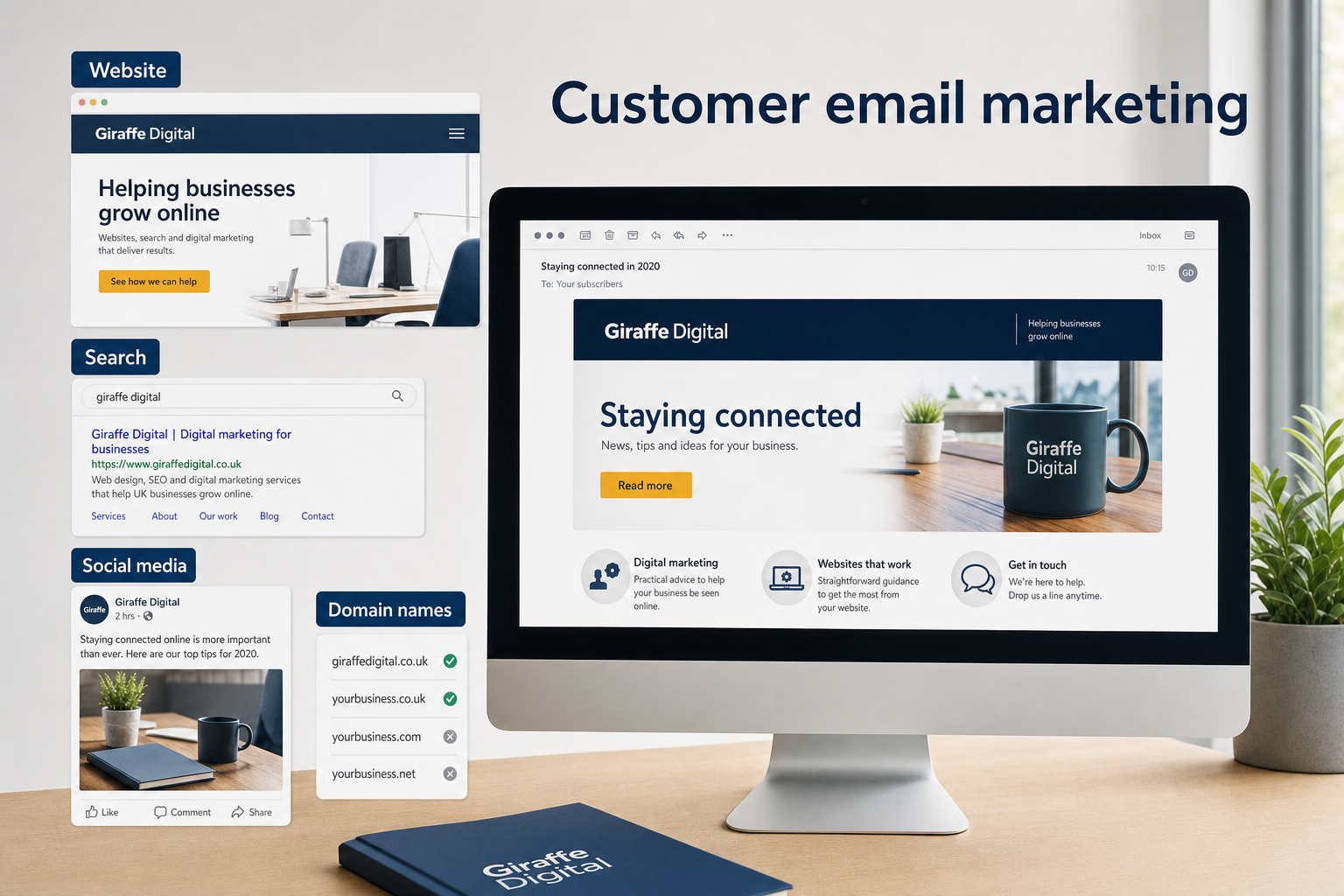
Email automation becomes more powerful when it is connected to the rest of your digital marketing. SEO brings visitors to useful pages. Social media helps build awareness and engagement. Content marketing answers customer questions. Email automation then helps maintain the relationship after the first visit or interaction.
For example, a business might publish an SEO-focused guide that answers a common customer question. Visitors who find the article through search can be invited to download a related checklist or sign up for further advice. Once subscribed, they can receive a short email sequence that expands on the topic, introduces relevant services and encourages a conversation.
Social media campaigns can work in a similar way. Rather than sending all paid or organic social traffic to a generic homepage, you can direct people to a focused landing page with a clear offer. If they sign up, email automation can continue the conversation after the social post has disappeared from their feed.
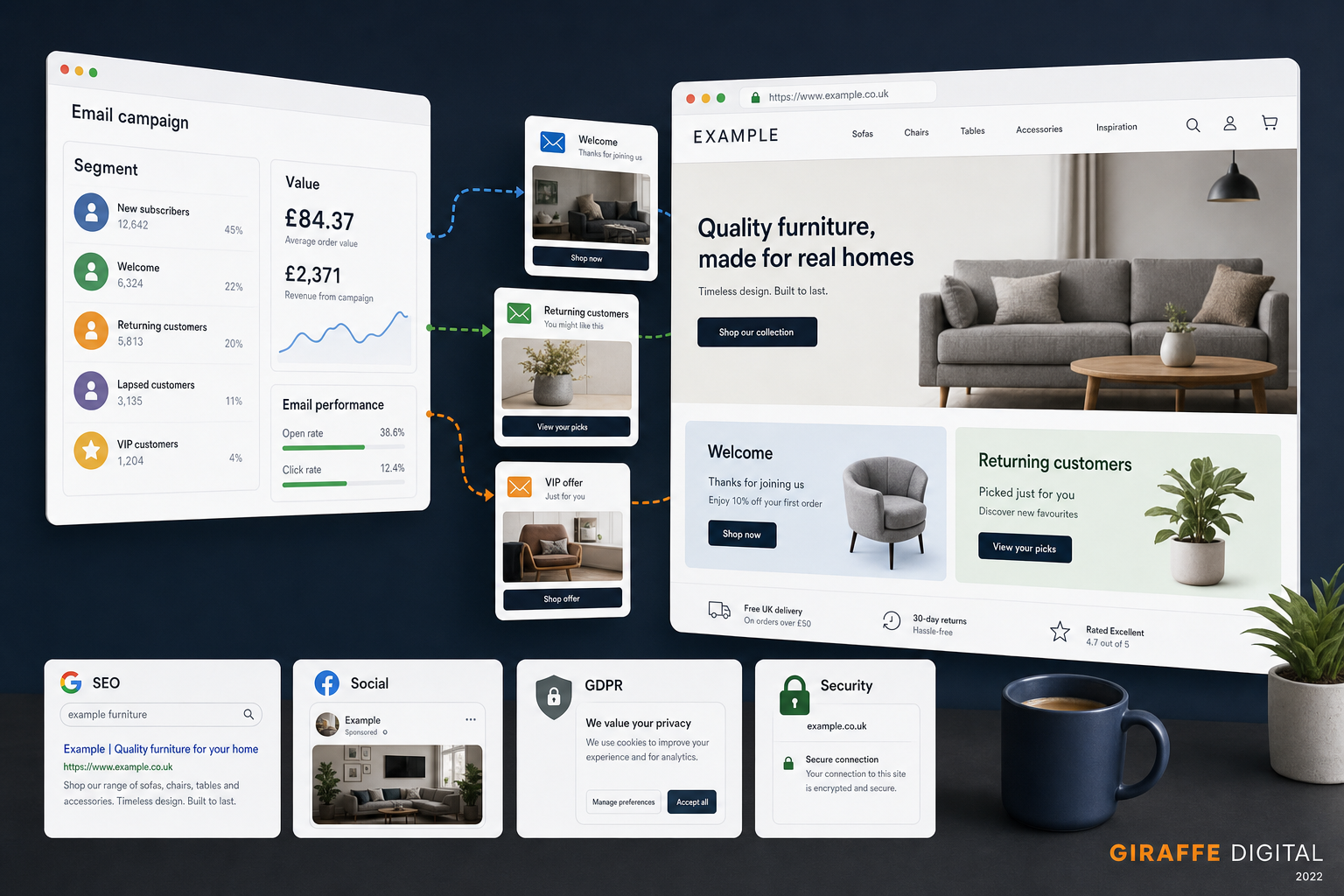
This joined-up approach also helps with brand consistency. The message someone sees on a search results page, social media post, landing page and email should feel connected. The visuals, wording and offer do not need to be identical, but they should clearly belong to the same brand and customer journey.
Data, consent and practical compliance
Any email automation strategy must be built on responsible data handling. UK businesses should be clear about what people are signing up to, how their data will be used and how they can unsubscribe. Consent should be recorded properly, and marketing lists should be managed carefully.
Automated emails should also be relevant to the relationship you have with the recipient. A customer service email, such as an order confirmation, is different from a marketing email promoting additional products. Mixing these carelessly can damage trust.
It is also worth reviewing how much personalisation is appropriate. Using a first name or referencing a recent action can be helpful, but excessive personalisation may feel uncomfortable. The best automation uses data to be useful, not to show off how much information has been collected.
In 2021, it is also sensible to treat open rates with care. Privacy features in some email clients can make opens less reliable as a performance measure. Clicks, conversions, replies, enquiries, purchases and preference updates often provide a clearer view of genuine engagement.
Domain names and technical foundations
Email automation relies on sound technical foundations. Your domain name, website hosting, email authentication and tracking set-up all affect performance and trust. A professional domain that matches your brand helps customers recognise your emails and website more easily.
When choosing a domain name, keep it clear, memorable and easy to spell. Avoid unnecessary hyphens, confusing abbreviations or wording that could be misheard over the phone. If your business serves a UK audience, consider whether a UK-focused domain extension supports trust and recognition. It is also sensible to register relevant variations where there is a clear brand protection reason, but avoid buying excessive domains without a plan.
Do not use a domain name that is too similar to another organisation’s brand, and check that your chosen name fits your wider branding, social media handles and search presence. A domain is not just a technical address; it is part of how customers remember and return to your business online.
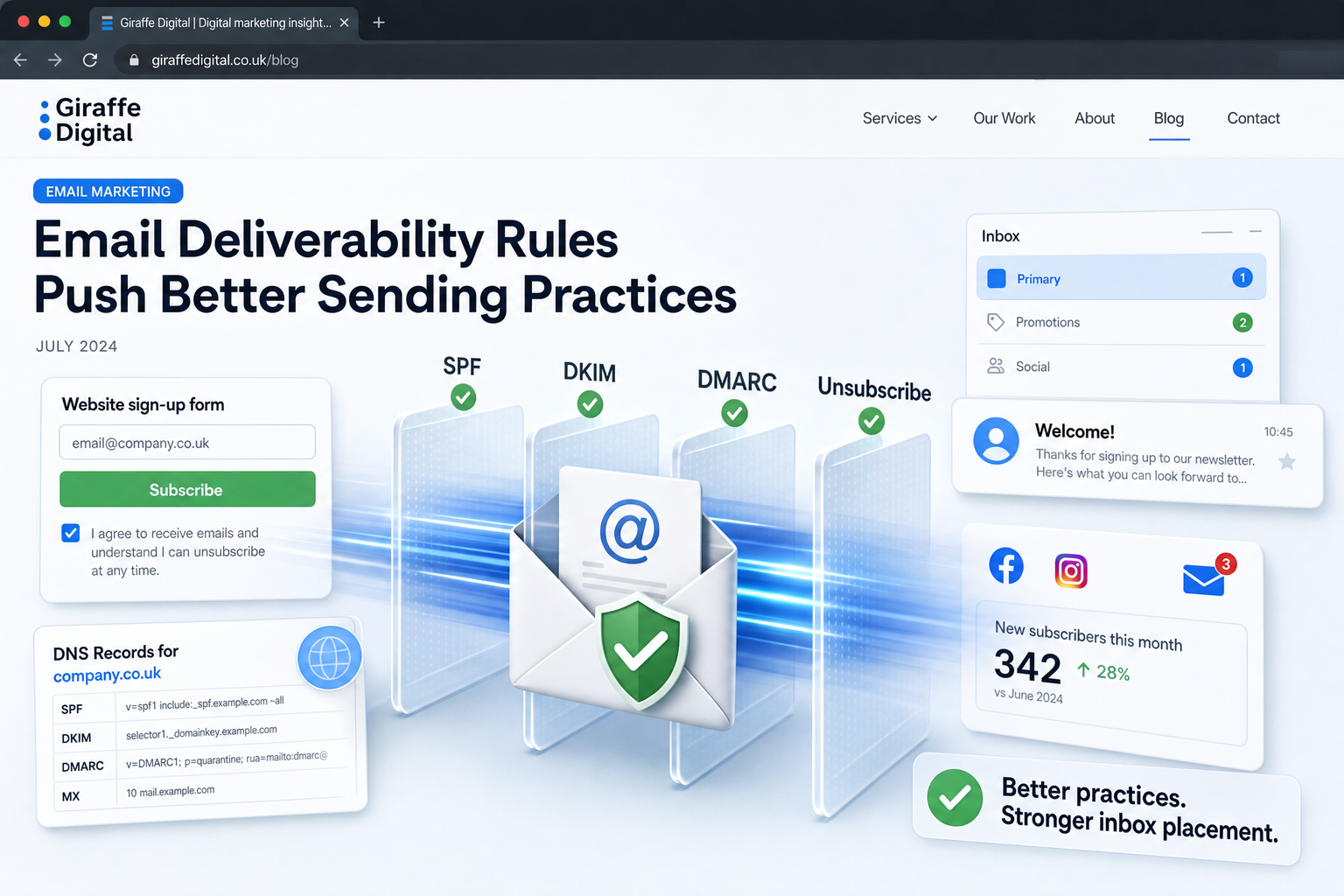
From an email perspective, authentication is important. Your email marketing platform and website should be configured so that automated messages are sent reliably and appear legitimate. This may involve adding records to your domain settings and testing forms, confirmation emails and customer notifications before launch.
Planning content for automated emails
Automation is not only a technical exercise. The content of each message matters. Every email should have a clear purpose and one primary next step. If you try to include too many links, offers or messages, the reader may do nothing.
A useful planning process is to map the customer journey and ask what the recipient needs at each stage. Early-stage subscribers may need education and reassurance. Enquirers may need process information, credibility and a clear way to speak to you. New customers may need onboarding and support. Repeat customers may appreciate relevant recommendations or loyalty-focused content.
Strong automated emails are usually written in plain English. They use short paragraphs, clear headings where appropriate and direct calls to action. They should sound like your brand, but they should not be overcomplicated. A helpful email that answers a real question will usually outperform a polished message that says very little.
Design matters too. Emails should be easy to read on mobile, with clear spacing, accessible contrast and buttons that are large enough to tap. Images can support the message, but the email should still make sense if images do not load. This is especially important for service businesses, where clarity and trust are more important than visual complexity.
Measuring the business value of email automation
To understand whether email automation is working, define the purpose of each sequence before you build it. A welcome sequence might be judged by clicks to key pages or enquiries generated. An abandoned basket sequence might be measured by recovered orders. A lead nurture sequence might be assessed by consultation bookings, quote requests or sales conversations.
Useful measures can include:
- Delivery rate: whether emails are reaching subscribers successfully.
- Click-through rate: whether recipients are interested enough to take the next step.
- Conversion rate: whether those clicks lead to enquiries, purchases or bookings.
- Unsubscribe rate: whether the content or frequency is causing people to leave.
- Revenue or enquiry attribution: where ecommerce or enquiry tracking is configured appropriately.
It is important to review results in context. A small, well-targeted list may generate more business value than a large list with weak engagement. Likewise, an email with a modest click rate may still be valuable if it helps high-intent prospects take an important step.
Testing can improve results over time. You might test subject lines, send times, email length, calls to action or landing page content. Make changes one at a time where possible so that you can understand what has made the difference.
Getting started without overcomplicating it
The most effective way to begin is to identify the customer journey points where follow-up is currently inconsistent or time-consuming. Look for common questions, repeated manual emails, missed opportunities and stages where customers hesitate.
For many businesses, a practical first phase might include a welcome email, a form enquiry follow-up, a post-purchase message and a re-engagement email. Ecommerce businesses may also prioritise abandoned basket and post-purchase support sequences. Service businesses may focus on enquiry nurture and appointment reminders.
Before switching automation on, test every step. Submit your own forms, complete test purchases where appropriate, check email wording, review links and confirm that data is being stored correctly. Make sure the experience feels natural from the customer’s point of view.
Email automation should not remove the human side of your business. Instead, it should make sure routine communication is reliable, timely and useful, allowing your team to focus on the conversations where personal input matters most.
A stronger journey from first visit to loyal customer
Email automation is valuable because it connects interest with action. It helps businesses respond quickly, communicate consistently and guide customers through a more thoughtful journey. When supported by a well-designed website, clear branding, responsible data practices and joined-up digital marketing, it can become one of the most dependable parts of your online strategy.
For UK business owners planning website improvements, SEO activity or a broader digital marketing programme, automation should be considered early rather than added as an afterthought. The stronger the journey, the easier it becomes for customers to understand your value, trust your brand and take the next step.