Email marketing continues to be one of the most useful digital marketing tools available to UK businesses, provided it is used with care. A well-planned email can bring past customers back to a website, introduce a new service, support a seasonal campaign and keep a brand visible between purchases. A poorly planned email, however, can be deleted in seconds, marked as junk or remembered for all the wrong reasons. The difference is respect: respect for the reader’s time, inbox, privacy and expectations.
Why email marketing still earns its place
There is a great deal of attention on social media, search engine optimisation and attractive website design, and rightly so. Each of these helps a business to be found, understood and trusted online. Email marketing works slightly differently. It is not only about reaching new people; it is about maintaining a relationship with people who have already shown some interest in your organisation.
That makes it valuable for many types of business. A local retailer can announce new stock or a seasonal event. A professional services firm can share a short guide that answers a common client question. A hotel or restaurant can encourage repeat bookings. A business-to-business supplier can remind customers of deadlines, product updates or helpful resources. In each case, email marketing can lead readers back to a relevant page on the website, where they can enquire, buy, book or find out more.
It is also a channel you have more control over than many public platforms. Social networks are useful for conversation and visibility, but not every follower will see every update. Search traffic is valuable, but it depends on people actively looking for what you provide. Email gives you a direct route to people who have agreed to hear from you, which is why the responsibility to send something worthwhile is so important.
Respect starts with permission
The foundation of good email marketing is a list of people who have given you permission to contact them. Buying a list of addresses may look tempting, but it rarely produces the right sort of response and can damage your reputation. The recipients do not know you, did not ask to hear from you and are far more likely to ignore the message or complain.
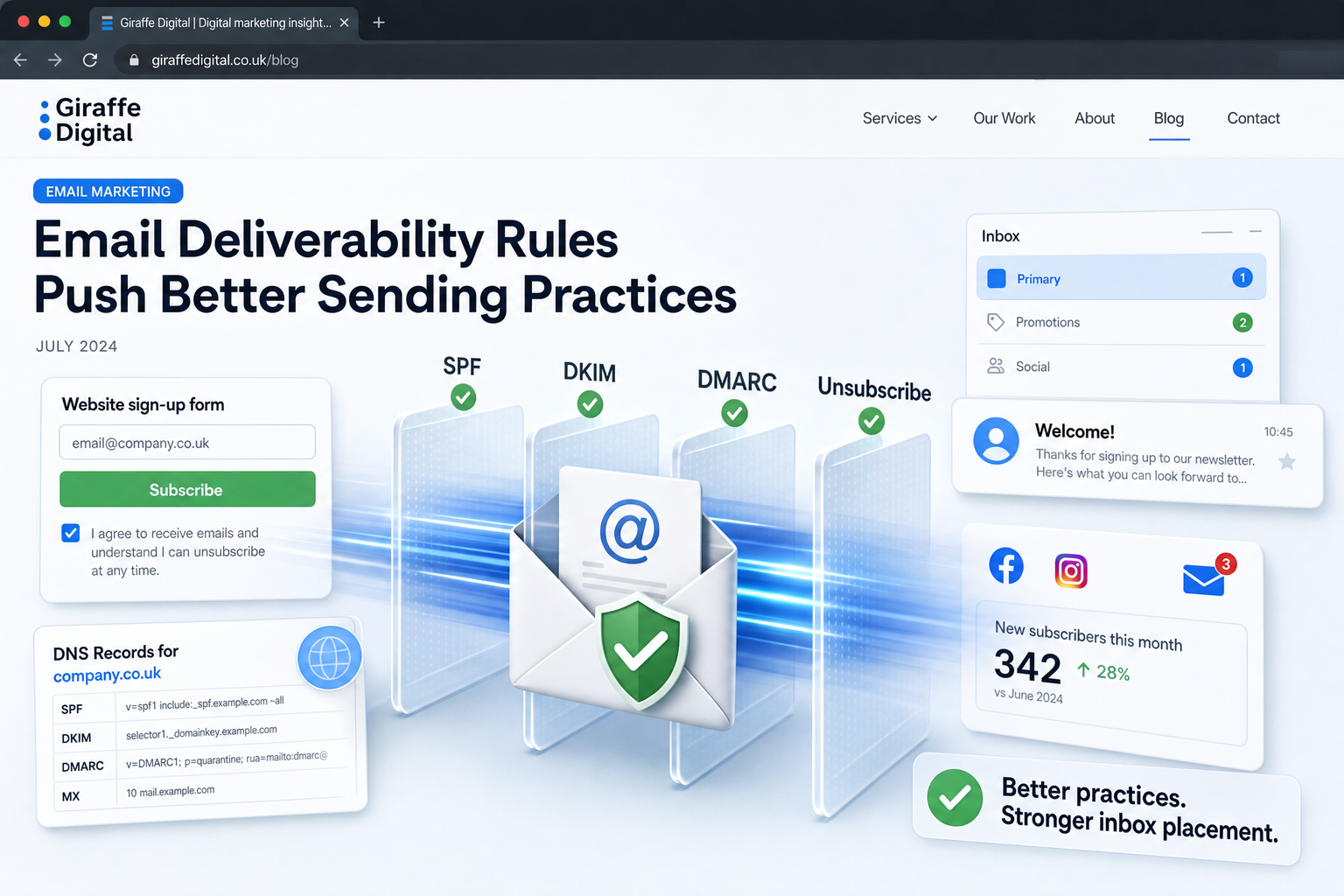
UK businesses should also pay attention to the Privacy and Electronic Communications Regulations and the Data Protection Act. In practical terms, this means being clear about what people are signing up to, keeping personal information secure and providing a simple way to unsubscribe. Good manners and good compliance usually point in the same direction: do not surprise people with unwanted messages.
Useful ways to build an email list include adding a newsletter sign-up form to your website, offering an option to join your mailing list when someone makes an enquiry, or providing a clear invitation at an event or point of sale. The wording should explain the benefit. For example, rather than simply saying sign up to our newsletter, a garden centre might say receive monthly planting tips and seasonal offers. A solicitor might invite readers to receive plain English updates for small business owners. The clearer the promise, the more likely the right people are to subscribe.
The reader should know why you are writing
Every email should have a purpose. It may be to inform, to encourage a booking, to invite a reply, to share a useful article or to introduce a new product. If the purpose is unclear to you, it will almost certainly be unclear to the reader.
A strong email does not need to say everything. In many cases, the best approach is to provide a short introduction, a few useful points and a clear link back to the website. The website can then do the heavier work: explaining the service, displaying images, showing case studies, answering common questions and encouraging an enquiry. This is where email marketing and website design should support one another. If your email promises a useful guide but the link leads to a cluttered or confusing page, the opportunity is weakened.
Before sending a campaign, ask a few simple questions. Who is this for? What do they already know? What problem are we helping them solve? What action would we like them to take? Is that action obvious? These questions prevent email marketing from becoming a habit of broadcasting for the sake of it.
Subject lines should be clear, not clever at any cost
The subject line is often the deciding factor in whether an email is opened. It should be honest, specific and relevant. Overly dramatic subject lines can increase curiosity in the short term but reduce trust if the content does not deliver.
For a business audience, clear usually beats vague. A subject line such as Five ways to prepare your website for Christmas orders is more useful than You will not believe what happens next. A restaurant might use New autumn menu now available. An accountancy practice might use Reminder: preparing your records before year-end. The reader immediately understands the value of opening the message.
It is also worth keeping subject lines reasonably concise, as many people now check email on smartphones as well as desktop computers. A subject line that makes sense at a glance is more likely to perform well across different devices and email programmes.
Design emails for real inboxes
Email design in 2013 still has to cope with a wide range of email clients and settings. Some readers will view messages in desktop software, some through webmail and an increasing number on mobile devices. Images may be blocked by default, and not every email client will display more advanced layout techniques in the same way.
For that reason, simple and robust design is usually best. Use a clear hierarchy, readable text, recognisable branding and obvious calls to action. Do not place all important information inside images, because some readers may not see those images unless they choose to download them. A sensible balance of HTML text and supporting images will normally work better than a single large graphic.
The email should also feel connected to the rest of your brand. Colours, tone of voice, logo treatment and photography should be consistent with your website, printed materials and social media profiles. This consistency helps readers recognise you quickly, especially if they are scanning a busy inbox.
Mobile reading should not be treated as an afterthought. Even if the final enquiry happens later on a desktop computer, the first impression may happen on a phone. Keep paragraphs short, use generous spacing, make buttons or text links easy to select, and ensure the landing page on your website is just as usable as the email itself.
Segmentation makes email more useful
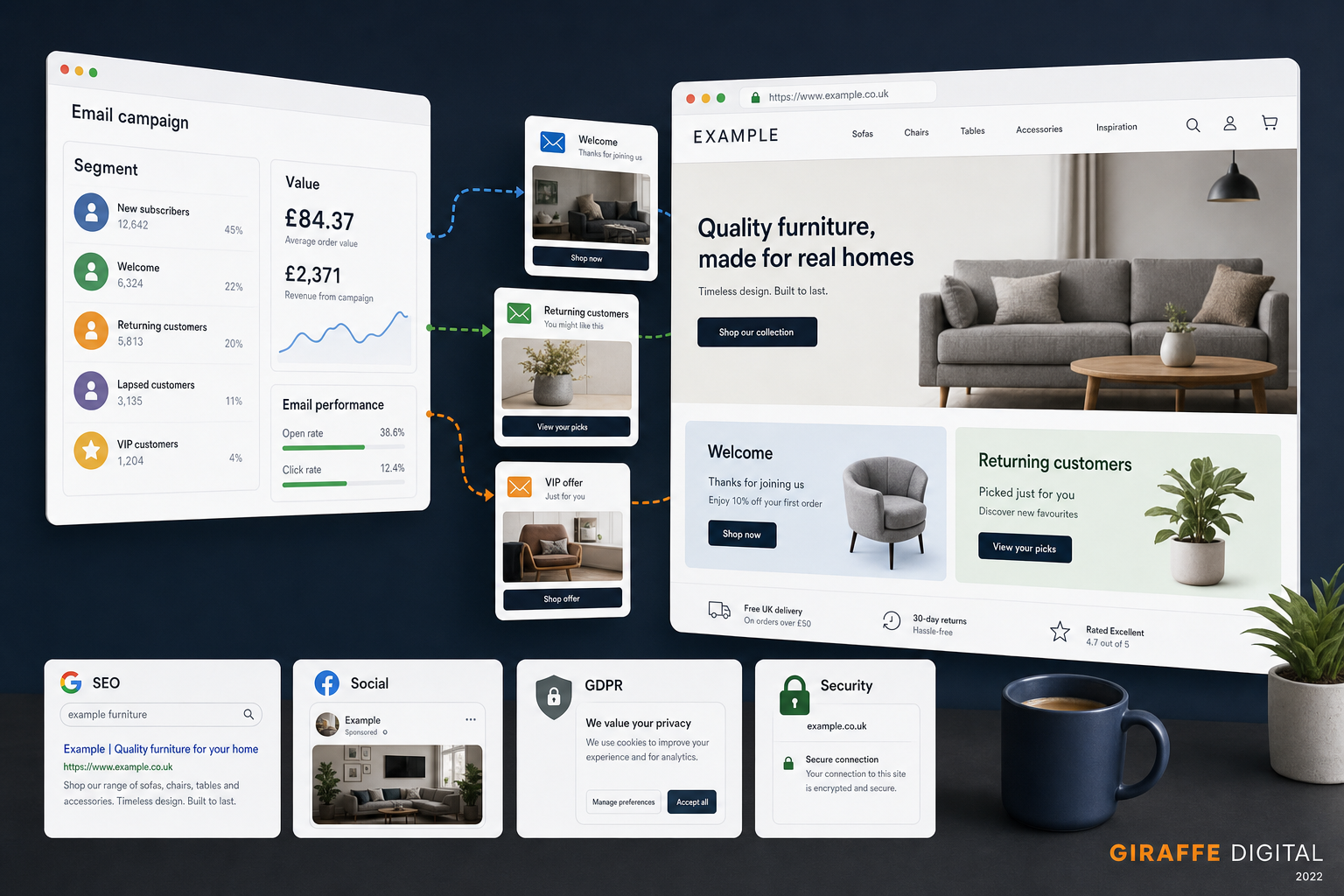
Not every subscriber needs to receive every message. One of the simplest ways to improve email marketing is to divide your list into sensible groups. This does not need to be complicated. You might separate customers from prospects, trade contacts from consumers, local contacts from national contacts, or people interested in different services.
Segmentation allows you to send more relevant messages. A web design agency, for example, might send one email to businesses with older websites about improving usability and another to newer clients about maintaining content and measuring enquiries. A clothing retailer might send different seasonal messages to customers based on previous interests. A training provider might separate introductory courses from advanced programmes.
The aim is not to create endless administration. It is to avoid treating every reader as though they are exactly the same. When people receive emails that match their interests, they are more likely to open, click and remain subscribed.
Email works best when it supports search and social media
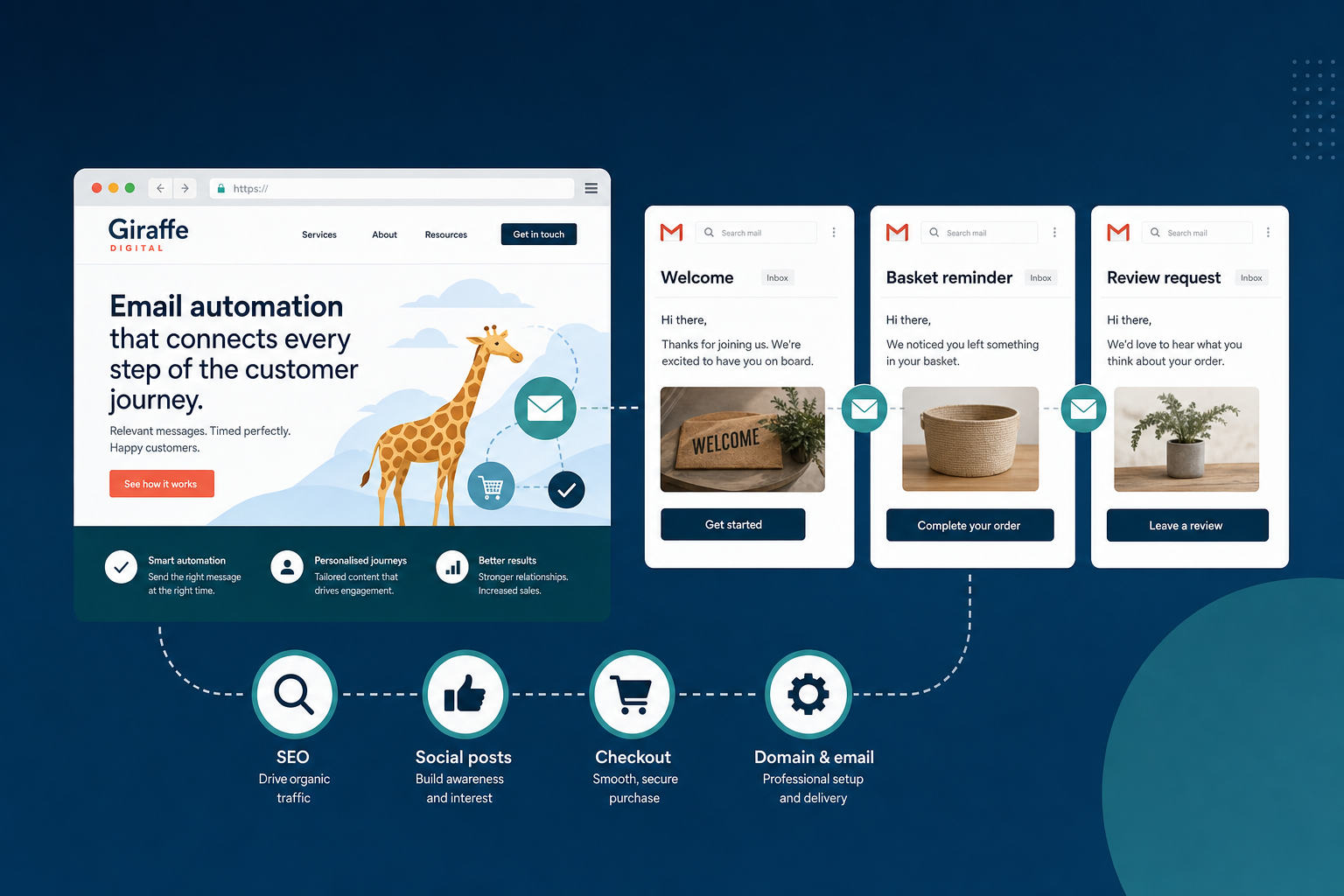
Email marketing should not sit in isolation. It can strengthen other digital activity when it is planned as part of a wider strategy. If you publish a helpful article on your website, email can bring it to the attention of people who may not have found it through search. If you are running a social media campaign, email can encourage subscribers to follow, share or take part. If you are launching a new service page, email can help attract early visitors and enquiries.
Search engine optimisation in 2013 is increasingly focused on quality, relevance and usefulness rather than quick tricks. Publishing helpful website content gives your business more opportunities to answer customer questions and attract appropriate search traffic. Email can extend the life of that content by sharing it directly with an interested audience. A useful guide, checklist or news item can be promoted by email, discussed on social media and made available on the website for future visitors.
Social media platforms such as Facebook, Twitter, LinkedIn and Google+ can also help widen the reach of your email content. Include social sharing options where they are genuinely useful, but do not overload the message with distractions. If the main aim is to book a consultation, make that the clearest action. If the aim is to spread an announcement, sharing may deserve more attention.
Measure what matters
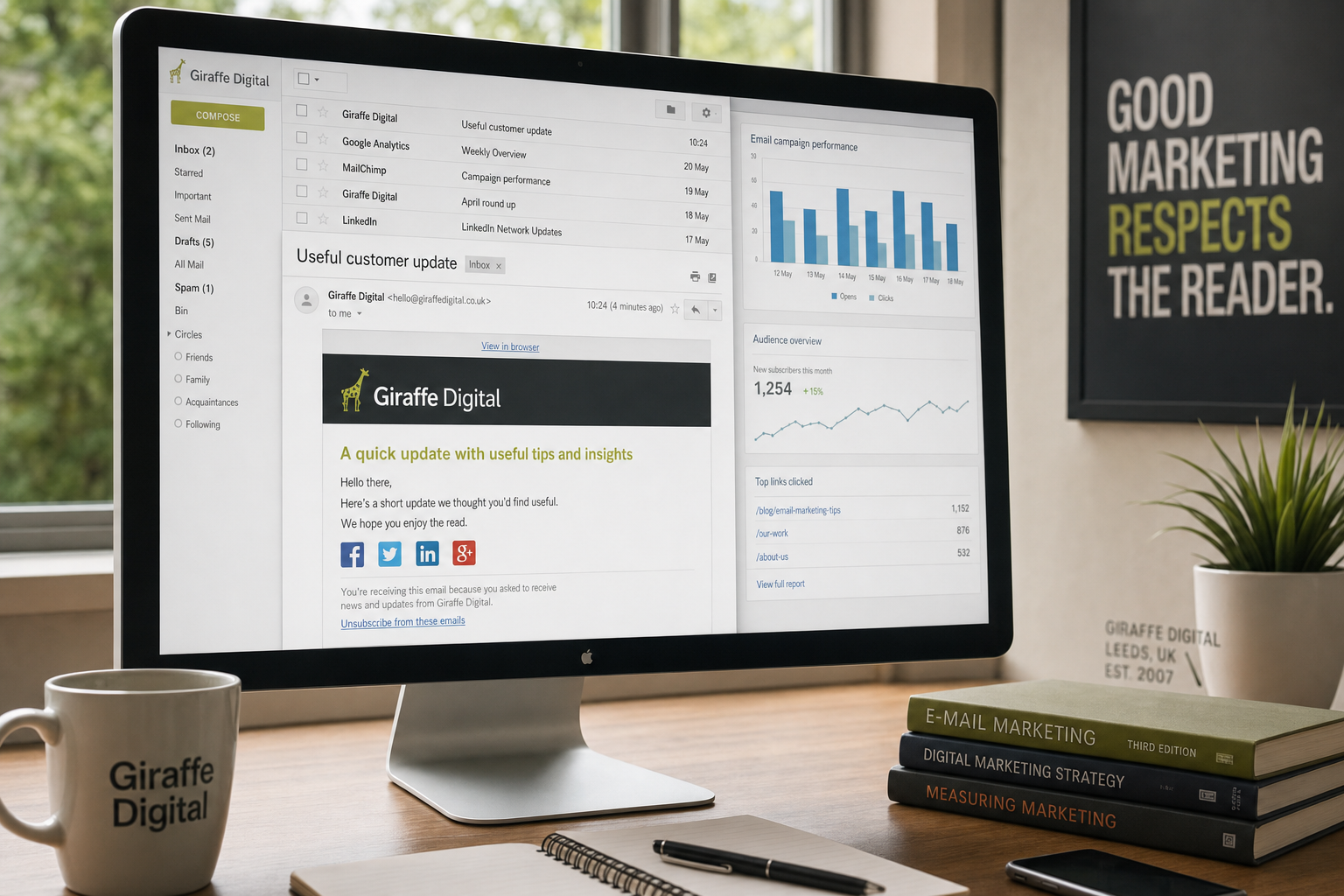
Email marketing is measurable, but it is easy to focus on the wrong figures. Open rates are useful as a broad indicator, but they are not perfect because image blocking and different email clients can affect tracking. Click-through rates usually give a clearer sense of whether the content encouraged action. Beyond that, the most important measures are the ones connected to business value: enquiries, bookings, purchases, downloads, repeat visits or replies.
It is sensible to review each campaign and ask what can be improved. Did a practical subject line perform better than a promotional one? Did readers click the main call to action? Did they prefer a short article or a longer guide? Did one segment respond better than another? Small improvements made over time can have a significant effect.
Testing can be useful, but it should be purposeful. Changing a button colour without understanding the audience may not tell you much. Testing two different subject lines, offers or landing pages can be more informative. Keep records of what you learn so that future campaigns become more considered rather than repetitive.
Your website must be ready for the click
An email campaign is only as strong as the experience it leads to. If someone clicks from an email and arrives on a slow, outdated or confusing website, the campaign may lose momentum immediately. This is particularly important for businesses investing in website design or considering a redesign.
A good landing page should match the email that sent the reader there. If the email promotes a guide, the page should make that guide easy to find. If it invites readers to book an appointment, the booking or enquiry route should be obvious. If it introduces a service, the page should explain the benefits clearly and provide supporting detail without overwhelming the visitor.
Trust signals matter as well. Clear contact details, professional design, well-written copy, relevant photography, testimonials where appropriate and a consistent domain name all help reassure visitors. If your email address and website domain look professional and match your brand, your communications are more credible. Businesses choosing a domain should aim for something memorable, easy to spell and appropriate for their market. For many UK organisations, a .co.uk address remains a familiar and trusted choice, while a .com may also be useful for broader commercial activity. Avoid overly long names, confusing hyphens and spellings that need constant explanation.
Frequency should be earned
There is no single correct sending frequency for every business. A daily email may be acceptable for a publication with time-sensitive updates, but it would be far too much for many professional services firms. A monthly or fortnightly email is often a good starting point for small and medium-sized businesses, provided there is something useful to say.
The important principle is that frequency should be earned by value. If readers regularly receive helpful, relevant emails, they are more likely to welcome them. If they receive repetitive sales messages, even occasional emails can feel too frequent.
It is better to send a well-prepared email once a month than a rushed message every week. Planning ahead helps. Build a simple content calendar around seasonal events, customer questions, product launches, service reminders and useful website articles. This makes email marketing feel less like a last-minute chore and more like part of your ongoing communication with customers.
A respectful approach is commercially stronger
Respectful email marketing is not soft or vague. It is commercially sensible. People are more likely to buy from, enquire with and recommend businesses they trust. Every message either adds to that trust or takes something away from it.
The best email marketing feels less like an interruption and more like a useful reminder from a business the reader already recognises.
For UK business owners, the opportunity is clear. Build a permission-based list, send relevant messages, design for real inboxes, connect campaigns to a capable website and measure meaningful results. Email marketing still works when it respects the reader because it treats the inbox as a relationship, not merely a delivery system.
Whether you are reviewing your website, improving your search visibility, refining your brand or becoming more active on social media, email can support the wider strategy. Used thoughtfully, it keeps your business present, helpful and easy to return to when the reader is ready to act.