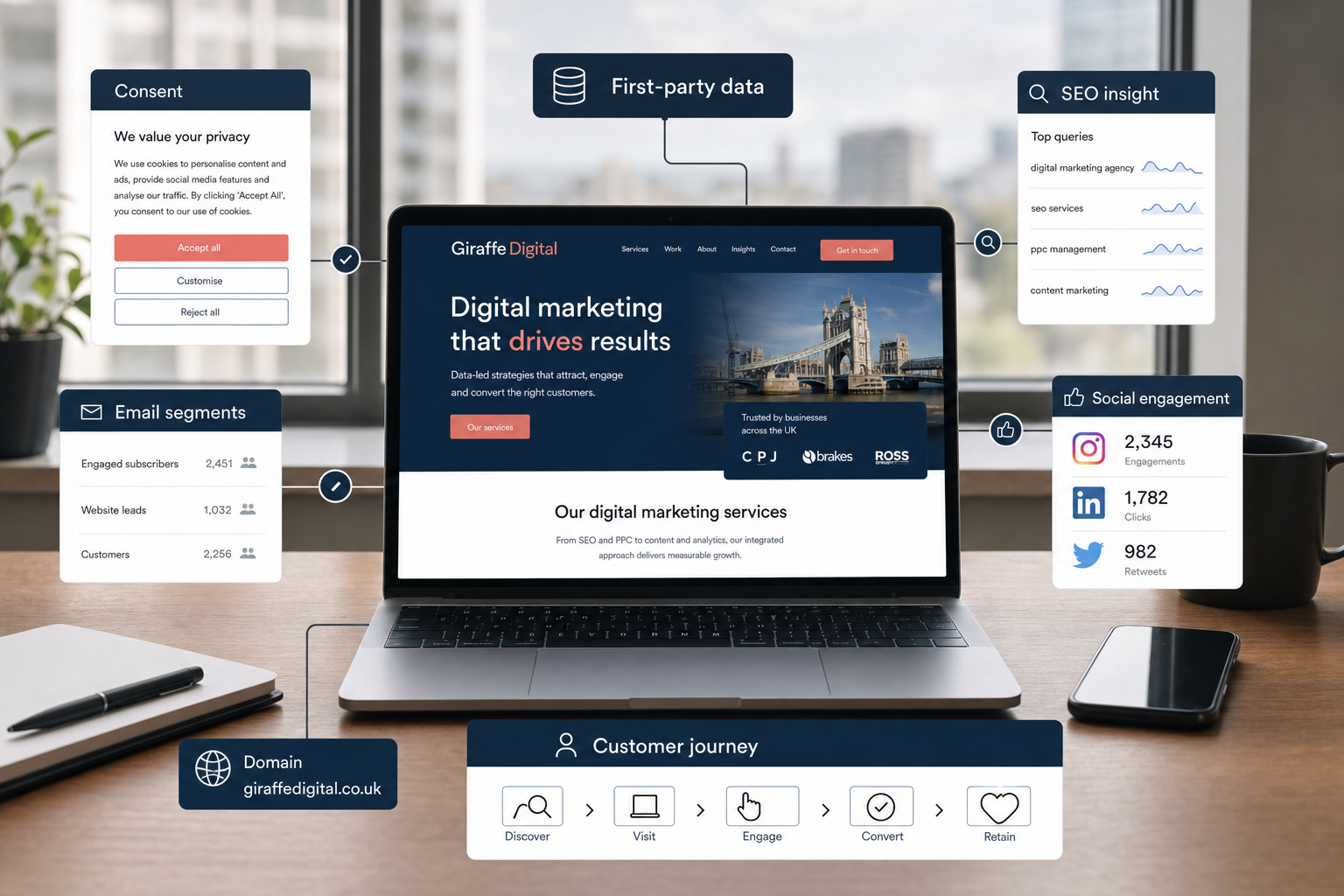
First-party data marketing gives businesses a clearer, more reliable way to understand customers and improve digital performance. Rather than depending heavily on rented audiences or broad platform assumptions, it focuses on information people share directly with your organisation through your website, enquiries, email sign-ups, purchases, bookings, downloads, surveys and customer conversations. For UK business owners investing in website design, SEO, branding or digital strategy, this data can help make marketing more relevant, measurable and resilient.
The shift towards first-party data is not only about privacy. It is also about quality. When your data comes from real interactions with your own audience, it can inform better decisions about content, user journeys, campaign targeting, product positioning and customer service. Used responsibly, it helps businesses create more useful experiences while respecting consent, transparency and trust.
What first-party data means for your business
First-party data is information collected directly by your organisation from people who interact with you. It may include website behaviour, enquiry form submissions, email preferences, purchase history, appointment bookings, customer service questions, account details, survey responses and event registrations. It can also include aggregated insights from analytics platforms, such as which service pages attract qualified visits or which blog posts lead to enquiries.
This is different from third-party data, which is gathered by external organisations and often bought, shared or used through advertising networks. It is also different from second-party data, which is another organisation’s first-party data shared through a partnership. First-party data is usually more relevant because it reflects your own audience, your own offers and your own customer journey.
For a local service business, useful first-party data might show that visitors who read a guide before requesting a quote are better informed and more likely to convert. For an e-commerce retailer, it might reveal that returning customers respond well to category-specific email campaigns. For a professional services firm, it might highlight which sectors are most engaged with case studies, webinars or downloadable resources.
Why first-party data marketing matters in 2023
Digital marketing in 2023 is shaped by higher expectations around privacy, more careful use of tracking technologies and greater competition for attention. UK businesses need to be mindful of the UK GDPR and PECR when collecting and using personal data, especially for email marketing, cookies and remarketing. Consent, transparency and clear privacy information are not optional extras; they are part of building a trustworthy online presence.
At the same time, search engines and social platforms are becoming more competitive. Advertising costs can fluctuate, organic rankings take sustained effort, and platform algorithms can change the reach of social content. First-party data helps reduce dependence on any single channel. If you understand what your audience wants and have permission to communicate with them, you can build stronger relationships beyond one advert, post or search result.
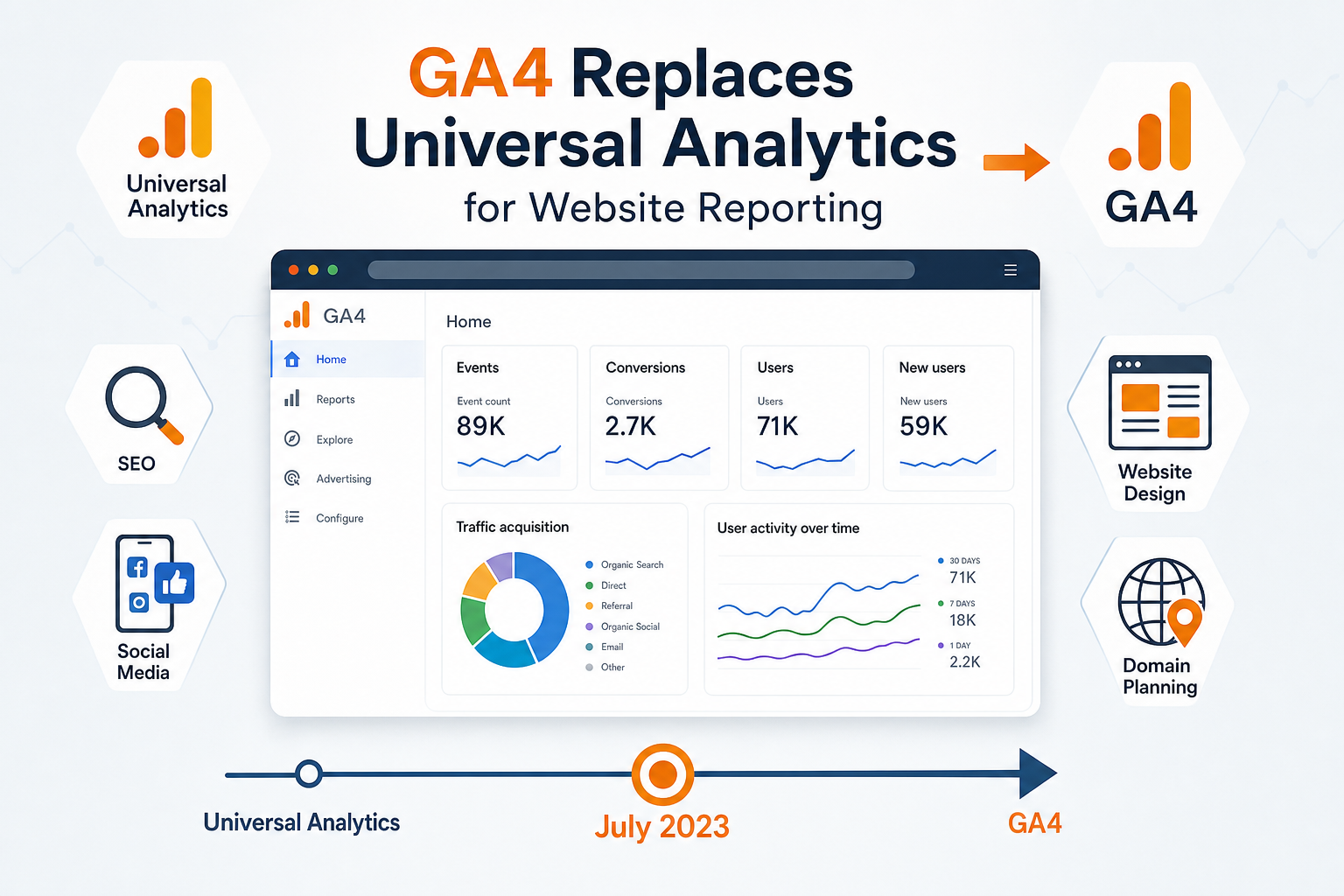
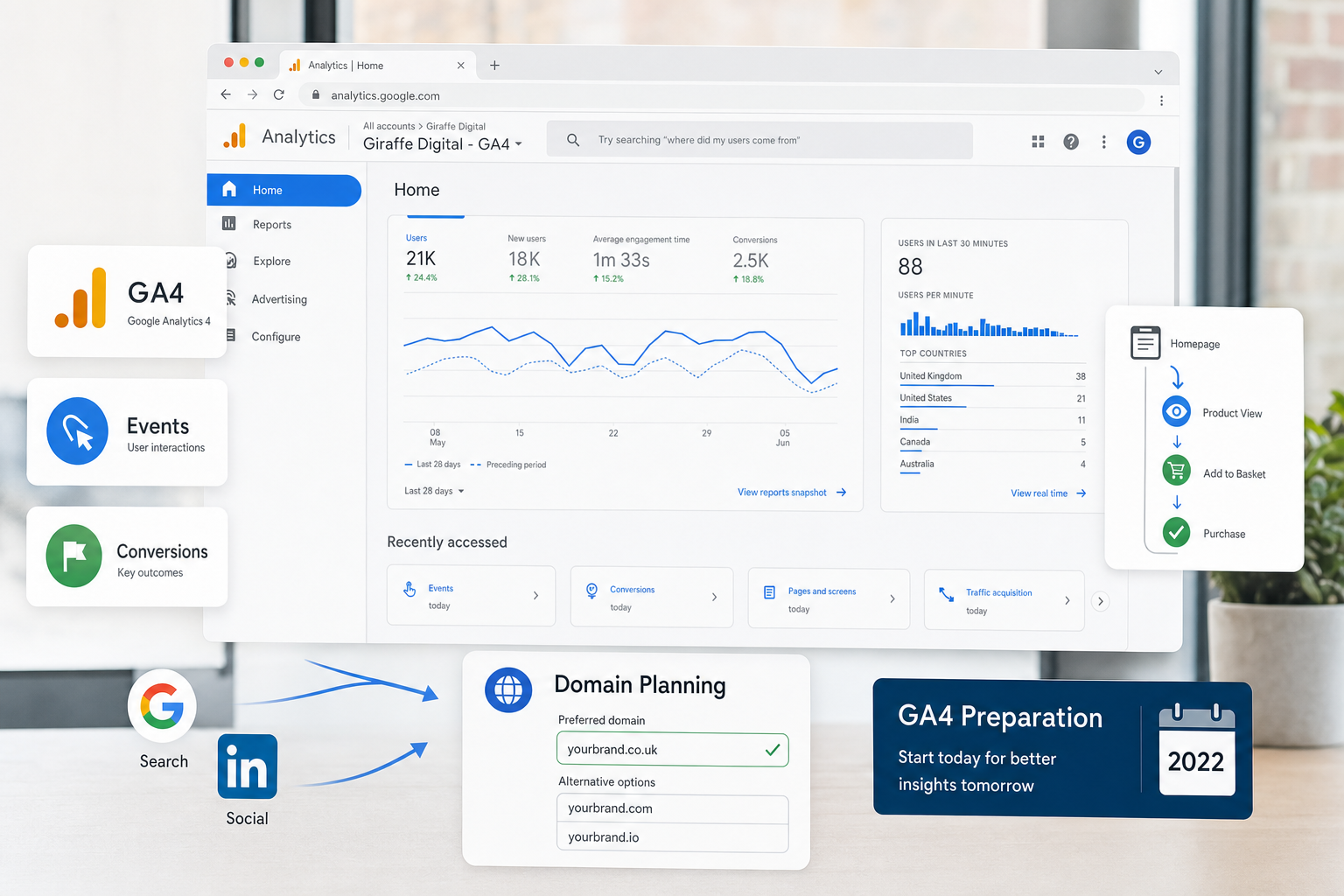
For many businesses, Google Analytics 4 has also changed how website measurement is approached. With its event-based model, GA4 encourages organisations to think more carefully about the actions that matter: form submissions, calls, file downloads, video views, sign-ups and purchases. This makes it an ideal moment to review whether your website is collecting meaningful data rather than simply reporting page views.
Good first-party data marketing is not about collecting everything. It is about collecting the right information, with clear permission, and using it to improve the customer experience.
Build data collection into website design
Your website is often the centre of your first-party data strategy. It is where people research your business, compare options, ask questions and decide whether to get in touch. A well-designed website should therefore make useful data collection natural, transparent and helpful.
Start by reviewing the key actions you want visitors to take. These might include submitting an enquiry form, requesting a callback, booking a consultation, signing up for email updates, downloading a guide or creating an account. Each action should be easy to find, simple to complete and relevant to the page the visitor is viewing.
Forms are especially important. A long form may give your sales team more detail, but it can also reduce completion rates if it asks for too much too soon. A practical approach is to request only what is needed at that stage. For example, an initial enquiry form might ask for a name, contact details, business type and a brief message. More detailed information can be gathered later in the sales process.
Website design can also support first-party data marketing through clear calls to action, helpful content gateways and thoughtful user journeys. A downloadable checklist, sizing guide, planning template or industry report can be valuable if it genuinely helps the visitor. However, gated content should be used carefully. If every useful resource is locked behind a form, visitors may become frustrated. Balance open-access content for SEO with selected resources that justify an email sign-up.
Use analytics to improve the user journey
Analytics should help answer practical questions. Which landing pages attract the most engaged visitors? Where do people drop out of the enquiry process? Which content topics lead to repeat visits? Which devices are used most often by converting users? These insights can guide improvements to page layout, navigation, copywriting and calls to action.
For example, if mobile users regularly abandon a quote form, the problem may not be demand; it may be the form design. If a service page receives traffic but few enquiries, the content may need clearer proof points, stronger internal links or a more relevant call to action. First-party data becomes valuable when it leads to improvements, not when it simply sits in a dashboard.
Connect first-party data with SEO and content strategy
Search engine optimisation is often treated as a keyword exercise, but the best SEO strategies are built around audience understanding. First-party data can show what your customers actually ask, which problems they are trying to solve and what information they need before they buy.
Customer enquiries are a rich source of content ideas. If people regularly ask about timescales, materials, compliance, delivery, maintenance, guarantees, suitability or aftercare, those questions may deserve dedicated website content. Sales and customer service teams often hold valuable insight that does not appear in keyword tools. Turning that insight into clear, well-structured pages can improve both search visibility and conversion.
Website search data, if your site has an internal search function, can also reveal intent. If visitors search for a product name, service area or support topic that is difficult to find, your navigation or content structure may need work. If multiple people search for a term you do not yet cover, that may indicate a content gap.
First-party data also helps prioritise SEO work. A page with modest traffic but high enquiry quality may deserve more attention than a page with high traffic and low commercial value. Similarly, a blog post that regularly introduces new visitors to your brand may be worth updating, expanding and internally linking to relevant service pages.
Use social media to build owned relationships
Social media platforms are useful for visibility, community building and paid campaigns, but your audience on a platform is not the same as an owned customer database. Reach can vary, algorithms can change and followers may not see every update. First-party data marketing helps turn social attention into a more durable relationship.
This does not mean using social media only to push sign-ups. It means creating reasons for people to take the next step. A helpful post might lead to a website guide, a webinar registration, an email series, a downloadable checklist or a product comparison page. The transition should feel useful and relevant, not forced.
Different platforms can support different stages of the customer journey. LinkedIn may be effective for professional services, recruitment, B2B advice and thought leadership. Instagram and Facebook can support community engagement, visual storytelling and local awareness. TikTok may be relevant for some consumer brands where short-form video fits the audience and message. The important point is to connect social activity with measurable goals on your own website.
Paid social campaigns can also benefit from first-party data when used responsibly and in line with platform rules and privacy requirements. For example, businesses may use customer lists or website engagement signals to reach people who have shown interest, provided the appropriate permissions and notices are in place. Even without advanced targeting, first-party insight can improve creative messaging by showing which customer needs, objections and benefits matter most.
Email marketing and customer retention
Email remains one of the most practical uses of first-party data, particularly for businesses with longer buying cycles, repeat purchases or seasonal demand. A well-managed email list can help you nurture prospects, support customers and encourage repeat engagement without relying entirely on paid media.
The key is relevance. A general newsletter can work if it is genuinely useful, but segmented communication is often stronger. A retailer might separate new customers from repeat buyers. A professional services firm might segment by business size, sector or service interest. A training provider might send different updates to people interested in beginner courses and advanced programmes.
Permission is essential. People should understand what they are signing up for, and it should be easy to unsubscribe. Clean, well-maintained lists usually perform better than large lists filled with disengaged contacts. Review your data regularly, remove obvious errors, and avoid sending campaigns to people who have not given appropriate consent.
Domain names, branding and trust signals
Your domain name is part of your digital identity and can affect how confident people feel when they visit, search for or share your website. A clear, memorable domain supports brand recognition and makes marketing easier across search, social media, email and offline materials.
When choosing or reviewing a domain, keep it simple and easy to spell. Avoid unnecessary hyphens, confusing abbreviations and names that are too similar to another organisation. If your business serves the UK market, consider whether a UK-focused domain extension or a widely recognised commercial extension best suits your brand, audience and long-term plans. The right choice depends on your positioning, not on a one-size-fits-all rule.
It is also sensible to protect important variations where appropriate, such as common spelling differences or key extensions that could otherwise cause confusion. Make sure domain ownership details, renewal settings and administrative access are properly managed within your organisation. A missed renewal or unclear ownership arrangement can create avoidable risk for your website, email and brand reputation.
Domain trust also connects with email marketing. Using a professional domain for business email, setting up appropriate authentication records and keeping branding consistent can improve credibility. Customers are more likely to trust communications that clearly match the organisation they contacted or purchased from.
Technology foundations for reliable data
First-party data marketing depends on good technology choices and tidy implementation. A modern website should have analytics configured correctly, forms tested regularly, conversion events defined and cookie consent handled appropriately. If the technical foundations are weak, the data may be incomplete or misleading.
Consider how your website, customer relationship management system, email marketing platform and e-commerce or booking tools fit together. Manual exports and disconnected spreadsheets may be manageable at a small scale, but they can quickly create errors and missed opportunities. Integrations should be chosen carefully, documented and reviewed, especially where personal data is involved.
Data security is equally important. Limit access to systems based on role, use strong authentication, keep software updated and remove accounts when staff or suppliers no longer need access. If your website uses forms, make sure submissions are stored and sent securely. If you collect sensitive information, take extra care with storage, retention and permissions.
It is also worth defining a simple measurement framework. Decide which actions count as meaningful conversions, which reports will be reviewed and how often decisions will be made. Businesses can waste time tracking too many minor metrics. Focus on figures that connect to real outcomes: qualified enquiries, bookings, sales, repeat purchases, customer lifetime value, retention and useful engagement.
Practical steps to get started
Improving first-party data marketing does not require a complete rebuild from day one. Most businesses can make progress by auditing what they already collect, identifying gaps and improving one stage of the customer journey at a time.
- Review your website goals. Identify the most important actions visitors should take and check whether they are easy to complete on desktop and mobile.
- Check analytics and conversion tracking. Make sure key events are set up correctly and that reports reflect genuine business objectives.
- Map your data sources. List where customer information is collected, including forms, email platforms, booking systems, e-commerce tools and customer service records.
- Improve consent and transparency. Review privacy notices, cookie messaging and email sign-up wording so people understand how their information will be used.
- Use enquiries to guide content. Turn common customer questions into helpful pages, FAQs, guides and social posts.
- Segment communication where useful. Avoid treating every contact the same if their interests, buying stage or relationship with your business differs.
- Keep data clean. Remove duplicates, correct obvious errors and avoid retaining personal data for longer than necessary.
The aim is to create a healthier marketing system. Your website attracts the right visitors, your content answers real questions, your forms capture useful enquiries, your analytics show what is working, and your follow-up communication feels relevant. Each part supports the next.
A stronger foundation for digital growth
First-party data marketing is valuable because it brings your digital activity closer to your customers. Instead of guessing what people need, you can learn from their behaviour, questions and preferences. Instead of relying entirely on external platforms, you can build assets your business controls: a useful website, a trusted brand, a clean email list, a structured customer database and a content strategy informed by real demand.
For UK businesses planning a new website, improving SEO or reviewing digital marketing performance, first-party data should be part of the conversation from the start. The design of a form, the structure of a service page, the wording of a call to action, the choice of domain and the set-up of analytics all influence the quality of data you receive.
Used carefully, first-party data helps businesses market with more confidence. It supports better decisions, more relevant communication and stronger customer relationships. Most importantly, it encourages a more sustainable approach to digital marketing: one built on trust, usefulness and direct understanding of the people you want to serve.