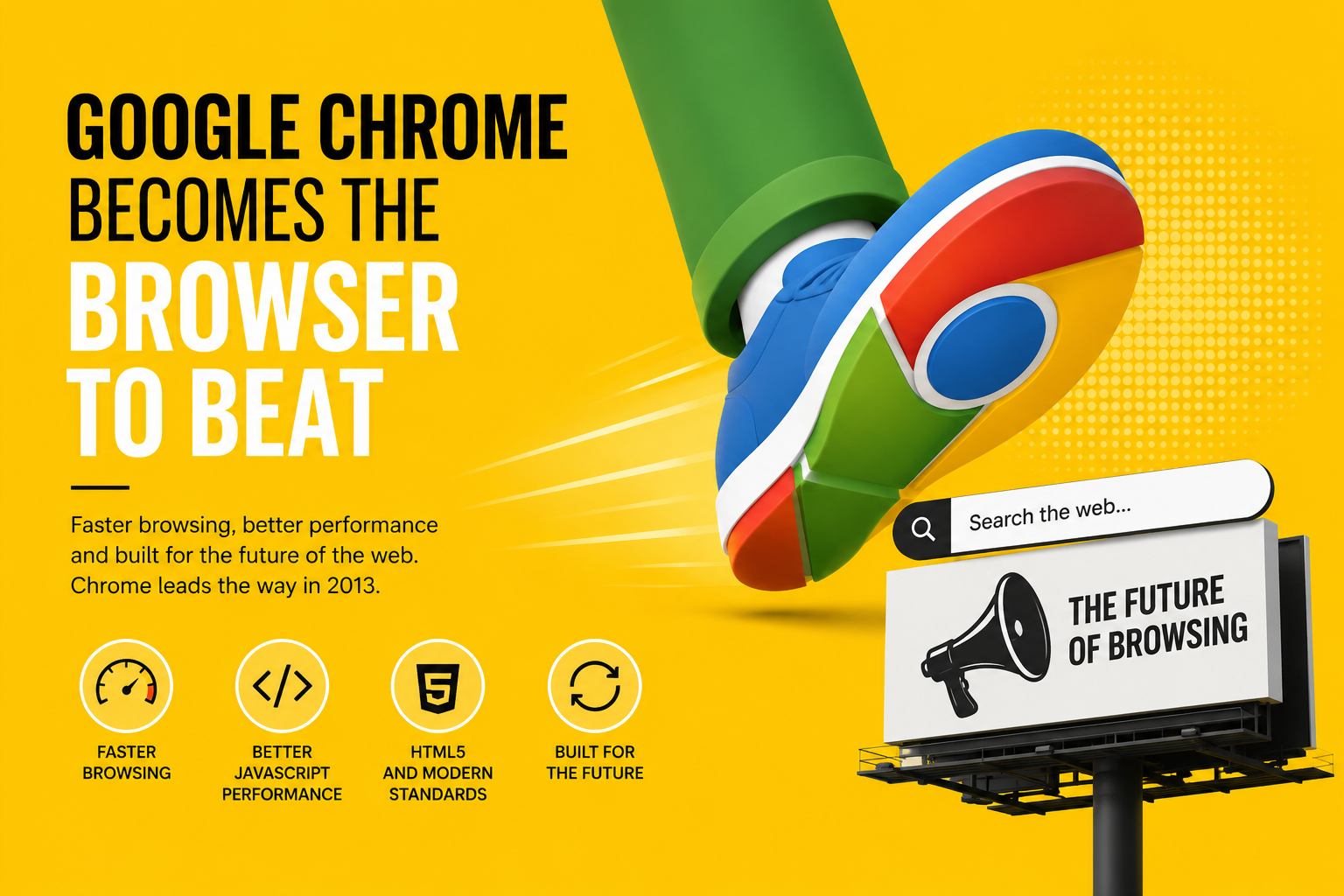
The web browser market has changed dramatically over the past few years. Once dominated by Microsoft Internet Explorer, today's landscape looks very different, with Google Chrome continuing its rapid rise in popularity. According to recent market reports, Chrome has now overtaken Internet Explorer in many countries, becoming the preferred browser for millions of internet users.
For web developers and businesses alike, this shift represents more than just a change in market share. It reflects a growing demand for faster browsing, improved web standards and richer online experiences.
As websites become increasingly interactive and complex, browser performance has become more important than ever before.
A Changing Browser Market
Not long ago, Internet Explorer was the default choice for most computer users.
With Windows installed on millions of PCs worldwide, Internet Explorer held a commanding position for many years.
However, the arrival of alternative browsers such as Google Chrome and Mozilla Firefox has given users more choice than ever before.
Google Chrome, first launched in 2008, has steadily gained popularity thanks to its speed, clean interface and regular updates.
By the middle of 2013, Chrome had become the browser of choice for many internet users worldwide.
Speed Makes a Difference
One of Chrome's biggest strengths has always been its performance.
Web users increasingly expect pages to load quickly, applications to respond instantly and browsing to feel smooth.
Google has focused heavily on creating a browser that launches quickly, renders pages efficiently and handles modern websites with ease.
For businesses, this means visitors are more likely to enjoy a fast and responsive experience when browsing online.
As websites continue growing in complexity, browser speed is becoming increasingly important.
Better JavaScript Performance
Modern websites rely heavily on JavaScript to provide interactive features.
From image galleries and contact forms to online shopping baskets and interactive maps, JavaScript powers many of the features users now expect.
Google Chrome's V8 JavaScript engine has received widespread praise for its speed and efficiency.
This allows developers to create richer applications without sacrificing performance.
As JavaScript continues evolving, browser performance will remain an important factor in delivering a positive user experience.
HTML5 Continues to Gain Momentum
One of the biggest developments in recent years has been the growth of HTML5.
Chrome has consistently supported many new HTML5 features, allowing developers to take advantage of:
- Native video.
- Audio playback.
- Canvas graphics.
- Local storage.
- Improved forms.
- Offline applications.
These technologies reduce the need for third-party plugins while helping websites load faster and be more compatible across devices.
Developers embracing HTML5 are finding it easier to create engaging websites using open web standards.
Supporting Modern Web Standards
Today's websites are built using a combination of technologies including:
- HTML5.
- CSS3.
- JavaScript.
Modern browsers need to consistently support these technologies for developers to create reliable user experiences.
Google Chrome has earned a strong reputation for quickly adopting new web standards, allowing developers to experiment with the latest technologies while maintaining excellent performance.
As standards continue evolving, browser compatibility remains an important consideration for every web development project.
Simpler Browsing Experience
Chrome's clean and uncluttered interface has also contributed to its growing popularity.
By reducing unnecessary buttons and placing greater emphasis on webpage content, Google has created a browser that feels modern and easy to use.
Features such as:
- Automatic updates.
- Tab isolation.
- Integrated search.
- Built-in translation.
- Synchronisation across devices.
have all helped improve the browsing experience.
For many users, simplicity has become one of Chrome's greatest strengths.
Faster Innovation
Unlike traditional software that receives major updates every few years, Chrome follows a rapid release cycle.
New features, security improvements and performance enhancements are delivered regularly.
This allows users to benefit from the latest technology without needing to manually install large upgrades.
For web developers, it also means browser support for emerging standards improves much more quickly.
What This Means for Web Developers
As Chrome's popularity continues to grow, developers are increasingly testing websites using modern browsers first.
This allows them to make greater use of:
- CSS3 animations.
- HTML5 features.
- Faster JavaScript.
- Responsive layouts.
Although compatibility with older browsers remains important, developers are gradually gaining more freedom to create richer websites using modern technologies.
Businesses Benefit Too
Businesses may not always consider which browser their customers use, but browser improvements directly impact website performance.
Modern browsers help businesses by providing:
- Faster loading pages.
- Better security.
- Improved compatibility.
- Richer customer experiences.
- Better support for modern web applications.
Visitors are more likely to remain on websites that feel fast and responsive.
As online competition continues increasing, every improvement to the browsing experience can make a difference.
The Importance of Keeping Browsers Updated
Whether using Chrome, Firefox, Internet Explorer or another browser, users should ensure they are running the latest available version.
Modern browsers receive regular updates that improve:
- Security.
- Stability.
- Performance.
- Compatibility.
Keeping software up to date helps provide a safer and more enjoyable browsing experience.
Looking Towards the Future
The browser market has changed significantly over the past five years, and there is little sign of that slowing down.
Competition among browser developers continues to drive innovation, resulting in faster software and better support for modern web technologies.
As HTML5, CSS3 and JavaScript continue evolving, browsers will play an increasingly important role in shaping the future of the internet.
Developers and businesses alike stand to benefit from browsers that continue pushing the boundaries of speed, performance and compatibility.
Final Thoughts
Google Chrome's rise to the top of the browser market reflects the changing demands of today's internet users. Speed, reliability and support for modern web standards have become essential as websites grow more sophisticated.
While competition remains strong, Chrome has established itself as one of the leading browsers of 2013 by providing excellent performance and embracing the technologies shaping the future of the web.
For businesses investing in modern websites, ensuring compatibility with today's leading browsers is more important than ever.