Google Hummingbird is a useful reminder that search marketing is no longer only about matching a handful of keywords on a page. For many UK business owners, the most important question is not simply how do we rank for this phrase?, but what is the customer really trying to find, compare, solve or buy? As Google becomes better at interpreting language, context and meaning, businesses need websites that answer real questions clearly, earn trust and make the next step obvious.
This does not mean traditional search engine optimisation is no longer important. Well-structured pages, sensible titles, accessible navigation, relevant content and good-quality links still matter. However, Google Hummingbird places more emphasis on the relationship between words and the intent behind a search. A visitor typing emergency plumber near me, how to choose office furniture or best accountant for a small limited company is not just entering keywords; they are expressing a need. Your website should be built to meet that need.
What Google Hummingbird Means for Business Websites
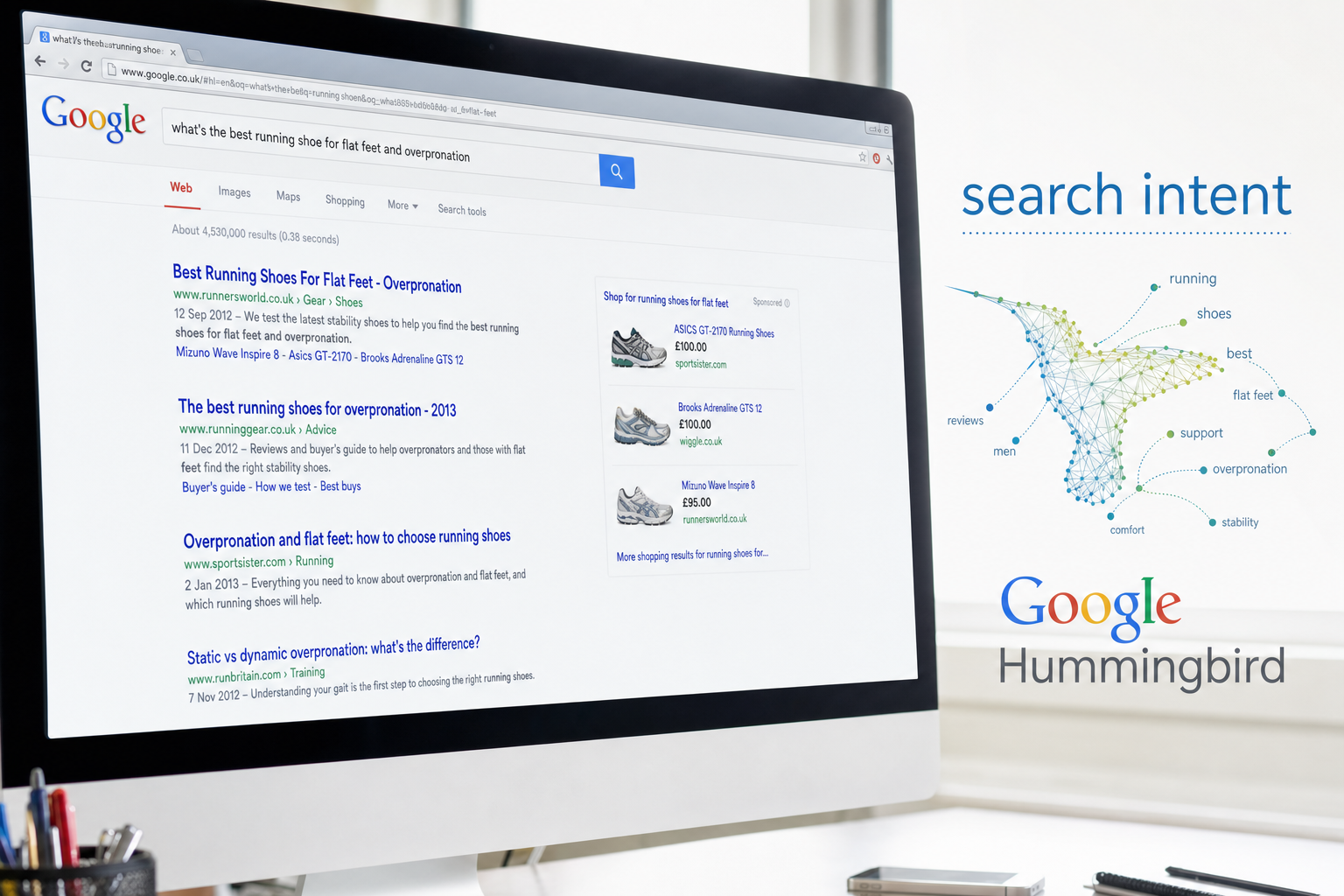
Google Hummingbird is best understood as part of a broader move towards more conversational, meaning-led search. People are increasingly searching in natural language, particularly as mobile browsing grows and voice-led searching becomes more familiar. Rather than looking only at individual words in isolation, Google is working harder to understand the full query and return results that match the user’s likely intention.
For a local business, this can be valuable. A potential customer may not know your exact service terminology. They may search for why is my boiler losing pressure? rather than boiler repair Southampton. They may search for what size banner do I need for an exhibition stand? rather than large format print services. If your website only targets short, rigid phrases, you may miss customers who are looking for help before they know exactly what to ask for.
The practical lesson is simple: write for the way customers think and speak, not only for the way your industry labels its services. Your pages should still include important search terms, but they should also explain problems, options, benefits and next steps in clear language.
Search Intent: The New Centre of Sensible SEO
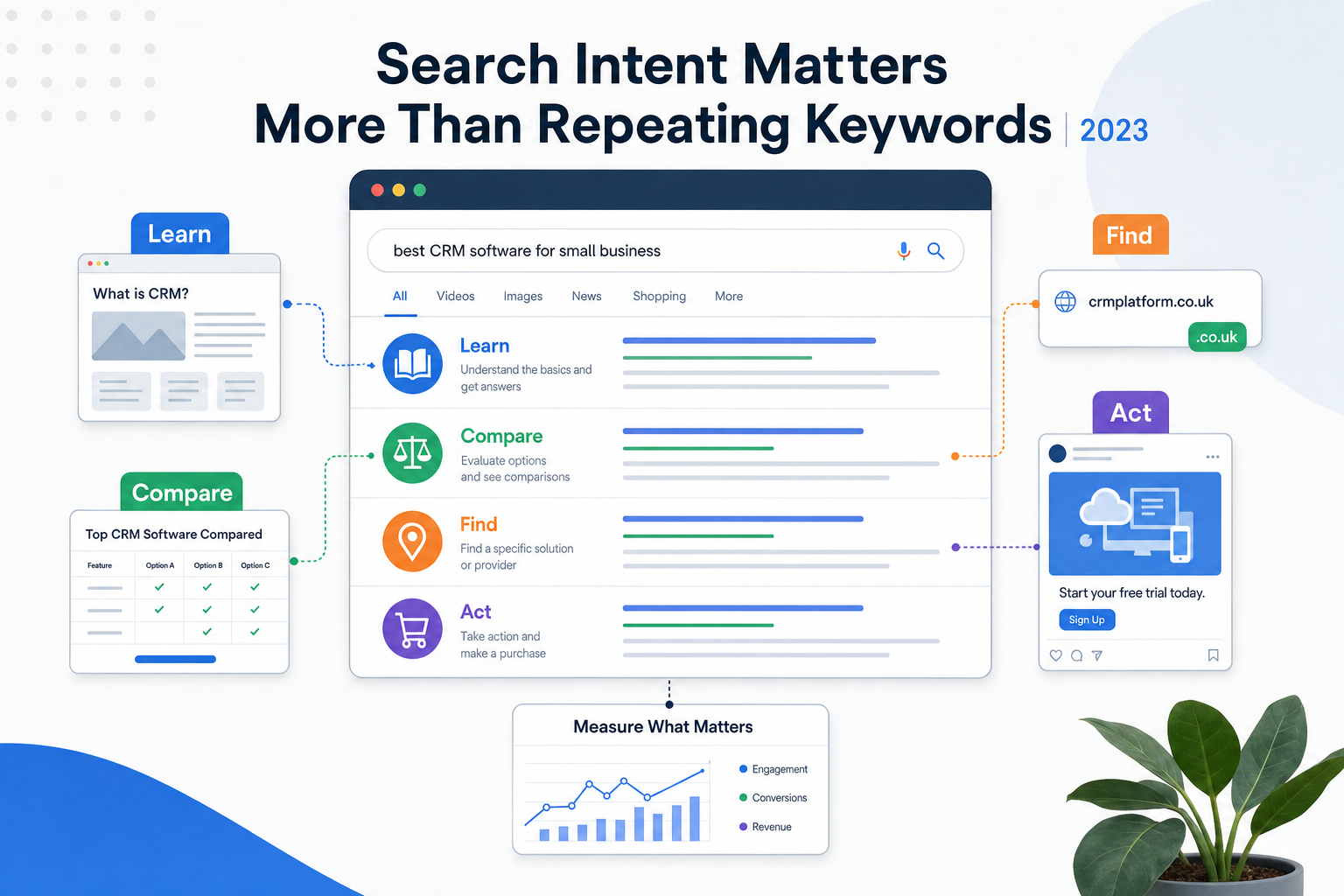
Search intent describes what someone is trying to achieve when they use Google. Most searches can be grouped into a few broad types. Some people want information, some want to compare suppliers, some are ready to buy, and some are looking for a particular organisation or location. A successful SEO strategy should include content for each stage.
Informational intent
Informational searches often begin with words such as how, what, why or when. A person may be researching a problem, learning about a service or trying to understand whether they need professional help. For example, a firm offering website design might publish a useful article explaining what makes a small business website effective, why responsive design matters, or what to prepare before briefing a designer.
This type of content may not produce an enquiry immediately, but it can build trust. If a visitor finds your explanation helpful, they are more likely to remember your brand and return when they are ready to act.
Commercial investigation
These searches come from people who are comparing options. They may search for website design agency in Hampshire, best material for outdoor signage or accountants for start-ups. At this stage, your website should make your expertise, process and suitability clear. Case studies, service pages, frequently asked questions and testimonials can all help, provided they are honest and specific.
Transactional intent
Transactional searches are closer to action. The visitor may be ready to request a quote, book a consultation, register interest or call. Your website design matters greatly here. Contact details should be easy to find, forms should be straightforward, and each page should guide the visitor towards a sensible next step.
How to Optimise Content for Google Hummingbird
Optimising for Google Hummingbird does not require tricks. In fact, tricks are becoming less useful. A stronger approach is to make each page genuinely helpful, well organised and relevant to the searcher’s task.
Answer real customer questions
Start by listing the questions customers ask before they buy. Speak to sales staff, customer service teams and directors who handle enquiries. Look through email enquiries and note repeated concerns. Then turn those questions into useful pages or sections on your website.
For example, a commercial cleaning company might answer questions such as how often should an office be deep cleaned?, what should be included in a cleaning specification? and how do we change cleaning contractors without disruption? These questions naturally include valuable search terms, but they also show expertise.
Use natural language and related phrases
Keyword research remains useful, but avoid forcing one phrase into every paragraph. Google Hummingbird encourages a more natural style. A well-written page about website design may mention web design, responsive layouts, content management, conversion, branding, search engines and mobile users because these subjects are genuinely connected.
When writing service pages, include the main phrase in important places, such as the page title, introductory copy and headings where appropriate. Then support it with plain-English explanations, examples and related terms. This is better for users and less awkward than old-fashioned keyword repetition.
Structure pages clearly
Clear structure helps visitors and search engines. Use headings to divide topics, keep paragraphs readable, and make sure each page has a clear purpose. If a page tries to cover too many unrelated services, it can become confusing. A business offering web design, search engine optimisation and social media marketing may be better served by separate, focused pages that link together sensibly.
Website Design and User Experience Still Matter
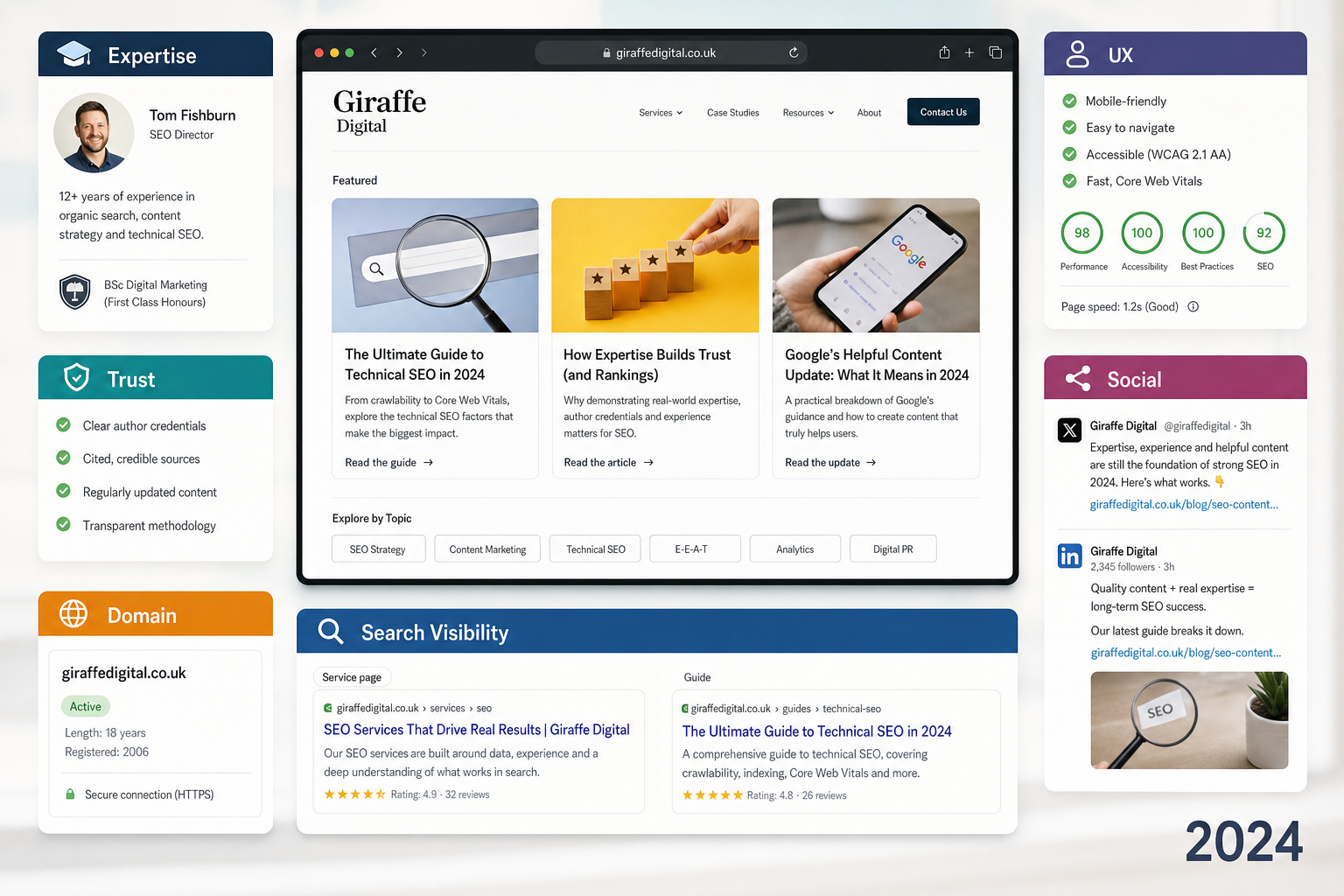
Search visibility is only valuable if the visitor can use the website once they arrive. A strong SEO campaign should therefore be connected to good website design. Google Hummingbird may help more relevant visitors find your pages, but it is your website’s job to persuade them to stay, trust you and make contact.
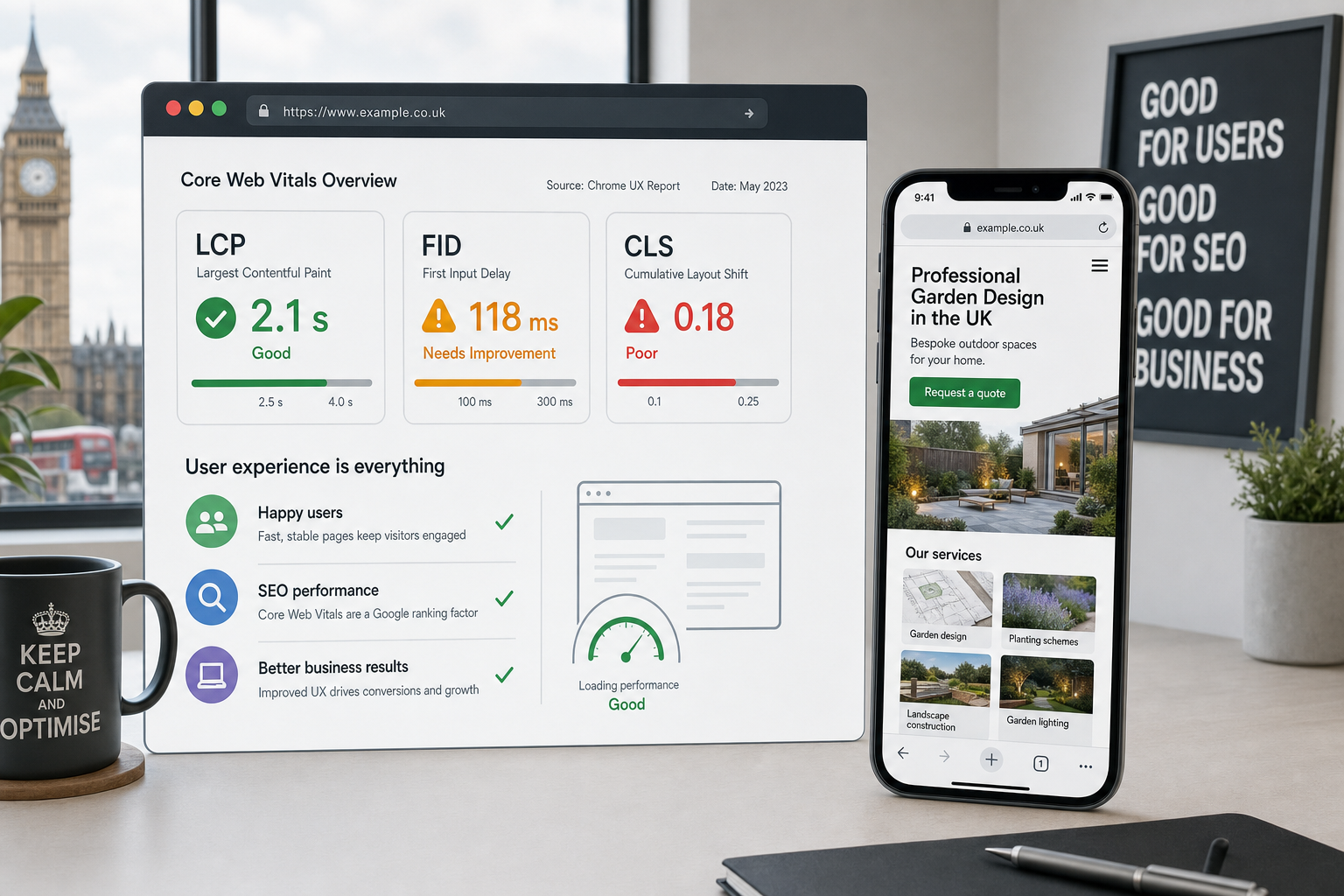
In 2013, more customers are using smartphones and tablets to browse websites, compare suppliers and look up local services. A responsive website can adapt to different screen sizes, making it easier for people to read content and complete forms without pinching and zooming. For many small and medium-sized businesses, this is becoming a practical necessity rather than a luxury.
Page speed is also important. Large images, unnecessary scripts and poor hosting can make a site feel slow. Visitors may leave before they have read your message. Clean design, efficient code and properly prepared images can improve both user experience and search performance.
Navigation should be simple. A visitor should be able to understand what you offer, where you operate and how to contact you within a few moments. Avoid hiding key information behind clever design. Creativity is valuable, but clarity is what turns interest into enquiries.
Social Media, Brand Signals and Content Distribution
Social media marketing supports search by helping your content reach the right people. Facebook, Twitter, LinkedIn, Google+ and Pinterest can all be useful, depending on your audience. The best platform is not necessarily the one receiving the most attention; it is the one your customers use and where your business can contribute consistently.
For business-to-business services, LinkedIn can be effective for sharing articles, joining discussions and demonstrating expertise. Twitter is useful for timely updates, networking and customer service. Facebook can work well for community-based organisations, retail, hospitality and brands with strong visual or local appeal. Google+ is also worth considering as part of a wider Google presence, particularly when combined with a well-maintained business profile and authorship where appropriate.
The key is to avoid treating social media as a broadcasting tool only. Share helpful articles, answer questions, comment on relevant industry issues and direct people back to useful pages on your website. If your content is genuinely helpful, it has a better chance of being shared, referenced and discovered.
Domain Names, Branding and Trust
Your domain name is an important part of your online identity. For UK businesses, a clear and memorable domain can support trust, brand recognition and local relevance. Choose a domain that is easy to spell, easy to say aloud and suitable for the long term. Avoid awkward hyphens, confusing abbreviations and names that may restrict your business if you expand your services.
Where possible, register the main domain extension that suits your audience and protect obvious variations. A UK-focused company may prefer a UK extension, while a business trading internationally may also consider a broader option. The main aim is consistency: your domain, email address, printed material and social media profiles should all feel connected.
Do not choose a domain only because it contains a keyword. Exact-match domains can look tempting, but a strong brand is often more valuable. A name that customers remember, trust and recommend can serve you better than a clumsy phrase chosen purely for search engines.
Technical Foundations That Help Search Engines Understand Your Site
Good technology supports good marketing. A website should be built so search engines can crawl important pages, understand the structure and identify the most relevant content. This includes sensible internal linking, descriptive page titles, unique meta descriptions and clean URLs.
A content management system can make it easier to keep pages updated, publish articles and manage enquiries. However, it should be configured carefully. Duplicate pages, weak automatically generated titles and poor category structures can create unnecessary problems. A professional build should balance design, usability and technical SEO from the beginning.
Structured data is also becoming more useful for certain types of information, such as business details, reviews, events and products. Used appropriately, it can help search engines interpret specific content on a page. It should not be treated as a shortcut, but as an additional layer of clarity.
Practical Steps for UK Business Owners
If you are reviewing your website or planning a new one, Google Hummingbird should encourage a more customer-focused approach. The following steps can help you move in the right direction:
- Audit your current content: Identify pages that are thin, outdated or written only around keywords rather than customer needs.
- Map content to intent: Create pages for research, comparison and enquiry stages rather than relying on one general services page.
- Improve local relevance: Make your location, service areas and contact details clear, particularly if you depend on local enquiries.
- Write useful questions and answers: Add frequently asked questions where they genuinely help visitors make decisions.
- Review mobile usability: Check how your website performs on smartphones and tablets, not just on a desktop monitor.
- Connect SEO with design: Ensure calls to action, forms, navigation and content all support the same business goals.
- Use social media with purpose: Share content that answers questions and demonstrates expertise, rather than posting for the sake of it.
A Better Search Experience Is Better for Business
Google Hummingbird points towards a more useful web, where businesses that understand their customers can perform well. It rewards clear answers, relevant content and well-structured websites. It also encourages business owners to think beyond rankings alone and consider the full journey from search query to enquiry.
For UK companies investing in website design, SEO, branding or digital strategy, the message is positive. You do not need to chase every small change in search. Instead, build a website that reflects how people search, what they need to know and why they should trust you. Combine that with sound technical foundations, thoughtful content and consistent social media activity, and your online presence will be much better prepared for the way search is developing.