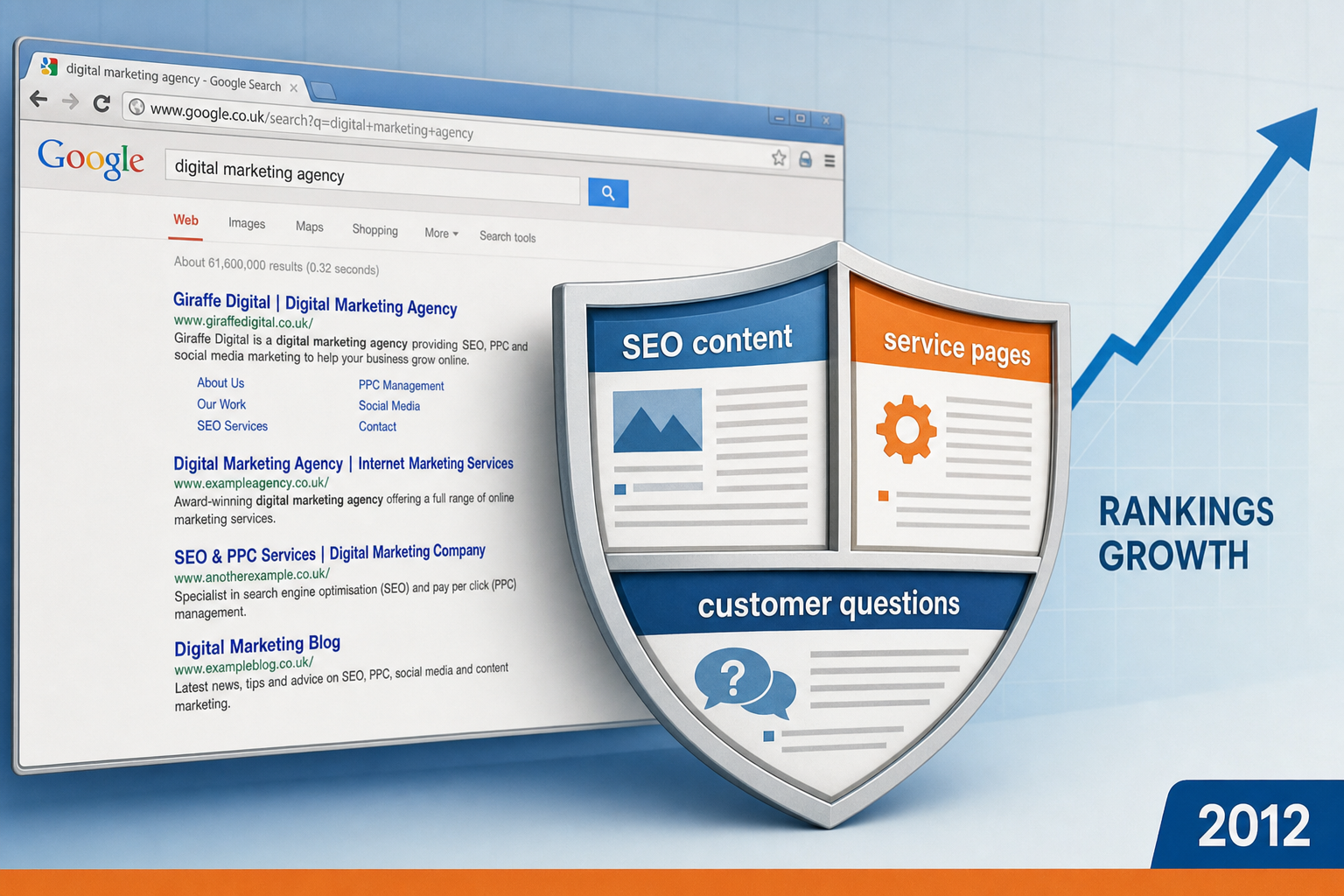
Search rankings are never completely guaranteed, but the quality of your website content has a direct influence on how well protected your visibility is. For many UK businesses, the past year has made that point clearer than ever. Search engines are paying closer attention to thin pages, duplicated wording, over-optimised linking and websites that appear to exist for rankings rather than readers. Better SEO content helps your site look useful, trustworthy and relevant, which makes it a stronger long-term asset.
Good content is not simply a matter of adding more words to a page. It is about explaining your services clearly, answering the questions your customers are already asking, supporting your brand and giving search engines enough context to understand why your page deserves to appear. When content, website design and marketing work together, your site becomes less dependent on quick fixes and more capable of earning sustainable search traffic.
Why content quality matters more than ever
Search marketing has changed considerably from the days when a page could rank well simply by repeating a phrase often enough. Keywords still matter, but they need to appear naturally within useful copy. A page that reads awkwardly, says very little or exists only to target a search phrase is far less likely to perform well over time.
Updates such as Google Panda and Google Penguin have encouraged many site owners to review their approach. Panda has drawn attention to thin or low-quality pages, while Penguin has put more pressure on manipulative linking practices and over-optimised anchor text. Although every website is different, the broader lesson is straightforward: a business website should be built for genuine users first, with search engines considered as part of that process.
For a business owner, this is good news. It means the work you put into clearer service pages, better guidance, useful product information and credible company content can support more than rankings. It can also improve enquiries, reduce wasted calls, help visitors choose the right service and make your business appear more professional.
What strong SEO content looks like in 2012
Strong SEO content combines relevance, clarity and commercial purpose. It should help a search engine understand the topic of a page, but it must also help a real person decide what to do next. A visitor who lands on your site from a search result should be able to see quickly what you offer, where you operate, why your service is suitable and how to make contact.
Useful content often includes details that many businesses forget to mention. For example, a local trades business might explain the areas it covers, the types of jobs it handles, what customers should prepare before an appointment and the difference between common service options. A professional services firm might describe who its service is for, the typical process, common questions and what makes its approach suitable for certain organisations.
The aim is not to write for the sake of it. The aim is to give each important page a clear job. A homepage should introduce the business and direct visitors to the most useful areas of the site. A service page should explain one service in enough depth to be helpful. A blog post or advice article should answer a defined question and show expertise without becoming a sales pitch from the first sentence.
Relevance before repetition
Your primary search phrases should appear in logical places, such as the page heading, opening paragraph and body copy where appropriate. However, forcing the same phrase into every sentence can damage both readability and trust. Search engines are increasingly able to recognise related language, so a page about SEO content can also discuss website copy, articles, landing pages, search visibility, enquiries and online marketing without repeating one exact phrase throughout.
Depth without padding
A page does not need to be long simply to be long. It needs to be complete enough for its purpose. A short contact page is perfectly acceptable, while a guide to choosing a service may need several sections. Padding content with vague claims, repeated paragraphs or copied manufacturer descriptions is unlikely to help. In many cases, it makes the site look less useful.
How better content helps protect rankings
Better content helps protect rankings because it gives search engines and visitors more reasons to value your site. A strong page is more likely to attract natural links, be shared through social media, keep visitors engaged and support a wider range of relevant search queries. These signals are not a substitute for sound technical SEO, but they make your overall search presence more resilient.
Thin websites are vulnerable because they often depend on a small number of pages, a narrow set of keywords or artificial link building. If search engines adjust how they assess quality or links, those sites can suffer quickly. A website with useful service pages, original articles, clear product information, good internal linking and a recognisable brand presence has more substance to support it.
Better content also reduces the temptation to chase risky tactics. If your site has genuine resources worth referencing, it becomes easier to earn mentions, links and social shares naturally. Useful guidance, a well-explained service page or a helpful checklist can give customers, suppliers and industry contacts a real reason to point people towards your website.
Search rankings are strongest when your website answers real questions better than the alternatives.
Start with the pages that matter commercially
Many businesses make the mistake of adding articles before improving the pages that actually generate enquiries. Blog content can be valuable, but the foundations should come first. If your main service pages are vague, duplicated or difficult to navigate, publishing more posts will not solve the problem.
Begin by reviewing the pages that are most important to your business. These may include your homepage, core services, product categories, location pages, about page and contact page. Ask whether each page explains the offer clearly and whether it includes the information a potential customer needs before taking the next step.
- Homepage: Does it quickly explain who you help, what you provide and where visitors should go next?
- Service pages: Does each page focus on one clear service rather than trying to cover everything at once?
- Product pages: Are descriptions original, specific and helpful rather than copied from a supplier?
- Location information: Is it accurate and useful without creating near-duplicate pages for every town?
- Contact details: Are telephone numbers, enquiry forms and business details easy to find?
Once the main pages are sound, supporting articles can answer related questions and bring in visitors earlier in the buying process. For example, an accountancy firm might publish guidance on preparing records for year end, while a web design company might explain what to consider before commissioning a new business website. These articles can link naturally to relevant service pages where the reader needs more help.
Use content to support design and usability
Good website design is not only about appearance. It should make content easier to read, understand and act upon. A beautiful site with weak copy will still struggle to convert visitors. Equally, excellent copy placed in a cluttered layout can be overlooked. The strongest business websites treat design and content as part of the same process.
In practical terms, this means using clear headings, short paragraphs, logical navigation and visible calls to action. Visitors should not have to hunt for basic information. If you provide a service, make the next step obvious. If you sell products, make descriptions, specifications, delivery details and support information easy to compare.
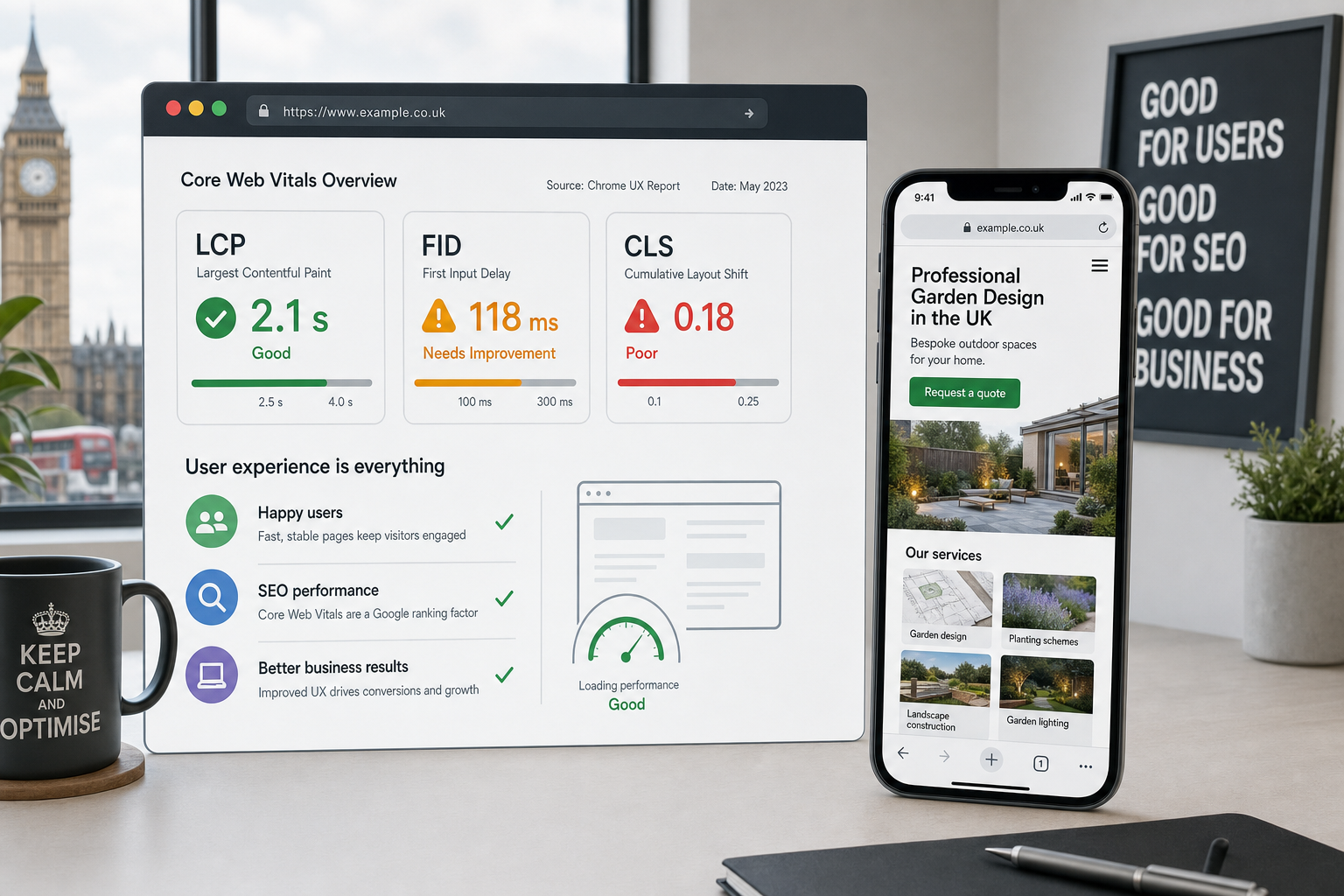
Mobile browsing is also becoming increasingly important as more customers use smartphones and tablets to research businesses. Even if your site has not yet been rebuilt around a responsive approach, it should still be tested on common mobile devices. Content that is readable on a desktop but awkward on a smaller screen may lose potential enquiries. Keep introductions concise, avoid unnecessarily wide layouts and ensure contact details can be found quickly.
Avoid duplicate and low-value content
Duplicate content can weaken a site when many pages say almost the same thing. This often happens with location pages, product descriptions and copied supplier text. It can also happen when businesses create multiple pages targeting slight variations of the same keyword without adding any meaningful difference for the reader.
If two pages are too similar, consider whether they should be combined into one stronger page. If you need separate pages, make sure each one has a clear purpose and original value. A location page, for example, should contain useful details about service coverage, local considerations and relevant contact information rather than simply replacing one town name with another.
Article spinning, mass article submissions and low-quality guest posts may appear tempting because they promise quick visibility, but they often leave a poor footprint. A better approach is to publish original material on your own site and seek legitimate exposure through relationships, trade bodies, local organisations, suppliers, press opportunities and genuinely relevant websites.
Make social media part of the content plan
Social media should not be treated as separate from content. Facebook, Twitter, LinkedIn, Google+ and YouTube can all help businesses share advice, answer questions and bring attention to useful website pages. The important point is to share something worth clicking, reading or watching.
A common mistake is to use social channels only for repeated sales messages. This rarely builds trust. Instead, businesses can share short tips, links to helpful guides, photographs of completed work where appropriate, answers to frequent questions and commentary on relevant industry matters. Each of these can support the wider content strategy and encourage people to visit the website.
Social activity can also reveal what customers care about. Questions asked on Twitter or LinkedIn may become useful blog topics. Comments on Facebook may highlight missing information on your website. A video placed on YouTube can help explain a process that is difficult to describe in text alone. These activities should be consistent with your brand and linked back to pages that provide more depth.
Think carefully about domains and brand signals
Domain names still play an important role in how customers perceive a business. A good domain should be easy to remember, easy to spell and suitable for your brand. While exact-match domains can sometimes be useful, they are not a substitute for a trustworthy website, strong content and a credible business presence.
For many UK organisations, a domain that reflects the business name is the most practical choice. It supports branding, word-of-mouth referrals and professional email addresses. If you are registering a new domain, check that it is not too long, confusingly similar to another business or difficult to pronounce over the telephone. Consider whether a UK-focused extension is appropriate if your customers are primarily in the United Kingdom.
It is also sensible to keep domain ownership details organised. Make sure the domain is registered in the correct name, renewal dates are monitored and login details are stored securely. Losing control of a domain can damage search visibility, email reliability and customer trust. Domain strategy is not just a technical matter; it is part of protecting your brand online.
Plan content around customer questions
The most reliable source of content ideas is often your own customers. Sales calls, enquiry emails and face-to-face conversations reveal the language people use before they buy. If several people ask the same question, it may deserve a place on your website.
A simple content plan might include a monthly advice article, improvements to one service page and occasional updates to frequently asked questions. This is more useful than publishing random posts with no connection to business goals. Each piece should have a purpose, whether that is attracting new visitors, supporting an existing service, helping sales conversations or building trust.
- List the services or products that matter most to your business.
- Write down the questions customers ask before buying.
- Identify which pages already answer those questions well.
- Improve weak pages before creating unnecessary new ones.
- Publish original articles that support genuine customer needs.
- Link related pages together so visitors can continue their journey.
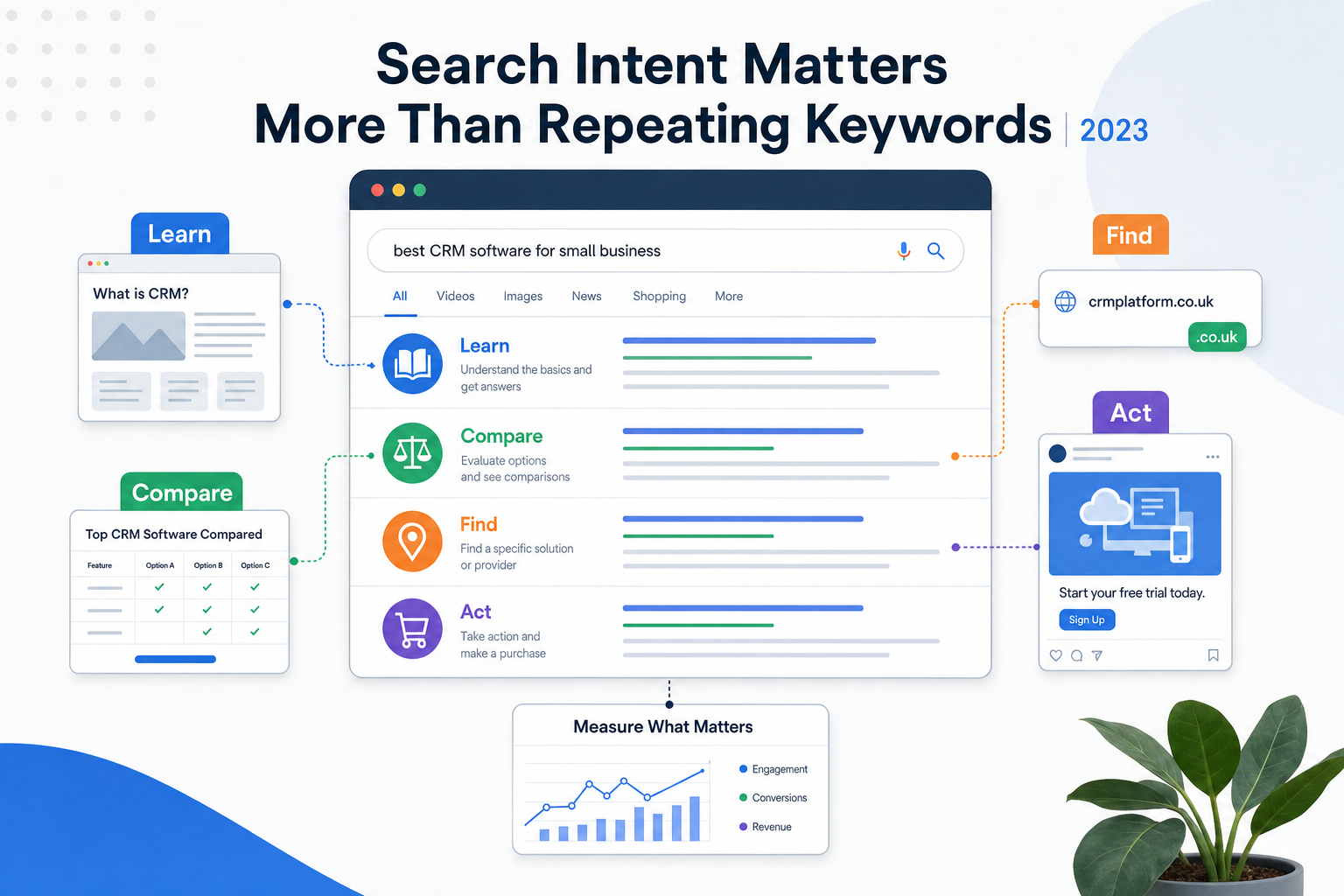
This process also helps with keyword research. Instead of relying only on broad terms, you can target longer, more specific searches that show clearer intent. A visitor searching for a detailed question may be closer to making an informed decision than someone searching for a very general phrase.
Measure quality as well as traffic
Traffic is useful, but it is not the only measure of success. A page that brings fewer visitors but produces better enquiries may be more valuable than a page that attracts large numbers of people with little interest in buying. Businesses should look at how visitors behave once they arrive.
Review which pages lead to enquiries, which pages have high exit rates and which topics attract engagement through social channels. If a page receives traffic but few actions, the issue may be the offer, the call to action, the clarity of the copy or the design of the page. If a page ranks poorly despite being commercially important, it may need stronger content, better internal links or more relevant supporting material.
Analytics packages and webmaster tools can help identify broad patterns, but they should be interpreted with common sense. Numbers alone will not tell the whole story. Speak to staff who answer the phone, handle enquiries or manage sales. They may notice whether website leads are becoming better informed and more suitable over time.
Build for long-term search confidence
Protecting rankings is not about finding a loophole. It is about building a website that deserves to be found. When your content is original, useful, well structured and aligned with your business goals, it becomes far easier to support search visibility in a sustainable way.
The best starting point is a focused content review. Look for pages that are too thin, too similar, out of date or unclear. Improve the pages that matter most, then build a publishing plan that answers real customer questions. Support those pages with sensible internal links, social sharing and a website design that makes information easy to use.
Search marketing will continue to develop, but the value of helpful content is unlikely to disappear. Businesses that invest in clear, credible SEO content are not only improving their chances of ranking well; they are also creating a stronger online presence for customers, prospects and partners.