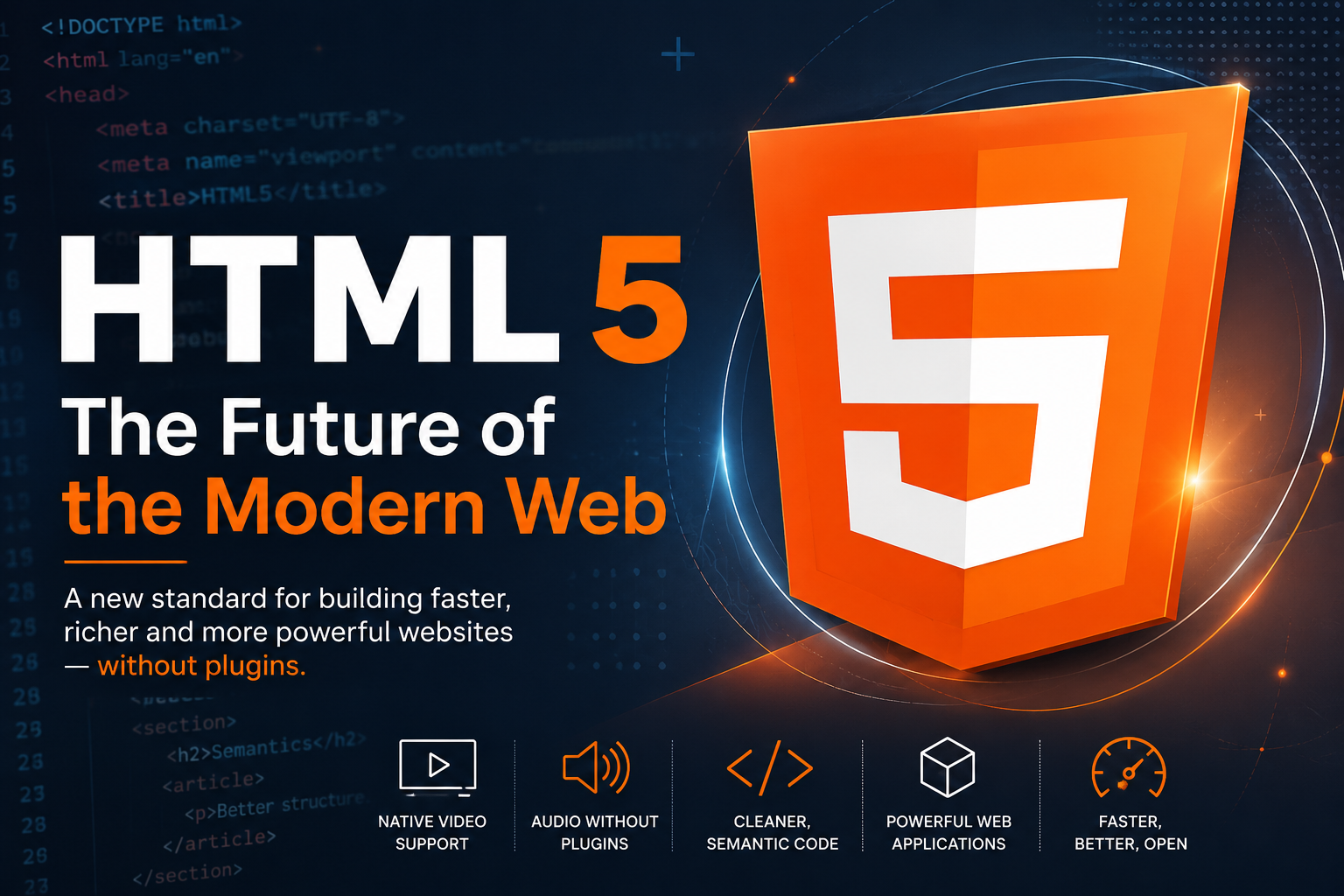
The internet continues to evolve at an incredible pace, and one of the most exciting developments currently attracting attention among web developers is HTML5. Although it is still under development, HTML5 is already being adopted by browser manufacturers and developers worldwide, with many predicting it will become the new standard for building modern websites.
For years, technologies such as Adobe Flash have been used to provide video, animations and interactive website features. However, HTML5 promises to bring many of these capabilities directly into the browser without the need for additional plugins.
While it may still be early days, HTML5 could represent one of the biggest changes to web development in over a decade.
What Is HTML5
HTML5 is the latest version of HyperText Markup Language, the coding language used to structure web pages.
It builds upon previous versions of HTML while introducing a wide range of new elements, features and APIs that allow developers to create richer, faster and more interactive websites.
Rather than relying heavily on third-party technologies, HTML5 aims to provide many advanced features directly in the web browser.
This could simplify website development while creating a more consistent browsing experience for users.
Why Is HTML5 So Important
Previous versions of HTML have served the internet well, but modern websites are becoming increasingly complex.
Users now expect:
- Online video
- Interactive maps
- Rich animations
- Audio playback
- Web applications
- Faster performance
Meeting these expectations has often required additional software such as Adobe Flash.
HTML5 introduces native support for many of these features, allowing browsers to handle them directly.
This has the potential to improve compatibility while reducing reliance on external plugins.
A Potential Alternative to Flash
Perhaps the biggest discussion surrounding HTML5 is its relationship with Adobe Flash.
For many years, Flash has powered:
- Online games
- Video players
- Interactive animations
- Rich multimedia websites
However, Flash has also faced criticism regarding performance, compatibility and security.
Earlier this year, Apple's new iPad launched without support for Flash, following the same approach taken with the iPhone. This decision has prompted renewed debate about whether browser-based technologies such as HTML5 could eventually become the preferred solution for delivering multimedia content online.
Although Flash remains widely used today, many developers are now exploring HTML5 as an alternative.
Better Video Support
One of HTML5's most anticipated additions is native video support.
Previously, websites generally required Flash players to display online video.
HTML5 introduces the < video> element, allowing compatible browsers to play video directly without requiring users to install additional software.
Although browser support and video formats are still being standardised, many believe this could significantly simplify online video in the future.
Audio Without Plugins
HTML5 also introduces the < audio> element.
This allows websites to play audio directly within supported browsers, removing the need for separate media players.
Developers can integrate music, podcasts and sound effects using standard HTML.
This creates opportunities for richer user experiences while simplifying website development.
Cleaner, More Meaningful Code
HTML5 introduces several new semantic elements designed to describe the structure of web pages better.
Examples include:
- < header>
- < footer>
- < article>
- < section>
- < nav>
These elements make webpages easier for developers to organise and may help search engines better understand page content.
Cleaner code also makes websites easier to maintain over time.
Supporting the Future of Web Applications
Modern websites are increasingly behaving like desktop software.
Email platforms, online office suites, and collaborative tools continue to push browsers beyond simple document viewing.
HTML5 introduces new technologies that may help developers build faster and more capable web applications.
Features currently being explored include:
- Offline application support
- Local storage
- Improved forms
- Canvas graphics
- Drag and drop functionality
Together, these features could reduce the gap between desktop applications and browser-based software.
Browser Support Is Improving
As with any new technology, browser support varies.
Major browser developers, including Mozilla Firefox, Google Chrome, Apple Safari and Opera, have already begun implementing HTML5 features.
Microsoft has also announced plans to improve HTML5 support in future versions of Internet Explorer.
While not every browser currently supports every feature, adoption is progressing steadily.
Developers should continue testing websites carefully across multiple browsers.
What Does This Mean for Businesses
Businesses planning new websites should begin paying attention to HTML5.
Although it may be too early to rely exclusively on every new feature, building websites with modern standards in mind will help prepare for future browser improvements.
Businesses investing in long-term web projects should discuss HTML5 compatibility with their web developers.
Keeping websites aligned with emerging standards can help reduce future redevelopment costs.
Challenges Still Remain
Despite the excitement, HTML5 is still evolving.
Several challenges remain before it becomes the universal standard.
These include:
- Browser compatibility
- Video format disagreements
- Incomplete feature support
- Existing reliance on Flash
- Ongoing specification development
Developers should continue monitoring progress while carefully testing new functionality before deploying it to live websites.
The Future of Web Development
Many industry experts believe HTML5 represents the future of web development.
Its emphasis on open standards, improved browser capabilities and plugin-free multimedia has generated significant interest throughout the development community.
As browsers continue adopting new features, developers may gradually reduce their reliance on proprietary technologies in favour of standardised web technologies.
Although Flash is unlikely to disappear overnight, HTML5 appears well positioned to become an increasingly important part of future website development.
Looking Ahead
The internet rarely stands still.
Every year brings new technologies that change the way websites are designed and experienced.
HTML5 has the potential to reshape web development by providing developers with more powerful tools while delivering faster, more accessible and more compatible websites for users.
It may still be some time before every website fully embraces HTML5, but there is little doubt that it represents one of the most important developments currently shaping the future of the web.
Developers who begin learning and experimenting with HTML5 today are likely to be well prepared for the next generation of website development.