For many UK businesses, rebuilding customer demand is not simply about being visible online; it is about being visible to the right people, in the right place, at the right moment. A strong local SEO strategy helps your business appear when nearby customers are searching for services, products, opening times, directions or reassurance that you are active and ready to help. Whether you run a shop, restaurant, trades business, professional service, clinic or regional organisation, local search can support both online enquiries and real-world visits.
Why local SEO matters when demand is returning
Customer behaviour has changed considerably over the last year. People are checking details before they travel, comparing businesses more carefully, and looking for clear information about availability, safety, delivery, booking options and opening hours. Search engines have become a practical decision-making tool, not just a way to find a website.
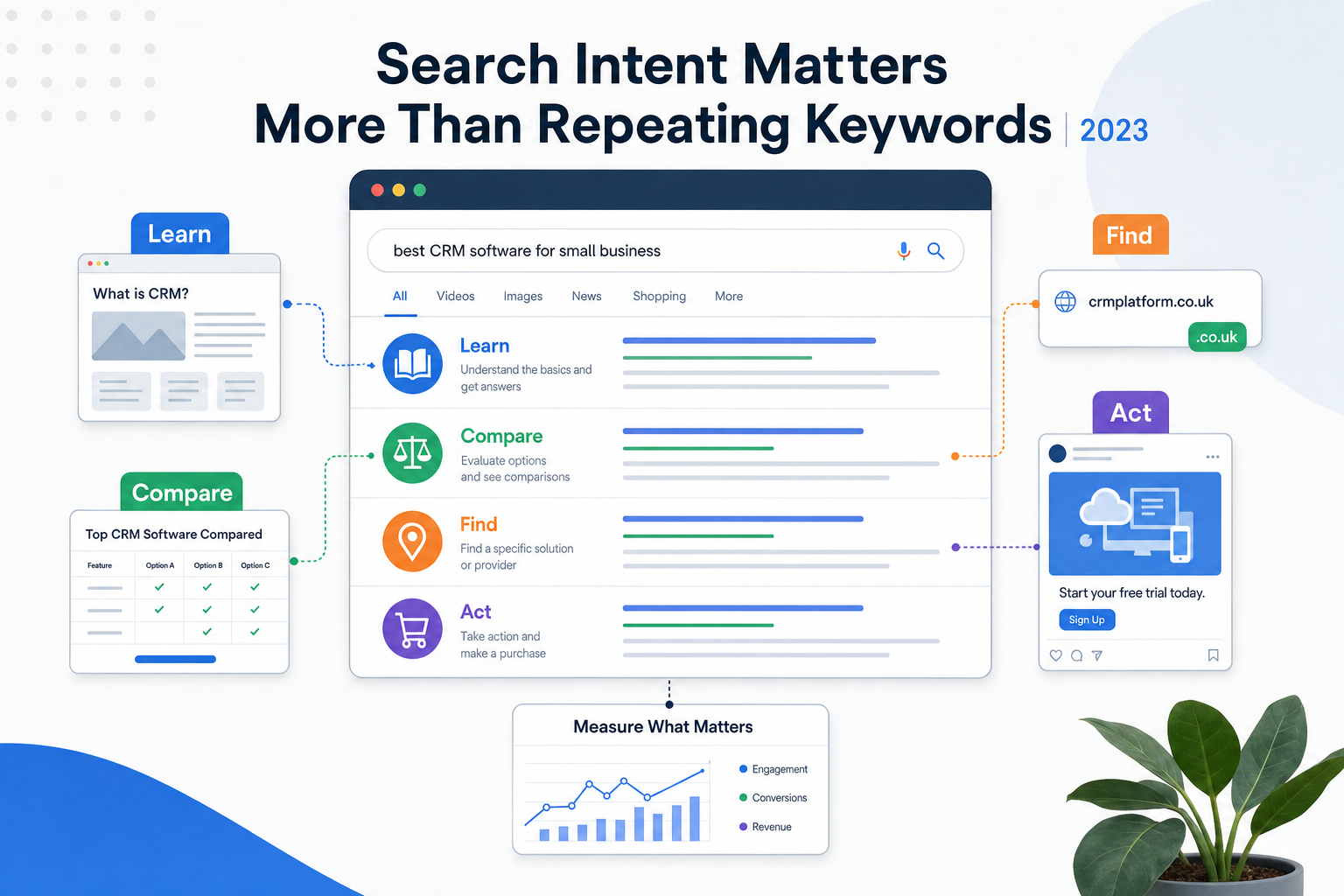
A local SEO strategy is designed to improve your visibility for searches with local intent. These include obvious searches such as ‘accountant in Bristol’, ‘hairdresser near me’ or ‘emergency plumber Manchester’, but also broader searches where Google understands that location matters, such as ‘coffee shop’, ‘estate agent’ or ‘private dentist’.
For businesses rebuilding demand, local SEO offers several advantages. It helps you reach people already showing intent, strengthens trust through consistent information, supports your wider website design and content activity, and provides measurable signals such as calls, direction requests, website visits and enquiry forms.
Unlike short-term promotional activity, local SEO builds an asset over time. A well-optimised website, accurate business listings, useful local content and genuine reviews can continue to support enquiries long after an individual campaign has finished.
Start with the foundations: your website and location signals
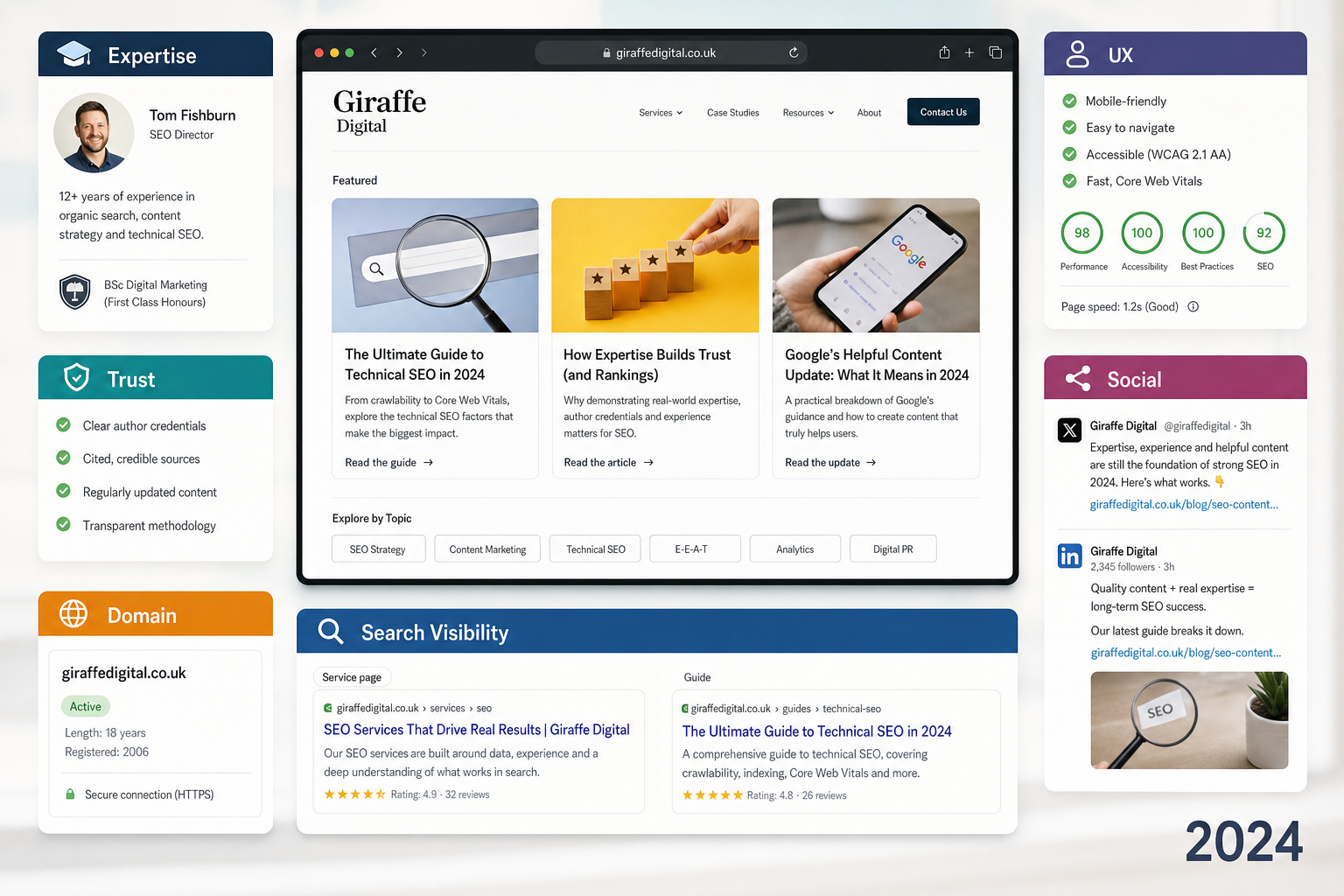
Your website remains the centre of your digital presence. Social platforms and directory listings are useful, but your own website gives you the greatest control over your messaging, branding, content and conversion journey. Before focusing on rankings, make sure your site clearly explains who you help, what you offer and where you operate.
Make your location easy to understand
Search engines look for clear location signals. Customers do too. Your website should include your business name, address and telephone number in a consistent format. If customers visit your premises, place this information somewhere easy to find, such as the footer and contact page. If you operate as a service-area business, explain the towns, cities, counties or regions you cover without pretending to have offices where you do not.
Location pages can be useful when they are genuinely helpful. For example, a removals company serving several towns might create individual pages for each key area, explaining local services, parking considerations, types of property commonly served and practical moving advice. Thin pages that simply swap one town name for another are unlikely to provide long-term value.
Design for trust and action
Local SEO is not only about being found. Once visitors land on your website, they need to feel confident enough to act. Good website design should make the next steps obvious. This may include a prominent telephone number, a simple enquiry form, a booking button, opening hours, service summaries, accreditations, FAQs and clear calls to action.
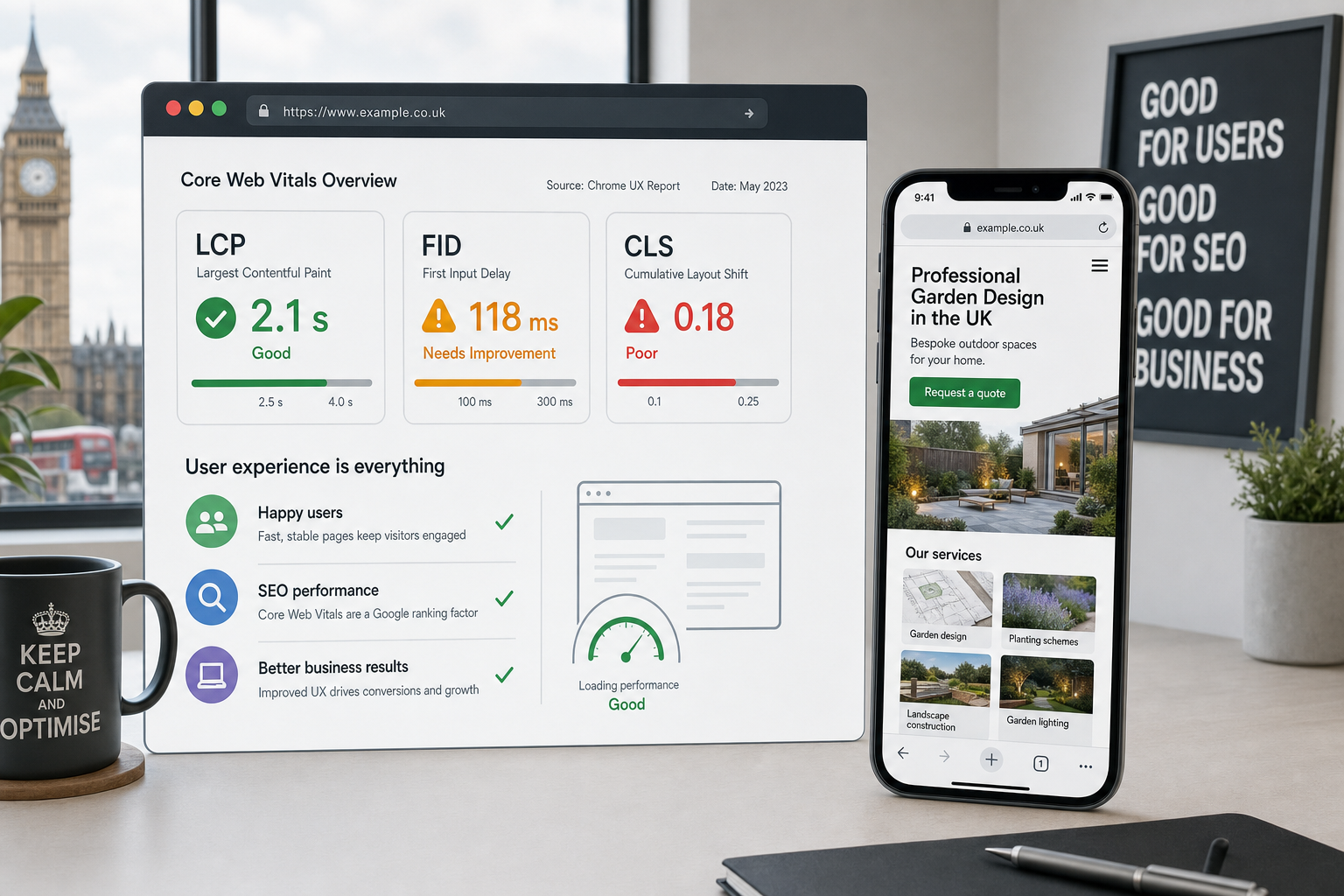
Mobile experience is especially important. Many local searches happen on phones, often when someone is ready to call, visit or compare options quickly. A slow, cluttered or difficult mobile website can lose valuable enquiries, even if your search visibility is improving.
In July 2021, site speed and user experience are also firmly part of the search conversation. Google’s Page ExExperience updatend Core Web Vitals have brought renewed attention to loading performance, interactivity and visual stability. For local businesses, the practical message is straightforward: make your website fast, stable and easy to use, particularly on mobile connections.
Optimise Google My Business properly
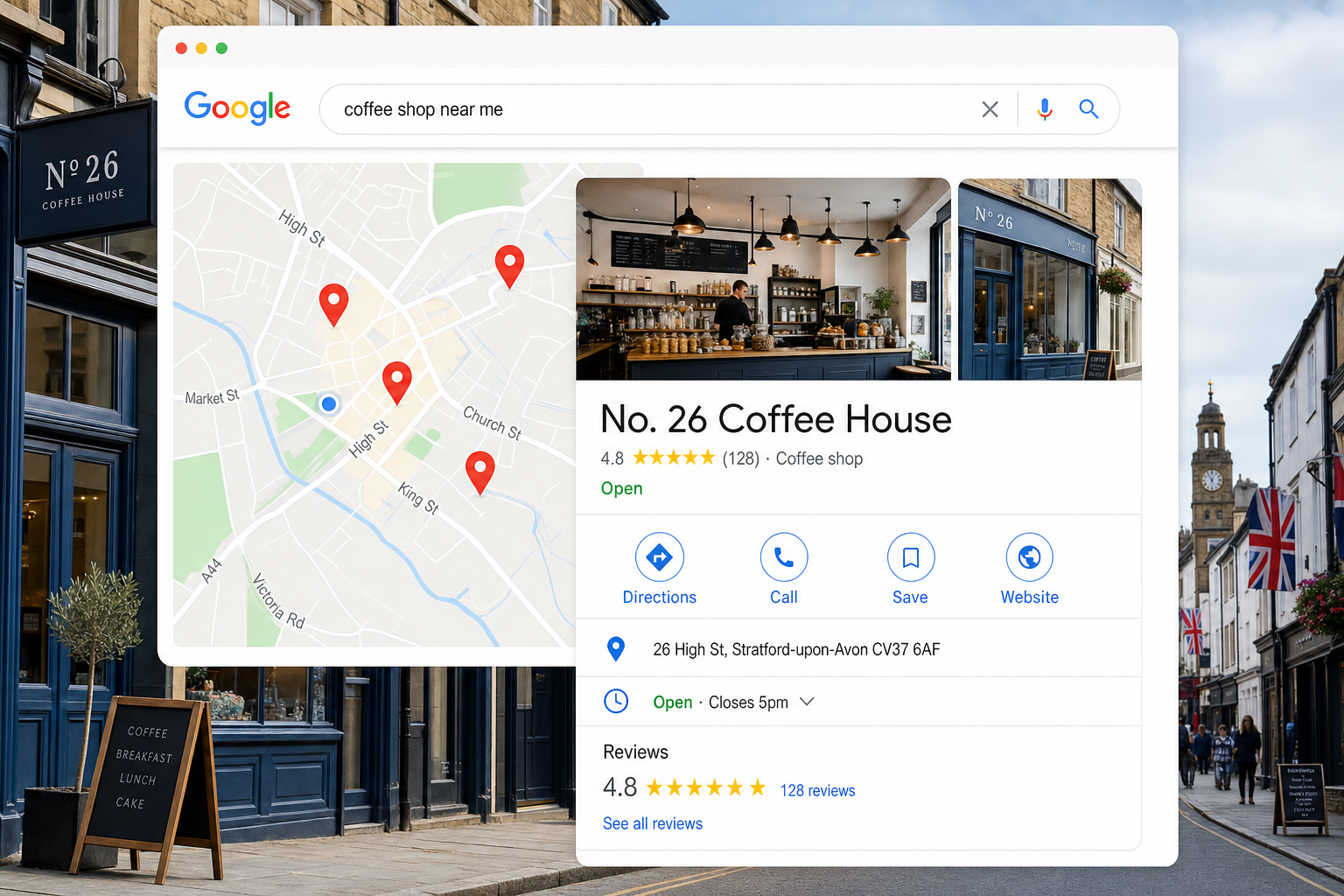
Google My Business is one of the most important platforms for local visibility. It powers many of the details shown in Google Search and Google Maps, including your address, opening hours, photos, reviews, phone number and website link. A neglected listing can create confusion; a well-managed one can help customers choose you with confidence.
Begin by claiming and verifying your listing if you have not already done so. Check that your business name, category, address, telephone number and website are accurate. Choose the most relevant primary category, then add suitable secondary categories where they reflect your services. Avoid adding categories that are only loosely related; relevance is more useful than trying to appear for everything.
Keep details up to date
Opening hours have become particularly important. If your hours change for bank holidays, staff shortages, seasonal demand or appointment-only periods, update them promptly. Customers are far less forgiving when online information sends them to a closed door or unanswered phone line.
Use the description, services, products and attributes where appropriate. Add good-quality photos of your premises, team, products, vehicles or completed work. Images help potential customers understand what to expect and can make your listing feel more current and trustworthy.
Use posts and questions carefully
Google My Business posts can be useful for timely updates, offers, events or service information. They should not replace your website content, but they can reinforce key messages and show that your business is active. Keep posts clear and practical, linking to the most relevant page on your website where helpful.
The questions and answers section should also be monitored. Customers may ask about parking, availability, access, appointments, delivery or payment options. Providing accurate answers helps both the individual asking and future customers viewing your listing.
Build consistency across local listings
Local SEO relies heavily on consistency. Search engines compare information across your website, Google My Business, Bing Places, Apple Maps and reputable directories. If your business name, address or phone number appears differently in multiple places, it can reduce confidence in your information and frustrate customers.
Review your main listings and correct outdated details. This is especially important if you have moved premises, changed telephone numbers, adjusted opening hours or rebranded. Consistency does not mean every profile must be identical in wording, but the core contact details should match.
Choose quality over quantity. A handful of relevant, trustworthy directories is more useful than dozens of poor-quality listings. Trade bodies, local chambers, sector-specific directories, local press websites and community business listings can all help when they are legitimate and maintained.
Earn and manage customer reviews
Reviews are a major influence in local decision-making. They help customers assess trust, service quality and recent activity. They can also contribute to local SEO performance, particularly when reviews are regular, genuine and relevant.
Encourage satisfied customers to leave reviews, but do so ethically. Ask after a completed job, successful appointment, delivery or purchase. Make the process simple by providing a direct review link where the platform allows it. Do not offer incentives in exchange for reviews, and do not write or commission fake reviews.
Responding matters as well. A polite thank you shows appreciation, while a calm and professional reply to criticism can demonstrate that you take service seriously. Avoid defensive arguments. Where a complaint needs investigation, acknowledge the concern and invite the customer to contact you directly.
Reviews can also inform your content strategy. If customers frequently mention speed, friendliness, specialist knowledge, accessibility or clear communication, those themes may deserve more prominence on your website and social channels.
Create local content that answers real questions
Content is often misunderstood in local SEO. You do not need to publish articles for the sake of it. The aim is to answer questions that local customers genuinely ask and to demonstrate relevance, expertise and usefulness.
Useful local content might include service-area guides, seasonal advice, frequently asked questions, case study-style project summaries without invented results, local delivery information, appointment guidance, aftercare advice or explanations of how your process works. A garden centre might publish advice on plants suitable for local soil conditions. A solicitor might explain the documents needed for a first appointment. A restaurant might clarify booking, collection and dietary information.
When writing, use natural language. Include local phrases where they make sense, but avoid forcing town names into every sentence. Search engines are increasingly good at understanding context, and customers will quickly notice content that feels repetitive or artificial.
Connect blog content to commercial pages
Blog posts and guides should not sit in isolation. Link them to relevant service pages, contact pages and booking options. For example, a heating engineer writing about preparing a boiler for winter should link to boiler servicing, emergency repairs and service-area pages where relevant.
This internal linking helps visitors take the next step and helps search engines understand the relationship between your content. It also makes your website more useful, which is an important part of both SEO and conversion.
Use social media to support local visibility
Social media activity is not a direct substitute for local SEO, but it can support awareness, trust and engagement. Platforms such as Facebook, Instagram, LinkedIn and Twitter each have different strengths, depending on your audience and sector.
For consumer-facing businesses, Facebook and Instagram can help show products, premises, availability, community involvement and behind-the-scenes updates. For professional services and business-to-business organisations, LinkedIn can support authority, recruitment, partnerships and referral relationships. Twitter can be useful for timely updates and local conversations, particularly where your audience is active.
The key is consistency and relevance. Share updates that help customers make decisions: new opening hours, service availability, product arrivals, staff expertise, local events, useful advice and links to your best website content. Keep branding consistent across profile images, descriptions and contact details.
Social posts can also drive early engagement with new website content. If you publish a guide, service update or local resource, share it with a short explanation of who it helps and why it matters. This can bring visitors to your website and encourage enquiries from people who already know your brand.
Think carefully about domain names and technical ownership
Your domain name is a long-term part of your digital identity. For a local business, it should be easy to say, easy to spell and closely connected to your brand. A short, memorable domain usually works better than one overloaded with keywords and locations.
Including a location in a domain can make sense in some circumstances, particularly for a business whose brand is strongly tied to one place. However, avoid choosing a restrictive domain if you plan to expand into new areas. A business that starts in one town may later serve a wider region, and an overly narrow domain can become limiting.
When registering a domain, use accurate ownership details and keep access secure. Make sure the business, not an individual employee or temporary supplier, retains proper control. Keep renewal reminders active and store login information safely. Losing access to a domain can disrupt email, website traffic and customer confidence.
From a technical SEO perspective, consistency also matters. Choose whether your website will use the www or non-www version and redirect the other correctly. Ensure your site uses HTTPS, has a valid security certificate and redirects old pages properly if you redesign or restructure the website.
Measure what matters
Local SEO should be judged by business outcomes, not rankings alone. Rankings vary by location, device, search history and wording, so they are only one part of the picture. More useful measures include phone calls, contact form submissions, booking requests, direction requests, website visits from local searches and engagement with key pages.
Google Analytics and Google Search Console can help you understand how people find and use your website. Google My Business Insights can show actions taken from your listing, such as calls, website clicks and direction requests. These tools are not perfect, but together they give a clearer view of progress.
Set realistic expectations. Local SEO improvements often build gradually, especially in competitive sectors. The aim is to improve the quality and consistency of your digital presence so that more of the right customers find you and trust you enough to make contact.
Local SEO checklist for rebuilding demand
- Check your website basics: make sure your services, location, contact details and calls to action are clear.
- Improve mobile usability: ensure pages load quickly and are easy to navigate on phones.
- Update Google My Business: verify your listing, choose accurate categories and keep hours current.
- Review local listings: correct inconsistent names, addresses, phone numbers and website links.
- Ask for genuine reviews: build a steady review profile and respond professionally.
- Create useful local content: answer real questions and link guides to relevant service pages.
- Use social media consistently: share practical updates and reinforce your brand locally.
- Protect your domain: keep ownership, renewals and technical settings under control.
- Measure enquiries: track calls, forms, bookings and direction requests as well as rankings.
Bringing your local SEO strategy together
A successful local SEO strategy is not a single task or quick technical fix. It is the combination of a clear website, accurate listings, strong local signals, useful content, positive reputation and consistent communication. Each part helps customers feel more confident that your business is active, relevant and easy to deal with.
For businesses rebuilding demand, this joined-up approach is especially valuable. It supports people who are ready to buy, book, visit or enquire, while also helping those still researching their options. By making your digital presence clearer and more trustworthy, you reduce friction at the exact points where customers are deciding what to do next.
If your website has not been reviewed for some time, start there. Check how it performs on mobile, whether your key services are easy to understand and whether customers can contact you without confusion. Then align your Google My Business profile, listings, reviews, social channels and content around the same message. Local SEO works best when every part of your online presence points customers in the same helpful direction.