Online reviews are no longer a curiosity reserved for hotels, restaurants and specialist retailers. For many local businesses, they are becoming one of the first things a potential customer sees when searching for a product, service or place nearby. Whether someone is looking for a plumber in Guildford, a hair salon in Brighton, a solicitor in Manchester or a guest house in York, comments from previous customers can affect whether they make an enquiry, visit a website or choose a competitor.
Why online reviews matter to local customers
Word of mouth has always been important for local firms. A recommendation from a neighbour, colleague or family member can carry more weight than any advertisement. Online reviews are, in many ways, word of mouth made visible. They allow people to find opinions from those who may never have met the reviewer, but who still want reassurance before spending time or money.
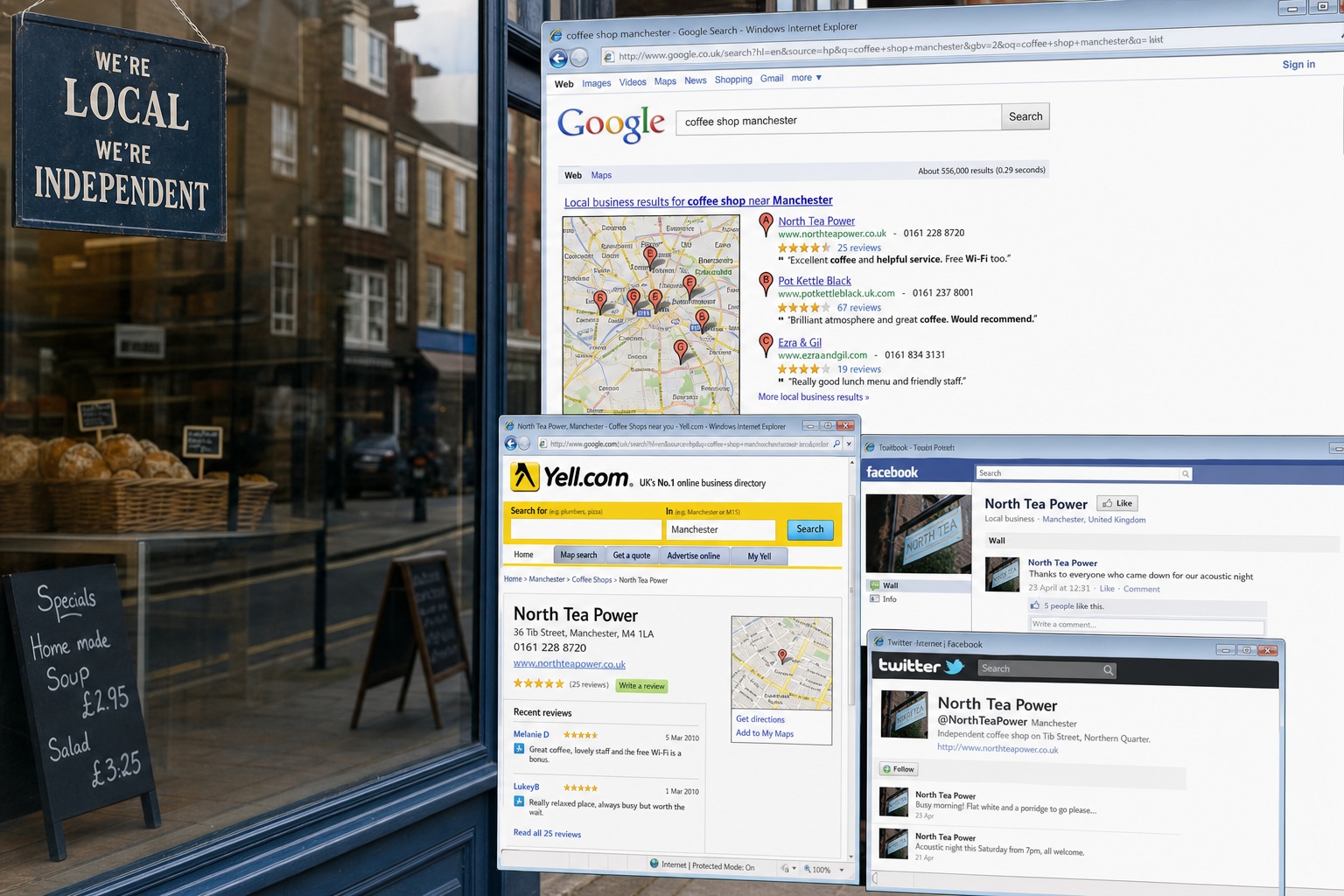
In February 2010, many customers were using search engines, online directories, mapping services, and specialist review websites before contacting a local business. They may compare star ratings, read recent comments and look for signs that a business is reliable, polite and good at what it does. Even if a firm has been established for many years, a weak or neglected online presence can make it look less active than newer competitors.
Reviews are especially influential where trust is important. A customer choosing a restaurant, dentist, builder, nursery, driving instructor or hotel wants to feel confident that others have had a good experience. A small number of thoughtful reviews can provide the reassurance needed to pick up the telephone or submit an enquiry form.
Reviews and local search visibility
Search marketing is not only about the pages on your own website. Local search results increasingly draw on information from a range of sources, including business directories, mapping listings and review sites. A business with consistent details, relevant categories and visible customer feedback may be more likely to stand out when a searcher is comparing options.
For example, a search for a local service may show a map, business names, addresses, telephone numbers and snippets of information gathered from around the web. Reviews can help a listing look active and credible. They can also provide natural language that matches what customers actually search for, such as friendly staff, same-day repair or excellent Sunday lunch.
This does not mean that reviews replace good search engine optimisation. Your website still needs clear page titles, relevant copy, sensible headings, well-written service pages and accurate contact details. However, online reviews can boost local visibility by strengthening your business's overall online presence.
Where customers may be leaving reviews
There is no single place where every customer leaves a review. The right sites vary by trade, location and audience. A hotel or guest house may be discussed on travel sites, while a café may receive comments on local directories and social networks. Tradespeople, professional services and retailers may appear in business directories, mapping results or niche websites.
UK businesses should regularly check the most relevant places where their name appears. This may include search engine map listings, local directory profiles, review-led community sites, travel websites for accommodation and hospitality, and industry-specific portals. It is also worth searching for your business name alongside words such as review, complaint, recommendation and your town or county.
Do not assume that a lack of reviews means nobody is talking about you. Business information is often copied between directories, and customers may leave feedback on sites you did not create yourself. Claiming or updating listings, where available, can help ensure that your address, telephone number, opening hours and website link are correct.
How reviews influence website enquiries
A customer may first discover a business through a review site, but the next step is often the company website. This is where good website design and clear content become important. If a review encourages someone to click through, your website must quickly confirm that they are in the right place.
Your website should make it easy to find what you do, where you operate and how to contact you. Prominent telephone numbers, clear enquiry forms, opening times and location details all help. If visitors have arrived after reading online reviews, they are likely to be looking for reassurance. Pages that explain your services, show genuine photographs, introduce your team or describe your process can all build confidence.
Testimonials on your own website can also be valuable, provided they are genuine and presented honestly. A brief quote with a customer's name, business name, or locality where permission has been given is more convincing than vague praise. Avoid filling a page with anonymous superlatives. Visitors are increasingly able to spot content that looks manufactured.
Responding to positive and negative reviews
Positive reviews deserve acknowledgement. When a site allows business responses, a short thank-you shows that you value customer feedback. It also demonstrates to future readers that your business is attentive and approachable. Keep replies polite, simple and professional.
Negative reviews require more care. It can be frustrating to see criticism online, particularly if you feel it is unfair. However, an angry or defensive reply can cause more damage than the original comment. Before responding, read the review carefully, check the facts internally and decide what a reasonable future customer would expect to see.
A good response should be calm, specific where appropriate and focused on resolving the matter. If the reviewer has raised a genuine problem, acknowledge it and explain how they can contact you. If there has been a misunderstanding, clarify without sounding dismissive. Avoid discussing private details, staff issues or anything that could appear unprofessional.
A poor review handled well can still show potential customers that your business takes service seriously.
It is rarely useful to argue point by point in public. The aim is not to win a debate; it is to show that your business listens, acts fairly and cares about standards.
Encouraging reviews without causing problems
Many satisfied customers will not think to leave a review unless asked. There is nothing wrong with encouraging genuine feedback, but it must be done sensibly. Ask at a natural moment, such as after a successful job, a completed order, an enjoyable stay, or a positive conversation. Keep the request simple and avoid pressuring people.
You might include a polite note on a receipt, in a follow-up email or on a thank-you card. For example, a local business could say, If you were pleased with our service, we would be grateful if you shared your experience online. This is straightforward and does not attempt to control what the customer says.
Do not write reviews for yourself, ask staff to pose as customers or offer rewards in exchange for favourable comments. These practices are risky, unethical and often easy to detect. They can damage trust far more than a small number of mixed reviews would.
It is also important not to ask only for perfect praise. A steady pattern of genuine feedback looks more believable than a sudden burst of identical five-star comments. Customers understand that no business is perfect. What they want to see is consistency, honesty and evidence that problems are dealt with properly.
Keeping business details consistent
Online reviews often appear alongside basic business information. If your name, address, telephone number, or website address is inconsistent across the web, customers may become confused, and search engines may struggle to interpret the information reliably.
Use the same business name wherever possible. If your shop sign, website and directory listings all use slightly different wording, decide on a standard version and apply it consistently. The same applies to addresses, especially where there are unit numbers, building names or local variations. A clear local telephone number can also reassure people that they are dealing with a nearby business.
Your domain name plays a role in this consistency. Choose a domain that is easy to say, easy to spell and suitable for printed material as well as search results. For many UK businesses, a UK-focused domain can help communicate location and relevance. Avoid overly long names, unnecessary hyphens and spellings that customers are likely to mistype. Once chosen, use the same website address on stationery, directory listings, social media profiles and email signatures.
Using social media to support your reputation
Social media is becoming a useful part of local marketing, but it should be approached with a clear purpose. A Facebook Page, a Twitter account, nt or a presence on a relevant community site can help a business show its personality, share updates, es and respond to questions. These channels can also influence how people perceive your service before they become customers.
Social media should not be used to broadcast advertisements. Local audiences respond better to practical updates, useful tips, photographs from events, seasonal information and prompt replies. A restaurant might post menu changes, a garden centre might share planting advice, and a garage might remind customers about winter checks. These small touches can support the positive impression created by online reviews.
It is sensible to monitor mentions of your business name on social platforms. Customers may not always leave formal reviews; sometimes they comment to friends or followers. A polite response, where appropriate, can turn a casual mention into a stronger relationship.
Making reviews part of your digital strategy
Reviews should not be treated as a separate task considered only when something goes wrong. They belong within a wider digital strategy that includes website design, search engine optimisation, social media marketing, directory management and customer service.
Start by deciding who in the business is responsible for monitoring reviews. This may be the owner, manager or a trusted member of staff. Set a simple routine, perhaps checking key sites weekly and recording any issues that need attention. Larger businesses with multiple branches may need a more structured approach to ensure each location is represented accurately.
Next, make sure your website supports the reputation you want to build. If reviews praise your personal service, your site should not feel cold or anonymous. If customers value your speed, make your contact options clear. If people often mention specialist knowledge, consider adding helpful advice pages or frequently asked questions.
Finally, learn from the comments themselves. Reviews can reveal what customers truly value, which may not always be what the business assumes. If several people praise a particular member of staff, product range, location feature or aftercare process, that insight can shape your marketing. If the same complaint appears more than once, it may point to an operational issue worth fixing.
A practical checklist for local businesses
- Search for your business name and town to see where reviews already appear.
- Claim or update relevant directory and map listings where possible.
- Keep your name, address, telephone number and website address consistent.
- Ask satisfied customers for honest feedback at an appropriate moment.
- Respond to reviews politely and avoid public arguments.
- Add genuine testimonials to your website, with permission.
- Use social media to show helpfulness, not just to advertise.
- Review customer comments regularly and act on recurring themes.
Taking reviews seriously is good business
Online reviews are important because they sit at the intersection of reputation, search visibility and customer decision-making. They can help a local business appear more trustworthy, encourage website visits and provide useful feedback on the customer experience.
For UK business owners investing in website design, SEO or digital marketing, reviews should be part of the conversation from the beginning. A well-designed website can convert interest into enquiries, but customer confidence is often shaped before the visitor reaches your site. By managing online reviews carefully, presenting accurate information, and responding with professionalism, local businesses can build a stronger, more resilient online presence.